
Luang Prabang Walking Tour Apps: Your Essential Guide (2026)
Explore Luang Prabang on foot like a local! Discover essential apps for navigation, translation, and discovery, ensuring a safe and enriching walking tour experience in Laos.
On this page
Luang Prabang, a UNESCO World Heritage site, invites travelers to slow down and explore its serene beauty, ancient temples, and vibrant markets on foot. Walking tours offer an unparalleled way to immerse yourself in the local culture and discover hidden gems. While the charm of this Laotian city lies in its timelessness, a smart approach leveraging modern technology can significantly enhance your walking adventure, making it safer, more informative, and deeply enriching. This guide reviews and recommends the best apps and tech tools to elevate your Luang Prabang walking tour experience.
Key Tips and Takeaways
- Always download offline maps for Luang Prabang before you set out.
- Invest in a local SIM card for reliable data and communication.
- Utilize translation apps to connect with locals and understand signs.
- Combine app-based research with spontaneous exploration and local interactions.
- Charge your devices fully and carry a power bank for long walks.
- Respect local customs and dress codes, especially when visiting temples.
Navigating Luang Prabang: Offline Maps & GPS Apps
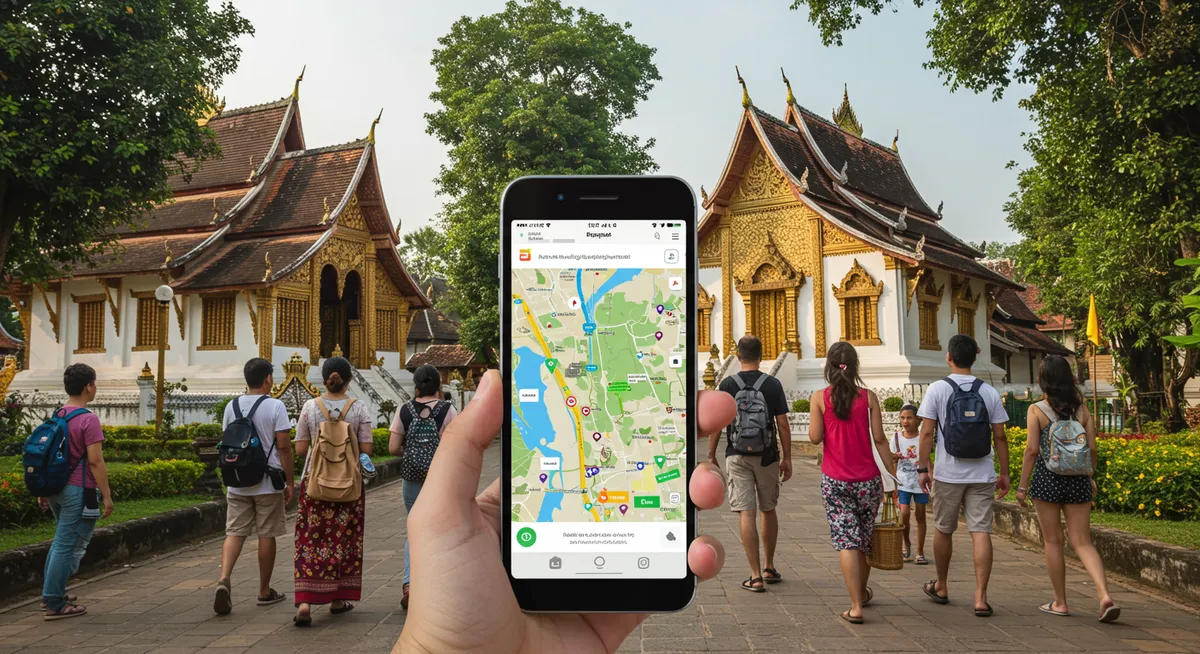
Luang Prabang, with its enchanting blend of golden temples, colonial architecture, and serene riverside paths, is a dream destination for walkers. While getting delightfully lost in its charming alleys can be part of the adventure, having reliable navigation at your fingertips ensures you can explore with confidence, discover hidden gems, and always find your way back to your guesthouse or that perfect riverside café. Given that Wi-Fi can be patchy and mobile data isn’t always reliable (or affordable) throughout the city, pre-downloading offline maps is an absolute game-changer for a stress-free walking tour.
Your Essential Navigation Toolkit
Here are the top app recommendations and how to leverage them for your Luang Prabang walking adventures:
-
Google Maps (with Offline Maps Download!)
This is arguably your most indispensable tool. Google Maps provides comprehensive information on businesses, landmarks, and major roads. The crucial step for walking in Luang Prabang is to download the map of the entire city and its surrounding areas before you leave your accommodation (or even before you arrive in Laos) while you have strong Wi-Fi.How to Download Offline Maps:
- Open Google Maps.
- Search for “Luang Prabang.”
- Tap the city name or swipe up the information card.
- Tap “Download” and select the area you want to save. Make sure it covers the entire peninsula, Mount Phousi, and areas extending to the Mekong and Nam Khan rivers.
Once downloaded, Google Maps uses your phone’s GPS to pinpoint your location accurately, even without an internet connection. This means you can track your progress, identify nearby temples like Wat Xieng Thong or Wat Mai, navigate to the Night Market, or find specific restaurants without burning through data.
-
Maps.me
A powerful alternative that excels in offline navigation, Maps.me is built specifically around the concept of downloaded maps. It often features incredibly detailed footpaths, small alleys, and points of interest that might be overlooked by other apps.Benefits for Walkers:
- Highly Detailed Footpaths: Excellent for exploring the narrower lanes around the peninsula or finding quieter routes along the rivers.
- Offline First: Designed to work seamlessly without an internet connection once the regional map is downloaded.
- Community-Driven Data: Often has unique contributions, including small guesthouses, local eateries, and points of interest not widely listed elsewhere.
It’s an excellent companion for spontaneous discoveries or when you want to explore the less-trafficked parts of Luang Prabang.
-
OpenStreetMap (via OSM-based apps like OsmAnd)
For the truly intrepid or those who prefer open-source solutions, apps built on OpenStreetMap data can be incredibly robust. While perhaps less user-friendly for a casual traveler than Google Maps or Maps.me, they offer immense detail and customization. It’s a good option if you want to explore very specific routes or contribute to mapping efforts yourself.
Pro-Tips for Seamless Navigation:
- Mark Points of Interest (POIs) Beforehand: Before you even set foot out the door, take some time to “star” or “save” key locations in Google Maps (or similar functions in other apps). Mark your guesthouse, must-visit temples (e.g., Mount Phousi, Wat Xieng Thong), specific restaurants you want to try, the Night Market, the Mekong River, and any other landmarks. This creates a visual itinerary on your map, making route planning and re-orientation incredibly easy.
- Charge Your Phone: GPS usage consumes battery life. Always start your day with a fully charged phone, and consider carrying a portable power bank, especially if you plan an extensive walking tour.
- Look Up and Engage: While apps are invaluable, remember to look up from your screen! Luang Prabang’s charm is in its atmosphere. Don’t hesitate to ask a friendly local for directions if you’re truly stumped – a smile and a few words of Lao can go a long way.
Breaking Barriers: Translation & Communication Apps
One of the most rewarding aspects of any walking tour is the opportunity to connect with the local culture and its people. While English is spoken in many tourist-facing establishments in Luang Prabang, venturing slightly off the main thoroughfares or engaging with street vendors and smaller eateries often requires a bridge. This is where translation and communication apps become your indispensable companions, truly breaking down barriers and enriching your exploration.
Your primary tool for seamless interaction will be a robust translation app like Google Translate. It’s more than just a word-for-word dictionary; its advanced features are perfectly suited for the dynamic environment of a Luang Prabang walking tour:
- Offline Language Packs: This is arguably the most crucial feature. Before you even set foot in Luang Prabang, or while connected to reliable Wi-Fi, download the Lao language pack. Luang Prabang offers a serene escape, and while Wi-Fi is available in many cafes and guesthouses, reliable mobile data can be spotty in certain areas, especially as you explore ancient temples or quieter residential lanes. Having Lao available offline means you’re never stranded without a way to communicate.
- Camera Translation: Imagine strolling through the vibrant Morning Market or pondering a menu at a charming, local noodle shop where no English translation is provided. Simply point your phone’s camera at the text, and Google Translate can often provide an instant, albeit sometimes imperfect, translation. This is incredibly helpful for deciphering ingredients, understanding local signs, or even reading the names of a temple building, giving you immediate insight into your surroundings. It transforms ordering food from a guessing game into an informed culinary adventure.
- Voice Input for Basic Communication: Need to ask for directions to a specific temple like Wat Xieng Thong, inquire about the price of a beautiful textile at the Night Market, or simply order a traditional Lao coffee (Kafe Lao)? Speak into your phone, and the app will translate your words into spoken Lao, allowing for simple, direct exchanges. Locals genuinely appreciate the effort to communicate, even if aided by technology.
These apps aren’t just about practicalities; they facilitate deeper engagement. They empower you to ask locals about their craft at the Traditional Arts and Ethnology Centre, understand nuances during a almsgiving ceremony, or simply share a polite greeting with a vendor. This level of interaction turns a passive sightseeing stroll into an active, immersive cultural exchange, giving you a more authentic taste of Luang Prabang’s laid-back charm and spiritual depth.
While technology is a fantastic aid, always remember the power of human connection. Learning a few basic Lao phrases goes a long way in showing respect and fostering goodwill. A simple “Sabaidee” (Hello), “Khop jai” (Thank you), or “Khop jai lai lai” (Thank you very much) can open doors, bring smiles, and make your interactions even more memorable. Combine these genuine efforts with the smart use of translation apps, and you’ll find communication in Luang Prabang to be an effortless and enriching part of your walking tour.
Local Insights & Discovery: Travel Guide & Review Apps
🌟 Local Expert Tip: Get the most out of your Luang Prabang visit with guided tours!
While Luang Prabang offers an abundance of sights and sounds to discover simply by wandering, leveraging travel guide and review apps can significantly enhance your walking tour experience. These digital companions go beyond simple navigation, offering a treasure trove of local insights, historical context, and real-time recommendations that transform your strolls into deeper cultural explorations.
General travel platforms like TripAdvisor and Google Maps (with its extensive review system) are invaluable. Before you even step out for your Luang Prabang walking tour, use them for pre-tour research. Look up historical facts about iconic temples like Wat Xieng Thong, delve into the significance of the Royal Palace Museum, or read up on the history of the ancient town itself. As you walk, these apps become dynamic guides. Spot a charming cafe, an intriguing artisan shop selling local silk or handmade paper, or a vibrant street food stall? A quick search can pull up reviews, photos, and even opening hours, helping you decide whether to venture in. You can discover highly-rated local eateries serving authentic dishes like mok pa (steamed fish in banana leaf) or khao soi, ensuring you experience the best of Luang Prabang’s culinary scene.
For more curated information, consider digital guidebook apps from publishers like Lonely Planet or Rough Guides. While not always specific to Luang Prabang walking tours, their comprehensive city guides often feature meticulously researched historical details, cultural etiquette tips, and suggested walking routes that connect key attractions. The beauty of these digital guides is their offline accessibility – crucial in areas where Wi-Fi might be intermittent. They can provide invaluable context for understanding the city’s unique blend of Buddhist heritage, French colonial influence, and the daily rhythm of life along the Mekong River, making your discoveries more meaningful than just surface-level sightseeing.
Using these apps allows you to connect more profoundly with Luang Prabang’s soul. Beyond the main tourist paths, you might uncover a quiet alley leading to a local ceramics workshop, a hidden viewpoint overlooking the confluence of the Mekong and Nam Khan rivers, or even the best spot to discreetly observe the morning alms giving ceremony. They empower you to find those “lesser-known” gems and authentic experiences that truly define local discovery.
Here are some actionable tips for integrating these apps into your Luang Prabang walking adventure:
- Download Offline Maps & Content: Ensure your maps, guides, and saved reviews are accessible even without an internet connection.
- Cross-Reference: Don’t rely solely on one source. Cross-reference information from different apps and even local recommendations for a balanced perspective.
- Read Reviews Critically: While helpful, remember that reviews are subjective. Use them as a general guide rather than absolute truth.
- Save Points of Interest: Before you head out, mark temples, cafes, shops, and viewpoints you want to visit on your map for easy navigation.
- Balance Tech with Serendipity: While apps are great tools, remember to occasionally put your phone away and allow yourself to simply wander, observe, and embrace the unexpected discoveries Luang Prabang offers.
Stay Connected: Data & Connectivity Solutions
🌟 Local Expert Tip: Get the most out of your Luang Prabang visit with guided tours!
As you embark on your self-guided walking tour through the charming streets of Luang Prabang, staying connected is more than just a luxury – it’s a practical necessity. Reliable data connectivity ensures seamless navigation, communication, and access to crucial real-time information, significantly enhancing both your safety and convenience.
Local SIM Cards: Your Best Bet
For most travelers, purchasing a local SIM card upon arrival is the most straightforward and cost-effective solution. Laos has several reputable mobile network operators, including Lao Telecom, Unitel, and ETL. All three offer competitive data packages, and you’ll find their kiosks or official stores readily available, particularly at Luang Prabang International Airport (LPQ) or conveniently located shops throughout the town center. Unitel often boasts the widest coverage, especially if you plan any excursions outside the main town, but Lao Telecom and ETL also provide excellent service within Luang Prabang.
The process is simple: just present your passport for registration, choose a suitable data package (often surprisingly affordable for generous allowances), and the vendor will typically help you activate it on the spot. Having a local SIM means you can instantly access:
- Real-time Navigation: Essential for using mapping apps like Google Maps or Maps.me to navigate the winding streets, find hidden temples, or locate that specific restaurant you’ve heard about.
- Communication: Stay in touch with your hotel, call a local tuk-tuk, or use messaging apps to communicate with fellow travelers.
- Emergency Access: In unforeseen circumstances, direct phone access is invaluable for reaching local emergency services or your embassy.
- Online Information: Quickly check opening hours for attractions, read recent reviews, or translate phrases on the go.
eSIMs: A Modern Alternative
If your device is compatible, an eSIM offers incredible convenience. An eSIM is a digital SIM card that allows you to activate a cellular plan without needing a physical SIM card. Providers like Airalo, Holafly, or GigSky offer regional or country-specific eSIMs that you can purchase and activate before you even land in Luang Prabang. This means you’ll have connectivity as soon as you arrive, avoiding the hassle of finding a local SIM vendor. While often slightly pricier than a local physical SIM, the ease of activation and ability to switch between plans digitally make it a compelling option for tech-savvy travelers.
Pocket Wi-Fi Devices: Connect Multiple Devices
Another option, though less common for individual tourists in Luang Prabang, is renting a pocket Wi-Fi device. These portable hotspots allow you to connect multiple devices (your phone, tablet, laptop) to the internet simultaneously. While useful for groups or if you need to work remotely, they add an extra item to carry and keep charged. Rental services might be available at major airports in Laos, but finding one specifically in Luang Prabang might be more challenging than simply picking up a local SIM.
Actionable Connectivity Tips for Your Luang Prabang Walk:
- Check Coverage: While all major providers offer good coverage in Luang Prabang town, if you plan to venture further afield (e.g., to Kuang Si Falls or Pak Ou Caves), it’s worth checking coverage maps beforehand.
- Download Offline Maps: As a crucial backup, always download offline maps of Luang Prabang and surrounding areas on apps like Google Maps or Maps.me. This way, if you lose signal or run out of data, you can still navigate.
- Keep Devices Charged: Continuous GPS usage and data streaming can drain your phone battery quickly. Carry a portable power bank to ensure your device stays powered throughout your walking adventures.
- Pre-load Essential Info: Before heading out, save screenshots or notes of important addresses, opening hours, or emergency contacts, just in case.
By ensuring you have reliable data connectivity, you’ll empower your Luang Prabang walking tour, turning potential navigational stresses into seamless exploration and enriching your experience tenfold.
Safety & Practicalities: Emergency & General Utility Apps
While exploring Luang Prabang’s tranquil streets on foot, your smartphone is more than just a navigation tool; it’s a vital companion for safety and practicalities. Beyond dedicated mapping apps, a few essential utility applications can significantly enhance your walking tour experience, acting as your digital safety net.
Emergency Preparedness: Your Digital Safety Net
Even in Luang Prabang’s peaceful ambiance, being prepared for unforeseen circumstances is always wise. Before you embark on your walking tour, ensure vital emergency information is readily accessible on your phone. Digital storage offers speed and convenience over physical notes.
- Local Emergency Numbers: Crucially, save Luang Prabang’s emergency contacts directly into your phone. These include the Tourist Police (often the best first point of contact for visitors) – ask your guesthouse for their number. Also, note down the general Police (191) and Ambulance (195) numbers for Laos. Quick access to these can be critical.
- Travel Insurance & Emergency Contacts: Use apps like “TravelSafe” or your phone’s native notes app to store your travel insurance policy details, emergency contact information for family/friends, and scanned copies of your passport/visa. This quick access is invaluable for medical professionals or authorities in an emergency.
General Utility Apps for Seamless Walks
These applications may not be “emergency” apps, but they significantly contribute to a hassle-free experience, indirectly enhancing your safety by keeping you informed and prepared.
- Currency Converters (e.g., XE Currency): Luang Prabang primarily uses cash transactions in Lao Kip (LAK). An accurate currency converter like XE Currency is indispensable for quickly understanding prices at markets, street food stalls, or for services. This helps you budget effectively, avoid misunderstandings, and prevents overpaying, contributing to a more relaxed and secure financial experience.
- Weather Apps (e.g., AccuWeather, Google Weather): Luang Prabang’s tropical climate means weather can change rapidly, especially during the monsoon season (May to October). A reliable weather app is essential for planning your walks. Check the forecast before climbing Mount Phousi for sunset or venturing on a longer stroll. Knowing if a downpour is imminent allows you to pack an umbrella or waterproofs, or adjust your schedule to avoid getting caught unprepared or walking in intense midday heat.
- Translation Apps (e.g., Google Translate): While many in tourist areas speak some English, an offline translation app can be incredibly useful for asking for directions, ordering food, or communicating a need in a moment of distress. It empowers you to interact more effectively with locals, fostering a sense of connection and enhancing your overall confidence.
Remember to download these apps and any necessary offline data (like currency exchange rates or language packs) before you head out, as Wi-Fi can be intermittent. Always ensure your phone is fully charged, and consider carrying a portable power bank, especially for longer walking days. By leveraging these practical apps, you’re not just prepared for the unexpected, but also setting yourself up for a smoother, more enjoyable walking adventure in Luang Prabang.
Beyond the Apps: Combining Tech with Local Wisdom
While Luang Prabang walking tour apps can be indispensable for navigation, historical context, and discovering popular points of interest, the true magic of this UNESCO World Heritage city often unfolds when you venture beyond the screen. Think of technology as your trusty co-pilot, but allow local wisdom to be your seasoned, intuitive guide. The most profound Luang Prabang experiences arise from blending digital assistance with authentic human connection and serendipitous discoveries.
Luang Prabang thrives on its gentle pace and the warmth of its people. Relying solely on an app means you risk missing out on the spontaneous moments that define a truly immersive journey. Imagine walking past a local family selling freshly grilled Mekong fish, or a monk silently observing the world from a temple veranda. An app might tell you where the next temple is, but it won’t tell you the story behind a particular carving, or which local eatery serves the best khao soi (Luang Prabang noodle soup) recommended by someone who has lived here their whole life.
Here’s how to enrich your walking tour by combining tech with the invaluable insights of Luang Prabang locals:
- Ask for Directions, Not Just Follow Maps: Even if your offline map is working perfectly, try asking a local for directions to a specific temple, a hidden coffee shop, or the best spot for sunset views. This simple interaction can lead to a brief, friendly conversation, a smile, or even an unexpected recommendation for something you never knew existed. Learn a few basic Lao phrases like “Sabaidee” (hello) or “Khop jai” (thank you) to break the ice.
- Engage with Vendors and Shopkeepers: As you explore the Night Market or the bustling morning market, engage with the vendors. Ask about their crafts, the ingredients in their food, or the history of their stall. They are custodians of local culture and often eager to share stories.
- Embrace Serendipity: Use your app for a general direction, but allow yourself to be delightfully sidetracked. Did you hear traditional music from a quiet alley? Does a fragrant aroma invite you towards a small, unassuming eatery? Follow your instincts. Some of Luang Prabang’s most charming spots are found simply by wandering and being open to the unexpected.
- Consider a Local Guide for Specific Insights: Even if you prefer self-guided walks, consider hiring a local guide for a specific part of your tour – perhaps for a temple complex like Wat Xieng Thong, or a morning alms giving ceremony. Their knowledge of history, religious customs, and local etiquette is unparalleled and cannot be replicated by an app. They can provide context that brings ancient stones and traditions to life.
- Validate App Information with Local Wisdom: An app might tell you a restaurant is open, but a local street vendor might know it’s closed for a family event that day, or that a better, less touristy spot is just around the corner. Cross-reference digital information with real-time local knowledge for the most current and authentic experience.
Ultimately, the best walking tour in Luang Prabang is a dynamic blend: the precision of your digital tools guiding you along the main arteries, coupled with the beating heart of local interaction pulling you down charming side streets and into profound human connections. It’s in these genuine exchanges that you’ll truly uncover the soul of Luang Prabang, transforming a simple walk into an unforgettable journey.
Frequently Asked Questions
Q: Is Luang Prabang safe for solo female walkers?
A: Yes, Luang Prabang is generally considered very safe for solo travelers, including women. The main tourist areas are well-lit and populated. As with any travel, common sense precautions apply: avoid walking alone in very secluded areas at night, be aware of your surroundings, and inform someone of your plans. Apps can enhance safety by providing navigation and communication.
Q: What’s the best time of day for free walking tours in Luang Prabang?
A: Early mornings (around 5:30-6:30 AM) are ideal for witnessing the daily alms giving ceremony, a unique cultural experience. Late afternoons (from 4 PM onwards) are pleasant for exploring temples as the sun starts to set, offering cooler temperatures and beautiful light. Mid-day can be very hot, so plan shorter walks or indoor activities during those hours. Always stay hydrated and wear sun protection.
Q: Do I need internet access for walking around Luang Prabang?
A: While many cafes and guesthouses offer Wi-Fi, reliable internet access can be inconsistent in some areas. It is highly recommended to download offline maps and language packs on your apps before you start your walk. For consistent connectivity, purchasing a local SIM card (e.g., Lao Telecom) is advisable for real-time information and emergencies.
Q: Can apps replace a local guide for a walking tour?
A: Apps are incredible tools for navigation, information, and communication, significantly enhancing a self-guided walking tour. However, they cannot fully replace the rich, personal insights, historical anecdotes, and unique cultural perspectives that an experienced local guide provides. Consider using apps for independent exploration and hiring a local guide for specific tours or deeper cultural dives to get the best of both worlds.
Embracing the charm of Luang Prabang on foot is an unforgettable experience, allowing you to connect deeply with its spiritual aura and vibrant street life. By strategically leveraging the right travel apps, you can navigate its ancient alleys with confidence, communicate with locals more effectively, and uncover layers of history and culture that might otherwise remain hidden. Remember, these digital tools are designed to augment your journey, not define it. So, download your maps, charge your phone, and step out to explore Luang Prabang’s captivating beauty, one rewarding step at a time!