
Vung Tau Walking Tour: Meeting Points & Transport Guide (2026)
Explore Vung Tau on foot! Discover key walking tour meeting points, public transport options, and expert tips for a safe & enjoyable journey.
On this page
Vung Tau, with its captivating coastline, historic landmarks, and vibrant local life, offers a unique charm best discovered on foot. Beyond the bustling beaches, walking tours provide an intimate glimpse into the city’s soul, from hidden alleyways to panoramic viewpoints. This guide equips you with all the practical knowledge to navigate Vung Tau’s walking tour landscape, focusing on seamless transport to your meeting points and ensuring a memorable exploration.
Key Tips and Takeaways
- Always confirm the exact meeting point address and landmark with your tour operator.
- Utilize ride-hailing apps like Grab for convenient and reliable transport to your meeting point.
- Wear comfortable walking shoes and bring sun protection (hat, sunscreen, sunglasses) and water.
- Be mindful of Vung Tau’s traffic; cross streets slowly and predictably.
- Consider booking tours with reputable local providers for authentic insights and safety.
- Don’t hesitate to explore on your own with offline maps for additional discoveries.
Why Walk Vung Tau? The Charm of Exploration on Foot
Vung Tau, often seen as a coastal escape, truly reveals its soul when explored on foot. While the city certainly has its share of bustling traffic, embracing a walking tour allows you to peel back the layers and discover the authentic charm that many visitors whiz past. It’s an immersive journey, turning every corner into a potential discovery.
Unearthing Hidden Gems & Local Rhythms
Walking is the ultimate way to stumble upon Vung Tau’s best-kept secrets. Veer off the main boulevards like Quang Trung or Thuy Van, and you’ll find yourself in labyrinthine alleys where local life unfolds. Witness vendors preparing fresh seafood, children playing in quiet courtyards, and the aroma of traditional Vietnamese cooking wafting from humble homes. You can spend hours meandering through the backstreets near Xom Luoi Market, observing the daily rituals and feeling the pulse of the community, something you’d completely miss from a car or motorbike. These intimate encounters offer a genuine insight into the city’s culture and the warmth of its people.
Embracing Coastal Breezes & Scenic Vistas
There’s nothing quite like feeling the fresh sea air directly on your skin as you stroll along Vung Tau’s picturesque coastline. Walking allows you to fully savor the panoramic views of the ocean, the gentle lapping of waves, and the distant silhouette of fishing boats. Take a leisurely pace along the Front Beach (Bai Truoc) promenade, particularly in the early morning or late afternoon, when the light is perfect for photography and the atmosphere is serene. Further south, the path around Nghinh Phong Cape offers breathtaking cliffside views and cooling ocean gusts, inviting you to pause, breathe, and simply absorb the natural beauty.
A Culinary Quest: Street Food at Your Fingertips
For food lovers, a walking tour of Vung Tau is a gastronomic adventure. The city is famous for its delectable street food, and walking provides the freedom to stop spontaneously at any stall that catches your eye (or nose!). From the iconic crispy mini-pancakes known as bánh khọt to fresh-off-the-boat seafood grilled roadside, the best culinary experiences are often found in unassuming nooks and crannies. You can easily hop from a stall serving savory *bún riêu* (crab noodle soup) to another offering refreshing sugarcane juice, all within a few blocks. Don’t be afraid to follow the scent of sizzling ingredients or the sight of a bustling local crowd – that’s often where the magic happens.
Navigating Vung Tau on Foot: Practical Tips
While Vung Tau can be busy, especially on weekends, its layout actually lends itself well to pedestrian exploration, particularly in specific areas. The trick is to identify the more walkable zones and adopt a mindful approach:
- Stick to Sidewalks & Promenades: Prioritize areas with clear pedestrian pathways, like the beach promenades or the paths leading up to landmarks like the Christ the King statue (though the climb itself is rigorous, the surrounding base area is walkable).
- Embrace Smaller Streets: Don’t be afraid to duck into narrower side streets; they are often less congested and reveal more local life.
- Be Mindful of Motorbikes: Always be aware of motorbikes, even on sidewalks. They may occasionally use them, so maintain vigilance.
- Walk During Off-Peak Hours: Early mornings (before 8 AM) and late afternoons (after 4 PM) are generally cooler and less crowded, offering a more pleasant walking experience.
- Stay Hydrated: Vung Tau can be hot and humid. Carry water, and don’t hesitate to pop into one of the many cafes for a refreshing drink and a quick break.
Ultimately, choosing to walk Vung Tau allows for unparalleled flexibility and an intimate connection with the city. It transforms sightseeing into an authentic journey of discovery, leaving you with deeper memories and a true appreciation for this charming coastal gem.
Understanding Vung Tau’s Layout for Walkers
Navigating Vung Tau’s Unique Topography on Foot
To truly appreciate Vung Tau on a walking tour, it’s essential to grasp its unique geographical layout. The city is nestled on a peninsula, dominated by two prominent mountains and flanked by two distinct bays, creating a natural amphitheater perfect for varied walking experiences.
Your walking adventures will primarily revolve around these key areas:
- Front Beach (Bãi Trước): Often considered the city’s face, this crescent-shaped bay is calmer and more scenic, especially in the evenings. Lined with hotels, restaurants, and a bustling promenade, it’s a popular starting point for many walks, offering flat, easy strolls and excellent sunset views. Many of Vung Tau’s central meeting points are conveniently located along or just off this beach, near landmarks like the historic Grand Hotel or the ferry terminal.
- Back Beach (Bãi Sau): Stretching for several kilometers, Bãi Sau is Vung Tau’s main swimming beach and typically more energetic. The wide, sandy expanse is ideal for longer, uninterrupted coastal walks. While offering less shade than Front Beach, it provides a different vibe – more about sun, sand, and surf. Walking routes along Back Beach are generally flat and expansive, perfect for covering significant distances.
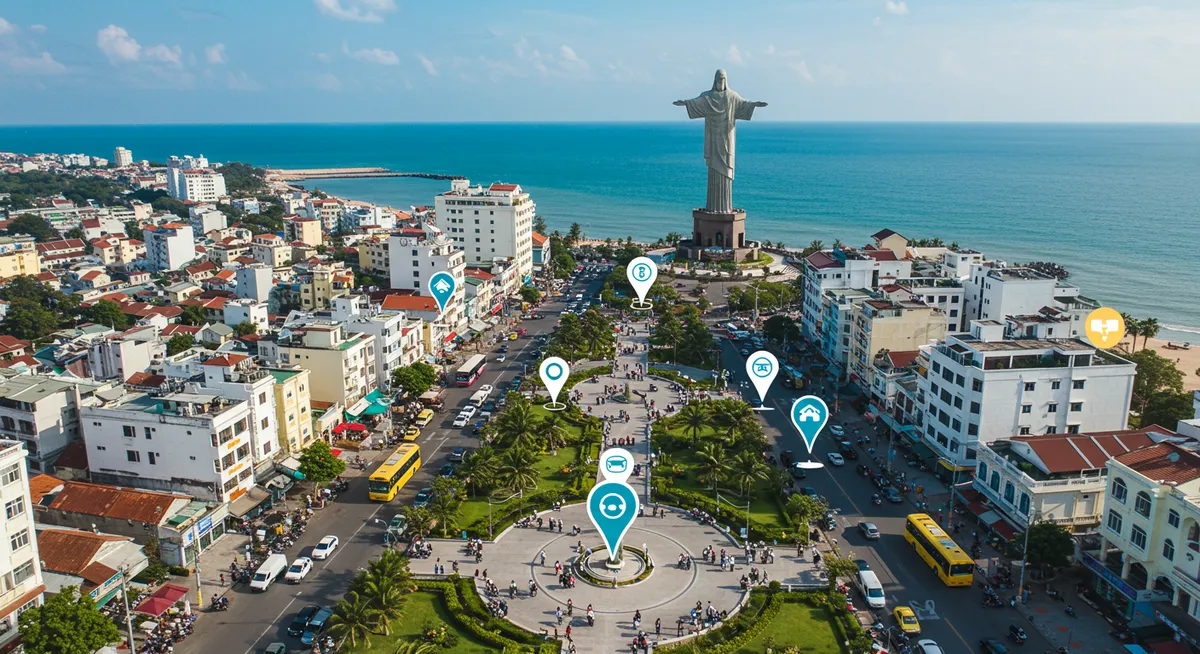
- Small Mountain (Núi Nhỏ): This prominent hill, located between the two beaches, is a walking tour highlight. It’s home to the iconic Jesus Christ Statue and the historic Vung Tau Lighthouse. Ascending Small Mountain involves moderate climbs via paved roads and stairs, rewarding walkers with breathtaking panoramic views of the city, coastline, and surrounding ocean. Routes up Núi Nhỏ are distinct, often forming a dedicated segment of a walking tour, with meeting points typically at its base.
- Big Mountain (Núi Lớn): Forming the northern backdrop to the city, Núi Lớn is larger and less developed for tourist walking. While it offers some challenging hiking trails, most general walking tours focus on the more accessible routes around the city and Small Mountain. Its presence is more about defining the peninsula’s natural boundary.
- Central City Area: Nestled between Front Beach and the base of Small Mountain, this is the bustling heart of Vung Tau. It’s where you’ll find local markets, colonial architecture, pagodas, and vibrant street life. Walking through this area connects the two beaches and the mountain, offering a glimpse into daily Vietnamese life and historical context. Many tours will naturally weave through these streets, transitioning from coastal paths to urban exploration.
Understanding this layout is crucial for planning your routes. A typical day might involve a morning climb up Small Mountain for views, followed by a descent into the central city for a local lunch, and an afternoon stroll along either Front or Back Beach. Nghinh Phong Cape, a stunning rocky headland that connects the two beaches and sits at the foot of Small Mountain, offers incredible views and is a natural transition point between the different coastal walks.
Actionable Tip: While Vung Tau is quite walkable, be mindful of the significant elevation changes if your route includes climbing Small Mountain. Always wear comfortable, supportive footwear suitable for both flat promenades and uphill ascents. For longer transfers between the very distinct areas (e.g., from the far end of Back Beach to Front Beach), a short Grab ride can save energy, allowing you to maximize your walking exploration within each zone.
Official Walking Tour Meeting Points: Your Starting Line
🎯 Insider Tip: Discover the best Vung Tau experiences with Viator Tours!
Embarking on a Vung Tau walking tour promises an immersive journey through this charming coastal city. Your adventure begins long before you take your first step on the tour itself – it starts with finding your official meeting point. Knowing precisely where to go, and how to get there, is crucial for a smooth and stress-free start to your Vung Tau exploration. Tour operators in Vung Tau typically choose easily identifiable, centrally located, and iconic landmarks to ensure everyone can gather with ease.
Here are some of the most common and popular meeting points you might encounter for your Vung Tau walking tour, along with practical tips to ensure you’re on time and ready to go:
- The Base of the Jesus Christ Statue (Tượng Chúa Kitô): This colossal statue perched atop Nui Nho (Small Mountain) is Vung Tau’s most famous landmark. Its base, often near the ticket booth or the start of the stairs leading up, is a very popular and unmistakable meeting spot. If your tour includes a panoramic view or a historical deep dive into the statue’s significance, this will be your starting line. Accessing this point typically involves a short taxi or Grab ride up the mountain road.
- Front Beach Park (Bãi Trước): As the vibrant heart of downtown Vung Tau, Front Beach Park is a bustling hub and a logical choice for many tours. You might be asked to meet near the ferry terminal (specifically, the Hydrofoil or Catamaran terminals if arriving by boat from Ho Chi Minh City), or by a specific statue within the park, such as the prominent Trần Hưng Đạo Statue. Its central location makes it highly accessible by various transport options, including local taxis, ride-sharing services like Grab, or even by foot if your accommodation is nearby.
- Vung Tau Lighthouse Entrance: Offering breathtaking views, the Vung Tau Lighthouse (Hải Đăng Vũng Tàu) is another iconic landmark. Meeting points are often specified near its entrance or the small café located nearby, offering a chance to enjoy the vista before your tour truly begins. Reaching the lighthouse requires a short, winding ascent, best done via taxi or Grab, which can drop you directly at the entrance area.
- Back Beach Promenade (Bãi Sau): If your tour focuses on Vung Tau’s expansive coastline, resort areas, or local seafood scene, the Back Beach promenade is a common meeting point. Operators often designate a spot near major hotels (e.g., The Imperial, Pullman Vung Tau) or specific beach access points along Thùy Vân Street. This area is easily reachable by taxi or Grab from anywhere in the city.
- Specific Well-Known Cafes or Restaurants: For smaller, specialized, or food-focused tours, your guide might choose a particular café or restaurant in a central area like Nguyễn Du Street or Trương Công Định Street. These spots offer a comfortable place to gather, perhaps enjoy a welcome drink, and ensure a more intimate start to your tour. Always confirm the exact name and address if this is your designated spot.
Your Actionable Advice for a Perfect Start:
- Confirm, Confirm, Confirm: Always, and we mean always, double-check the exact address or specific landmark with your tour operator. This information will be clearly stated on your booking confirmation or voucher. Don’t rely on general directions; look for precise details.
- Arrive Early: Aim to be at your meeting point 10-15 minutes before the scheduled start time. This allows for buffer time in case of unexpected Vung Tau traffic (especially on weekends), gives you a moment to locate your guide (they often carry signs or wear company uniforms), use a restroom if needed, and simply settle in before the tour begins.
- Transportation Strategy: Consider how you’ll get to your meeting point. Taxis and Grab (car or motorbike) are widely available and affordable in Vung Tau. Factor in travel time, especially if your meeting point is on one of the mountains or across town. Having a local SIM card for data or pre-downloaded offline maps can be incredibly helpful for navigation.
- Have Contact Info Handy: Keep the tour operator’s contact number (and your guide’s, if provided) readily accessible on your phone, just in case you run into any last-minute issues.
By following these simple steps, you’ll ensure your Vung Tau walking tour kicks off without a hitch, setting the stage for an unforgettable exploration of this captivating Vietnamese city.
Navigating Vung Tau: Transport Options to Your Meeting Point
Arriving at your Vung Tau walking tour meeting point stress-free is key to starting your adventure right. Vung Tau offers a variety of transport options, each with its own advantages, ensuring you can reach your designated spot comfortably and on time.
Taxis & Ride-Hailing Apps (Grab/Go-Jek)
For unparalleled convenience and comfort, taxis and ride-hailing apps are your top choice in Vung Tau. Grab is the dominant app here, widely used and reliable for both cars and motorbikes. Simply download the app, input your tour’s meeting point address, and a fixed fare will be displayed upfront. Payment can be made by linking a credit/debit card, or opting for cash, which is still very common and often preferred by drivers. Be mindful of surge pricing during peak hours or bad weather, though it’s usually reasonable. Traditional taxis from reputable companies like Mai Linh (green cars) or Vinasun (white cars) are also readily available. Always ensure the meter is running, or agree on a fare beforehand, and don’t hesitate to point out your destination on a map to the driver.
Motorbike Taxi (Xe Om)
For solo adventurers seeking a quick, authentic, and budget-friendly ride, a motorbike taxi (Xe Om) is a Vung Tau staple. You can hail independent drivers on virtually any street corner or, for added safety and convenience, use GrabBike/GoBike via their respective apps. If hailing a freelance driver, *always* negotiate and agree on the fare *before* you hop on. Safety first: Insist on wearing a helmet – it’s mandatory by law for both rider and passenger and crucial for your well-being. Hold on tight and be aware of your surroundings, as traffic can be dynamic.
Cyclo (Xích Lô)
Embrace Vung Tau’s old-world charm with a leisurely cyclo ride. These iconic three-wheeled rickshaws are perfect for short distances, especially around the scenic Front Beach (Bãi Trước) area. They offer a unique, slow-paced perspective of the city but aren’t ideal if you’re rushing to a meeting point from afar. Key tip: As with Xe Om, confirm and agree upon the price with the driver before beginning your journey to avoid any misunderstandings upon arrival. They are more for a relaxed experience than a direct commute.
Local Public Bus
While Vung Tau does have a local bus network, its utility for tourists specifically reaching a tour meeting point is quite limited. Routes can be complex, and schedules might not align perfectly with your tour’s start time, making it less reliable for punctual arrivals. This option is generally more suited for long-term visitors or those looking for a very budget-conscious, albeit less direct, way to explore. For the purpose of punctually reaching your walking tour, we recommend other more convenient methods.
Walking from Your Hotel
If your accommodation is centrally located, particularly around Front Beach or within a reasonable radius of your tour’s meeting point, walking can be an excellent option. Vung Tau is relatively compact in its main tourist areas. Before setting out, check the distance on Google Maps (e.g., a 15-20 minute walk is usually comfortable). Consider the time of day: mornings are pleasant, but midday heat and humidity can be intense. Ensure sidewalks are accessible, and be cautious when crossing busy streets, as traffic can be lively. Walking offers a fantastic prelude to your tour, allowing you to absorb the local atmosphere at your own pace and discover hidden gems.
Safety & Practical Tips for Walkers in Vung Tau
A Vung Tau walking tour offers an immersive experience, but to ensure it’s both enjoyable and safe, a little preparation goes a long way. Heed these practical tips to make the most of your explorations.
Sun Protection & Hydration
Vung Tau’s tropical climate means sunshine is abundant, often intense, especially between 10 AM and 3 PM. Protect yourself from the strong UV rays and heat:
- Hat & Sunglasses: A wide-brimmed hat and UV-protective sunglasses are non-negotiable.
- Sunscreen: Apply high-SPF sunscreen generously to all exposed skin and reapply regularly, especially if you sweat a lot.
- Carry Water: Staying hydrated is paramount. Always carry a refillable water bottle. You’ll find many small shops (tạp hóa) and street vendors selling bottled water or fresh coconut water (nước dừa), which is incredibly refreshing. Consider starting your day with a large bottle and refilling as needed.
Footwear is Paramount
Comfortable, broken-in walking shoes or sturdy sandals are your best friends in Vung Tau. While the city boasts some lovely wide promenades along the beachfront, you’ll also encounter uneven sidewalks, occasional construction, and unpaved paths in older areas or near attractions. Good support and comfort will prevent blisters and fatigue, allowing you to walk further and enjoy more.
Navigating Vung Tau Traffic
Vietnamese traffic can seem chaotic to newcomers, but there’s a method to the madness, especially with the sheer volume of motorbikes. Patience and predictability are key when crossing streets:
- Walk Slowly & Predictably: Don’t sudden stop, run, or make erratic movements. Maintain a slow, steady pace and let the motorbikes flow around you. Many drivers are skilled at anticipating pedestrian movement.
- Make Eye Contact: Try to make eye contact with approaching drivers if possible.
- Utilize Crosswalks: While not always strictly adhered to, crosswalks offer a designated (and sometimes slightly safer) spot to cross.
- Be Aware: Always be aware of your surroundings; traffic can come from unexpected directions, even on smaller streets.
Local Etiquette
Showing respect for local customs enhances your experience and is deeply appreciated by residents:
- Dress Modestly: When visiting religious sites like the Jesus Christ Statue, Niet Ban Tinh Xa Pagoda, or Linh Son Co Tu Pagoda, ensure your shoulders and knees are covered. It’s polite to remove your shoes before entering temples.
- Polite Interactions: A smile goes a long way. Politeness and patience are valued in interactions, especially with vendors or service staff.
Basic Vietnamese Phrases
Learning a couple of basic phrases will often open doors to warmer interactions and show your appreciation for local culture:
- Xin chào (sin chow): Hello
- Cảm ơn (gahm un): Thank you
Locals will often respond with genuine delight at your effort.
Emergency Contacts
While Vung Tau is generally safe for tourists, it’s wise to be prepared:
- Local Police: Dial 113 for police emergencies.
- Medical Emergency: Dial 115 for ambulance services.
- Tour Guide/Hotel Contact: Always have your tour guide’s phone number or your hotel’s front desk number readily available in your phone. They can assist with translation or directions in a pinch.
Staying Connected
Your smartphone is a powerful tool for navigation and communication:
- Portable Charger: Walking and using GPS/camera apps can drain your phone battery quickly. A fully charged portable power bank is invaluable.
- Local SIM Card: Consider purchasing a local SIM card upon arrival for affordable data, essential for using Google Maps or translation apps. They are widely available at airports and local phone shops.
Connecting with Local Vung Tau Walking Tour Providers
Once you’re ready to lace up your walking shoes and explore Vung Tau on foot, the next crucial step is connecting with reputable local tour providers. A well-chosen walking tour can transform your visit, offering insights you wouldn’t get exploring solo and introducing you to hidden gems. Here’s how to find and book the perfect Vung Tau walking experience:
Online Platforms & Local Websites
The digital realm is an excellent starting point for your search. Global platforms like Viator and TripAdvisor are prime resources, featuring a wide array of tours offered by local Vung Tau operators. Use their search functions to filter by “Vung Tau walking tour” and pay close attention to user reviews. Look for tours with consistent five-star ratings and comments that specifically praise the guide’s knowledge, the itinerary, and the overall experience. Besides these aggregators, a quick search for “Vung Tau local tour companies” or “free walking tours in Vung Tau” might lead you to the websites of smaller, independent operators. Booking directly can sometimes offer better rates or more personalized service, and their sites often provide richer detail about their specific offerings.
Hotel Concierge & Local Travel Agencies
Don’t underestimate the power of local connections. Your hotel concierge in Vung Tau is often an invaluable resource, frequently having established partnerships with trusted local tour operators. They can provide recommendations, share brochures, and even assist with bookings. Similarly, travel agencies located within Vung Tau are another avenue. While less common for walking tours specifically, they can still point you towards reputable providers or even help arrange a custom itinerary if you have specific interests in mind. This method offers the benefit of face-to-face interaction and immediate answers to your questions.
Types of Walking Tours to Explore in Vung Tau
Vung Tau offers a diverse palette of experiences best discovered on foot. When looking for a tour, consider what aspect of the city you’re most eager to delve into:
- Food Tours: Immerse yourself in Vung Tau’s culinary scene, famous for its fresh seafood and local delicacies like Banh Khot. A food walking tour will take you through bustling markets and street food stalls, allowing you to taste authentic flavors and learn about Vietnamese ingredients.
- Historical & Cultural Tours: Journey through Vung Tau’s past, visiting landmarks such as the White Palace (Bach Dinh), the Vung Tau Lighthouse, and the Christ the King statue. These tours often weave in stories of French colonial influence, wartime events, and local legends, bringing the city’s rich history to life. Explore local temples like Linh Son Co Tu or Nirvana Pagoda for cultural insights.
- Scenic & Mountain Treks: For those who love stunning views, tours focusing on Vung Tau’s hills are ideal. Walk up Small Mountain (Nui Nho) to the Christ the King statue or Big Mountain (Nui Lon) for panoramic vistas of the coastline and city. These tours often combine gentle exercise with breathtaking photo opportunities.
What to Look For in a Quality Tour
To ensure a fantastic walking tour experience, keep these key factors in mind when making your selection:
- Small Group Sizes: Opt for tours that advertise small group sizes. This allows for a more intimate experience, better interaction with your guide, and the flexibility to ask questions without feeling rushed.
- English-Speaking Guides: Unless you’re fluent in Vietnamese, an articulate, knowledgeable English-speaking guide is essential. They are your window into local culture, history, and daily life.
- Clear Itineraries: A well-defined itinerary outlines exactly what you’ll see, the duration, and what’s included (e.g., entrance fees, water, snacks). This transparency helps manage expectations and ensures the tour aligns with your interests. Confirm the starting point and any transport arrangements for connecting to the tour’s meeting point.
- Good Reviews: Beyond just star ratings, read the specific comments. Are people consistently praising the guide’s personality, the pace of the walk, or the unique insights provided? Look for recent reviews to ensure the quality is consistent.
By taking these steps, you’ll be well-equipped to find a Vung Tau walking tour that offers a memorable and enriching exploration of this charming coastal city.
Beyond the guided Tour: Self-Guided Walking Ideas
🎯 Insider Tip: Discover the best Vung Tau experiences with Viator Tours!
While Vung Tau offers excellent guided walking tours, some of the most rewarding explorations come from striking out on your own. Self-guided walks allow you to set your own pace, linger longer at spots that capture your interest, and truly immerse yourself in the city’s rhythms. Here are some fantastic ideas for independent walking adventures:
The Gentle Rhythm of the Front Beach Promenade (Bãi Trước)
For a leisurely introduction to Vung Tau, a stroll along the Front Beach (Bãi Trước) promenade is a must. This palm-lined stretch comes alive in the early morning with locals exercising and in the late afternoon as the sun dips. It’s perfect for people-watching, grabbing a coffee from a roadside vendor, or simply enjoying the sea breeze. The paved walkway extends for a considerable distance, offering uninterrupted views of the bay and distant fishing boats. It’s an ideal spot to observe daily life unfolding at a relaxed pace.
Ascending Small Mountain: Lighthouse & Jesus Christ Statue
Challenge yourself with a walk up Small Mountain (Núi Nhỏ) to visit two of Vung Tau’s iconic landmarks. The ascent to the Vung Tau Lighthouse is via a well-paved road, offering increasingly spectacular panoramic views. From the lighthouse area, continue towards the Jesus Christ Statue (Tượng Chúa Kitô Vua), which involves a climb primarily via steps. The reward is an even more expansive vista and the unique chance to climb inside the statue for distinct perspectives. Remember comfortable walking shoes, water, and consider starting your ascent in the cooler parts of the day (early morning or late afternoon).
Sensory Journey Through Local Markets
Dive deep into Vung Tau’s authentic local life by walking through its bustling markets. The Xom Luoi Seafood Market (Chợ Xóm Lưới) near Front Beach is a vibrant experience, particularly in the mornings when the fresh catch arrives. Wander through stalls piled high with exotic seafood, observe locals, and soak in the energetic atmosphere. For a broader local experience, navigate to the main Vung Tau Market (Chợ Vũng Tàu). Here, you’ll find everything from fresh produce to textiles and countless food stalls. Don’t hesitate to try some local snacks from the vendors – just point and smile! Be mindful of your belongings in these crowded, but rewarding, areas.
The Expansive Beauty of Back Beach (Bãi Sau)
If you prefer a longer, more uninterrupted stretch of sand and sea, head to Back Beach (Bãi Sau). This extensive coastline is popular for swimming and offers a vast expanse for walking. Unlike the more bustling Front Beach promenade, a stroll along Back Beach provides a sense of open space and tranquility. You can walk for miles along the shoreline, feeling the sand between your toes and enjoying the refreshing sea air. It’s an ideal spot for a morning jog or a peaceful sunset walk, often with fewer crowds than its counterpart.
Essential Navigation: Using Offline Maps
For all self-guided explorations, having reliable navigation is key. We highly recommend downloading offline maps of Vung Tau before you head out. Apps like Google Maps and Maps.me allow you to save entire city maps to your device, ensuring you can navigate even without an internet connection or if your data signal is weak. This is incredibly useful for finding specific addresses, pinpointing nearby cafes or restrooms, or simply re-orienting yourself if you wander off the beaten path. Always have your phone charged, and consider carrying a portable power bank for longer walks.
Accessibility Considerations for Walkers
Vung Tau offers a delightful pedestrian experience, but it’s important to set realistic expectations regarding accessibility, especially for those with mobility considerations. While many areas are flat and pleasant for a stroll, certain popular landmarks and general street conditions can present challenges.
Uneven Pavements and Obstacles
Throughout Vung Tau, the general walking environment can be quite varied. Main thoroughfares might offer relatively smooth sidewalks, but many side streets, residential areas, and older parts of the city feature uneven pavements, cracked tiles, missing sections, and occasional potholes. You’ll also frequently encounter obstacles such as parked motorbikes, street food vendors spilling onto the sidewalk, and even construction materials. Maintaining awareness of your surroundings and watching your step is key to a comfortable walk here.
Iconic Climbs: Steps to Landmarks
Some of Vung Tau’s most famous attractions involve significant climbs, primarily via steps:
- Jesus Christ Statue: Reaching the base of this majestic statue requires a substantial ascent of hundreds of steps. The path is well-maintained but steep, and there are multiple rest stops along the way. However, for anyone with knee issues, heart conditions, or significant mobility limitations, this climb can be very challenging and should be approached with caution or opted out of.
- Vung Tau Lighthouse: While less strenuous than the Jesus Christ Statue, accessing the lighthouse also involves a winding road uphill followed by steps to reach the top. It offers incredible panoramic views, but again, consider your physical condition before attempting the ascent.
For individuals keen on seeing these sights without the climb, consider viewing them from a distance from accessible viewpoints, or utilizing local taxis/Grab to get as close as possible to the base before deciding on the final ascent.
General Walking Environment and Traffic
Vung Tau is a bustling Vietnamese city, and navigating its streets on foot means contending with local traffic. While drivers are generally accustomed to pedestrians, road crossings often lack dedicated signals and require careful observation of traffic flow. Sidewalks can be narrow, sometimes forcing pedestrians onto the road shoulder. Always be prepared for motorbikes using sidewalks as shortcuts, especially during peak hours. Good quality, comfortable, closed-toe walking shoes are highly recommended to navigate the diverse terrain and protect your feet.
Advice for Those with Mobility Issues
If you have mobility concerns, don’t let it deter you from enjoying Vung Tau, but do plan your walking tours carefully:
- Choose Flatter Routes: Opt for walking along the expansive promenades of Front Beach (Bai Truoc) or the flatter sections of Back Beach (Bai Sau). These areas offer wide, relatively even surfaces perfect for leisurely strolls and enjoy the sea breeze.
- Shorter, Focused Walks: Instead of long, multi-landmark tours, consider shorter walks focused on specific, accessible areas like a stroll through a local park or a visit to an accessible temple.
- Utilize Local Transport: Don’t hesitate to use Vung Tau’s readily available taxis or Grab (ride-hailing app for cars and motorbikes). They are very affordable and can take you directly to the entrance of most attractions, minimizing long walks on uneven terrain.
- Communicate with Tour Operators: If booking a guided tour, clearly communicate your accessibility needs beforehand. Reputable tour operators can often suggest modified itineraries or private tours tailored to your comfort and mobility level.
- Prioritize Comfort: Always wear supportive footwear and take frequent breaks. Stay hydrated, especially given Vung Tau’s tropical climate.
With a little preparation and awareness, Vung Tau can still be a fantastic walking destination for everyone, allowing you to immerse yourself in its unique charm at your own pace.
Frequently Asked Questions
Q: Is Vung Tau generally walkable for tourists?
A: Yes, many key areas like Front Beach, the central city, and parts of the Small Mountain are very walkable. However, be prepared for uneven pavements and busy traffic, especially outside of pedestrianized zones. Comfortable footwear is essential.
Q: What’s the best way to get to my walking tour meeting point in Vung Tau?
A: For convenience and safety, using ride-hailing apps like Grab (car or motorbike) or traditional taxis are highly recommended. They are affordable and reliable, ensuring you reach your meeting point on time.
Q: Are there public buses in Vung Tau that tourists can use?
A: Vung Tau does have a local bus system, but routes can be complex and less intuitive for tourists trying to reach specific walking tour meeting points directly. Grab or taxis are generally more efficient for visitors.
Q: What should I bring on a Vung Tau walking tour?
A: Essentials include comfortable walking shoes, a hat, sunglasses, sunscreen, a reusable water bottle, and a portable charger for your phone. A small backpack for these items is advisable.
Q: Is it safe to walk alone in Vung Tau, especially to meeting points early in the morning?
A: Vung Tau is generally considered safe for tourists. However, as with any city, exercise common sense. If walking alone to a meeting point very early or late, stick to well-lit main roads. For peace of mind, a short Grab ride is always a good option.
Vung Tau truly reveals its charm to those who explore it on foot. By understanding the city’s layout, knowing your transport options to meeting points, and embracing practical safety tips, you’re set for an unforgettable journey. Whether you join a guided tour or venture out independently, walking offers a unique opportunity to connect with Vung Tau’s culture, history, and stunning coastal beauty. Lace up your shoes, plan your route, and step into the heart of this vibrant Vietnamese city.