
Vientiane Food Tour: Best Walking Stops & Local Eats (2026)
Discover Vientiane’s culinary heart! This walking tour guide highlights the best local food stops, hidden gems, and practical tips for an unforgettable gastronomic adventure in Laos.
On this page
Vientiane, with its laid-back charm and compact city center, is an ideal destination for exploring on foot. Beyond its serene temples and French colonial architecture, the city boasts a vibrant food scene waiting to be discovered. This guide will help you navigate Vientiane’s delicious offerings, ensuring your walking tour is not just a feast for the eyes but also a delightful journey for your taste buds.
Key Tips and Takeaways
- Always carry small denominations of Lao Kip (LAK) for street food and small purchases.
- Stay hydrated: Drink plenty of bottled water, especially during the hotter parts of the day.
- Don’t shy away from busy street food stalls; high turnover often means fresh, safe food.
- Embrace the ‘eat as you go’ mentality: Try small portions from various vendors to sample more.
- Combine your food stops with nearby temples or attractions for a well-rounded exploration.
Why Vientiane is a Walker’s Food Paradise
Vientiane might not boast the dizzying energy of Bangkok or Ho Chi Minh City, and that’s precisely why it’s a walker’s ultimate food paradise. The Lao capital offers a unique blend of a supremely walkable layout, an enchantingly relaxed pace, and an astounding abundance of accessible street food stalls and charming local eateries. This combination makes it perfectly suited for a self-guided culinary exploration on foot, allowing you to truly immerse yourself in the city’s delicious offerings.
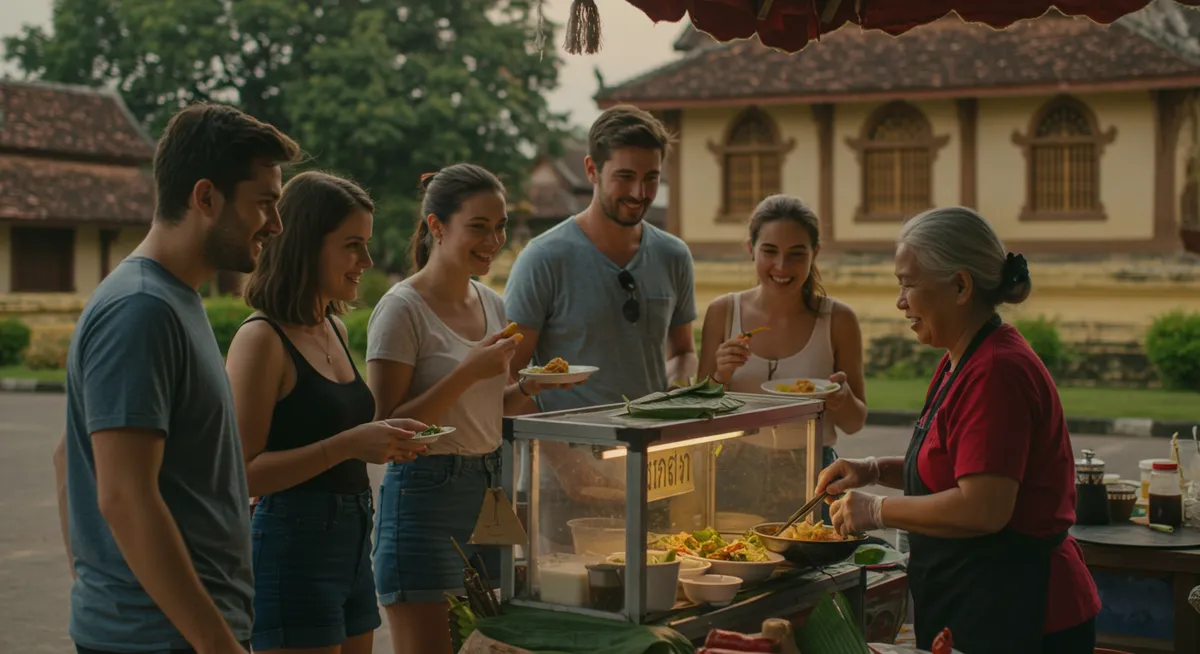
Picture this: You step out of your guesthouse, and within minutes, you’re greeted by the aroma of freshly grilled meats or simmering noodle soups. Unlike bustling metropolises where getting from one food stop to the next often requires a taxi or a long, hot trek, Vientiane’s city center is remarkably compact and flat. Its relatively quiet streets, framed by tree-lined boulevards and French colonial architecture, invite leisurely strolls. You can easily meander from a morning coffee shop to a lunch spot for a bowl of authentic khao piak sen (Lao noodle soup), then detour for a refreshing fruit shake, all without breaking a sweat or needing to hail a tuk-tuk.
The beauty of exploring Vientiane’s food scene on foot lies in the sheer serendipity of discovery. Every block seems to unveil a new opportunity to tantalize your taste buds. Keep an eye out for unassuming pushcarts selling crispy spring rolls (nem nuong), sizzling skewers of grilled pork (ping moo), or the fragrant Lao sausages (sai oua). Small, family-run restaurants, often identified by simple signs or just the inviting sight and smell of food, are everywhere. These local spots are where you’ll find authentic staples like sticky rice with spicy jaew bong (chili dip) or savory larb (minced meat salad).
As you wander, you’ll find refreshment opportunities aplenty. Pop into any roadside stall for a vibrant fresh fruit shake – mango, passion fruit, or durian are popular choices – or grab an iced Lao coffee, often served with condensed milk, providing a sweet energy boost. In the evenings, the Mekong Riverside Night Market transforms into a pedestrian food heaven, with dozens of stalls offering everything from grilled fish and seafood to various noodle dishes and desserts. This is an ideal spot to sample a bit of everything and soak in the lively local atmosphere, all within easy walking distance.
Actionable Tips for Your Walking Food Tour:
- Wear Comfortable Shoes: This is non-negotiable. You’ll be doing a lot of leisurely walking!
- Stay Hydrated: Carry a reusable water bottle or buy bottled water frequently. The tropical heat can be deceiving.
- Carry Small Bills: Most street food vendors prefer cash, and small denominations (10,000 to 50,000 LAK) are best.
- Embrace Spontaneity: Don’t be afraid to try a place that looks busy or smells amazing, even if you don’t know exactly what they’re serving. Pointing and smiling often works wonders.
- Pace Yourself: It’s a marathon, not a sprint! Take breaks, enjoy the moment, and savor each bite.
Vientiane truly rewards the curious walker. Its gentle pace and accessible culinary landscape invite you to embark on a delightful, unhurried food adventure, one delicious step at a time.
Morning Rituals: Coffee Culture & Breakfast Bites
As the cool Vientiane morning air begins to stir, so does the city’s vibrant culinary scene. Your walking tour begins with an immersion into the daily rituals of locals, where the enticing aroma of freshly brewed coffee mingles with the comforting scent of traditional breakfast dishes. This section of your Vientiane food tour is all about “Morning Rituals: Coffee Culture & Breakfast Bites,” a delightful exploration of the city’s unique blend of French colonial heritage and authentic Lao flavors.
Savoring French Colonial Echoes
Vientiane’s long-standing connection with France is wonderfully evident in its morning fare. You’ll quickly notice bakeries and street vendors selling crisp, golden-brown baguettes, often still warm from the oven. These aren’t just for sandwiches; many locals enjoy them plain or dipped into rich, sweetened condensed milk coffee. Seek out small, charming cafes that dot the city’s older streets, especially those near the Mekong Riverfront or around temples like Wat Si Saket. Here, you can indulge in French-style pastries – think croissants and pain au chocolat – often baked fresh daily, offering a delightful European twist to your Lao morning.
Authentic Lao Breakfast Staples
Beyond the French influence, Vientiane truly shines with its traditional Lao breakfast offerings, readily available at street-side stalls and bustling morning markets. Your must-try is Khao Piak Sen, a comforting and flavorful rice noodle soup. Picture a steaming bowl of chewy, hand-rolled tapioca noodles in a clear, savory broth, often topped with sliced pork or chicken, crispy fried garlic, fresh herbs, and sometimes even cubes of congealed blood (a common local addition, but entirely optional for your order). It’s the perfect hearty start to a day of exploration.
Another beloved companion to your morning coffee or soup is Pa Tong Ko. These are light, airy fried breadsticks, reminiscent of Chinese crullers (youtiao). Crispy on the outside and wonderfully soft within, they are perfect for dipping into your coffee or the broth of your Khao Piak Sen, soaking up all the delicious flavors.
Your Morning Market & Cafe Stops
For the quintessential Vientiane breakfast experience, make your way to the Talat Sao Morning Market (though the main building is a mall, the surrounding streets and older market sections are where the food action happens). This bustling hub awakens early with vendors serving everything from Khao Piak Sen to fresh fruits and sticky rice. It’s a sensory feast and an ideal spot to grab an authentic, affordable breakfast. Alternatively, explore the countless local coffee shops you’ll stumble upon; many will have a small selection of pastries or even some basic Lao breakfast dishes.
Mastering the Lao Coffee Order
No Vientiane morning is complete without a cup of local coffee. Lao coffee is typically strong, robust, and often brewed in a cloth filter, resulting in a rich, dark brew. When ordering, remember these phrases:
- Kafé dum: Black coffee
- Kafé nom sod: Coffee with fresh milk
- Kafé nom khon: Coffee with condensed milk (the most popular and sweetest option, often served black with a generous dollop of condensed milk at the bottom to stir in)
- Kafé yen: Iced coffee (often made with condensed milk)
Don’t be shy to point or use simple English; vendors are generally very accommodating. Embrace the sweetness of Kafé nom khon – it’s an iconic Vientiane taste!
Practical Walking Tips:
- Go Early: To truly experience the morning buzz and get the freshest food, aim to start your breakfast tour between 6:30 AM and 8:00 AM.
- Cash is King: Always carry small denominations of Lao Kip (5,000, 10,000, 20,000 kip notes) for street food and small cafes.
- Embrace the Local Scene: Don’t expect fancy plating. Most morning bites are served simply, designed for quick, delicious consumption. Find a plastic stool, join the locals, and enjoy the authentic atmosphere.
Lunchtime Lao Feasts: From Markets to Eateries
🎯 Insider Tip: Discover the best Vientiane experiences with Viator Tours!
After a morning of exploring Vientiane’s temples or colonial architecture, your stomach will undoubtedly be rumbling for an authentic Lao lunch. This isn’t just a meal; it’s an immersion into the vibrant flavors and daily life of the city, offering a perfect midday break on your walking tour.
Head to the bustling energy of Talat Sao Morning Market or the more local Khua Din Market for an unparalleled market-to-table experience. Here, amidst the colorful produce and fragrant spices, you’ll find numerous food stalls offering freshly prepared dishes. This is where locals eat, so you know it’s authentic and often incredibly affordable. Don’t be shy; point to what looks good, and watch as your meal is scooped or fried before your eyes. It’s a sensory overload in the best possible way!
When navigating the lunch scene, keep an eye out for these essential Lao delights:
- Laap (Lao Minced Meat Salad): Considered the national dish, Laap is a truly refreshing and flavorful minced meat salad, typically made with chicken, pork, beef, or even mushroom. It’s seasoned with fresh herbs like mint and cilantro, roasted ground rice, chili, and lime juice. Served at room temperature, it’s perfect scooped up with sticky rice (khao niao). Ask for your preferred protein, and don’t be afraid to try a spicier version!
- Tam Mak Hoong (Lao Green Papaya Salad): While similar to its Thai cousin, the Lao version is distinctively pungent, savory, and often much spicier, thanks to the generous use of fermented fish sauce (padaek) and sometimes fermented crab. It’s a riot of flavors – salty, sour, spicy, and a touch sweet. If you’re sensitive to heat, remember to say “mai phet” (not spicy).
- Mok Pa (Steamed Fish in Banana Leaves): For a milder, aromatic option, seek out Mok Pa. Flaky white fish, typically river fish, is marinated in a blend of herbs, spices, coconut milk, and dill, then wrapped in banana leaves and steamed until tender. The banana leaves impart a subtle, earthy aroma, creating a delightful parcel of moist, flavorful fish.
Beyond the markets, Vientiane boasts countless small, unassuming eateries that come alive during lunchtime. Look for places bustling with local office workers – a sure sign of good food and value. Many establishments offer daily lunch specials (aharn sao) that provide a quick and delicious meal.
Remember these walking tour tips for a seamless lunch experience:
- Hydration is Key: Vientiane’s heat can be intense. Grab a refreshing cold drink like a fresh coconut water, local iced coffee (cafe nom yen), or even a chilled Beerlao with your meal to rehydrate and cool down.
- Cash is King: While some larger establishments might accept cards, most market stalls and smaller eateries operate on cash only. Have plenty of small denominations (Kip) ready.
- Pace Yourself: Lunch is a great opportunity to rest your feet. Find a shaded spot or an eatery with fans, and truly savor the flavors. It’s part of the cultural experience!
- Language Barrier? Point and Smile: Don’t worry if you don’t speak Lao. Most vendors are friendly and used to non-Lao speakers. Pointing to dishes and using simple hand gestures works wonders.
Enjoy your authentic Lao feast – a true highlight of your Vientiane food adventure!
Afternoon Delights & Street Food Snacking
As the Vientiane sun begins its gentle descent, painting the city in softer hues, it’s the perfect cue to transition from substantial midday meals to the delightful world of afternoon treats and casual street food snacking. This part of your walking tour is all about refreshing your senses and embracing the easygoing pace of Lao life, one delicious bite or sip at a time.
The heat of the afternoon often calls for something incredibly refreshing, and Vientiane delivers in spades. Seek out the ubiquitous fresh fruit shake stalls, often brimming with vibrant displays of mango, passion fruit, dragon fruit, and pineapple. For just a few thousand kip, you can enjoy a custom-blended, ice-cold concoction that’s pure bliss. Another absolute must is the Kafé Nom Yen, or Lao Iced Coffee – a potent, sweet, and milky brew that will give you just the right jolt to continue your explorations. Keep an eye out for vendors pressing fresh Nam Oy (sugarcane juice) right before your eyes; it’s naturally sweet, incredibly hydrating, and surprisingly complex.
For something a little more substantial but still perfect for on-the-go snacking, turn your attention to the sizzling grills. Sai Oua, the famed Lao sausage, is an aromatic revelation. Packed with herbs like lemongrass, kaffir lime leaves, and dill, these grilled pork sausages are flavour bombs. You’ll often find them sold by the piece or skewer, ideal for sharing or savoring solo as you stroll. Alongside Sai Oua, look for other grilled skewers – from marinated chicken and pork to local meatballs, often served with a tangy and spicy dipping sauce.
No Vientiane afternoon snack session is complete without diving into the world of sweet sticky rice desserts. A true local delight is Khao Nom Krok, small coconut-rice pancakes. Cooked in charming dimpled pans, these bite-sized treats are often crispy on the outside, soft and chewy within, offering a delightful balance of sweet coconut milk and a hint of savory often from a touch of spring onion. You can find these at various morning markets and dedicated afternoon street stalls, emitting a sweet, inviting aroma.
Walking Tour Tips for Afternoon Snacking:
- Mekong Riverside Promenade: As evening approaches, this area transforms into a vibrant hub. It’s an excellent place to find an abundance of fruit shake stalls, grilled meats, and often street food vendors.
- Explore Side Streets: Don’t be afraid to venture down smaller neighborhood streets off the main thoroughfares (like those near Wat Mixay or around Rue Setthathirath). This is often where you’ll discover authentic, bustling local stalls with incredible prices.
- Look for Locals: A good rule of thumb for street food is to patronize stalls with a steady stream of local customers – it’s usually a sign of quality and freshness.
- Carry Small Bills: Most street food vendors deal exclusively in Lao Kip, and small denominations (10,000 to 20,000 LAK) are best for quick transactions.
- Stay Hydrated: While enjoying the snacks, remember to keep sipping on water. You’ll be doing a fair bit of walking, and the Vientiane heat can be deceptively intense.
Embrace the spontaneity of Vientiane’s afternoon food scene; it’s a delicious way to experience the city’s heartbeat beyond its main attractions.
Evening Flavors: Night Markets & Riverside Dining
As dusk paints the Mekong sky with fiery hues, Vientiane truly comes alive with the tantalizing aromas of evening street food. This section of your walking tour immerses you in the vibrant night market scene and delightful riverside dining, a quintessential Vientiane experience that offers a rich tapestry of flavors and local life.
Your primary destination for an evening feast will undoubtedly be the bustling Vientiane Night Market, stretching along the Mekong River promenade. While known for various wares, follow your nose to the dedicated food sections. Here, the air hums with sizzling woks, grilling meats, and the lively chatter of locals and travelers. It’s a sensory feast, a vibrant hub where the city’s culinary heartbeat is most palpable after dark.
Prepare to be spoiled for choice with an incredible array of street food specialties. Sample delicious ping kai (grilled chicken) and the aromatic sai oua (Lao pork sausage), often served with generous portions of sticky rice and a fiery jeow (dipping sauce). Keep an eye out for vendors expertly grilling fresh fish and seafood skewers, a popular and delicious option. For a refreshing treat amidst the warmth, indulge in a freshly blended fruit shake, made on the spot with local tropical fruits. No evening meal in Laos is truly complete without a chilled Beerlao, the country’s beloved brew. Find a spot on one of the ubiquitous small plastic stools or mats, often facing the river, and savor the local flavors as the sun dips below the horizon over Thailand across the Mekong – an unparalleled way to end your walking day.
While the main Night Market is a focal point, don’t hesitate to explore smaller, more localized food stalls and open-air BBQ restaurants that dot the riverside stretch. You might discover hidden gems offering sindat (Lao BBQ and hotpot, a communal dining experience) or unique noodle dishes that cater to local palates.
Practical Tips for Your Evening Feast:
- Navigating Crowds: The Night Market can get very busy, especially on weekends. Stick to wider paths, keep an eye on your belongings, and embrace the lively atmosphere as part of the authentic experience.
- Ordering: Most vendors understand pointing to what you want, and prices are usually displayed or easily quoted. A friendly “Sabai dee” (hello) and “Khop chai deu” (thank you) go a long way in showing appreciation.
- Sampling Strategy: Resist the urge to fill up at the first stall you encounter. Grab small portions from several vendors to taste a wider array of Lao culinary delights and truly maximize your food adventure.
- Seating: Expect informal setups – plastic chairs and low tables or mats on the ground are standard for street food dining. This casual approach is part of the charm.
- Hygiene: Opt for stalls with high customer turnover, indicating freshness, and where food is cooked fresh in front of you.
- Best Time to Go: Arrive around 5:30 PM – 6:00 PM as vendors are fully set up but before the peak crowds arrive, giving you more space and ease to browse and choose your evening meal.
Hydration & Comfort: Essential Walking Tour Tips
🎯 Insider Tip: Discover the best Vientiane experiences with Viator Tours!
Vientiane, with its laid-back charm, can still pack a punch with its tropical heat and humidity, especially during midday. To truly savor every bite and sight on your walking food tour, prioritizing your comfort and hydration is paramount. Think of proper preparation as your secret ingredient for an amazing culinary adventure through the city’s flavors.
The golden rule for any walking tour in Vientiane is to carry plenty of water. Even with numerous food stops, you’ll be actively moving under the sun. A reusable water bottle is ideal; you can often refill at larger cafes or shops, or buy chilled bottles from convenience stores. Beyond plain water, embrace the local options! Freshly pressed sugarcane juice (nam oi), invigorating lime juice (nam manao), or a refreshing coconut water (mak pào) purchased directly from a street vendor are delicious ways to stay hydrated and experience local flavors.
Vientiane’s sun can be intense year-round. Protect yourself with a wide-brimmed hat, sunglasses, and a high-SPF sunscreen applied generously before you head out. Consider lightweight, breathable clothing – light-colored cotton or linen is perfect. While short sleeves are common, a light long-sleeved top can offer excellent sun protection without feeling too hot, especially during peak sun hours.
Your feet will be doing most of the work, so comfortable, well-broken-in walking shoes are non-negotiable. Leave the flip-flops for the riverside relaxation; uneven pavements and unexpected puddles can quickly turn an enjoyable walk into a nuisance. Build short, strategic breaks into your itinerary. Many food stops inherently offer a chance to sit, relax, and refuel. If you need an extra moment, duck into a shaded temple courtyard or one of Vientiane’s many charming cafes for a Lao coffee or a fresh fruit shake. Popular spots along the Mekong Riverfront or near Wat Si Muang offer pleasant places to pause and people-watch.
Remember, your food tour isn’t just about eating; it’s also about refreshment! Many of Vientiane’s local specialties double as perfect pick-me-ups. Aside from the aforementioned juices and coconut water, look out for:
- Iced Lao Coffee (Kafae Yen): A strong, sweet, and cooling treat from almost any street stall or cafe.
- Fresh Fruit: Stalls bursting with ripe mangoes, papayas, and watermelons are everywhere – grab a bag of pre-cut fruit for an instant energy boost.
- Bò Tòy (Iced Grass Jelly): A unique, subtly sweet, and wonderfully refreshing dessert found at street markets.
- Cooling Noodle Soups: While hot, a light bowl of khao piak sen can be surprisingly rehydrating and restorative, offering a moment to sit down and recharge.
Navigating the Local Food Scene: Expert Tips for Walkers
Navigating Vientiane’s vibrant food scene on foot is arguably the best way to truly taste the city. From bustling morning markets to lively riverside night stalls, every corner offers a new culinary adventure. Here are our expert tips to ensure your walking tour includes delicious and authentic food stops.
Ordering Like a Local & Understanding Portions
Don’t be shy! While English isn’t universally spoken at every street food stall, pointing to what you want is perfectly acceptable, and a smile goes a long way. Many vendors understand basic numbers or gestures. Lao cuisine often features smaller, tapas-style portions, which is fantastic for a walking tour as it encourages you to sample a variety of dishes without getting too full too quickly. Embrace the opportunity to try a bit of everything, from savory snacks to sweet treats. Remember that sticky rice (Khao Niao) is the staple and usually comes in a small woven basket, meant to be eaten by hand.
Managing Hygiene Expectations at Street Stalls
The golden rule for street food hygiene anywhere, and especially in Vientiane, is to follow the locals. Stalls with a consistent stream of customers usually indicate fresh ingredients and high turnover, reducing the risk of food sitting out. Look for vendors who cook food to order, use separate utensils for raw and cooked items, and maintain reasonably clean surfaces. Boiling hot dishes are generally safer bets. Always carry hand sanitizer for pre- and post-meal cleanliness.
Recognizing Popular Local Spots & Specialties
Your nose and eyes will be your best guides. Seek out stalls specializing in just one or two dishes; these often represent the pinnacle of a vendor’s culinary skill. A stall solely dedicated to Khao Piak Sen (Lao noodle soup) or Khao Nom Krok (sweet coconut pancakes) is likely to be exceptional. Keep an eye out for queues – a line of locals is always a good sign! Popular Vientiane specialties you absolutely must try include:
- Larb: Laos’ unofficial national dish, a flavorful minced meat (or fish) salad mixed with herbs, lime, and chili. Often served with sticky rice.
- Khao Piak Sen: A comforting, thick rice noodle soup, perfect for breakfast or a light lunch.
- Tam Mak Hoong: Spicy green papaya salad, incredibly fresh and vibrant. You can specify your spice level!
- Sai Oua: Delicious grilled Lao sausage, packed with herbs and spices.
- Khao Nom Krok: Sweet and crispy coconut pancakes, often cooked street-side in a special pan.
Basic Lao Phrases for Food Orders
Armed with a few basic Lao phrases, you’ll enhance your interactions and show respect for the local culture. Locals genuinely appreciate the effort!
- Khop Chai: Thank you (very useful!)
- Ao ni: I want this (use while pointing)
- Ped noi: A little spicy
- Bo ped: Not spicy
- Tao dai?: How much?
Recommended Food & Refreshment Stops on Your Walk
Your Vientiane walking tour is as much a culinary journey as it is a sightseeing one. Keep an eye out for these refreshment and food opportunities:
- Riverside Night Market: After dusk, the Mekong riverside transforms into a bustling food paradise. It’s an excellent place for a varied dinner, with countless stalls offering everything from grilled fish and meats to fresh fruit shakes and local desserts.
- Morning Market (Talat Sao Area): Visit early for an authentic breakfast experience. You’ll find stalls selling hot bowls of Khao Piak Sen, sweet sticky rice snacks, and strong Lao coffee.
- Street Fruit & Refreshment Stalls: Throughout the day, you’ll encounter vendors selling refreshing drinks. Look for stalls offering freshly pressed sugarcane juice, fresh coconut water (served right from the coconut!), or blended fruit shakes (e.g., mango, passion fruit). These are perfect for hydrating and cooling down on a warm Vientiane day.
Embrace the adventure, be open to new flavors, and enjoy the delicious journey through Vientiane’s food landscape!
Beyond the Plate: Integrating Food with Sightseeing
Vientiane’s charm isn’t just in its golden temples and colonial architecture; it’s deeply woven into its culinary fabric. To truly immerse yourself in the city, combine your sightseeing adventures with strategic food and refreshment stops. This isn’t just about grabbing a bite; it’s about punctuating your explorations with authentic flavors, local interactions, and delightful breaks that enhance the entire journey.
Here are a few integrated walking routes that blend Vientiane’s must-see landmarks with delicious local discoveries:
Route 1: Central Cultural Gems & Riverside Delights
This route focuses on the heart of Vientiane, ideal for a leisurely morning or afternoon stroll, culminating in a beautiful riverside evening.
- Morning Start (9:00 AM – 10:30 AM): Wat Sisaket & Haw Phra Kaew. Begin your exploration at the serene Wat Sisaket, famous for its thousands of Buddha images, and then cross the street to the exquisite Haw Phra Kaew, the former royal temple.
- Food & Refreshment Stop (10:30 AM – 11:30 AM): Breakfast/Coffee Near Temples. As you exit, look for small, local eateries on the side streets. This area often has humble stalls serving delicious breakfast options like Khao Piak Sen (Lao noodle soup with chewy rice noodles) or sweet Lao coffee with condensed milk. A well-known local spot might be a few blocks north or west of the Presidential Palace.
- Mid-day Stroll (11:30 AM – 1:00 PM): Presidential Palace & Mekong Riverside. Walk south past the elegant Presidential Palace (view from outside) towards the majestic Mekong River. The journey itself offers glimpses of Vientiane’s administrative heart and tree-lined avenues.
- Lunch/Snack Stop (1:00 PM – 2:00 PM): Mekong Riverside Street Food. The Mekong promenade comes alive with vendors. This is your chance to sample fresh fruit shakes, grilled sticky rice, or small skewers of grilled meats. For a more substantial lunch, find a casual restaurant overlooking the river offering fresh fish dishes, larb (minced meat salad), or tam mak hoong (papaya salad).
- Evening Wind-down: Dinner by the Mekong. As dusk approaches, the riverside restaurants offer a perfect setting for dinner, often with live music and stunning sunset views over the Mekong. Indulge in local favorites like grilled Mekong river fish or a Beerlao.
Route 2: Grandeur of Patuxay & That Luang Flavors
This route covers Vientiane’s grandest monuments, which are slightly further afield. While the distance between Patuxay and That Luang might warrant a short tuk-tuk ride for comfort, the areas around them are perfectly walkable for food exploration.
- Morning Start (9:30 AM – 11:30 AM): Patuxay & Surrounds. Begin at the iconic Patuxay, Vientiane’s Victory Gate. Climb to the top for panoramic city views. Explore the surrounding Patuxay Park with its fountains.
- Food & Refreshment Stop (11:30 AM – 12:30 PM): Coffee & Snacks near Patuxay. There are several modern coffee shops and small eateries in the vicinity of Patuxay, perfect for a refreshing iced coffee or a light snack before you head towards That Luang. Look for local bakeries for a sweet treat.
- Journey & Arrival (12:30 PM – 1:00 PM): To That Luang. A tuk-tuk ride (around 10-15 minutes) is recommended to cover the 3-4 km to That Luang comfortably, especially during the hotter parts of the day.
- Lunch & Exploration (1:00 PM – 2:30 PM): That Luang & Nearby Eats. Spend time at the magnificent golden stupa of Pha That Luang, Laos’ national symbol. Around the stupa, you’ll find a scattering of local stalls and small restaurants. This is an excellent opportunity to try various grilled street foods, local noodle dishes, or a hearty plate of sticky rice with a side of Lao-style BBQ.
- Afternoon Treat: Fresh Fruit & Drinks. Vendors often sell fresh fruit (mango, pineapple, watermelon) and refreshing sugarcane juice or coconut water around these major tourist sites – perfect for rehydrating after your explorations.
Practical Tips for Food-Integrated Walking Tours:
- Stay Hydrated: Vientiane can be hot. Carry a reusable water bottle and refill it frequently, or buy bottled water from small shops.
- Comfortable Footwear: You’ll be doing a lot of walking, so prioritize comfort over style.
- Small Bills: Many street food vendors and small eateries prefer Lao Kip (LAK) in smaller denominations.
- Embrace Street Food: Don’t be afraid to try food from busy street stalls; high turnover usually means fresh ingredients. Look for where the locals eat!
- Pace Yourself: Vientiane’s relaxed pace is infectious. Don’t rush; allow time for spontaneous stops and discoveries.
- Snack Smart: Fruit vendors are abundant and offer a healthy, refreshing snack on the go.
By blending the visual splendor of Vientiane’s landmarks with its rich culinary landscape, your walking tour will transform into a multi-sensory journey, leaving you with unforgettable memories and a true taste of Lao culture.
Dietary Considerations & Eco-Conscious Choices
Navigating new culinary landscapes is one of the joys of a Vientiane walking food tour, but it’s important to do so mindfully – both for your own dietary needs and for the planet. Laos offers incredible flavors, and with a little preparation, everyone can savor them responsibly.
Catering to Dietary Needs
While Lao cuisine is incredibly diverse, common dietary restrictions like vegetarian, vegan, and gluten-free require a bit of awareness and communication. Don’t be shy about asking questions; most vendors are friendly and willing to accommodate where possible.
- Vegetarian & Vegan: Traditional Lao cooking often uses padek (fermented fish sauce) or nam pa (fish sauce) extensively, even in seemingly vegetarian dishes. Many dishes, however, can be adapted.
- Useful Phrases:
- “Bor sai seen” (no meat)
- “Bor sai gai” (no chicken)
- “Bor sai pla” (no fish)
- “Bor sai goong” (no shrimp)
- For strict vegans, also add “Bor sai nam pa” (no fish sauce) and “Bor sai khai” (no egg).
- Vientiane Options: Look for fresh spring rolls (often served with a separate dipping sauce), papaya salad (ensure no fish sauce/shrimp paste if vegan), and various stir-fried vegetable dishes. Many noodle soups (like Khao Piak Sen) can be made without meat, though the broth may still be meat-based unless specified. Vientiane has a growing number of dedicated vegetarian restaurants, particularly around the city center and near temples, which are excellent stops for guaranteed plant-based meals.
- Gluten-Free: Good news for gluten-free travelers! Sticky rice (Khao Niao), the staple of Lao cuisine, is naturally gluten-free. Many traditional dishes are also safe.
- Considerations: Be cautious with marinades (which might contain soy sauce) and some deep-fried items. Fresh grilled meats (like Ping Gai – grilled chicken) and salads like Larb (minced meat salad) or papaya salad are often safe, provided no soy sauce is added. Noodle soups typically use rice noodles, but always confirm.
- Useful Phrase: While there isn’t a direct equivalent for “gluten,” you can try “Bor sai paeng” (no flour), and point to relevant ingredients if needed. Stick to naturally GF dishes as much as possible for peace of mind.
Eco-Conscious Choices for a Greener Tour
Vientiane, like many Southeast Asian cities, faces challenges with single-use plastics. As you explore on foot, you have a unique opportunity to minimize your environmental footprint.
- Hydrate Smart: Vientiane’s climate requires frequent hydration. Instead of buying multiple plastic bottles, carry a reusable water bottle. Many guesthouses, cafes (like Common Grounds Cafe or Joma Bakery Cafe), and even some street vendors offer filtered water refills for a small fee or sometimes for free. This is a simple, impactful way to cut down on waste.
- Say No to Straws & Bags: When ordering a refreshing fruit shake or a cold drink, politely ask for “Bor ao lord” (no straw). For small purchases at markets or food stalls, decline plastic bags if you can carry the item easily.
- Support Local & Sustainable: Choose family-run eateries and vendors who use less packaging or more traditional methods. By supporting these businesses, you’re not only getting an authentic taste of Vientiane but also contributing to the local economy and often a smaller environmental footprint. Look out for market stalls that use banana leaves or reusable containers.
By being mindful of your dietary needs and making eco-conscious choices, your Vientiane food walking tour will be not only delicious but also a positive experience for both you and the beautiful city of Vientiane.
Frequently Asked Questions
Q: Is Vientiane generally safe for solo walking food tours?
A: Yes, Vientiane is considered very safe for walking, even for solo travelers. Petty crime is rare, but it’s always wise to be aware of your surroundings, especially in crowded night markets, and keep valuables secure.
Q: What are the absolute must-try Vientiane dishes during a food walk?
A: You absolutely must try Khao Piak Sen (Lao noodle soup), Laap (spicy minced meat salad, often considered the national dish), Tam Mak Hoong (spicy papaya salad), and grilled specialties like Sai Oua (Lao sausage) or grilled fish, often accompanied by sticky rice (khao niao).
Q: How do I ensure the street food is hygienic?
A: A good rule of thumb is to look for stalls that are popular and have a high turnover of customers, especially locals. This usually means the ingredients are fresh. Observe how the food is handled and cooked. Cooked-to-order dishes are generally safer.
Q: What is the best time of day to embark on a Vientiane food walk?
A: Mornings (7-10 AM) are great for breakfast items and coffee. Late afternoons to evenings (4-9 PM) are perfect for street food, night markets, and riverside dining as the weather cools down and the city comes alive with culinary activity.
Q: Can I find vegetarian or vegan options easily on a Vientiane food tour?
A: While traditional Lao cuisine is often meat-heavy, many dishes can be adapted. Look for ‘jay’ (vegetarian) signs, or ask for dishes ‘bor sai sin’ (no meat) or ‘bor sai paa’ (no fish sauce). Papaya salad, sticky rice, and many vegetable stir-fries are often easily made vegetarian.
Vientiane invites you to slow down, savor each moment, and most importantly, taste its unique flavors. Embarking on a walking food tour here is more than just eating; it’s an immersive cultural experience that connects you with the heart and soul of Laos. So lace up your shoes, prepare your appetite, and let Vientiane’s charming streets lead you on an unforgettable culinary adventure.