
Pakse Food Walk: Best Stops & Local Bites on Foot (2026)
Discover Pakse’s vibrant food scene on foot! Our guide highlights local specialties, recommended stops, and practical tips for an unforgettable culinary walking adventure.
On this page
Pakse, the charming capital of Champasak Province, is a gem for travelers who love to explore on foot. Beyond its riverside beauty and access to the Bolaven Plateau, Pakse offers an incredibly rich and accessible culinary landscape. This guide is crafted for the walking enthusiast, showing you how to seamlessly blend your urban exploration with delicious food and refreshing stops, ensuring you fuel your adventures with authentic Lao flavors. Get ready to embark on a walking tour that satisfies both your wanderlust and your taste buds!
Key Tips and Takeaways
- Always carry small Lao Kip notes for easy street food purchases.
- Prioritize hydration; fresh fruit shakes and local iced coffee are excellent choices.
- Don’t shy away from busy street food stalls – they often indicate the best quality and freshness.
- Embrace the local coffee culture; Pakse is a prime spot for it.
- Learn a few basic Lao phrases like ‘saap’ (delicious) and ‘khop jai’ (thank you) to enhance your experience.
The Pakse Walking & Eating Synergy
In Pakse, the very act of walking isn’t just a way to get around; it’s an intrinsic part of the culinary adventure. Unlike sprawling metropolises, Pakse’s charmingly compact layout makes it a dream for pedestrians, especially those whose senses are finely tuned to the call of local flavors. As you meander its tree-lined streets and riverside promenades, you’ll discover a natural, unforced synergy between exploration and eating – a rhythm unique to this Southern Lao gem.
Walking allows you to peel back the layers of Pakse’s everyday life, leading you to hidden culinary gems that a tuk-tuk or scooter might zip right past. It’s in the quiet side alleys where a grandmother meticulously rolls fresh spring rolls, or around a bustling corner where the aroma of sizzling Lao BBQ (ping gai or ping moo) wafts from a humble roadside grill. These aren’t just food stops; they’re impromptu cultural exchanges, opportunities to observe local life, and moments to share a genuine smile with a vendor as they hand you a steaming bowl of khao piak sen (Lao noodle soup).
The beauty of a Pakse walking tour is that your food breaks become organic pauses, dictated by appetite and discovery. Feeling peckish? A vibrant fruit stall bursting with mangoes, papayas, and dragon fruits is often just steps away. Need a caffeine kick? A local coffee shop, often just a few plastic stools and a simple counter, will serve you a robust Lao iced coffee with condensed milk, perfect for recharging. This isn’t about rigid restaurant reservations; it’s about following your nose and your curiosity.
Recommended Culinary Pit Stops on Foot:
- Morning Market & Surrounds: Start your day early, perhaps near the bustling Pakse Morning Market (though the market itself is less about prepared food and more about produce). The streets leading to and from it are dotted with small stalls serving up authentic, comforting breakfast dishes like khao piak sen or sticky rice with grilled pork. Look for the simple set-ups with plastic chairs – that’s where the magic happens.
- Riverside Strolls: As you wander along the Mekong and Xe Don riverbanks, particularly towards sunset, you’ll find numerous pop-up eateries and small restaurants. They offer fresh catches from the river, often grilled, alongside classic Lao dishes like larb (minced meat salad). This is a perfect spot to enjoy a meal with a view, watching local life unfold on the water.
- The Night Market Experience: No Pakse walking tour for foodies is complete without a visit to the Pakse Night Market (often located near the Champasak Palace Hotel or along the riverfront depending on the current setup). This is a sensory overload in the best possible way. Walk slowly, surveying the incredible array of street food: skewers of marinated meats, fresh seafood, vivid tropical fruit smoothies (Nam Vaan), crispy fried snacks, and sweet coconut pancakes. It’s an ideal place to sample a little bit of everything.
- Coffee Shops: Pakse is surrounded by the Bolaven Plateau, a renowned coffee-growing region. Numerous small cafes, many within easy walking distance in the town center, offer excellent local brews, from strong black coffee to creamy iced concoctions. They make for delightful pit stops to rest your feet and soak in the local atmosphere.
Practical Walking & Eating Tips:
- Wear Comfortable Shoes: You’ll be doing a lot of exploring!
- Carry Small Notes: Many street vendors prefer small denominations of Lao Kip for quick transactions.
- Hydrate: The tropical climate means staying hydrated is crucial. Look for vendors selling fresh coconut water or bottled water.
- Be Adventurous: Don’t be afraid to try something new, even if you don’t recognize it. Pointing and smiling often work wonders for ordering.
- Observe Local Crowds: A stall with a line of locals usually means the food is delicious and fresh.
Embracing the walk-and-eat synergy in Pakse transforms your trip from a mere visit into an immersive culinary journey, revealing the city’s true flavors one delicious step at a time.
Morning Fuel: Pakse Breakfast & Coffee Stops
A successful day of exploring Pakse on foot begins with a hearty and authentic Lao breakfast, perfectly paired with the city’s renowned coffee. As the sun rises and the city slowly awakens, you’ll find the streets buzzing with vendors setting up their stalls, ready to offer the first tastes of the day. This isn’t just about sustenance; it’s an immersion into the local rhythm and a truly essential stop on any Pakse walking tour.
One of the undisputed champions of Lao breakfast is Khao Piak Sen. This comforting, thick noodle soup, often made with chewy tapioca or rice noodles, is a staple. Served in a savory pork or chicken broth, it’s generously garnished with tender meat, meatballs, fried garlic, fresh herbs, and a squeeze of lime. Each spoonful offers a delightful mix of textures and flavors – warm, hearty, and incredibly satisfying. Look for small, unassuming eateries or bustling street carts near the main market or along Thanon 13 (Route 13) in the city center; the aroma alone will guide you.
Another beloved breakfast item you’ll spot everywhere are Pa Tong Koh, the Lao version of Chinese fried breadsticks. These golden, crispy dough sticks are often served in pairs, perfect for dipping into your Khao Piak Sen broth, a bowl of congee, or, most commonly, your morning coffee. They offer a delightful contrast of crispy exterior and soft, airy interior. Don’t be shy; grab a few and enjoy them fresh off the fryer.
For those preferring rice, Pakse offers a variety of local rice dishes. You’ll find stalls selling sticky rice (Khao Niao) served with grilled meats, savory dips (jeow), or even steamed fish wrapped in banana leaves (Mok Pa). These are excellent portable options for a walking tour, allowing you to fuel up while on the move, or to sit on a tiny plastic stool and soak in the morning atmosphere.
Beyond the food, Pakse’s robust coffee culture is an absolute highlight. Situated at the gateway to the Bolaven Plateau, one of Southeast Asia’s premier coffee-growing regions, the city prides itself on its strong, aromatic brews. Your morning coffee experience can range from a quick, potent shot at a street stall to a more relaxed affair in a small, local cafe. Typically, Lao coffee is a dark, strong roast, often served with condensed milk for a sweet, creamy kick, though black coffee is readily available for purists.
For an authentic experience, seek out the bustling street stalls or vendors within the local markets. Many offer a simple yet powerful brew in a small glass, perfectly complementing your breakfast. Small, family-run cafes also dot the city, providing a more comfortable setting to savor your cup. Don’t hesitate to point at what locals are drinking, and always have small kip notes ready for these affordable morning treats.
Walking Tour Tips for Morning Fuel:
- Go Early: Many breakfast spots and coffee stalls are at their freshest and most bustling between 6:30 AM and 9:00 AM. This is when you’ll find the best selection and most authentic local atmosphere.
- Observe and Point: Don’t worry if you don’t speak Lao. Look for busy stalls with locals eating – a clear sign of good food. Pointing at dishes or asking “How much?” with a smile will usually suffice.
- Combine Experiences: Grab a bowl of Khao Piak Sen from one vendor, then stroll a few meters to find a street coffee stall to complete your meal.
- Cash is King: Always carry small denominations of Lao Kip (5,000, 10,000, 20,000 LAK notes) as most street vendors and small cafes do not accept cards.
- Embrace the Stool: Don’t be surprised by the tiny plastic stools. Pull one up and enjoy the experience like a local.
Starting your day with these traditional Pakse flavors not only provides the energy for your walking adventures but also offers an invaluable glimpse into the daily life and culinary heart of the city. It’s an unmissable part of your Pakse food journey.
Midday Munchies: Lunch Spots on Your Pakse Walk
🌟 Local Expert Tip: Get the most out of your Pakse visit with guided tours!
As your Pakse walking tour progresses, the morning heat might start to build, and your stomach will undoubtedly begin to rumble. Midday in Pakse is the perfect time to pause, refuel, and dive deeper into the city’s culinary heart. The beauty of a walking tour here is that delicious, authentic lunch options are never far away, often tucked into bustling markets or alongside tranquil rivers.
Prepare your taste buds for some quintessential Lao midday meals:
- Khao Soy (Lao Noodle Soup): While sharing a name with its Northern Thai cousin, Lao Khao Soy is distinctively rich and savory, often featuring thick rice noodles in a clear, flavorful broth, topped with a generous spoonful of a fermented soybean and pork mince sauce. It’s often garnished with crispy pork rinds, fresh herbs, and lime. Look for small, unassuming eateries – their Khao Soy is usually legendary among locals.
- Various Lao Noodle Dishes: Beyond Khao Soy, Pakse offers a delightful array of noodle soups. You’ll find variations of Fho (similar to Vietnamese Pho, with clear broth and often beef or pork), and Khao Piak Sen (thick, chewy tapioca noodles in a hearty, sometimes viscous, broth, often with pork and blood jelly). Each stall will have its unique twist and a spread of fresh herbs, greens, and chili pastes for you to customize your bowl.
- Fresh Larp (Minced Meat Salad): For something lighter yet packed with flavor, try Larp. This iconic Lao dish consists of finely minced meat (chicken, pork, beef, or fish are common) mixed with toasted sticky rice powder, lime juice, fish sauce, fresh herbs like mint and cilantro, and chili. It’s typically served at room temperature or slightly warm and eaten with sticky rice (khao niaw). It’s refreshing, zesty, and a true taste of Laos.
Where to Find Your Midday Munchies:
Your feet are your best guide to Pakse’s lunch scene. Here are some prime spots easily accessible on foot:
- Pakse Morning Market (Talat Sao Pakse): Don’t let the name fool you; while busiest in the morning, many food stalls within and around the market remain open for lunch. This is an absolute treasure trove for authentic, budget-friendly street food. Wander through the aisles, and you’ll find vendors expertly dishing out noodles, fried snacks, and various prepared dishes. Look for the stalls with the most local patrons – a sure sign of deliciousness and freshness. Be adventurous and point at what looks good!
- Riverside Eateries (Along the Xe Don River): For a more relaxed sit-down experience with a view, head towards the banks of the Xe Don River. Numerous small restaurants and cafes line the riverside, especially around the old bridge. These spots often offer a mix of Lao dishes, including rice plates, stir-fries, and, of course, noodle soups. It’s a great place to escape the sun, enjoy a cool breeze, and watch life unfold on the water. Many will have English menus, making ordering a breeze.
- Local ‘Food Pockets’ & Alleys: Pakse doesn’t have a single designated “food street” like some larger cities, but it has several vibrant ‘food pockets’ – clusters of local eateries tucked into side streets or around residential areas. Keep an eye out for small plastic tables and chairs spilling onto sidewalks, indicating a popular local spot. These often specialize in one or two dishes, perfecting them over years. They offer an immersive experience and incredibly affordable prices. Ask a local if they have a favorite hidden gem, or simply follow your nose!
Practical Tips for Your Lunch Stop:
Always carry a water bottle to stay hydrated, especially during midday. Don’t be afraid to try smaller, less fancy establishments; they often serve the most authentic and delicious food. Learning a few basic Lao phrases like “Saap!” (delicious!) or “Tao Dai?” (How much?) can also enhance your experience. Enjoy your well-deserved Pakse midday feast!
Evening Feasts: Dinner & Night Market Delights
🌟 Local Expert Tip: Get the most out of your Pakse visit with guided tours!
As dusk settles over Pakse, the city truly comes alive with the tantalizing aromas of grilling meats and simmering broths, signaling the arrival of the evening feast. For any food-focused walking tour, this is arguably the most vibrant and essential stop.
Your culinary journey after sunset will naturally lead you to the heart of Pakse’s evening dining scene: the bustling **Dao Heuang Night Market**. Easily walkable from most central accommodations, a leisurely stroll along the Mekong River will bring you to this sensory wonderland. Prepare for a symphony of sights, sounds, and incredible smells as you navigate rows upon rows of food stalls.
The Dao Heuang Night Market is a veritable buffet of Lao street food. Here are the unmissable highlights for your dinner experience:
- Lao BBQ (Ping Gai/Moo): The smoky scent will draw you in. "Ping Gai" (grilled chicken) and "Ping Moo" (grilled pork) are ubiquitous and utterly delicious. Watch as vendors expertly grill marinated cuts over charcoal, serving them up with a side of sticky rice and a potent jeow (Lao dipping sauce). It’s simple, flavorful, and incredibly satisfying.
- Lao Hot Pot (Sindad): For a more communal and interactive dining experience, seek out a Sindad stall. This Lao-style BBQ-hotpot hybrid features a unique dome-shaped grill surrounded by a moat of broth. You grill your choice of thinly sliced meats (pork, beef, chicken) on top while vegetables, noodles, and eggs cook in the flavorful soup below. It’s perfect for sharing and a true local favorite.
- A Kaleidoscope of Street Food: Don’t limit yourself! The market is a treasure trove of other delights. Look for fresh spring rolls, crispy fried fish, spicy papaya salad (tam mak hoong), grilled whole fish, various skewers, and an abundance of fresh fruit shakes. You can easily assemble a diverse and delicious meal by trying a little of everything. Don’t forget a refreshing bottle of Beerlao to wash it all down.
Practical Tips for Your Night Market Walk:
- Cash is King: Most vendors operate on a cash-only basis. Have plenty of small denominations of Lao Kip ready for easy transactions.
- Embrace the Chaos: It can be crowded, especially on weekends, but that’s part of the fun. Take your time, observe, and don’t be afraid to point at what looks good.
- Find Your Spot: Many stalls have small plastic tables and chairs set up for diners. Grab a seat, order your food, and soak in the lively atmosphere.
- Stay Hydrated: Even in the evening, the Pakse humidity can be felt. Plenty of fresh fruit shakes or bottled water are readily available.
While the Dao Heuang Night Market offers the quintessential Pakse evening food adventure, if you prefer a quieter, sit-down meal, Pakse also boasts numerous local restaurants. Many can be found along the Mekong riverfront, offering classic Lao dishes like larb (minced meat salad), khao piak sen (Lao noodle soup), and various curries, often with a pleasant view of the river. However, for a true taste of local life and an unbeatable selection of fresh, affordable food, the night market remains the undisputed champion of Pakse’s evening feasts.
Refreshing Breaks & Sweet Treats
As you explore the charming streets of Pakse on foot, the warm Lao sunshine makes frequent hydration and energy boosts not just a luxury, but a necessity! Thankfully, Pakse’s vibrant street food scene is overflowing with delicious options to keep you refreshed and ready for your next discovery. These aren’t just pit stops; they’re integral parts of your authentic Pakse food journey.
Quench Your Thirst: Hydration Heroes
- Fresh Fruit Shakes (Nam Pan): A true tropical blessing! You’ll find countless street stalls blending up an incredible array of fresh fruit shakes. Look out for the incredibly sweet and creamy mango shake or the tangy, exotic passion fruit shake, both perfect for cooling down. They’re typically made with fresh fruit, ice, and a touch of condensed milk or sugar. Observe the vendor for cleanliness, and most reputable stalls use clean, filtered ice. These are a quintessential Pakse pick-me-up.
- Authentic Lao Iced Coffee (Café Nom Yen): Pakse sits at the gateway to the Bolaven Plateau, Laos’s coffee heartland, making its coffee incredibly fresh and robust. A Lao iced coffee is a must-try: strong, dark-roasted brew generously sweetened with condensed milk, poured over ice. It’s rich, creamy, and provides the perfect caffeine kick to revitalize your walking tour. Look for small, bustling coffee stalls, especially near the morning market or along the riverfront, where locals gather for their daily fix.
- Sugarcane Juice (Nam Oi): Watch as vendors feed fresh sugarcane stalks through a manual press, extracting the incredibly sweet, natural juice. Often served with a squeeze of lime, it’s a pure, unadulterated taste of the tropics – refreshing, naturally sweet, and surprisingly invigorating.
Sweet & Savory Street Treats for Energy
Beyond drinks, Pakse’s streets offer an enticing array of snacks perfect for a quick bite:
- Coconut Pancakes (Khao Nom Kok): These delightful little morsels are a Pakse favorite. Made from a batter of rice flour and coconut milk, they’re cooked in a special dimpled pan, resulting in crispy edges and a soft, custard-like center. Often served warm, they’re subtly sweet and incredibly addictive – perfect for a quick energy boost. Find them steaming hot, fresh off the griddle at many street corners, especially in the mornings.
- Fried Bananas (Khao Pad Hoy): Simple yet satisfying, these slices of ripe banana are dipped in a light batter and deep-fried until golden brown and deliciously caramelized. A comforting, naturally sweet snack that’s easy to find and eat on the go.
- Crispy Fried Spring Rolls (Yaw Dee Tao): While often associated with meals, you’ll find smaller, snack-sized versions of crispy fried spring rolls packed with glass noodles and vegetables (sometimes minced pork) available from street vendors. They’re crunchy, savory, and satisfying – a great option if you need something more substantial than a sweet treat.
Practical Tips for Your Pakse Walking Tour
- Stay Hydrated: Even with all these delicious options, always carry a bottle of water. The tropical climate means you’ll sweat more than you think.
- Look for Local Hubs: The areas around the morning market (Talat Dao Heung), the riverside promenade, and main thoroughfares like Road 13 are prime locations for finding a wide variety of refreshment and snack stalls.
- Small Notes are King: Street vendors appreciate small denominations of Lao Kip (5,000, 10,000, 20,000 LAK notes) for quick transactions.
- Observe and Indulge: Don’t be shy! Watch how locals order, point to what looks good, and enjoy the sensory experience of these authentic Pakse flavors.
Embracing these refreshing breaks and sweet treats is an essential part of your Pakse walking tour, offering not just sustenance but also deeper insight into the local culture and culinary delights.
Must-Try Local Specialties & Where to Find Them
Pakse offers a delightful culinary journey, especially when explored on foot. As you wander through its vibrant streets and bustling markets, you’ll be constantly tempted by the aromas of authentic Lao cooking. Here are some absolute must-try specialties unique to the region, and where to find them as you embark on your Pakse walking food adventure.
Tam Mak Hoong (Spicy Papaya Salad)
Often referred to simply as Lao papaya salad, Tam Mak Hoong is a refreshing explosion of flavors – spicy, sour, salty, and sweet. Unlike its Thai cousin, the Lao version often incorporates fermented fish sauce (padek), crab, and often includes rice noodles, making it funkier and incredibly addictive. It’s pounded fresh in a mortar and pestle, ensuring every ingredient contributes to its vibrant taste.
- Where to Find It: Look for street food stalls and small local eateries, particularly around the Pakse Morning Market or the riverside promenade in the late afternoon. Many vendors will prepare it to your desired spice level.
- Walking Tour Tip: Perfect for a quick, spicy pick-me-up. Many vendors offer small portions, ideal for tasting without getting too full. Remember to specify your spice preference (“bo phet” for not spicy, “phet noi” for a little spicy).
Sai Oua (Lao Sausage)
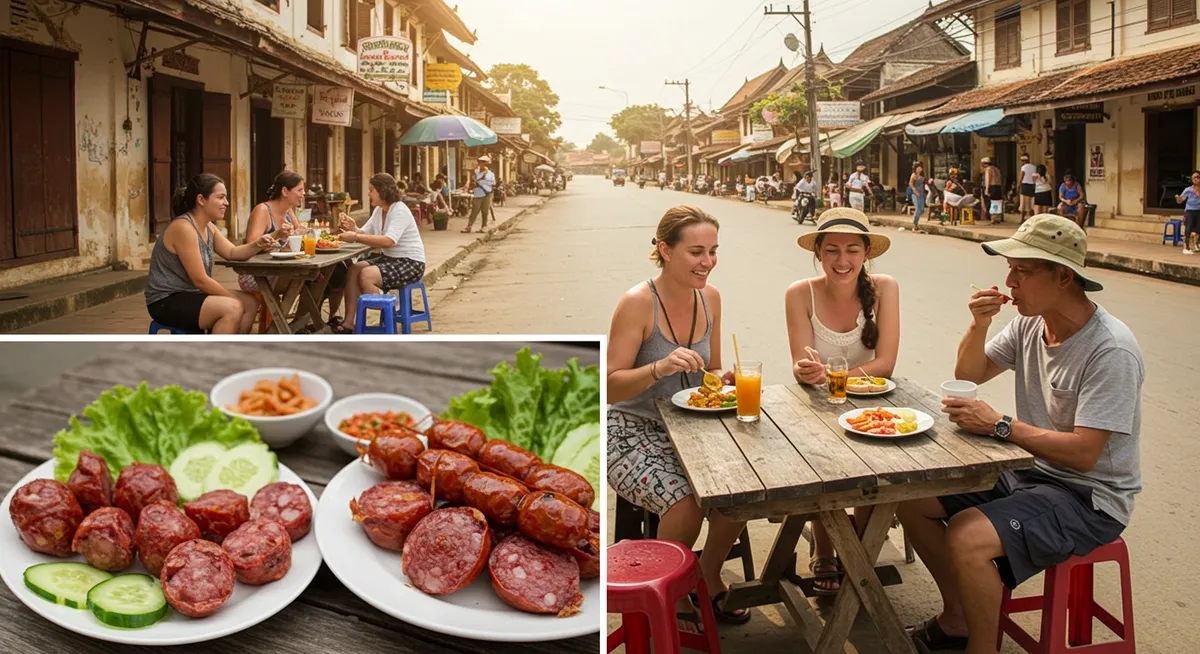
A true Lao delicacy, Sai Oua is a fragrant pork sausage heavily seasoned with lemongrass, galangal, kaffir lime leaves, chili, and herbs. It’s typically grilled over charcoal, giving it a smoky char and releasing its aromatic oils. Each bite is savory, slightly spicy, and wonderfully fresh.
- Where to Find It: You’ll spot this sizzling on grills at the Pakse Night Market, roadside stalls, and occasionally at larger morning market sections. Look for the enticing smoke and golden-brown coils.
- Walking Tour Tip: Sai Oua is an excellent grab-and-go snack. Many vendors sell it by weight or by the piece, making it easy to sample as you stroll. Pair it with sticky rice for a more substantial bite.
Mok Pa (Steamed Fish in Banana Leaves)
For a lighter yet incredibly flavorful dish, seek out Mok Pa. This dish features fish (often Mekong river fish) mixed with a paste of herbs like dill, lemongrass, and chili, along with coconut milk and fish sauce, all lovingly wrapped in banana leaves and steamed. The result is a moist, aromatic, and delicate parcel of flavor.
- Where to Find It: Mok Pa is often found at local restaurants specializing in traditional Lao cuisine rather than street stalls. Ask locals for recommendations for sit-down eateries. Sometimes, larger sections of the morning market might have stalls selling pre-made portions.
- Walking Tour Tip: This dish is best enjoyed as a sit-down meal, perhaps for a refreshing lunch break during your walking tour. It’s a great way to experience a more refined side of Lao cooking.
Khao Poon (Lao Vermicelli Soup)
A comforting and robust noodle soup, Khao Poon consists of thin vermicelli noodles bathed in a rich, coconut-based broth, typically made with fish, chicken, or pork. It’s served with an array of fresh herbs, shredded cabbage, beansprouts, and sometimes banana blossoms, allowing you to customize each spoonful to your liking.
- Where to Find It: Many small, local “soup houses” or breakfast spots (often open only in the morning and early afternoon) around the city specialize in Khao Poon. The Morning Market area also has several vendors.
- Walking Tour Tip: A hearty and warming option, perfect for a leisurely breakfast or lunch stop. The freshness of the accompanying herbs really brightens up the rich broth. Don’t be shy to load up on the greens!
Embrace the adventure, follow your nose, and don’t be afraid to try new things. These local specialties are integral to Pakse’s charm and will undoubtedly enhance your walking tour experience.
Practical Tips for Your Culinary Walk
Embarking on a culinary walking tour through Pakse is a feast for the senses, but a little preparation goes a long way to ensure a smooth and delicious experience. Here are some essential practical tips to enhance your edible adventure in Laos’s southern capital:
Food Hygiene & Safety First
- Look for High Turnover: When choosing street food vendors, always opt for stalls with a constant stream of customers. High turnover means food is cooked fresh and doesn’t sit around for long.
- Hot and Fresh is Best: Stick to dishes that are cooked to order and served hot. This minimizes the risk of bacterial contamination. For fruits, choose those you can peel yourself.
- Hydrate Smartly: Pakse’s tropical climate demands constant hydration. Always carry a reusable water bottle and refill it frequently from reputable sources or purchase bottled water. Tap water is generally not safe for drinking.
- Hand Sanitizer: A small bottle of hand sanitizer is your best friend. Use it frequently, especially before and after eating street food, as handwashing facilities might not always be readily available.
Currency & Transactions
Laos uses the Kip (LAK). Street vendors and smaller eateries often prefer, or even require, cash. Larger denominations can be challenging for them to break, especially early in the morning or late at night.
- Carry Small Notes: Always have plenty of small Kip notes (e.g., 10,000 LAK, 20,000 LAK, 5,000 LAK, and even 1,000 LAK) on hand. This makes transactions smoother and avoids awkward situations. For example, a delicious bowl of Khao Piak Sen (Lao noodle soup) might only cost 15,000-20,000 LAK.
- Bargaining (for goods, not food): While respectful bargaining is common in markets for non-food items, it’s generally not practiced when buying prepared food from street vendors. Prices are usually fixed and very reasonable.
Language & Ordering
While some vendors might speak a little English, learning a few basic Lao phrases will greatly enrich your interactions and ensure you get exactly what you want.
- Essential Phrases:
- Sabaidee (sah-bye-dee) – Hello
- Khop jai (khawp-jai) – Thank you
- Kin pasak noi (kin pah-sak noy) – Eat less spicy (or “a little bit spicy” if you want to try some heat but not too much!)
- Bor pet (baw pet) – Not spicy
- Tao dai? (tao dai) – How much?
- Point and Smile: If language is a barrier, don’t be afraid to point at what you want. A friendly smile and a polite gesture go a long way.
Understanding Spice Levels
Lao cuisine, particularly in the south, can pack a punch! Chili is a staple, and dishes like Tam Mak Hoong (spicy papaya salad) are known for their fiery kick.
- Be Specific: When ordering, if you’re not a fan of extreme heat, make sure to use “bor pet” or “kin pasak noi.” Don’t underestimate the local spice tolerance!
- Cool Down: If you do over-spice, sticky rice (khao niao) or fresh fruit can help soothe your palate.
Best Times to Visit Markets & Eateries
Pakse’s culinary scene shifts throughout the day, offering different delights at various times.
- Morning Markets (e.g., Dao Heuang Market area): For breakfast specialties like Khao Piak Sen, fresh pastries, or coconut pancakes (Kanom Krok), aim to visit between 6:00 AM and 9:00 AM. This is when the markets are bustling with locals buying fresh produce and cooked breakfast items.
- Evening Markets & Street Food Stalls: The night comes alive with food stalls opening typically from 5:00 PM onwards, offering grilled meats (like Sai Oua – Lao sausage), fresh seafood, and various stir-fried dishes. The area around the Mekong Riverfront is particularly vibrant.
Respecting Local Dining Etiquette
Lao dining is generally relaxed, but a few courtesies are appreciated.
- Sharing is Caring: Many dishes are served family-style, encouraging sharing. Don’t be surprised if your host or fellow diners offer you food.
- Chopsticks and Spoons: While forks and spoons are common, chopsticks are widely used for noodles. Avoid sticking your chopsticks upright in your bowl of rice, as this can be seen as bad luck or an offering to the deceased.
- Feet Awareness: When sitting on low stools or mats, avoid pointing the soles of your feet towards people or religious imagery, as this is considered disrespectful.
By keeping these practical tips in mind, you’ll be well-prepared to fully immerse yourself in the authentic, delicious, and friendly food culture of Pakse during your walking tour.
Integrating Food Stops into Your Pakse Itinerary
🌟 Local Expert Tip: Get the most out of your Pakse visit with guided tours!
One of the most delightful ways to experience Pakse on foot is to weave its incredible culinary scene directly into your walking itinerary. Instead of merely pausing for meals, transform your food stops into integral parts of your exploration, turning them into natural rest points, cultural immersion opportunities, or even the primary destination of your walk.
Strategic Fueling & Cultural Bites:
Think of your daily walks as journeys between delicious discoveries. Plan your morning stroll to culminate at a bustling local eatery for a traditional Lao breakfast. For instance, head towards the heart of the city for a bowl of comforting Khao Piak Sen (Lao noodle soup) or a crispy Khao Jee Pate (Lao baguette sandwich with pâté), often found at street stalls or small family-run shops. These spots are perfect for people-watching and soaking in the morning rhythm of Pakse. Mid-afternoon walks can be punctuated by a refreshing stop at a juice stand for fresh tropical fruit shakes or a local café serving authentic Lao coffee, a proud product of the nearby Bolaven Plateau.
Themed Culinary Crawls:
- The Noodle & Street Food Sprint: Dedicate an afternoon to a ‘noodle crawl.’ Start near the French Bridge area and meander through the smaller lanes towards the market or the bus station. You’ll encounter numerous street food vendors specializing in various noodle dishes, grilled meats, and savory snacks. Sample small portions of different fho (pho-style noodle soup), try some spicy Tam Mak Hoong (papaya salad), or grab some freshly grilled fish or skewers. Look for busy stalls – a good sign of freshness and popularity.
- Market Tasting Tour (Dao Heuang Market): An early morning visit to Dao Heuang Market is a feast for the senses and an ideal ‘market tasting tour.’ Allow at least 1-2 hours. Beyond fresh produce, you’ll find vendors selling prepared foods like sticky rice with grilled chicken, various savory cakes, and unique sweets. Don’t miss trying local desserts like Khao Nom Kok (small coconut pancakes) or sipping on fresh sugarcane juice (nam oy). It’s a sensory overload and a fantastic way to understand local life and ingredients.
- Riverside Sunset & Snack Stroll: As the sun begins to dip, take a leisurely walk along the Xe Don River or Mekong River. Many small eateries and pop-up stalls appear in the late afternoon, offering chilled Beerlao, fresh spring rolls, and light snacks. It’s a perfect way to unwind and enjoy the serene river views, turning your walk into a culinary observation deck.
Connecting Food to Culture & Sightseeing:
Your walking routes can naturally lead you from cultural landmarks to gastronomic delights. After exploring the tranquil grounds of Wat Luang, Pakse’s largest and most revered temple, seek out one of the charming local restaurants nearby for lunch, perhaps enjoying a delicious Laap (minced meat salad) or Mok Pa (steamed fish in banana leaf). The old French colonial quarter, with its charming architecture, is perfect for a leisurely stroll culminating in a stop at a bakery for a French-inspired pastry or a traditional Lao snack. Food stops are not just about sustenance; they are windows into Pakse’s soul, offering insights into local customs, ingredients, and the warm hospitality of its people.
Local Insights & Expert Recommendations
To truly unlock Pakse’s culinary heart during your walking tour, you need to think like a local. The most authentic and delicious street food experiences aren’t always found in obvious spots, but rather by following your nose and, more importantly, the queues of local residents.
Spotting the Gems: A golden rule for any food walk in Pakse is to seek out stalls with a bustling crowd, especially at peak meal times. If you see a long line of Lao people patiently waiting, you’ve likely stumbled upon a local favorite. These vendors often specialize in just one or two dishes, perfecting them over years. Don’t be deterred by humble setups; some of the most extraordinary flavors come from simple carts or small, open-air eateries. Areas around the Pakse Morning Market (Talat Sao Pakse) and along the Mekong Riverfront are prime hunting grounds for such authentic finds.
Timing is Everything: The best times to visit specific vendors can vary. For an unforgettable breakfast experience, hit the morning market scene between 6:00 AM and 9:00 AM. This is when vendors serving steaming bowls of *Khao Piak Sen* (Lao thick noodle soup) or crispy *Pa Tong Kho* (Lao donuts) with strong Lao coffee are at their freshest and busiest. Lunch often sees office workers and students flocking to stalls offering grilled meats with sticky rice or vibrant *Laap*. As evening descends, the night market areas come alive with an array of grilled fish, BBQ skewers, and sweet treats.
Ask a Local: Don’t underestimate the power of a friendly smile and a simple question. Guesthouse staff, hotel receptionists, or even fellow diners can be invaluable resources. A quick “Where do you eat
Embrace the Seasonal & the Specific: Beyond the well-known dishes, keep an eye out for seasonal delights. During fruit season, you’ll find an abundance of incredibly fresh fruit shakes (*Nam Pan*) or sticky rice with ripe mango. Pakse, being close to the Bolaven Plateau, also means exceptional local coffee is readily available from street vendors and small cafes. Don’t shy away from trying unique local snacks like *Khao Lam* (sticky rice cooked in bamboo) or various types of Lao desserts sold by street vendors. For refreshment during your walk, look for vendors selling fresh coconut water or traditional Lao iced coffee (*Nam Soy*).
By blending in with the local rhythm, you’ll discover that eating in Pakse is more than just sustenance – it’s a profound cultural immersion. Be adventurous, trust your senses, and enjoy the incredible flavors that await you on your walking tour.
Frequently Asked Questions
Q: Is it safe to eat street food in Pakse?
A: Generally, yes, if you choose wisely. Look for stalls with high customer turnover, fresh ingredients, and clean cooking areas. Opt for food that is cooked fresh in front of you and served hot. Trust your instincts, and if a place looks questionable, move on.
Q: How much does a meal typically cost at a Pakse food stop?
A: Street food and local eatery meals are incredibly affordable. A typical bowl of noodles or a plate of rice with a topping might cost 15,000-30,000 LAK (approx. $0.75 – $1.50 USD). Fruit shakes are usually 10,000-15,000 LAK. Night market BBQ can vary depending on what you order but is generally very budget-friendly.
Q: Are there vegetarian or vegan options easily available?
A: Yes, vegetarian options are increasingly available, especially in noodle dishes (‘khao piak sen jay’ or ‘khao soy jay’ for vegetarian versions) and by asking for ‘bor sai sin’ (no meat). Papaya salad can often be made vegetarian. Vegan options might require more specific requests, but fresh fruit and vegetable stir-fries are common. Look for ‘ahaan jay’ signs.
Q: What’s the best time for a food-focused walking tour in Pakse?
A: Mornings (7-10 AM) are excellent for markets and breakfast stalls. Lunchtime (11:30 AM – 1:30 PM) offers a wide array of options. For the most vibrant street food experience, evenings (5:30 PM onwards) are perfect, especially at the night markets when the atmosphere is buzzing.
Pakse truly comes alive when explored on foot, and its culinary offerings are the heart of that experience. By integrating food stops into your free walking tours in Pakse, you’re not just fueling your body; you’re immersing yourself in the local culture, meeting friendly faces, and discovering the authentic flavors that define Southern Laos. So, lace up your shoes, prepare your taste buds, and let the delicious journey through Pakse begin!