
Accessible Luang Prabang: Walking Tour Guide & Tips (2026)
Explore Luang Prabang’s charm with our accessible walking tour guide. Discover flat paths, mobility tips, and how to enjoy this beautiful city on foot, even with challenges.
On this page
Luang Prabang, a UNESCO World Heritage gem in Laos, is renowned for its tranquil Mekong River views, ancient temples, and vibrant markets. For many, exploring this enchanting city on foot offers the most immersive experience, allowing you to absorb its unique rhythm and beauty. However, for travelers with mobility challenges or those seeking smoother paths, navigating unfamiliar terrain can be a concern. This comprehensive guide is designed to empower you with the knowledge and practical tips needed to enjoy Luang Prabang’s free walking tours in Luang Prabang safely and comfortably, ensuring its charm is accessible to everyone.
Key Tips and Takeaways
- Prioritize flexibility and thoughtful planning for your accessible walking tours.
- Embrace a slower pace and frequent breaks to fully enjoy the experience.
- Don’t hesitate to utilize local transport (tuk-tuks, electric vehicles) to supplement your walking.
- Stay hydrated and protected from the sun, especially during warmer months.
- Engage respectfully with locals; they are often willing to offer assistance.
Understanding Luang Prabang’s Unique Terrain & Accessibility Landscape
Luang Prabang, with its enchanting riverside setting, golden temples, and colonial architecture, offers an incredibly rewarding experience for walkers. However, understanding its unique terrain and infrastructure is crucial for an enjoyable and comfortable exploration, especially if you have mobility concerns. Unlike many modern cities, Luang Prabang retains much of its authentic charm, which often translates to a less standardized pedestrian environment.
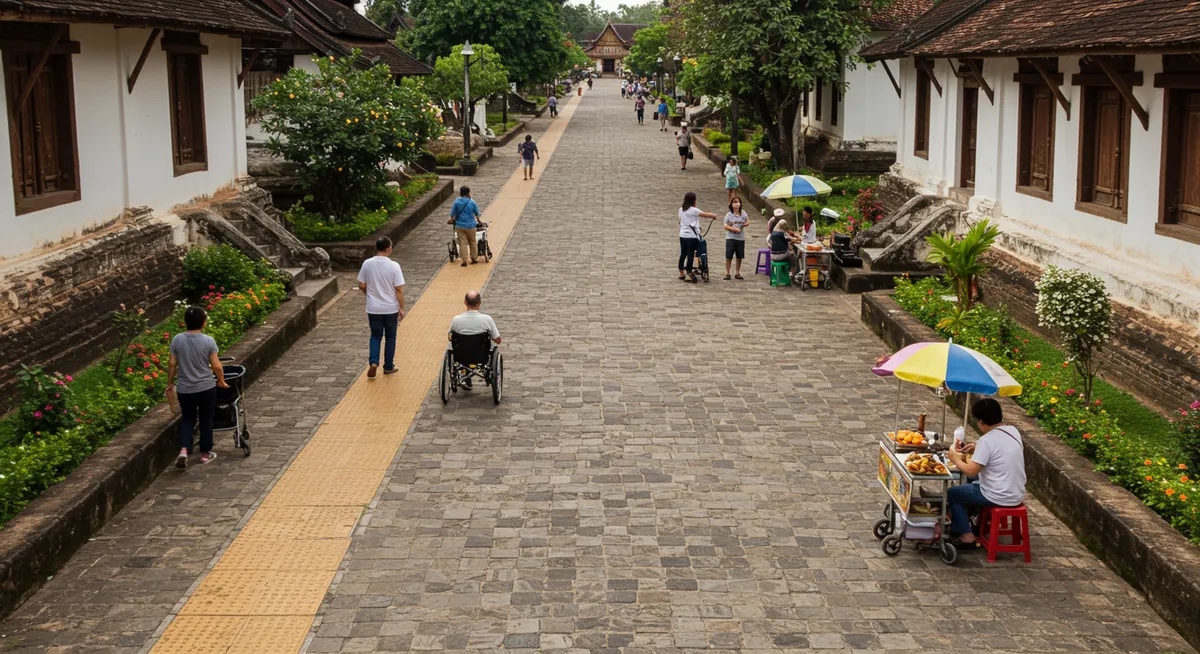
One of the first things you’ll notice are the **sidewalks and streets themselves**. While charmingly antiquated, they are frequently uneven, cracked, or feature missing sections. You might encounter cobblestones in certain heritage areas, particularly around the main night market stretch and some temple entrances, which can be challenging for unsteady footing. Drainage grates, while necessary, are often large and can pose a tripping hazard if not vigilant. Pavements can also occasionally blend seamlessly into dirt paths, especially in less central areas or smaller sois (alleys).
**Temple access** is another significant consideration. Luang Prabang’s stunning wats (temples) are often elevated, requiring ascents via numerous, often steep, steps. Temples like Wat Xieng Thong and Wat Mai, while iconic, involve considerable stair climbing to reach their main compounds. Ramps are generally non-existent, reflecting traditional Lao architectural practices rather than modern accessibility standards.
For those dreaming of panoramic views, **Phousi Hill** stands as the city’s central landmark and a prime example of its hilly terrain. Reaching the summit involves ascending hundreds of irregular steps. While the sunset views are legendary, this ascent is a significant physical undertaking and may not be feasible for all visitors with mobility challenges. There are also smaller, less strenuous inclines throughout the peninsula, especially as you move away from the flat riverbanks.
Despite these challenges, Luang Prabang’s flat, central peninsula area, nestled between the Mekong and Nam Khan rivers, offers many relatively manageable walking routes. The charm lies in its authenticity, but it demands a mindful approach to walking. Here are some actionable tips for navigating Luang Prabang on foot:
- Footwear is Key: Prioritize sturdy, comfortable shoes with good ankle support and non-slip soles. Leave the flip-flops for poolside lounging.
- Pace Yourself: Embrace the laid-back Lao pace. There’s no need to rush. Take frequent breaks, especially in the heat.
- Mind Your Step: Always look where you’re going. Be aware of uneven surfaces, small ditches, parked scooters on sidewalks, and occasional construction debris.
- Route Planning: For those with mobility concerns, consider shorter, more focused walks along the flatter riverside promenades or through specific, well-maintained temple grounds. Don’t feel obligated to tackle every challenge.
- Phousi Hill Alternatives: If Phousi Hill is too daunting, enjoy stunning views from a Mekong river cruise, riverside restaurants, or the Luang Prabang View Resort (requiring a short drive/tuk-tuk).
- Tuk-Tuk as Backup: Don’t hesitate to use a tuk-tuk for longer distances, to bypass particularly challenging sections, or when you’re simply tired. They are readily available and affordable.
- Stay Hydrated: Walking in Luang Prabang’s tropical climate requires constant hydration. Carry plenty of water.
Luang Prabang’s unique terrain is part of its allure, offering an intimate connection with its cultural and natural landscape. By understanding and preparing for these characteristics, every walker can craft an incredible and memorable journey through this UNESCO World Heritage city.
Identifying Your Accessible Walking Zones & Routes
While Luang Prabang’s charming landscape features rolling hills and many ancient temples perched on elevated grounds, navigating the town on foot is entirely possible and highly rewarding, even for those with mobility considerations. The key lies in understanding and identifying the zones that offer the most manageable terrain. We’ve pinpointed areas that are relatively flatter, less prone to significant obstacles, and allow you to immerse yourself in the town’s beauty with greater ease.
Sisavangvong Road: The Gentle Heartbeat
Luang Prabang’s main artery, Sisavangvong Road, is your prime accessible walking zone. Stretching from the Royal Palace Museum down towards Wat Sensoukaram and beyond, this street is predominantly flat, offering a consistent surface ideal for leisurely exploration. Along this route, you’ll find street-level access to numerous charming cafes, local shops, and several beautiful temples like Wat Sop Sickharam and the aforementioned Wat Sensoukaram. The pavements, while not always perfectly smooth and occasionally interrupted by minor cracks or vendor displays, are generally wide enough to navigate comfortably. This central road allows for direct, relatively unimpeded views of daily life and the architectural grandeur that defines Luang Prabang.
The Night Market Area: A Pedestrian Paradise (Even by Day)
Just off Sisavangvong Road, the pedestrianized Night Market area transforms into a wonderfully accessible zone, especially during market hours (typically 5 PM onwards). The main thoroughfare for the market is a wide, flat, and hard-packed surface, entirely free of vehicle traffic. This makes it excellent for strolling, browsing the myriad handicraft stalls, and enjoying the vibrant atmosphere. Even during the day, before the market sets up, this area provides a spacious, flat pathway perfect for a quiet walk. Be mindful that during peak market times, it can get very crowded, which might pose challenges for some, so consider visiting just as it’s opening or nearing closing if you prefer fewer people.
Mekong Riverfront Promenade: Scenic Strolls with Caution
The picturesque Mekong Riverfront promenade offers breathtaking sunset views and a serene ambiance. While much of it is relatively flat, caution is advised. Sections of the promenade can be uneven, feature occasional short steps, or have varying surface materials from concrete to packed earth. Some areas, particularly those closer to the river, might be prone to muddiness after rain. Focus on the stretches near well-established guesthouses and restaurants, as these often have better-maintained pathways. It’s an ideal spot for shorter, slower strolls, allowing you to absorb the peaceful riverine setting without pushing for long distances. If you encounter a particularly uneven section, it’s often easy to divert back to a parallel, more stable road for a short distance.
Connecting Your Routes & Practical Tips:
- Short, Focused Walks: Rather than attempting one long continuous loop, consider shorter, focused walks within these accessible zones.
- Observe Surfaces: Always keep an eye on the ground for uneven paving, small steps, or loose gravel. Luang Prabang’s charm lies in its authenticity, which sometimes means less standardized infrastructure.
- Ask for Advice: Don’t hesitate to ask your guesthouse staff or locals about the current conditions of specific paths. They can offer invaluable real-time insights.
- Hydration & Sun Protection: Regardless of your mobility, Luang Prabang’s heat and humidity necessitate staying hydrated and protecting yourself from the sun.
- Consider Tuk-Tuks for Gaps: For distances between accessible zones, or if you encounter an unexpectedly challenging stretch, local tuk-tuks are readily available and affordable. They can be a great way to bridge gaps and conserve energy.
By focusing on these identified zones and applying a mindful approach, you can craft a fulfilling and enjoyable walking tour experience, discovering the heart of Luang Prabang at your own pace.
Smart Strategies for a Smooth & Enjoyable Accessible Walk
🌟 Local Expert Tip: Get the most out of your Luang Prabang visit with guided tours!
Navigating Luang Prabang on foot is an incredibly rewarding experience, allowing you to truly absorb its serene beauty and unique atmosphere. To ensure your accessible walking tour is as smooth and enjoyable as possible, a little strategic planning goes a long way. Whether you’re moving at a gentle pace or managing mobility aids, these tips will help you make the most of your journey through this UNESCO World Heritage city.
Optimal Timing for Comfort
Luang Prabang’s tropical climate means the midday sun can be intense, and popular areas can get crowded. For the most comfortable and serene walks, aim for the following times:
- Early Morning (before 8:30 AM): This is arguably the best time. The air is cool and fresh, the light is soft, and the city is just beginning to stir. You’ll find fewer people along the Mekong and Nam Khan riverfronts, and it’s ideal for peaceful exploration of the main streets before shops fully open.
- Late Afternoon (after 4:00 PM): As the sun begins its descent, temperatures drop, and a gentle breeze often picks up. This is perfect for leisurely strolls, enjoying the golden hour light on the temples, or finding a riverside spot for sunset views without the mid-day rush.
Avoiding the hottest parts of the day not only enhances comfort but also makes navigating any uneven terrain less taxing.
Essential Gear for a Smooth Journey
Packing smart for your Luang Prabang walks is crucial for comfort and safety:
- Footwear is Key: Invest in comfortable, sturdy, closed-toe walking shoes with good grip. Luang Prabang’s sidewalks can be uneven, cracked, or even non-existent in some areas. Cobbled temple grounds and damp paths require secure footing. While sandals might seem appealing, ensure they are supportive and strapped securely if you choose them.
- Hydration Station: Always carry a reusable water bottle. Staying hydrated is paramount in the heat. Many guesthouses and cafes offer water refills, helping you reduce plastic waste.
- Sun Protection: A wide-brimmed hat, sunglasses, and high-SPF sunscreen are non-negotiable. Even on cloudy days, the tropical sun’s UV rays are powerful.
- Small Backpack/Day Bag: A lightweight bag to carry your essentials – water, sunscreen, camera, and perhaps a small towel – will free your hands and distribute weight evenly.
Pacing Yourself and Listening to Your Body
Luang Prabang encourages a slower pace of life, and your walking tour should reflect that. Don’t feel pressured to rush. Take frequent breaks at charming cafes, on a park bench, or by the river. It’s okay to do less and enjoy more. For those with mobility challenges, be extra mindful of your limits. It’s always better to turn back, find a comfortable spot, or take a short tuk-tuk ride than to push yourself to discomfort or fatigue.
Utilizing Maps for Smart Pre-Planning
Before you step out, a little route reconnaissance can save you time and energy:
- Digital Maps are Your Friend: Use apps like Google Maps or Apple Maps to preview your desired routes. Zoom in to check for sidewalk continuity, identify potential obstacles (like steep steps or narrow passages), and locate accessible points of interest.
- Offline Access: Download map areas for offline use, as Wi-Fi and mobile data can be intermittent.
- Identify Accessible Points: Note accessible entrances to temples (many have small steps or raised thresholds), public restrooms, and places to rest or grab a refreshment. The main street (Sisavangvong Road) and the riverfront offer relatively flatter, more consistent walking paths, but side streets can be more challenging.
By integrating these smart strategies into your Luang Prabang walking plans, you’ll be well-equipped to enjoy its enchanting beauty at your own pace, ensuring a smooth, safe, and truly memorable accessible adventure.
Integrating Local Transport for Enhanced Exploration
🌟 Local Expert Tip: Get the most out of your Luang Prabang visit with guided tours!
Luang Prabang’s charm lies in its pedestrian-friendly peninsula, inviting you to wander. However, to truly unlock its full potential, especially for those with mobility considerations or to conserve energy in the tropical climate, strategically integrating local transport is key. This approach allows you to cover more ground, bypass challenging sections, and reach specific sites with greater ease, ensuring a more comfortable and comprehensive exploration.
Leveraging Local Transport Options
- Tuk-Tuks: Your Go-To Ride: The ubiquitous three-wheeled tuk-tuks are Luang Prabang’s most common and flexible transport. They are excellent for short hops between attractions, covering longer distances across the peninsula (e.g., from the main market to Wat Xieng Thong), or skipping over uneven cobblestone sections or bustling night market crowds if desired. While generally open and breezy, note that entering and exiting requires stepping up and over, which might be a consideration for some mobility challenges.
- Electric Buggies/Golf Carts: A Smoother Alternative: Increasingly, you’ll find electric buggies, particularly around popular tourist zones or offered by some hotels. These can provide a smoother, quieter ride than tuk-tuks and might have slightly easier access depending on their design. They are a great option for eco-conscious travelers or those seeking a more gentle journey.
- Private Cars/Vans: Maximum Comfort and Accessibility: For longer excursions outside the core peninsula (e.g., to Kuang Si Falls) or if you require guaranteed accessibility, a private car or van offers the most controlled and comfortable environment. Hotels can easily arrange these, providing air-conditioned transport and often a driver who understands specific needs, such as waiting at a specific entry point or avoiding steps.
Strategic Integration for Enhanced Exploration
Think of local transport as a flexible bridge in your walking itinerary. Here’s how to use it effectively:
- Bypass Challenging Terrains: If a specific section of your desired walking route involves steep hills, uneven paths, or particularly crowded areas that might be difficult to navigate, hop in a tuk-tuk for that segment. For instance, while Mount Phousi is a must-see, the base area around the main market can be very busy. You might take a tuk-tuk to a quieter starting point nearby, or just to get past the initial throng.
- Effortless Site Access: Reach specific entry points more easily. For example, the magnificent Wat Xieng Thong is at the far northern tip of the peninsula. Instead of walking the entire length, a quick tuk-tuk ride can drop you directly at its main gate, saving energy for exploring the temple complex itself. Similarly, use transport to reach specific points along the Mekong riverfront to begin a leisurely riverside stroll.
- Conserving Energy: Luang Prabang can be hot and humid. Using transport to cover longer distances between clusters of attractions (e.g., from the Royal Palace Museum area to the That Chomsi steps) allows you to save your energy for more leisurely walks within specific temple grounds or along charming side streets, maximizing your enjoyment without exhaustion. This is especially vital for those with mobility challenges, allowing them to participate fully without overexertion.
Practical Tips for Seamless Journeys
- Negotiate Fares in Advance: Always agree on the price with the driver before you start your journey. Fares are generally reasonable for short trips (a few dollars for a cross-peninsula ride), but confirm to avoid misunderstandings. Your hotel can often provide current estimated fares for popular routes.
- Communicate Your Needs Clearly: A simple map or pointing to your destination is often enough. For specific accessibility needs, use simple phrases like “stop here,” “slowly,” or ask your hotel to write a note in Lao if you have complex requirements (e.g., “needs easy access,” “no steps”). Patience and a polite smile go a long way.
- Utilize Hotel Staff: Your hotel concierge or front desk is an invaluable resource. They can arrange reliable transport, advise on fair prices, and even help communicate your specific accessibility needs to drivers, ensuring a smoother experience.
Temple & Site Access: What to Expect & How to Navigate
Navigating Luang Prabang’s sacred sites, especially for those with mobility considerations, requires a blend of realistic expectation and informed planning. While the exquisite main prayer halls (sims) of many temples are typically elevated, accessed via several steps, the good news is that the sprawling temple grounds, serene courtyards, and exterior views are often remarkably accessible, offering a rich cultural experience even without entering every interior.
Consider iconic sites like Wat Xieng Thong, Luang Prabang’s most magnificent temple. While its main sim requires climbing a few ornate steps, its extensive, beautifully maintained grounds, punctuated by smaller stupas and shrines, are largely flat, consisting of packed earth or smooth paving stones that are generally manageable for walkers. Similarly, Wat Mai Suwannaphumaham, centrally located, boasts a wide, relatively flat courtyard, making its exterior and surrounding monastic buildings easy to navigate.
The Royal Palace Museum (Haw Kham), while the museum building itself has steps, is situated within spacious, level gardens that are entirely pleasant to explore. Here, you can soak in the history, admire the architecture from outside, and enjoy the tranquil surroundings at your own pace. Many of Luang Prabang’s smaller temples along the peninsular streets, while perhaps not as grand, also offer easily accessible courtyards and exteriors, perfect for a peaceful stroll and observation.
Here are some practical tips to enhance your temple and site access experience:
- Observe and Adapt: Pathways within temple complexes can vary from smooth concrete to uneven cobblestones, gravel, or packed earth. Be mindful of your footing and take your time.
- Footwear is Key: Sturdy, comfortable walking shoes with good grip are essential for navigating varied terrain and ensuring stability.
- Seek Assistance Respectfully: If you encounter steps or obstacles and need a hand, a polite gesture or simple “sok dee” (hello/good luck) followed by pointing can often prompt a kind offer of assistance from locals or fellow travelers. Remember to always ask permission before touching anyone.
- Strategic Timing: Visit during cooler, less crowded times, such as early mornings (especially after the alms giving, which can be very busy) or late afternoons. This allows for a more relaxed pace and easier maneuverability.
- Focus on the Exterior: Don’t feel obligated to enter every building. The architectural beauty, intricate carvings, and serene atmosphere of the grounds and surrounding monastic life often provide a profound and rewarding experience on their own.
- Respectful Conduct: Regardless of physical access, always dress modestly (shoulders and knees covered) and remove your shoes before entering any temple sim or sacred area (even if you’re just observing from the threshold). Keep voices low to maintain the tranquil ambiance.
Luang Prabang’s spiritual heart is genuinely open to exploration. With a little foresight and a willingness to embrace the journey, you’ll find that the city’s temples offer accessible paths to profound cultural immersion, inviting you to discover their timeless beauty at your own pace.
Beyond the Peninsula: Accessible Excursions & Considerations
While much of Luang Prabang’s charm lies within the relatively flat and walkable peninsula, many visitors are drawn to its iconic excursions just beyond the city limits. These day trips, while breathtaking, often present unique accessibility considerations that require careful planning for an enjoyable experience.
Exploring Kuang Si Falls: Beauty with Bumps
The stunning turquoise tiers of Kuang Si Falls are a highlight for almost every visitor to Luang Prabang. Here’s what to expect regarding accessibility:
- Vehicle Access: The journey to the falls is typically by minivan or tuk-tuk. These vehicles can usually drop you off very close to the main entrance, minimizing the initial walk.
- Within the Park: Upon entering, you’ll find a relatively flat, well-maintained paved path leading to the Tat Kuang Si Bear Rescue Centre, which is generally accessible. Beyond this, the paths become a mix of paved sections, compacted earth, and natural, uneven terrain.
- The Falls Themselves: The lower, wider pools are often the most accessible, with paths leading to the main swimming areas. However, reaching the higher tiers of the falls requires navigating numerous steps – some are well-built, others are more rustic, slippery, and steep. While you can enjoy much of the beauty from the lower levels, ascending to the very top might be challenging for those with significant mobility limitations.
- Practical Tip: Consider the “less is more” approach. You can still experience the magic of Kuang Si by focusing on the lower falls and the bear sanctuary without needing to climb to the very top. Discuss your mobility needs with your driver or guide, as they can advise on the best routes and waiting spots.
Pak Ou Caves: A Riverside Journey with Steep Steps
The sacred Pak Ou Caves, filled with thousands of Buddha images, offer a cultural glimpse, but their accessibility is more challenging:
- Boat Trip: The primary way to reach Pak Ou Caves is via a scenic longtail boat trip up the Mekong River. Getting on and off the boat can involve navigating uneven wooden planks or steps, which might be tricky depending on river levels and the specific boat. Assistance from boatmen is usually available.
- Cave Access: Upon arrival, you’ll face a significant number of steep, often uneven steps to reach the lower (Tham Ting) cave. This cave is well-lit and houses many Buddha statues. For the upper (Tham Phum) cave, the climb is even more arduous, involving dark, narrow, and often slippery steps. A torch (flashlight) is essential for the upper cave.
- Consideration: For individuals with significant mobility issues, accessing the caves themselves might be prohibitive. The experience of the boat journey itself, offering stunning Mekong riverside views, can still be very rewarding, even if you choose not to ascend into the caves.
General Excursion Considerations & Actionable Tips
When planning any excursion beyond the peninsula, especially with mobility considerations, proactive communication is key:
- Communicate Clearly: Before booking, speak directly with tour operators, guesthouses, or drivers about your specific accessibility needs. Ask detailed questions about path conditions, number of steps, and vehicle types.
- Private vs. Group Tours: A private tour often offers more flexibility to tailor the itinerary, allow for slower paces, and provide assistance as needed, compared to fixed-schedule group tours.
- Footwear: Always wear sturdy, comfortable, closed-toe walking shoes with good grip, especially for natural environments.
- Hydration & Sun Protection: Carry plenty of water, and use sunscreen and a hat, as temperatures can be high, and shade is limited in some areas.
- Local Assistance: Luang Prabang locals are generally very kind and willing to assist. Don’t hesitate to ask for help from your guide, driver, or even fellow travelers if you encounter a challenging spot.
By understanding the potential challenges and planning accordingly, you can still enjoy the breathtaking beauty and cultural richness that lies beyond Luang Prabang’s central peninsula.
Frequently Asked Questions
Q: Is Luang Prabang generally accessible for wheelchair users?
A: While not fully compliant with international accessibility standards, specific areas and attractions in Luang Prabang can be navigated by wheelchair users with careful planning, some assistance, and a flexible mindset. The main road and Night Market are relatively flat, but many sidewalks are uneven.
Q: Can I find accessible restrooms easily in Luang Prabang?
A: Public accessible restrooms are quite rare in Luang Prabang. Your best bet will be at larger hotels, some upscale restaurants, and guesthouses. It’s advisable to plan restroom breaks in advance.
Q: What’s the best time of year for accessible walking in Luang Prabang?
A: The cooler, dry season from November to February offers the most comfortable walking temperatures. Humidity and heat are higher from March to May, and the rainy season (June to October) can make some paths slippery.
Q: Are there tour guides specializing in accessible tours in Luang Prabang?
A: While not widely advertised, many local guides are accommodating and can adapt tours to specific mobility needs. It’s highly recommended to communicate your requirements clearly when booking a private guide to ensure they can tailor the experience for you.
Q: What are common challenges for mobility aids like walkers or canes in Luang Prabang?
A: The primary challenges include uneven pavements, numerous steps (especially at temples and guesthouses), and occasional dirt paths. Bringing sturdy, all-terrain mobility aids is recommended, and always be mindful of your footing.
Luang Prabang’s timeless allure is best savored at a leisurely pace, and with thoughtful planning, it’s remarkably accessible for all. By understanding the terrain, strategically combining walking with local transport, and embracing local insights, you can craft a truly rewarding and comfortable exploration of this magical city. So, lace up your comfortable shoes, arm yourself with our tips, and prepare to immerse yourself in the gentle charm and profound beauty of Luang Prabang, one accessible step at a time.