
Vang Vieng Walks: Sustainable Exploration Guide (2026)
Discover Vang Vieng on foot! Explore stunning landscapes, local villages, and sustainable practices with our comprehensive walking tour guide. Tips for responsible travel.
On this page
Vang Vieng, with its dramatic limestone karsts, emerald rice paddies, and winding Nam Song River, is a natural wonderland. While often associated with adventure sports, exploring Vang Vieng on foot offers an unparalleled opportunity to connect deeply with its landscapes and local culture. This comprehensive guide will help you navigate Vang Vieng’s walking trails sustainably, ensuring your journey is as rewarding for you as it is beneficial for the local community and environment.
Key Tips and Takeaways
- Always carry plenty of water and stay hydrated in the tropical climate.
- Wear sturdy, comfortable shoes suitable for varied terrain (dirt paths, rocky trails).
- Respect local customs and dress modestly, especially when visiting villages or temples.
- Minimize your environmental impact: ‘leave no trace’ and carry out all your rubbish.
- Support the local economy by purchasing goods and services directly from Vang Vieng residents.
- Consider hiring a local guide for an authentic and safe experience, especially for less-traveled routes.
Why Walk Vang Vieng? The Sustainable Advantage
Vang Vieng, with its dramatic limestone karsts, serene Nam Song River, and emerald rice paddies, offers a profound beauty that’s best appreciated at a slower pace. While adventure activities often steal the spotlight, choosing to explore Vang Vieng on foot unlocks a sustainable, deeply immersive, and uniquely rewarding experience for both you and the destination. Here’s why walking should be at the heart of your Vang Vieng itinerary:
Deeper Immersion and Unique Perspectives
Walking allows you to truly sync with the rhythm of Vang Vieng. You’ll move beyond the main tourist strips and discover hidden alleys, observe local life unfolding – perhaps catch a glimpse of monks collecting alms in the morning, children playing by the riverside, or farmers tending their fields. The scent of woodsmoke, the sounds of chirping birds and distant buffalo bells, and the chance encounters with friendly locals become part of your journey. You’ll stumble upon authentic noodle stalls, find the freshest sticky rice vendors, and truly appreciate the intricate details of traditional wooden houses nestled against towering karsts that vehicles simply rush past. It’s about seeing Vang Vieng through its people, not just its famous landmarks.
Reduced Environmental Footprint and Health Benefits
Opting for a walking tour is one of the most impactful ways to practice sustainable tourism in Vang Vieng. By foregoing motorized transport, you directly contribute to reducing carbon emissions and noise pollution, preserving the pristine natural beauty of the region’s rivers, caves, and dramatic landscapes. Every step you take is a conscious choice to minimize your environmental impact. Beyond the ecological advantages, walking tours offer immense personal health benefits. It’s an excellent way to stay active, burn off those delicious Lao meals, and enjoy the fresh air. The meditative rhythm of walking amidst such stunning scenery can also be incredibly therapeutic, offering a chance to de-stress and connect mindfully with your surroundings.
Direct Engagement with Local Life
Walking opens doors to genuine interactions that are often missed from a tour bus. A simple “Sabaidee” (hello) as you pass a local shopkeeper or a farmer can lead to a brief, memorable exchange. You might find yourself invited for a cup of tea or learn about a local craft. These are the moments that transform a trip into an authentic cultural exchange. Wandering off the beaten path will lead you to less-visited villages bordering the town or the vibrant morning market where locals gather to buy fresh produce – offering insights into daily life far removed from typical tourist activities. Supporting small, local businesses by buying water, snacks, or souvenirs from them directly benefits the community.
Practical Tips for Walking Vang Vieng:
- Comfortable Footwear: This is non-negotiable! Expect uneven paths, dusty trails, and possibly muddy stretches, especially during the rainy season.
- Hydration: Always carry plenty of water. Vang Vieng can get hot, and staying hydrated is crucial. Buy water from local shops to support the community.
- Timing is Key: Start your walks early in the morning to beat the heat and witness Vang Vieng waking up, or in the late afternoon for beautiful sunset views.
- Embrace the Detour: Don’t be afraid to take a side path if it looks interesting. Some of the best discoveries are made when you let curiosity guide you.
- Respect Local Customs: When walking through villages or near temples, dress modestly. Always ask for permission before taking photos of people, especially children.
- Stay Aware: While Vang Vieng is generally safe, be mindful of your surroundings, especially on less-trafficked paths. A basic offline map on your phone can be very useful.
By choosing to walk Vang Vieng, you’re not just moving from point A to point B; you’re embarking on a journey of discovery that enriches your understanding of Laos and supports the very essence of sustainable tourism.
Preparing for Your Vang Vieng Walk: Essentials & Safety
Embarking on a walking adventure in Vang Vieng promises breathtaking views and authentic encounters, but proper preparation is key to ensuring a safe, enjoyable, and sustainable experience. Vang Vieng’s natural beauty, from its towering karst landscapes to tranquil riverside paths, is best explored on foot, but the tropical climate and varying terrain demand a mindful approach to packing and safety.
What to Pack: Your Vang Vieng Walking Kit
To fully enjoy Vang Vieng’s trails, your backpack should be a well-curated collection of essentials:
- Hydration is paramount: The Vang Vieng heat and humidity can be intense. Carry a large, reusable water bottle (1.5-2 litres recommended) and refill it whenever possible. This reduces plastic waste and keeps you energised.
- Sun Protection: The Laotian sun is powerful. A wide-brimmed hat, high-SPF sunscreen, and sunglasses are non-negotiable, even on cloudy days.
- Sturdy Footwear: Leave the flip-flops for the guesthouse! Comfortable, closed-toe walking shoes or sturdy sandals with good grip are essential. Paths can be uneven, rocky, dusty, or muddy, especially after rain.
- Insect Repellent: Mosquitoes and other biting insects are prevalent, particularly around water sources and during dawn/dusk. Apply repellent regularly.
- Basic First Aid: A small kit with blister plasters, antiseptic wipes, pain relievers, and any personal medication is always wise.
- Navigation Tools: While many paths are clear, having offline maps (like Google Maps or Maps.me) downloaded on your phone is crucial, especially for exploring less-trodden routes. A fully charged power bank is also recommended.
- Lightweight Backpack: A comfortable daypack to carry all your essentials.
- Lightweight Rain Gear: If visiting during the wet season (May-October), a packable rain jacket or poncho is a smart addition.
Best Time to Walk & Weather Watch
Timing your walk can significantly impact your experience in Vang Vieng:
- Early Morning or Late Afternoon: These are the golden hours for walking. The temperatures are cooler, the light is beautiful for photography, and you’ll avoid the intense midday heat (typically 11 AM – 3 PM). Sunrise walks offer serene tranquility, while late afternoon walks lead into spectacular sunsets over the karsts.
- Seasonal Considerations:
- Dry Season (October – February): Generally the most pleasant time, with cooler temperatures and less humidity. Paths are usually dry and firm.
- Hot Season (March – May): Expect very high temperatures. Stick to very early morning or late evening walks and stay hydrated.
- Wet Season (June – September): While lush and green, frequent rain showers can make paths muddy and slippery. Be prepared for humidity and potential downpours, which can quickly transform dirt tracks.
Fitness Level & Terrain
Most walking tours around Vang Vieng are considered of a moderate fitness level. You should be comfortable walking for a few hours at a steady pace. While many trails are relatively flat, traversing rice paddies or riverside paths, others may involve gentle inclines, uneven surfaces, or navigating rocky sections. The heat and humidity can make even an easy walk feel more strenuous, so listen to your body and take breaks as needed.
Safety First: Navigating Vang Vieng Responsibly
Prioritising safety ensures a worry-free exploration of Vang Vieng:
- Stay Hydrated: We can’t stress this enough. Dehydration is a real risk.
- Inform Someone: If you’re walking solo or venturing off well-trodden paths, inform your guesthouse or a friend of your intended route and estimated return time.
- Stick to Marked Paths: Always stay on established trails. While Vang Vieng’s tourist areas are generally safe, straying into unmarked areas can pose risks, including uneven terrain or, in rare historical cases, unexploded ordnance (UXO) in more remote, untouched regions of Laos.
- Respect Local Culture: When passing through villages, dress modestly (shoulders and knees covered) and be mindful of local customs. Always ask permission before taking photos of people.
- Valuables: Carry only essential cash and secure your valuables. While Vang Vieng is generally safe, petty theft can occur.
- Wildlife Awareness: While rare, be aware of your surroundings for snakes or other creatures, particularly in lush, overgrown areas. They usually keep to themselves.
- Emergency Contacts: Have your guesthouse’s contact number saved. While emergency services might be limited, your accommodation can often provide assistance.
Top Sustainable Walking Routes & Trails
⭐ Recommendation: Don't miss out on amazing Vang Vieng tours - book now!
Vang Vieng, nestled amidst dramatic karst mountains and the serene Nam Song River, offers an unparalleled setting for walking adventures. Embracing sustainable walking tourism here means minimizing your impact while maximizing your connection to the incredible landscapes and local culture. Lace up your boots and explore these breathtaking routes, each designed to offer a unique perspective on Vang Vieng’s natural beauty and community life.
Town & Riverside Loop: A Gentle Introduction
Perfect for an easy morning or late afternoon stroll, this accessible loop immerses you in the heart of Vang Vieng. Begin by navigating the town’s charming streets, observing local life, before heading towards the Nam Song River. Follow the riverside paths, often leading to picturesque bamboo bridges (some requiring a small crossing fee, supporting local families) that offer stunning views of the limestone karsts. This route is mostly flat, offering opportunities to stop at local cafes or simply enjoy the tranquil atmosphere. Keep to designated paths and support local vendors responsibly.
Village & Rice Paddy Strolls: Cultural Immersion
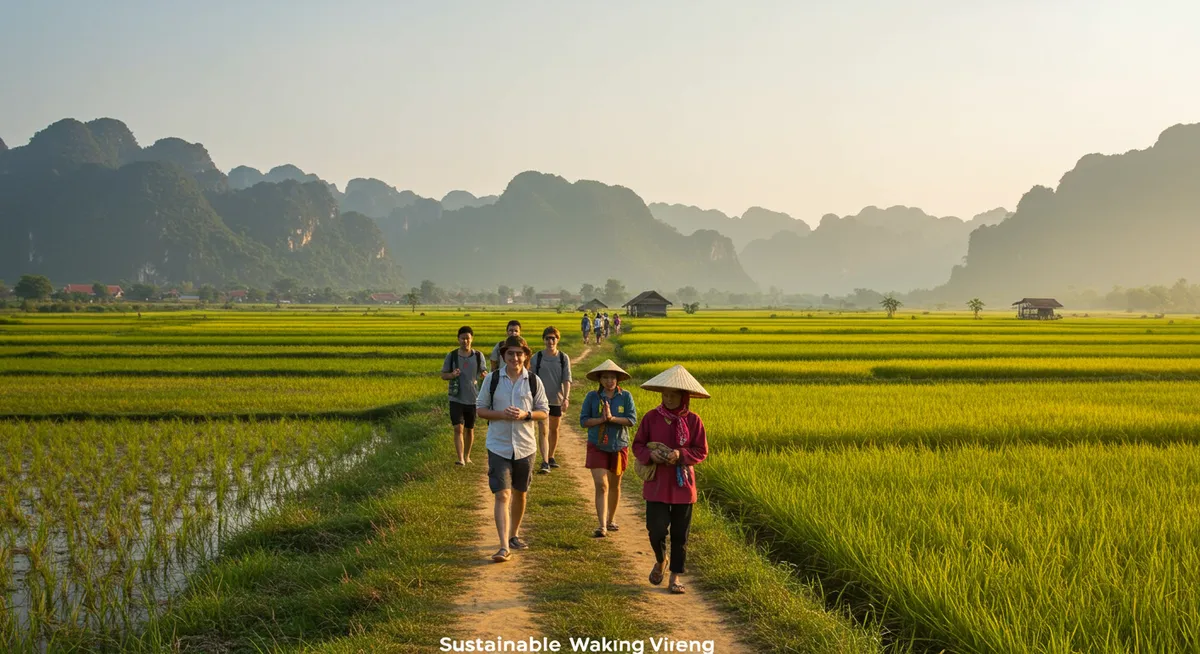
For a deeper dive into local life, venture out into the surrounding villages and verdant rice paddies, particularly on the west side of the Nam Song River. These gentle strolls offer a chance to witness traditional farming practices, observe water buffalo, and perhaps even interact with friendly locals. The paths here are generally unpaved and can be muddy during the wet season. Remember to walk respectfully, avoid trespassing on private land, and ask permission before taking photos of people, particularly children. Your quiet observation helps preserve the authentic rural experience.
Ethical Cave & Lagoon Hikes: Natural Wonders Responsibly
Vang Vieng is famed for its captivating caves and refreshing lagoons. While Tham Phu Kham (often referred to as Blue Lagoon 1) and its associated cave are popular, consider exploring less crowded alternatives to distribute tourist impact and enjoy a more tranquil experience. Options like Tham Nam (Water Cave) or Tham Loup/Tham Hoi offer unique geological formations and a sense of adventure without the crowds. For all cave explorations, stay on marked trails, do not touch cave formations, and carry out all your trash. Wearing sturdy shoes with good grip and carrying a headlamp are essential. Many caves and lagoons are managed by local communities, and your entry fees contribute directly to their livelihood and the upkeep of these sites.
Viewpoint Treks: Panoramic Rewards
For those seeking a more challenging ascent and truly breathtaking panoramic views, Vang Vieng’s viewpoint treks are a must. The most renowned include Nam Xay Viewpoint and Pha Ngern Viewpoint. These hikes, ranging from moderate to strenuous, typically involve steep, rocky climbs. While rewarding, they require good physical fitness, proper hiking shoes, and plenty of water. Access to these viewpoints is often managed by local families who maintain the trails; a small fee (typically 10,000-20,000 LAK) is collected at the trailhead to support their efforts. To promote sustainable tourism, always stick to the marked trails, avoid disturbing the natural environment, and pack out everything you pack in. Go early in the morning for cooler temperatures and incredible sunrise views, or late afternoon for sunset, but allow ample time to descend before dark.
No matter which route you choose, remember to pack light, carry sufficient water, wear appropriate footwear, and apply sun protection. By walking mindfully and respecting local customs and the environment, you contribute to Vang Vieng’s sustainable tourism future.
Walking Safely & Responsibly in Vang Vieng
Exploring Vang Vieng on foot is an incredibly rewarding experience, offering intimate encounters with its stunning landscapes and welcoming communities. To ensure your walks are both safe and respectful, keep the following essential tips in mind.
Walking Safely in Vang Vieng
Vang Vieng’s dramatic karst landscape, rivers, and tropical climate present unique considerations for walkers. Being prepared can make all the difference:
- Navigating the Terrain: Many walking trails, especially those leading to caves, viewpoints, or the blue lagoons, can be uneven, rocky, and muddy, particularly during or after the rainy season (May to October). Always wear sturdy, closed-toe walking shoes with good grip. Avoid flip-flops for anything more than a stroll through town.
- River and Stream Crossings: Your walking adventures may involve crossing small streams or even the Nam Song River itself via bamboo bridges or stepping stones. Exercise caution, especially if water levels are high or currents strong. If a crossing feels unsafe, it’s best to turn back.
- Weather Watch: Vang Vieng’s tropical climate means sudden downpours are common, even outside the official rainy season. Pack a lightweight rain jacket or poncho. Conversely, days can be intensely hot and humid. Start walks early to avoid the midday sun, and carry plenty of water to stay hydrated.
- Sun Protection: The equatorial sun in Laos is powerful. Protect yourself with a wide-brimmed hat, sunglasses, and high-SPF sunscreen. Wearing lightweight, long-sleeved clothing can also offer excellent sun protection.
- Communication and Navigation: Mobile signal can be intermittent or non-existent once you venture away from the main town. Download offline maps (like Google Maps or Maps.me) before you go. Inform your guesthouse or a friend of your intended route and estimated return time. Learning a few basic Lao phrases, like “Sa-bai-dee” (hello) and “Khop Jai” (thank you), will also be greatly appreciated by locals.
Walking Responsibly in Vang Vieng
Vang Vieng is a place of immense natural beauty and rich cultural heritage. Your actions as a visitor have a direct impact. Embrace responsible tourism to help preserve what makes this destination so special:
- Cultural Sensitivity and Dress Code: Laos is a predominantly Buddhist country with conservative customs. When walking through local villages or visiting sacred sites like temples (Wats), dress modestly. This generally means covering your shoulders and knees. A sarong or lightweight scarf is useful for impromptu temple visits.
- Photography Etiquette: Always ask for permission before taking photographs of local people, especially children, monks, or villagers. A simple gesture and “Khop Jai” if they agree goes a long way. Respect their decision if they decline. Avoid intrusive photography that invades privacy.
- Respecting Privacy and Property: Be mindful of private property when walking through rural areas. Stick to public roads and marked trails, and do not trespass.
- Environmental Stewardship: Vang Vieng’s natural environment is its most precious asset.
- Stay on Marked Trails: This helps prevent erosion, protects delicate flora and fauna, and minimizes your environmental footprint. Straying off-trail can also lead to getting lost.
- “Leave No Trace” Principles: Carry out everything you carry in. This means all your trash, including fruit peels, water bottles, and snack wrappers. Public bins are scarce outside the main town.
- Waste Management: Littering is a significant issue in many parts of Vang Vieng. Do your part by reducing your plastic consumption (e.g., refilling water bottles where possible) and ensuring all your waste is disposed of properly back in town.
- Respect Wildlife: Observe local wildlife from a distance and never disturb or feed animals.
By following these guidelines, you’ll not only have a safer and more enjoyable walking experience in Vang Vieng but also contribute positively to the local environment and community.
Beyond the Path: Immersing in Local Life
While Vang Vieng’s natural beauty is undeniable, a truly enriching walking experience extends beyond its stunning karst landscapes to the heart of its local culture. By intentionally stepping “beyond the path,” you unlock opportunities to connect with the friendly Lao people, understand their daily rhythms, and contribute positively to the community. Walking allows you to observe, absorb, and interact in a way that other modes of transport simply can’t.
Embracing Local Etiquette and Language
A little effort goes a long way in showing respect and opening doors to genuine interactions. As you walk through villages or past homes, simple greetings can spark a smile:
- “Sabaidee” (Sa-bai-dee): The universal Lao greeting for “Hello.” Use it freely with a warm smile.
- “Khop Jai” (Khawp Jai): “Thank you.” This is always appreciated.
- “Nop” (or “Wai”): The traditional Lao greeting involves pressing your palms together in a prayer-like gesture at chest height. A slight bow often accompanies it. Observe locals and reciprocate this respectful gesture when greeted.
- Dress Respectfully: Especially when walking near temples or entering homes, ensure your shoulders and knees are covered. Light, breathable long pants or skirts and a t-shirt are ideal for both comfort and cultural sensitivity.
Discovering Vang Vieng’s Culinary Soul: Markets and Street Food
Vang Vieng’s morning market, often found near the main bridge or in the town’s northern reaches, is a vibrant kaleidoscope of local life. Waking early to walk here allows you to witness the town stirring to life. Engage your senses:
- Explore the Market: Wander through stalls piled high with fresh produce, exotic fruits, fragrant herbs, and local textiles. It’s a fantastic spot for people-watching and photography. While haggling is common, do so respectfully and with a smile.
- Taste Street Food: The market and roadside stalls offer an authentic taste of Lao cuisine. Don’t miss trying local delicacies like Khao Piak Sen (Lao noodle soup), fresh fruit shakes, or grilled sticky rice and meat skewers. Look for busy stalls – a sign of freshness and popularity.
Supporting Local Artisans and Community Initiatives
Your walking journey is also an opportunity to make a tangible difference:
- Seek Out Local Crafts: Beyond the main tourist shops, keep an eye out for smaller family-run stalls or workshops selling genuine local crafts. You might find beautifully woven Lao textiles, intricate silverwork, or hand-carved wooden items. Buying directly supports the artisans and their families.
- Engage with Community-Based Tourism: While walking, consider options that directly benefit local villages. This could involve choosing a local guide for a village trek (ask at reputable tour offices in town), or participating in initiatives that contribute to rural development. Some guesthouses and tour operators actively engage with nearby communities for sustainable practices – inquire about these options.
- Buy Local Products: Whether it’s a bottle of locally produced honey, a unique piece of artwork, or fresh produce from a village farm stand, buying directly from local vendors ensures your money stays within the Vang Vieng community, fostering sustainable economic growth.
By consciously integrating these practices into your Vang Vieng walking adventure, you’re not just a tourist; you become a welcomed participant in the local tapestry, fostering respect and creating more meaningful memories.
Choosing Eco-Conscious Services & Guides
⭐ Recommendation: Don't miss out on amazing Vang Vieng tours - book now!
Vang Vieng’s dramatic karst landscapes, serene Nam Song River, and vibrant local culture are treasures that deserve our protection. As a walking tourist, your choices have a direct and powerful impact on the sustainability of this beautiful destination. By consciously selecting eco-conscious services and guides, you’re not just enjoying your trip; you’re actively contributing to the well-being of the local community and the preservation of its natural wonders.
Identifying Eco-Conscious Guides for Your Walks:
- Look for Local Expertise & Passion: Prioritize guides who are truly local to Vang Vieng and display a genuine passion for their homeland. These guides often have a deeper understanding of the environment, cultural nuances, and the importance of preserving both. They’ll be more likely to lead you on walking routes that respect local land use and sensitive ecosystems.
- Ask Incisive Questions: Don’t hesitate to ask potential guides about their practices. Inquire about their approach to waste (do they carry out all trash?), their respect for local communities (do they promote responsible interaction with villagers, especially in ethnic minority areas?), and how they minimize their environmental footprint. A good sign is a guide who emphasizes walking over motorized transport for shorter distances, like treks to nearby viewpoints or the famous Blue Lagoon caves, where trails are well-established.
- Prioritize Direct Bookings: Whenever possible, book your walking tours directly with local guides rather than through large, often international, tour operators. This ensures that the majority of your payment goes directly to the guide and their family, bolstering the local economy immediately. You might find excellent independent guides through recommendations from your guesthouse or fellow travelers.
- “Leave No Trace” Ethos: An eco-conscious guide will actively teach and enforce “Leave No Trace” principles. This means staying on marked trails, not picking plants or disturbing wildlife, and ensuring all rubbish (including organic waste like fruit peels) is packed out. Vang Vieng’s delicate karst formations and underground cave systems are particularly vulnerable, so a guide who stresses respectful interaction with these natural wonders is paramount.
Choosing Ethical Tour Operators & Eco-Friendly Accommodations:
- Research Ethical Practices: When considering tour operators for more comprehensive walking packages (perhaps including kayaking or caving), research their commitment to responsible tourism. Look for operators that explicitly state fair wage policies for their staff, invest in local community projects, and have clear environmental protection guidelines. Some operators in Vang Vieng focus on small group tours that minimize impact and maximize cultural immersion through walking.
- Eco-Friendly Accommodation Choices: Your choice of lodging also plays a role. Opt for guesthouses or smaller hotels that demonstrate an effort towards sustainability. This could include conserving water and energy, using solar power, managing waste responsibly, and sourcing food locally. Many local guesthouses in Vang Vieng are family-run and inherently support the local economy. Plus, staying closer to the town center or the riverbank means you can walk to most attractions, reducing your transportation footprint.
- Support Local Businesses: Beyond tours and accommodation, choose local restaurants, shops, and handicraft vendors. Every kip you spend within the Vang Vieng community helps to sustain livelihoods and ensures that tourism benefits the people who call this place home.
By making these conscious choices for your Vang Vieng walking adventure, you’re not just a tourist; you’re a responsible traveler helping to preserve the magic of this unique destination for generations to come. Your footsteps, both literal and economic, will pave the way for sustainable tourism in Laos.
Your Contribution: Making a Positive Impact
As you embark on your immersive walking tours through the stunning landscapes of Vang Vieng, you’re not just a visitor; you’re an integral part of its journey towards sustainable tourism. Every step you take, every decision you make, has the power to leave a positive footprint on this remarkable destination. Your conscious choices are vital in preserving Vang Vieng’s breathtaking natural beauty and supporting the well-being of its vibrant communities.
One of the most immediate and impactful contributions you can make is by minimizing your plastic waste. Vang Vieng, like many beautiful natural areas, faces significant challenges with plastic pollution, which can sadly end up in the pristine Nam Song River or littering the base of the majestic karst mountains. When preparing for your walks:
- Carry a Reusable Water Bottle: Many guesthouses, cafes, and even some local shops in Vang Vieng offer water refill stations for a small fee or sometimes for free. Make this your primary method for hydration on your walks.
- Refuse Single-Use Plastics: Decline plastic straws, bags, and cutlery whenever possible. Consider carrying a small reusable shopping bag for any purchases you make from local vendors.
- Pack Out What You Pack In: Ensure all your trash, including snack wrappers, comes back with you to be disposed of properly. Do not leave anything behind on trails or in natural areas.
Beyond plastic, respecting Vang Vieng’s natural resources and local culture is paramount. The delicate karst ecosystems, the agricultural lands, and the traditional villages you’ll pass through are vital to the region’s identity and livelihood. Your responsible walking habits reinforce this respect:
- Stick to Marked Paths: When walking through agricultural fields or near caves, staying on designated paths prevents damage to crops and delicate ecosystems. It also ensures your safety.
- Observe Wildlife from a Distance: Admire Vang Vieng’s diverse flora and fauna without disturbing them. Do not pick plants or remove natural souvenirs.
- Conserve Water & Energy: While not directly tied to walking, your habits at your accommodation indirectly impact local resources. Be mindful of your water and electricity usage.
- Support Local Communities: When you stop for a refreshing drink or a snack during your walk, choose small, locally-owned shops and eateries. This directly injects money into the local economy, supporting families and preserving traditional ways of life.
- Respect Local Customs: When walking through villages, dress modestly, especially when visiting temples. Always ask for permission before taking photographs of people, particularly children or monks. A simple “Sabaidee” (hello) and a smile go a long way in fostering positive interactions.
By embracing these simple yet powerful practices, you become a guardian of Vang Vieng’s charm. Your mindful approach to walking tourism helps ensure that future generations can also experience the magic of its towering karsts, emerald rice paddies, and the warm smiles of its people.
Expert Tips for an Unforgettable Vang Vieng Walking Experience
Vang Vieng is a town best explored on foot, allowing you to truly absorb its unique blend of dramatic karst landscapes, serene river scenes, and vibrant local life. To elevate your walking experience from good to absolutely unforgettable, consider these expert tips that go beyond the basic itinerary, fostering deeper connections and a more sustainable journey.
Embrace the Early Bird Advantage & Stay Hydrated: Vang Vieng’s tropical climate means mornings are your best friend. Start your walks early, ideally before 8 AM, to enjoy cooler temperatures, softer light for photography, and a more peaceful atmosphere before the day’s heat and crowds descend. Witness the town awaken, perhaps catching monks on their alms rounds or locals heading to the market. This tranquil time offers stunning reflections on the Nam Song River and clear views of the towering limestone karsts. Crucially, always carry a reusable water bottle. Vang Vieng gets hot and humid; staying hydrated is paramount. Many guesthouses and cafes offer water refills, a simple yet effective way to reduce plastic waste and support sustainable tourism.
Allow for Serendipitous Detours: While planning is good, some of Vang Vieng’s most magical moments are found off the main track. Don’t be afraid to wander down a side alley, follow a path leading toward the rice paddies, or cross a bamboo bridge into a local village. These unplanned detours often reveal hidden cafes, charming local interactions, or breathtaking, unexpected views of the surrounding mountains and fields. It’s in these quiet corners that you’ll truly connect with the authentic rhythm of Vang Vieng, far from the tourist bustle.
Learn a Few Key Lao Phrases: A little effort goes a long way in fostering genuine connections. Learning basic Lao phrases like “Sabai dee” (hello/how are you), “Khop jai” (thank you), and “Pai sai?” (where are you going?) will be met with warm smiles and open arms. Locals appreciate the effort, and it can open doors to more authentic interactions, whether you’re buying fruit from a street vendor or simply walking past a group of children playing. This cultural exchange enriches your journey immeasurably.
Consider Hiring a Local Guide: For deeper insights and truly immersive experiences, consider hiring a local Vang Vieng guide. Beyond simply leading you to sights, they can provide invaluable cultural context, share fascinating stories about the local traditions, the history of the area, and the geology of the dramatic karst formations. A local guide can also lead you to lesser-known paths, hidden caves, and viewpoints that you’d never discover on your own. By hiring a local, you directly contribute to the local economy and support responsible tourism practices, gaining an authentic perspective while ensuring your visit benefits the community.
Frequently Asked Questions
Q: Is Vang Vieng safe for solo walkers?
A: Generally, Vang Vieng is safe for solo walkers during the day. However, always inform someone of your route, carry a fully charged phone, and stick to well-trafficked paths. For remote areas, consider joining a group or hiring a local guide.
Q: Do I need a guide for all free walking tours in Vang Vieng?
A: For easy walks around town or well-marked trails to popular viewpoints or lagoons, a guide isn’t strictly necessary. However, for exploring remote villages, less-traveled paths, or specific cave systems, a local guide is highly recommended for safety, cultural insights, and to ensure you don’t trespass on private land.
Q: What’s the best time of year for walking in Vang Vieng?
A: The best time is during the dry season, from October to February, when temperatures are cooler and rainfall is minimal, making trails easier to navigate. March to May is very hot, and June to September is the rainy season, which can make some paths muddy and slippery.
Q: Are there any dangerous animals to watch out for while walking?
A: While Vang Vieng is rich in biodiversity, serious threats from animals are rare. Be aware of insects like mosquitoes (carry repellent), and watch your step for snakes, especially during the rainy season or in overgrown areas. Generally, local wildlife tends to avoid human contact.
Q: How can I cross the Nam Song river safely for walking?
A: Many walking routes require crossing the Nam Song River. You can use one of the several bamboo bridges (often with a small toll paid to local villagers for maintenance), or for more remote crossings, look for local ferry services or ask for guidance from locals. Always check the condition of bridges, especially after heavy rain.
Vang Vieng, experienced on foot, reveals its true magic. Beyond the adrenaline-fueled activities, walking offers a mindful, sustainable, and deeply enriching way to connect with its breathtaking natural beauty and the genuine warmth of its people. By embracing responsible travel practices, you not only embark on an unforgettable adventure but also contribute directly to the preservation and prosperity of this Lao paradise. Lace up your boots, follow these guidelines, and let Vang Vieng unfold before you, one sustainable step at a time.