
Vang Vieng Solo Walking Tours: Explore Safely & Deeply (2026)
Explore Vang Vieng solo on foot! Our comprehensive guide offers safe, insightful walking tours, practical tips, and local secrets for an unforgettable adventure. Discover Laos’ natural beauty.
On this page
Vang Vieng, with its dramatic karst landscapes, serene river, and vibrant town, beckons adventurers. For the solo traveler, there’s no better way to truly absorb its essence than on foot. Walking tours in Vang Vieng offer unparalleled freedom to explore hidden corners, connect with local life, and discover breathtaking vistas at your own pace. This guide provides practical advice and inspiring routes for an unforgettable solo walking adventure in this Lao paradise.
Key Tips and Takeaways
- Always carry plenty of water and stay hydrated.
- Inform someone of your intended route, especially for longer hikes.
- Use offline maps for reliable navigation.
- Embrace early mornings to beat the heat and crowds.
- Dress respectfully, especially when entering temples or villages.
- Support local vendors and interact with the community.
- Leave no trace – pack out what you pack in.
Why Walk Vang Vieng Solo? The Freedom of Foot Exploration
Embarking on a walking tour in Vang Vieng as a solo traveler offers a profoundly different, often more rewarding, experience than exploring with a group. This isn’t just about getting from point A to B; it’s about embracing the journey, allowing for serendipity, and truly connecting with the spirit of Laos at your own pace.
The primary allure is the **unparalleled flexibility and freedom**. Imagine strolling along the Nam Song River, and spotting a quaint path leading towards a cluster of limestone karsts. As a solo walker, you can instantly decide to follow that impulse, detouring to explore an unmarked cave entrance, or lingering to watch local children play by the riverbank. There’s no consensus to seek, no schedule to adhere to other than your own. You dictate the pace – whether it’s a brisk march to catch the sunrise over the mountains or a leisurely amble through a quiet village, stopping to observe daily life or simply enjoy the sounds of nature. This autonomy allows you to craft a deeply personal adventure, responsive to your mood and discoveries of the moment.
This solo pace fosters a **deeper immersion into local culture and nature**. When you walk alone, your senses are heightened. You’ll notice the intricate patterns of a traditional Lao textile drying on a fence, catch the subtle scent of frangipani in the air, or hear the distinct call of a gibbon echoing from the cliffs. You’re more approachable, too; locals often smile and offer a ‘Sabaidee’ (hello), sometimes leading to brief, genuine interactions that are harder to come by in a group setting. Walking solo takes you off the well-trodden tourist paths and into the heart of Vang Vieng’s rural beauty – past verdant rice paddies, through sleepy hamlets, and along trails that reveal hidden waterfalls or secluded viewpoints only accessible on foot. It’s an intimate encounter with the natural splendor and the authentic rhythms of life outside the main town.
Beyond the experiential benefits, solo walking is incredibly **budget-friendly**. Vang Vieng is compact enough that many attractions, from popular Blue Lagoons (beyond the entry fee, the walk there is free!) to stunning viewpoints, are within comfortable walking distance from the town center. By relying on your own two feet, you significantly cut down on tuk-tuk or motorbike rental costs, freeing up your budget for delicious local meals, a refreshing coconut shake, or perhaps a relaxing massage after a long day of exploration. It also allows you to stumble upon smaller, less-advertised eateries or local markets where prices are often more authentic.
Finally, solo walking in Vang Vieng offers a profound **sense of accomplishment and self-discovery**. Each path navigated, each peak summited (even a small one!), and each new discovery made independently builds confidence and a deep connection to your surroundings. The rhythmic motion of walking can be incredibly meditative and reflective. Away from distractions, your mind clears, allowing for quiet contemplation and processing of your experiences. It’s an opportunity to truly listen to yourself, to appreciate the simple act of movement, and to revel in the sheer joy of independent exploration amidst Vang Vieng’s breathtaking landscape. Remember to always wear comfortable, broken-in shoes, carry plenty of water to combat the tropical heat, and consider an offline map to navigate those spontaneous detours.
Safety First: Essential Solo Walking Tips for Vang Vieng
Venturing out on foot solo in Vang Vieng offers an unparalleled sense of freedom and discovery. While Laos is generally considered safe for travelers, being a solo explorer means taking extra precautions to ensure your journey is not only memorable but also secure. Here’s how to prioritize your well-being while soaking in the Vang Vieng vibe:
Your Essential Solo Safety Checklist:
- Stay Aware of Your Surroundings: Even in Vang Vieng’s laid-back atmosphere, always be conscious of your environment. Avoid walking with headphones that might block out the sounds of approaching motorbikes or tuk-tuks. Pay attention to uneven paths and trust your instincts – if a situation feels off, calmly remove yourself.
- Notify Someone of Your Route: Before heading out on an extended walk, especially towards less-populated areas like certain caves or viewpoints, inform your guesthouse staff or a trusted friend/family member of your intended route and estimated return time.
- Carry a Charged Phone & Offline Maps: Your smartphone is crucial for navigation and emergencies. Ensure it’s fully charged, and consider a portable power bank. Signal can be spotty outside the town center, so download offline maps (e.g., Google Maps, Maps.me) before you go.
- Avoid Walking Alone After Dark: Vang Vieng’s side streets become poorly lit after dusk. It’s always safer to limit solo walking at night. If you need to travel, opt for a tuk-tuk, even for short distances, and stick to well-lit, populated areas.
- Respect Local Customs & Manage Valuables: Embrace local etiquette by dressing modestly, especially when visiting temples or rural areas (shoulders and knees covered). A friendly “Sabai dee” (hello) and a smile go a long way. While Vang Vieng is safe, petty theft can occur. Avoid flashing large amounts of cash or expensive electronics. Keep valuables secure in a cross-body bag or a front pocket, and utilize your guesthouse’s safe for passports and unnecessary items.
- Hydrate Continuously: Vang Vieng’s tropical climate means high temperatures and humidity. Dehydration is a real risk when walking. Carry ample water (at least 1-2 liters for a few hours) and drink frequently, even if you don’t feel thirsty. A hat, sunglasses, and sunscreen are also non-negotiable.
- Navigate Roads & Animal Encounters Smartly:
- Road Safety: Roads can be busy with motorbikes and tuk-tuks, and sidewalks are often non-existent. Always assume vehicles might not see you. Look both ways multiple times and be extra cautious when crossing streets, especially near the main bridge or market.
- Street Dogs: Common throughout Vang Vieng, most street dogs are harmless. However, it’s best to observe them from a distance. Avoid making direct eye contact, provoking them, or trying to pet them. If a dog barks or seems aggressive, calmly walk away without running.
By keeping these practical tips in mind, you’re well-equipped to enjoy your solo walking adventures in Vang Vieng with confidence and peace of mind. Embrace the journey, stay safe, and create incredible memories!
Essential Gear for Your Vang Vieng Walking Adventure
⭐ Recommendation: Don't miss out on amazing Vang Vieng tours - book now!
Vang Vieng’s allure lies in its stunning natural beauty, from the majestic karst mountains and lush rice paddies to the refreshing lagoons and mysterious caves. To fully immerse yourself in these landscapes on foot, packing the right gear is not just recommended, it’s essential. Smart preparation ensures comfort, safety, and an uninterrupted focus on the incredible sights around you. Here’s a breakdown of the must-have items for your Vang Vieng walking adventure:
- Comfortable Walking Shoes: This is your absolute non-negotiable item. While flip-flops might suffice for town, Vang Vieng’s walking trails demand more. Opt for closed-toe shoes with good ankle support and sturdy grip. You’ll encounter a variety of terrains: dusty village paths, potentially muddy trails leading to caves or waterfalls, rocky ascents to viewpoints, and uneven ground around lagoons. Prioritize comfort and durability to prevent blisters and ensure stable footing on slippery or uneven surfaces.
- Light and Breathable Clothing: Laos boasts a tropical climate, meaning heat and humidity are constant companions. Pack lightweight, quick-drying fabrics like cotton, linen, or technical synthetics. Think t-shirts, shorts, and light trousers or long-sleeved shirts. While Vang Vieng is generally relaxed, it’s advisable to have clothing that covers your shoulders and knees if you plan to visit any temples or more traditional villages, showing respect for local customs.
- Hat and Sunglasses: The equatorial sun in Vang Vieng can be intense and relentless. A wide-brimmed hat provides crucial protection for your face and neck, shielding you from direct sun exposure, while sunglasses protect your eyes from harsh glare, especially when walking in open areas or near water.
- Sunscreen: A high SPF sunscreen is paramount. Apply it liberally before you head out and reapply frequently, especially after sweating or any water activities. Sunburn can quickly dampen your spirits and make future walks uncomfortable.
- Insect Repellent: Mosquitoes are a common presence, particularly during the rainy season (May to October) or at dawn and dusk, and around water sources like the Nam Song River or the various lagoons. A good quality insect repellent will save you from itchy bites and potential insect-borne illnesses.
- Reusable Water Bottle: Staying hydrated is absolutely vital in Vang Vieng’s heat. Carry a large reusable water bottle (1-1.5 liters) and refill it whenever possible. Many guesthouses and local shops offer filtered water refills, which is not only convenient but also an excellent eco-friendly practice.
- Small Backpack (Daypack): A lightweight, comfortable daypack (around 15-25 liters) is perfect for carrying all your essentials: water, snacks, sunscreen, camera, and any layers you might shed. Look for one with good back ventilation to minimize sweat.
- Basic First-Aid Kit: Even for a solo traveler, a small personal first-aid kit is invaluable. Include blister plasters, antiseptic wipes, pain relievers, any personal medications, and perhaps some anti-diarrhea tablets. Minor scrapes or blisters from uneven paths are a common part of any walking adventure.
- Power Bank: Your smartphone will likely serve multiple purposes – navigation with offline maps, a camera for capturing Vang Vieng’s beauty, and a communication device. With limited charging opportunities when you’re out exploring remote trails or lagoons, a fully charged power bank ensures your devices stay powered up throughout the day.
- Waterproof Phone Pouch: Given Vang Vieng’s popularity for water-based activities like tubing and kayaking on the Nam Song River, or simply visiting the stunning Blue Lagoons, a waterproof pouch for your phone is an absolute must. Even if you don’t plan on getting wet, sudden tropical downpours can occur without warning, and this pouch offers vital protection for your valuable device.
Top Vang Vieng Solo Walking Routes & Self-Guided Trails
Vang Vieng is a playground for solo explorers, and its compact size makes it incredibly walkable. Beyond organized tours, you can discover incredible sights and local life simply by putting one foot in front of the other. Here are some top self-guided routes to help you connect deeply with this captivating town and its stunning surroundings.
Town Center & Riverside Stroll
Duration: 1-2 hours (Easy)
This is the perfect introductory walk to get your bearings and soak in Vang Vieng’s laid-back vibe. Start by meandering through the bustling local market, a sensory feast of fresh produce, spices, and everyday Laos life. From there, navigate to the serene grounds of Wat That and Wat Si Soumang, where you can admire traditional Lao architecture and observe monastic life. As the day progresses, make your way to the banks of the Nam Song River. The riverside path offers spectacular sunset views over the karsts, a perfect backdrop for reflection. Afterwards, explore the many riverside eateries for a delicious and affordable solo dinner.
Blue Lagoon 1 & Tham Phu Kham Cave
Duration: Half-day (Moderate)
To reach the starting point for this popular solo adventure, you’ll need to cross the Nam Song River via one of the toll bridges (often a small fee for pedestrians/cyclists). From there, you can choose to walk (approx. 45-60 mins), cycle, or rent a scooter to reach the Blue Lagoon 1 area. Once there, the walk within the park is mostly flat, leading you to the famous turquoise lagoon, perfect for a refreshing dip. The real moderate challenge comes with the ascent to Tham Phu Kham Cave. The path is steep and can be slippery, involving some scrambling over rocks, so sturdy footwear is essential. The reward is a glimpse into a large cave system and a reclining Buddha statue.
Pha Ngern Viewpoint Hike
Duration: 2-3 hours round trip (Challenging)
For breathtaking panoramic views that will make your solo journey truly unforgettable, head to Pha Ngern Viewpoint. The trail starts a short walk from town (cross the bamboo bridge near the hospital). The ascent is challenging, incredibly steep in places, and often slippery due to loose earth and rocks, especially after rain. There are ropes and makeshift railings to assist you, but a good level of fitness and appropriate footwear (hiking shoes recommended) are crucial. The trail can be broken into two main viewpoints, with the second offering even grander vistas. Aim to go early morning (before 9 AM) for cooler temperatures and fewer crowds, or late afternoon for a spectacular sunset (allow time to descend safely before dark).
Nam Song River Villages & Rice Fields Walk
Duration: 2-4 hours (Easy-Moderate)
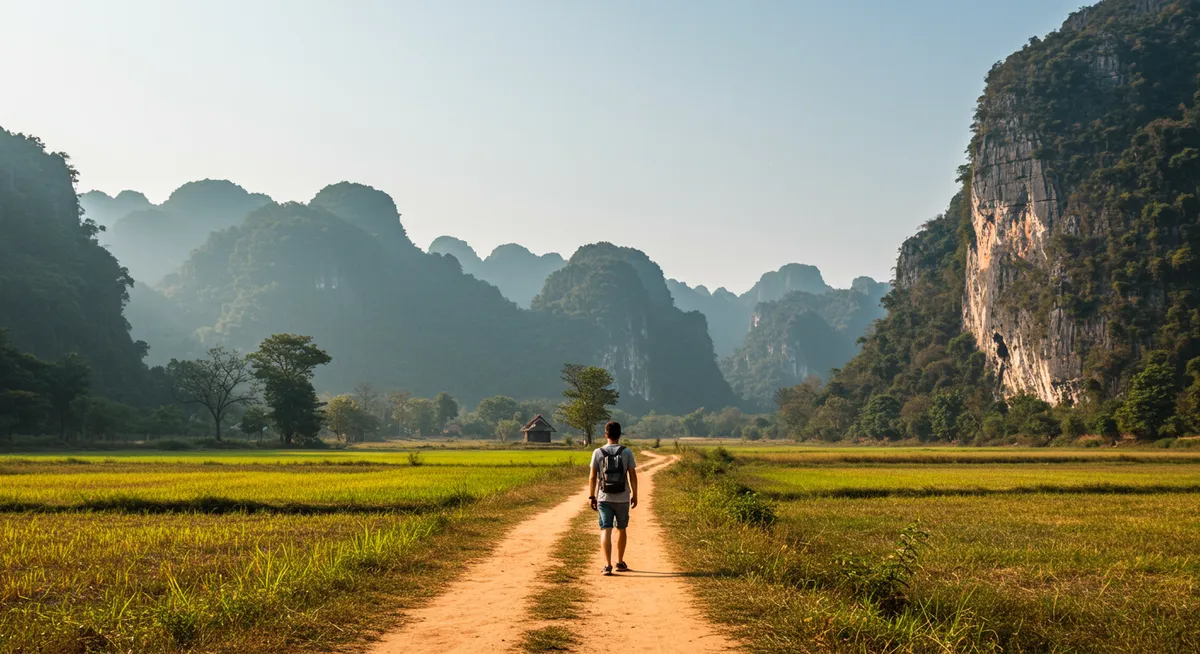
Escape the main tourist drag and immerse yourself in authentic local life with a walk through the villages and rice fields along the Nam Song River. Cross any of the numerous bamboo bridges to the quieter west bank. The paths here are mostly flat dirt tracks winding through lush green rice paddies, dotted with small, traditional Lao homes. You’ll encounter friendly villagers going about their daily routines, water buffalo grazing peacefully, and a pervasive sense of tranquility. Remember to smile and offer a polite “Sabaidee” (hello). Dress respectfully (shoulders and knees covered), and always ask permission before taking photos of people, especially children. This walk offers a profound connection to the local culture and landscapes.
‘Secret’ Lagoon & Cave Exploration
Duration: Half-day (Moderate-Challenging)
For the more adventurous solo traveler, Vang Vieng hides several less-frequented lagoons and caves that offer a sense of discovery. While not truly “secret” to locals, they are often less developed and require a bit more navigation skill. Consider heading further north or south of town on the west bank of the river. You might stumble upon Blue Lagoon 2 or 3, or lesser-known caves. Finding these spots often involves asking locals for directions (a map application on your phone is highly recommended) and walking along unpaved paths. For deeper cave exploration, especially beyond the initial entrance chambers, it’s highly advisable to hire a local guide who knows the passages and safety protocols. Always carry a headlamp, plenty of water, and inform someone of your planned route.
Navigating Vang Vieng: Maps, Apps & Local Guidance
Navigating Vang Vieng on foot is part of its charm, offering a deeper connection to the landscape and local life. While the town center is relatively straightforward, venturing out to the caves, lagoons, and viewpoints requires a smart approach to navigation. Don’t rely solely on instinct; a combination of technology and local interaction will be your best guide.
Your Digital Compass: Offline Maps Are Essential
For any walking tour in Vang Vieng, especially if you’re a solo traveler, offline maps are non-negotiable. Mobile data can be spotty or non-existent once you leave the main strip, and you don’t want to be stranded without directions.
- Maps.me: This is arguably your most valuable tool for Vang Vieng’s walking trails. Maps.me excels with its incredibly detailed, community-contributed maps, often showing obscure walking paths, smaller bridges, and even specific viewpoints that Google Maps might miss. Download the entire Vang Vieng region (or even all of Laos) before you arrive or whenever you have strong Wi-Fi. Many of the less-marked trails to hidden lagoons or viewpoints are clearly etched on Maps.me.
- Google Maps (Offline): While perhaps not as detailed for minor footpaths as Maps.me, Google Maps is still excellent for general town navigation, locating restaurants, guesthouses, and major attractions like Nam Xay Viewpoint. Remember to download the offline area for Vang Vieng, encompassing all your likely walking destinations, before you head out. This also allows you to save points of interest and measure distances.
Always charge your phone fully before a walk, and consider carrying a power bank. Even with offline maps, a dead battery means no map at all!
The Human Touch: Asking Locals for Help
Despite the wonders of digital maps, don’t underestimate the power of local guidance. Vang Vieng locals are generally friendly and eager to help, even if there’s a language barrier. This is particularly true when you’re looking for less-traveled paths or specific points of interest that might not be perfectly mapped.
- Basic Lao Phrases: Learning a few simple phrases goes a long way. Even a polite “Sabaidee” (hello) and “Khop Jai” (thank you) can open doors. For directions, try:
- “Yu sai…?” (Where is…?)
- “Khun pai saai?” (Go left?)
- “Khun pai kwaa?” (Go right?)
- “Pai suu mu” (Go straight)
- “Pai taam thang ni?” (Is this the way?)
Show them a point on your map or a photo of your destination. Gesturing is universal!
- Don’t Be Shy: If you’re feeling lost or unsure, approach a shop owner, a local villager, or even someone at a guesthouse. They might not speak fluent English, but they can often point you in the right direction or confirm you’re on the correct path.
Decoding Vang Vieng’s Trails: Signage (or Lack Thereof)
Unlike well-maintained national parks in other countries, Vang Vieng’s walking trails are often informal. Official signage is rare, especially once you’re off the main roads leading to popular spots like the Blue Lagoons or Tham Phu Kham Cave. Many trails are simply worn paths created by locals and fellow travelers.
- How to Identify Trails: Look for clear, worn dirt paths diverging from the main road. Sometimes you’ll spot small, hand-painted signs on pieces of wood or rocks pointing to a cave or lagoon, but don’t rely on them exclusively. Always cross-reference what you see on the ground with your offline map. If a path looks too overgrown or disappears abruptly, it might be time to check your map again or backtrack.
- Trust Your Map, Verify with Your Eyes: Your offline map should be your primary guide. It will show the general direction and shape of a path. Use your eyes to confirm that the physical path you’re on matches the digital one. The key is frequent checking, especially at intersections or when a path forks.
Embrace the adventure of navigating Vang Vieng. With your smartphone acting as your compass and a willingness to engage with the friendly locals, you’ll uncover incredible sights that many rush past.
When to Walk: Best Season & Time of Day
⭐ Recommendation: Don't miss out on amazing Vang Vieng tours - book now!
Optimizing your walking experience in Vang Vieng begins with understanding its tropical climate. Timing your solo strolls perfectly will ensure comfort, capture the best light for those breathtaking photos, and allow you to fully immerse yourself in the town’s unique atmosphere without battling the elements.
Best Season: The Dry & Delightful Months (October to April)
For unparalleled walking conditions, aim for Vang Vieng’s dry season, which stretches from October to April. This period offers:
- Comfortable Temperatures: While it can still be warm, especially towards March and April, the humidity is significantly lower than in the wet season, making longer walks much more enjoyable.
- Clear Skies & Stunning Views: Expect mostly sunny days, perfect for capturing the dramatic karst landscapes and emerald rice paddies. The lack of heavy rain also means trails are less muddy and slippery, providing safer footing.
- Accessibility: River crossings are generally easier, and paths to viewpoints or caves are more navigable. October and November are particularly lovely as the landscape is still lush from the preceding rains, but the weather is starting to cool. December to February offers the coolest temperatures, ideal for extensive exploration.
While the wet season (May to September) brings lush greenery and fewer tourists, it also means heavy downpours, potential flooding, and extremely muddy trails, which can significantly hinder your walking plans. If traveling during this time, be prepared with waterproof gear and accept that some paths might be impassable.
Best Time of Day: Embrace the Golden Hours
Regardless of the season, the time of day you choose for your walks is crucial. Vang Vieng can get intensely hot and humid, especially during the midday sun. For the most rewarding solo walking tours, target the early mornings and late afternoons:
-
Early Morning (Sunrise to 9:30 AM):
This is arguably the best time for any serious walking. The air is wonderfully cool and fresh, often with a gentle mist clinging to the mountains, creating a magical atmosphere. The soft, golden light is perfect for photography, casting long shadows and illuminating the karst peaks beautifully. You’ll find the streets quieter, the air cleaner, and have the chance to witness Vang Vieng waking up – perhaps spotting local monks on their alms rounds or villagers starting their day. It’s ideal for longer explorations like walking to the Blue Lagoon 1 (if you’re up for a trek) or exploring the rice fields.
-
Late Afternoon (4:00 PM to Sunset):
As the sun begins its descent, temperatures start to drop, and the light once again turns warm and golden. This is an excellent time for a more relaxed stroll, perhaps heading towards the Nam Song River to catch a breathtaking sunset over the mountains, or walking to one of the nearby viewpoints for panoramic vistas. The golden hour casts a spectacular glow on the landscape, perfect for capturing memorable photos.
-
Midday (10:00 AM to 3:30 PM):
It’s strongly advised to avoid extensive walking during these hours. The sun is at its strongest, making the heat oppressive and increasing the risk of sunburn and dehydration. Use this time for indoor activities like enjoying a leisurely lunch at a riverside restaurant, relaxing at your guesthouse, or visiting one of Vang Vieng’s many cafes. If you must be out, wear a wide-brimmed hat, apply high-SPF sunscreen generously, and carry plenty of water.
By aligning your solo Vang Vieng walking adventures with these prime times, you’ll maximize comfort, enhance your photographic opportunities, and truly soak in the serene beauty of this remarkable Laotian town.
Solo Dining & Socializing After Your Walk
After a day of exploring Vang Vieng on foot, your legs will be tired, your stomach will be rumbling, and you’ll likely be craving good food and perhaps some company. Fortunately, Vang Vieng’s compact town center and riverside stretch offer a fantastic array of options for solo diners looking to refuel, relax, and connect with fellow travelers.
Riverside Dining & Serene Sunsets:
The banks of the Nam Song River are undoubtedly the most picturesque setting for your post-walk meal. Numerous restaurants line the western side of the main street, offering stunning sunset views over the karsts. Many have comfortable floor seating or low tables, perfect for unwinding. Look for places offering traditional Lao BBQ, known as Sindad, a communal hotpot experience that’s surprisingly fun even for one, allowing you to cook your own meats and vegetables. While traditionally shared, many places offer smaller portions suitable for a solo diner, and it’s a great way to observe local culinary culture. For a more direct social vibe, spots like Gary’s Irish Bar on the main road (just a short walk from the riverside) often have a lively mix of solo travelers and groups, offering familiar comforts alongside local options, and a friendly atmosphere to strike up conversations.
Embrace Local Flavors & Cafes:
Don’t miss the chance to dive deeper into Lao cuisine. Besides Sindad, seek out a steaming bowl of Khao Piak Sen (Lao noodle soup), a comforting and hearty meal, or a vibrant Tam Maak Hoong (Lao papaya salad) for something fresh and spicy. Many local eateries have English menus and are very welcoming to solo diners. For a lighter bite or an afternoon pick-me-up, Vang Vieng is dotted with charming cafes. Naked Espresso is a popular choice for good coffee and pastries, offering a relaxed setting perfect for journaling about your walk or observing the town’s bustling life, often leading to natural interactions with other patrons.
Socializing & Happy Hour Hubs:
Vang Vieng truly comes alive in the evenings, with a vibrant social scene, especially around happy hour. This is prime time for solo travelers to meet others. Many bars along the main street and towards the river offer enticing happy hour deals on local BeerLao and cocktails, creating a lively, approachable atmosphere. While Sakura Bar is famed for its late-night party scene, its early evening happy hour can be a surprisingly good spot to meet people before it gets too boisterous. Look for other smaller, less overwhelming bars with outdoor seating where you can easily chat with people passing by or seated near you. Simply smiling, making eye contact, or commenting on the day’s weather can often open the door to a conversation.
Actionable Tips for Solo Connection:
- Sit at the Bar/Counter: If available, it’s often the easiest place to chat with staff or other solo diners.
- “How was your day?” or “Did you do [specific Vang Vieng activity] today?”: Use your shared walking experience as a natural conversation starter. You might find someone who walked the same path or is planning to!
- Join a Cooking Class: This is a fantastic way to meet people with shared interests in a fun, interactive setting, learning about local ingredients and dishes while making new friends.
- Hostel Common Areas: Even if you’re not staying in a hostel, some have open bars or cafes that are very solo-traveler friendly.
- Be Open & Approachable: A friendly demeanor goes a long way. Vang Vieng is full of fellow adventurers eager to share stories.
Whether you seek peaceful solitude after your trek or are keen to share your walking adventures with new friends, Vang Vieng offers a welcoming and diverse scene to round off your perfect day.
Connecting Beyond the Path: Vang Vieng’s Walking Tour Ecosystem
Vang Vieng is a playground for the independent walker, offering a sense of boundless freedom as you navigate its picturesque landscapes on foot. Yet, even the most self-sufficient solo adventurer can significantly enrich their experience by tapping into Vang Vieng’s "walking tour ecosystem"—a network that extends beyond marked paths to include the invaluable insights of local guides. While the allure of forging your own trail is strong, understanding when and how to connect with local expertise can transform a great walk into an extraordinary journey.
For the vast majority of Vang Vieng’s popular walking routes – like the leisurely strolls to the Blue Lagoons, Nam Song River viewpoints, or nearby rice paddies – a solo approach is perfectly feasible and incredibly rewarding. These paths are generally well-trodden, safe, and easily navigable with a good map or GPS. However, Vang Vieng’s true depth lies in its more challenging terrain and hidden cultural corners, where a local guide becomes not just an asset, but often a necessity.
Consider embarking on multi-day treks into the surrounding karst mountains, perhaps aiming for an overnight stay in a remote village, or exploring the deeper, less-visited sections of Vang Vieng’s extensive cave systems beyond the popular Tham Chang or Tham Phu Kham. These expeditions require specific local knowledge for navigation, safety (especially concerning flash floods in caves or unpredictable weather in the mountains), and sometimes, access permissions. A local guide, intimately familiar with the land, its dangers, and its hidden wonders, ensures both your safety and a truly authentic exploration. They can lead you to stunning viewpoints only known to locals, or safely navigate complex cave passages that would be hazardous for an unguided visitor.
Beyond navigation and safety, a local guide is a bridge to Vang Vieng’s vibrant culture. Imagine trekking through a remote village and having your guide explain traditional agricultural practices, the significance of a local festival, or the intricate weaving patterns of a specific ethnic group. They can facilitate respectful interactions with villagers, providing a rare glimpse into daily Lao life that you’d likely miss walking solo. Your guide can point out medicinal plants, identify rare birds, and share fascinating legends connected to the very mountains you’re traversing. This cultural immersion adds immeasurable depth, transforming a physical journey into a profound educational experience.
Finding a reputable local guide in Vang Vieng is straightforward. You can inquire at your guesthouse, visit one of the many tour agencies lining the main street, or seek recommendations from fellow travelers. Always look for licensed guides and discuss your desired route, duration, and what’s included (e.g., water, meals, permits) beforehand to ensure clarity on pricing and expectations. Even if you plan most of your Vang Vieng walks independently, dedicating one day to a guided trek or cave expedition can provide that "aha!" moment, enriching your understanding of this captivating region far beyond the visual beauty of its landscapes. It’s an investment in a deeper, more meaningful connection with Vang Vieng.
Respecting Local Culture & Environment
As you embark on your self-guided free walking tours in Vang Vieng, you’re not just exploring stunning landscapes; you’re stepping into the heart of a vibrant culture. To ensure your solo adventure is enriching for both you and the local community, it’s crucial to practice responsible tourism. Your respectful actions can make a significant positive impact on the environment and the people who call Vang Vieng home.
Dress with Respect
Vang Vieng is known for its adventurous activities, but it’s also home to deeply rooted traditions and sacred sites. When your walking tour takes you through local villages, past traditional homes, or especially to temples like Wat That, dressing modestly is a sign of respect. This means covering your shoulders and knees. Lightweight trousers or long skirts, and a T-shirt or modest top, are perfect for both comfort on your walk and cultural appropriateness. Always observe local customs and dress codes, particularly before entering any religious building.
Ask Before You Click
The people of Vang Vieng, especially the ethnic minority communities in the surrounding villages, are often part of the charm of your exploration. However, their privacy should always be respected. Before taking photos of individuals, especially monks, children, or elderly villagers, always ask for permission first. A simple gesture or “Sabai dee” (hello) with a smile and a hand motion towards your camera can go a long way. If they decline, respect their wishes without question. Focus on capturing the beautiful landscapes, architecture, or general street scenes instead.
Protect Our Planet: Mindful Waste Disposal
The natural beauty of Vang Vieng – its towering karst mountains, serene rice paddies, and the picturesque Nam Song River – is what draws many travelers. Help preserve this pristine environment. During your walks, make a conscious effort to dispose of your trash properly. Carry a small reusable bag for any litter you accumulate until you find a designated bin. Avoid leaving plastics, food wrappers, or cigarette butts anywhere, especially near rivers, caves, or viewpoints. The local infrastructure for waste management can be challenging, so “pack it in, pack it out” is an excellent motto to live by.
Support Local Livelihoods
One of the most direct ways to give back to the Vang Vieng community during your walking tours is by supporting local businesses. Instead of opting for larger, international chains, seek out family-run restaurants, guesthouses, and independent shops. When purchasing souvenirs, look for locally made handicrafts. Buying a refreshing drink from a small street vendor, enjoying a meal at a local eatery, or picking up fresh produce from a village market directly injects money into the local economy, benefiting the very people you’re encountering on your walks.
Be Mindful of Noise
While Vang Vieng has its lively spots, many areas are peaceful and serene. When your walking route leads you through residential neighborhoods, past temples, or into quiet natural areas like the paths to Blue Lagoon 1 or Tham Phu Kham Cave, be mindful of your noise levels. Keep conversations at a reasonable volume, avoid playing loud music from portable speakers, and generally respect the tranquility of these spaces. This consideration allows locals to maintain their peaceful daily lives and ensures a calm atmosphere for other visitors who come to appreciate Vang Vieng’s quiet beauty.
Frequently Asked Questions
Q: Is Vang Vieng safe for solo female walkers?
A: Generally, Vang Vieng is considered safe for solo female travelers. However, like any destination, it’s crucial to exercise common sense: avoid walking alone after dark, be aware of your surroundings, and trust your instincts. Stick to well-trafficked areas, especially after sunset. Many travelers find Vang Vieng to be a welcoming and easy place to navigate solo.
Q: Can I walk to all the main attractions from the town center?
A: Many attractions within and just outside the main town, like the market, temples, and riverside viewpoints, are easily walkable. For popular spots like Blue Lagoon 1, Pha Ngern Viewpoint, or more distant caves, you might need to walk a significant distance (2-7 km one way) or consider combining walking with a bicycle or scooter ride to the trailhead.
Q: What if I get lost or need help while walking?
A: Carry a fully charged phone with offline maps. If you get lost, try retracing your steps. Locals are generally friendly and helpful; use a translation app or point to your destination on a map. For emergencies, major guesthouses or tour operators can assist, and the tourist police are available.
Q: Are there any specific dangers to be aware of on Vang Vieng’s walking trails?
A: Be aware of uneven terrain, especially on trails to viewpoints or caves which can be rocky and slippery, particularly during or after rain. Some trails might have loose soil or require scrambling. Watch out for stray dogs, especially in rural areas – avoid direct eye contact and sudden movements. During the rainy season, some paths may become impassable or extremely muddy.
Q: How do I handle language barriers with locals?
A: While some locals, especially in tourist areas, speak basic English, it’s always helpful to learn a few basic Lao phrases (‘Sabaidee’ for hello, ‘Khop jai’ for thank you). A translation app on your phone can be invaluable, and body language along with pointing to maps or pictures can often convey your message effectively.
Vang Vieng truly comes alive when explored on foot, especially for the solo traveler seeking a profound connection with the destination. From tranquil riverside paths to challenging mountain hikes, each step offers a new discovery and a chance to forge your own unique story. Embrace the freedom, follow these practical tips, and step confidently into your Vang Vieng walking adventure. You’ll leave not just with incredible memories, but with a deeper appreciation for this magnificent corner of Laos and the resilience of your own two feet.