
Vang Vieng Hidden Gems: Ultimate Walking Tour Guide (2026)
Discover Vang Vieng’s secret spots and stunning landscapes on foot. This guide offers practical tips, local insights, and hidden gems for an unforgettable walking adventure.
On this page
Vang Vieng, often celebrated for its adventurous outdoor activities, holds a quieter charm for those willing to explore its beauty on foot. Beyond the main streets, a network of paths leads to serene lagoons, ancient caves, and breathtaking viewpoints, offering a unique perspective of this Laotian paradise. This comprehensive guide empowers you to embark on a self-guided walking discovery, revealing the hidden gems of Vang Vieng safely and enjoyably, connecting you deeper with its natural wonders and local life.
Key Tips and Takeaways
- Start your walks early in the morning to avoid the midday heat and crowds.
- Always carry ample water – Vang Vieng’s humidity can be deceptively dehydrating.
- Wear comfortable, sturdy walking shoes suitable for uneven and muddy terrain.
- Download offline maps (e.g., Maps.me) before you venture out, as connectivity can be patchy.
- Learn basic Lao greetings (‘Sabaidee’ for hello, ‘Khop Jai’ for thank you) to enhance local interactions.
- Dress respectfully, especially when passing through villages or near temples – cover shoulders and knees.
- Practice ‘Leave No Trace’ principles: pack out everything you pack in, and respect the natural environment.
Why Explore Vang Vieng on Foot?
While Vang Vieng is often associated with tubing down the Nam Song River or zipping around on motorbikes, we believe the true heart of this riverside town, nestled amidst dramatic limestone karsts and emerald rice paddies, is best discovered one step at a time. Exploring Vang Vieng on foot transforms a typical tourist visit into an immersive adventure, allowing you to peel back the layers and uncover its authentic charm and numerous hidden gems.
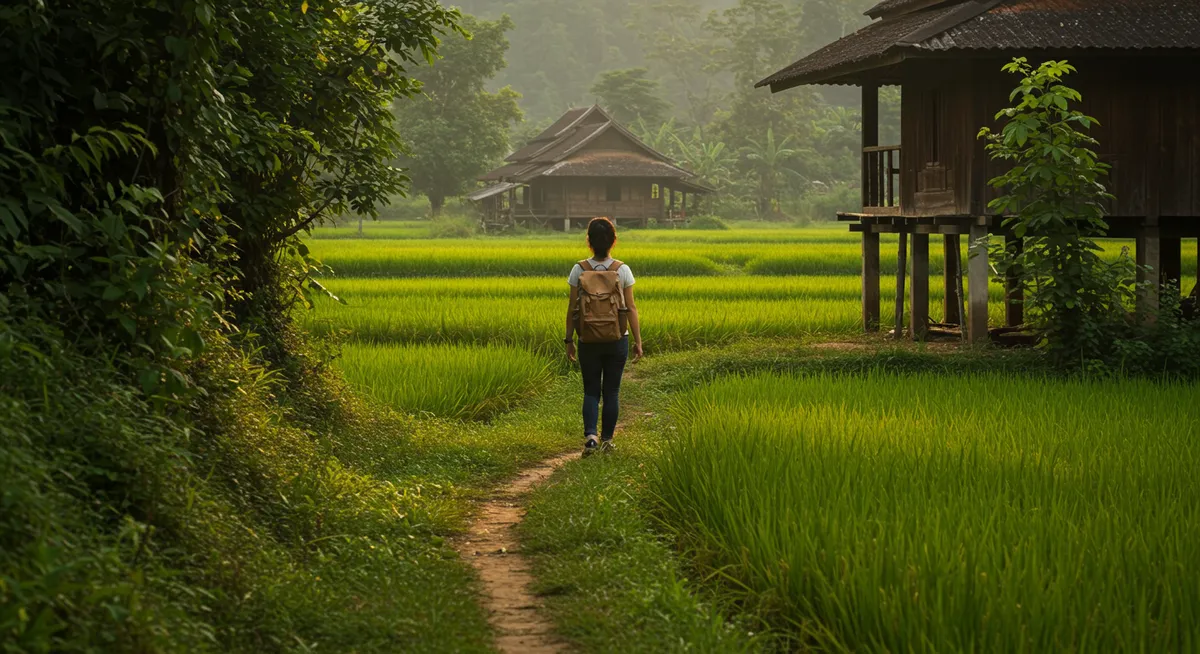
One of the most compelling reasons to lace up your walking shoes in Vang Vieng is the unparalleled access it grants. Many of the most breathtaking views, secluded swimming holes, and tranquil villages are simply out of reach for motorized transport. Imagine wandering along dusty paths that wind through vibrant green rice paddies, the air filled with the scent of blossoming frangipani, leading you to a quieter section of the Nam Song River or a less-visited cave like Tham Phu Kham. You’ll find yourself standing in awe beneath towering karsts, their ancient beauty seemingly within arm’s reach, a perspective often missed from a speeding vehicle. It’s on these quiet footpaths that you truly connect with the landscape.
Walking also offers the most authentic way to experience local life. Step away from the main tourist strip, and you’ll find yourself strolling through local hamlets where children play, women weave intricate textiles, and roosters crow in the morning. A walking tour allows for spontaneous interactions – a friendly wave from a villager, the chance to browse fresh produce at a bustling morning market, or even share a smile with a monk on his alms round. You’ll hear the gentle rhythm of daily life, smell the charcoal fires preparing local delicacies, and feel the soft earth beneath your feet, forging a deeper, more personal connection with Vang Vieng’s vibrant culture.
Choosing to explore on foot is a wonderfully eco-friendly way to travel, minimizing your carbon footprint while maximizing your engagement with the environment. It fosters a sense of mindful discovery, allowing you to dictate your own pace. If a particular vista catches your eye, or a quaint local eatery beckons, you’re free to stop, linger, and absorb the moment fully. This flexibility ensures you don’t just see Vang Vieng; you truly experience it, discovering sights that many others overlook.
To make the most of your walking explorations:
- Gear Up: Wear comfortable, sturdy walking shoes suitable for uneven terrain. Don’t forget a hat, sunglasses, and eco-friendly sunscreen.
- Stay Hydrated: Always carry plenty of water, especially during the warmer months.
- Go Early or Late: The cooler parts of the day – early mornings or late afternoons – are ideal for walking, offering softer light for photography and more comfortable temperatures.
- Mind the Map: While wandering is encouraged, have an offline map (like Maps.me) on your phone for navigation, especially when exploring less-trodden paths.
- Respect Local Customs: When walking through villages, dress modestly and be mindful of local etiquette. A polite “sabaidee” (hello) goes a long way!
By choosing to walk, you unlock Vang Vieng’s hidden narrative, one authentic step at a time, creating memories that go far beyond the typical tourist snapshots.
Best Time to Walk & Essential Packing List
Embarking on a walking discovery of Vang Vieng’s hidden gems is an unforgettable experience, but timing is everything to ensure maximum comfort and enjoyment. The absolute best time to explore Vang Vieng on foot is during the **dry season, spanning from October to March**.
During these months, you’ll be treated to clear skies, lower humidity, and more agreeable temperatures, making those longer treks and village strolls genuinely pleasurable. The trails are typically dry and less slippery, offering easier navigation to remote viewpoints and serene riverside paths. Daytime temperatures are warm but not oppressive, usually ranging from 20-30°C (68-86°F), perfect for active exploration.
While the dry season is ideal, the shoulder months of April and September can also be considered. April is hotter, preceding the main monsoon, but you might find fewer crowds. September marks the tail end of the rainy season, with landscapes at their most vibrant green, though trails might still be muddy in places. The rainy season (May-August) brings heavy downpours, high humidity, and potentially challenging muddy conditions, which can make extensive walking less comfortable and sometimes impractical for certain routes. Sticking to the dry season truly maximizes your Vang Vieng walking adventure.
To fully immerse yourself in Vang Vieng’s natural beauty and ensure a comfortable walking experience, packing smart is crucial. Here’s a comprehensive list of essentials for your hidden gem discovery:
- Sturdy Walking Shoes: This is paramount. Vang Vieng’s walking paths range from paved roads to uneven dirt trails, rocky ascents, and potentially muddy sections. Opt for closed-toe, comfortable, and supportive walking shoes or light hiking boots with good grip. Leave the sandals for town strolls.
- Light, Breathable Clothing: Due to the tropical climate, lightweight, moisture-wicking fabrics are your best friends. Think quick-drying shorts, t-shirts, and perhaps a long-sleeved top for sun protection or mosquito prevention during dawn/dusk walks.
- Wide-Brimmed Hat & Sunglasses: The sun in Vang Vieng can be intense, even on seemingly cloudy days. A hat offers crucial protection for your face and neck, while sunglasses shield your eyes from glare.
- High-SPF Sunscreen: Reapply frequently, especially if you’re sweating or near water. Sunburn can quickly dampen your walking spirits.
- Insect Repellent: Especially if you plan to walk near the river, in rural areas, or during early mornings/evenings, insect repellent (containing DEET or Picaridin) is highly recommended to ward off mosquitoes and other biting insects.
- Reusable Water Bottle: Hydration is key in Vang Vieng’s warmth. Bring a large reusable bottle (1-1.5 liters) and refill it whenever possible. Many guesthouses and cafes offer filtered water, helping you stay hydrated and reduce plastic waste.
- Small, Lightweight Backpack: A comfortable daypack (15-25 liters) is perfect for carrying your water, snacks, camera, and other essentials, leaving your hands free for navigation or balancing.
- Basic First-Aid Kit: For minor scrapes, blisters, or headaches, a small kit with antiseptic wipes, band-aids, blister plasters, pain relievers, and any personal medications is invaluable.
- Power Bank: If you’re relying on your phone for navigation, photography, or communication, a fully charged power bank will ensure you don’t run out of juice mid-adventure.
- Waterproof Bag for Electronics: Whether it’s an unexpected downpour or accidental splash near the Nam Song River, a small dry bag or waterproof pouch for your phone, camera, and wallet is a smart precaution.
Navigating Vang Vieng: Maps, Apps & Local Direction
⭐ Recommendation: Don't miss out on amazing Vang Vieng tours - book now!
While Vang Vieng’s compact town center feels easy to grasp, truly discovering its “hidden gems” amidst the sprawling karst landscape requires a strategic approach to navigation. Unlike grid-patterned cities, Vang Vieng’s charm lies in its organic growth, with informal trails often leading to the most stunning vistas. Here’s how to confidently chart your course for an unforgettable walking discovery.
Your Digital Compass: Offline Maps are Essential
Mobile signal can be patchy, especially outside the main town, making offline maps crucial:
- Google Maps: Before venturing out, download the entire Vang Vieng area for offline use. This is vital for navigating main roads, locating restaurants, and identifying key landmarks like the Nam Song River or bridges. Simply search for “Vang Vieng,” tap location details, and select “Download offline map.”
- Maps.me: This app is a lifesaver for explorers, often featuring a much more detailed network of walking trails, small footpaths, and unofficial shortcuts that Google Maps might miss. It’s excellent for finding caves (like Tham Chang or Tham Phu Kham), lagoons (such as Blue Lagoon 1 or 3), and viewpoints (like Pha Ngern or Pha Poak) where the official “road” might turn into a narrow dirt track. Download the Laos map pack in advance.
Pro Tip: Pin your guesthouse location on both apps as soon as you arrive for a constant return reference.
Old-School Orientation: Familiarize with Landmarks
Even with digital tools, a basic understanding of Vang Vieng’s geography will serve you well. The town is nestled beside the Nam Song River, which runs roughly north-south. Many attractions are on the western side, accessed by bridges (some requiring a small toll). Key landmarks include the main market street, the central roundabout, the prominent vehicle bridge, and the distinct shapes of the surrounding karst mountains. Always orient yourself relative to the river and the nearest prominent peak.
Embrace Local Expertise: Asking for Directions
Vang Vieng locals are generally friendly and eager to help, even with limited English:
- Learn Basic Lao Phrases: “Sabai dee” (hello) and “Khop jai” (thank you) will earn smiles. For directions, try “Pai sai?” (where is X going?) or “Yu sai?” (where is X?). Pointing to your destination on your map or a picture can also be very effective.
- Be Patient and Observe: Locals might point, gesture, or give vague directions. Try to understand the general direction and look for visual cues they might be indicating.
Understanding Vang Vieng’s Paths: Informal vs. Marked
Many of Vang Vieng’s most scenic routes are informal, well-trodden dirt paths created by locals and travelers:
- Informal Trails: Common along the riverside, leading to viewpoints, or connecting villages. They might not be marked by official signs but are generally safe and visible. Maps.me is invaluable for these.
- Marked Trails: While less common for general walking, some specific attractions might have rudimentary signs (e.g., arrows on rocks for Pha Ngern Viewpoint). Always pay attention to your surroundings and follow clear, established paths.
- Bridge Tolls: Be aware that many charming bamboo bridges crossing the Nam Song River (especially in dry season) are privately owned and charge a small pedestrian toll (typically 5,000-10,000 LAK per crossing). These are essential for accessing attractions on the west bank if you don’t want to use the main vehicle bridge.
With these navigation tips, you’re well-equipped to wander off the beaten path and uncover the hidden gems of Vang Vieng with confidence.
Safety First: Crucial Walking Tips for Travelers
Embarking on a walking discovery of Vang Vieng’s hidden gems is an unforgettable experience, but prioritizing your safety is paramount to ensuring your adventure is both thrilling and trouble-free. The unique natural beauty and laid-back pace of Vang Vieng come with specific considerations for walkers.
First and foremost, the tropical climate demands constant vigilance regarding **hydration and sun protection**. Vang Vieng can be intensely hot and humid, especially during the dry season. Always carry significantly more water than you think you’ll need, and replenish your supply regularly from local shops. Wear a wide-brimmed hat, sunglasses, and apply high-SPF sunscreen generously and frequently. Light, breathable clothing that covers your skin can offer excellent protection against the strong midday sun, which is particularly fierce between 10 AM and 3 PM.
When exploring, **recognizing safe paths** is crucial. While Vang Vieng offers many well-trodden trails to popular viewpoints like Phapoung or the various caves, some ‘hidden gems’ might lead you onto less defined routes or rural tracks. Stick to clearly visible paths whenever possible. If a path looks overgrown, unmaintained, or leads into dense vegetation, especially if you’re alone, it’s often best to turn back. Don’t hesitate to ask locals for directions or confirmation of a trail’s safety; their knowledge is invaluable.
Be aware of the local environment, including **wildlife**. While serious encounters are rare on main walking paths, you might spot various insects, and in more rural or overgrown areas, snakes can be present. Always watch where you step, especially in grassy or rocky areas. Mosquitoes are common, particularly at dusk, so carrying insect repellent is highly recommended to ward off bites. Remember, you’re a visitor in their habitat, so observe from a respectful distance.
The beauty of Vang Vieng lies in its authentic village life and stunning natural landscapes, often intertwined. Always **respect private property**. Many paths wind through local farms, fields, or close to family homes. Stick to public rights-of-way, and if you’re unsure if you’re on private land, simply turn back. Avoid trampling crops or disturbing local residents, and never enter someone’s property without explicit permission. A simple ‘Sabaidee’ (hello) and a friendly smile go a long way.
Although Vang Vieng’s traffic is considerably lighter than major cities, **understanding basic traffic rules** is still important. Motorbikes are prevalent, and while drivers are generally attentive, they might not expect pedestrians in certain areas. Walk on the side of the road, facing oncoming traffic where safe, and always look both ways before crossing, even on quieter streets. Be particularly cautious on bridges and narrow sections of road.
Finally, for any longer treks or explorations to more remote hidden gems, it’s vital to **inform someone of your plans**. Tell your guesthouse staff, a friend, or family your intended route and your estimated time of return. Always carry a fully charged mobile phone. While signal can be patchy in very remote areas amidst the karst mountains, it’s invaluable for navigation (consider downloading offline maps) and in case of an emergency. A small power bank can also be a lifesaver.
The Main Routes & Uncovering Hidden Trails
Vang Vieng, with its dramatic karst landscapes and emerald rice fields, is a paradise for walkers. While many opt for scooters, exploring on foot offers unparalleled intimacy, allowing you to stumble upon the true hidden gems that define the region’s charm.
The Main Routes: Gateway to Discovery
Your walking adventures often begin by crossing the iconic Nam Song River. Several options exist: the picturesque bamboo bridges (typically 5,000-10,000 LAK toll for foreigners) or more stable concrete bridges. Each crossing grants access to the west bank, the launching point for most natural attractions.
From the west bank, well-trodden paths lead to the famous Blue Lagoons (1, 2, & 3) and various caves. These routes are generally well-signed, sometimes paved, and shared with other travelers. Blue Lagoon 1 (and Tham Phu Kham Cave) is the most popular and can be crowded. Paths to Blue Lagoon 2 and 3 offer progressively quieter experiences, making them excellent starting points for deeper exploration.
Uncovering Hidden Trails: Where Tranquility Lies
The real magic of Vang Vieng on foot begins when you venture beyond the main tourist arteries. Finding serene spots and authentic glimpses of local life requires observation and a little adventure.
- Beyond the Popular Lagoons: Instead of turning back from Blue Lagoon 1, look for smaller, less-maintained paths continuing deeper into the countryside. These often branch off, leading to much quieter swimming holes or less-frequented viewpoints. Many small, unnamed lagoons and river access points exist; keep an eye out for faint trails leading away from primary roads or local children playing by the water.
- Elevated Viewpoints & Village Paths: For breathtaking panoramas, seek paths ascending the karst peaks. While some, like Pha Ngern, are somewhat established, others are merely local trails for farming or access. These often promise more solitude. Delve into the heart of rural Laos by walking through the expansive rice paddies, following narrow dirt bunds. These paths often connect to small, traditional villages like Pha Tang, offering an incredible opportunity to observe daily life and experience genuine local warmth. Remember to be respectful: dress modestly, especially when passing through villages, and politely ask permission before taking photos of people.
Practical Tips for Off-the-Beaten-Path Walks:
- Footwear is Key: Sturdy, comfortable walking shoes or sandals with good grip are essential for often muddy, rocky, or slippery paths.
- Hydration & Sun Protection: Always carry plenty of water, especially during hotter months. A hat, sunglasses, and high-SPF sunscreen are crucial.
- Offline Maps & Observation: While Google Maps is helpful for main roads, download an offline map app (like Maps.me) for contour lines and smaller trails. However, rely more on observation, your senses, and the natural flow of the land.
- Go Early or Late: The best time to walk is early morning or late afternoon to avoid midday heat and crowds.
- Leave No Trace: Pack out everything you pack in. Respect the natural environment and local communities.
Beyond the Famous Spots: True Hidden Gems
⭐ Recommendation: Don't miss out on amazing Vang Vieng tours - book now!
While Vang Vieng is renowned for its iconic Blue Lagoons and tubing adventures, the true magic often lies just beyond the well-trodden path. For the dedicated walker, Vang Vieng offers a treasure trove of ‘hidden gems’ – places where the serene beauty of Laos unfolds without the crowds, providing authentic glimpses into local life and breathtaking natural wonders. Lace up your boots; it’s time to discover the Vang Vieng few get to see.
Lesser-Known Caves & Elevated Views
- Pha Poak Cave for Serene Panoramas: For an unforgettable sunrise or sunset experience away from the bustling viewpoints, consider the short but rewarding hike to Pha Poak Cave. Located just a few kilometers north of town (easily walkable or a short bike ride), the path to the cave itself is less about deep exploration and more about the incredible panoramic reward. A relatively steep climb leads to the cave entrance, but the real draw is the elevated viewpoint offering sweeping vistas of the karst landscape bathed in golden light – a perfect, tranquil spot for photography and reflection. Bring a headlamp if exploring inside the small cave chamber.
- Water Cave (Tham Nam)’s Deeper Secrets: While Tham Nam (Water Cave) is popular, many visitors only experience its initial, easily accessible sections. To truly discover its hidden depths, consider going further than the initial float. With a local guide, you can navigate deeper into the cave system, where the current is gentler and the formations more pristine, offering a more intimate and adventurous experience. Remember to respect the cave environment and always go with proper safety gear and experienced guidance for deeper exploration.
Quiet Stretches of the Nam Song River
The Nam Song River isn’t just for tubing. To find tranquility, walk south or north along its banks away from the main town center. Head towards the local villages and farmlands, and you’ll find peaceful stretches where fishermen cast their nets, children play, and water buffalo graze contentedly. These paths offer serene views of the river against the backdrop of the towering karsts, providing excellent photo opportunities and a chance to observe daily rural life unfolding at a languid pace. Consider walking across one of the bamboo bridges (often with a small toll) to explore the less developed western bank.
Local Temples Away from the Main Town
Vang Vieng isn’t a temple town like Luang Prabang, but a gentle stroll through its quieter neighborhoods or slightly outside the core will often reveal small, unassuming local temples (wats). These humble religious sites, often made of simple wood and brick, offer a peaceful respite and a window into the spiritual life of the community. They are typically less ornate but exude a genuine sense of calm. Look for them nestled amongst residential homes or along quieter pathways leading out of town – a respectful visit offers a unique cultural insight away from tourist crowds.
Remote Rice Paddy Pathways
For the most idyllic and crowd-free karst views, venture into the remote rice paddy pathways. Head west across the main bridge (charge applies) and immediately diverge from the main road leading to the Blue Lagoons. Instead, take the smaller dirt tracks winding through the vast emerald-green or golden-brown rice fields, depending on the season. Here, the panoramic vistas of the limestone karsts are uninterrupted, framed by lush paddies and dotted with small village homes. These pathways are perfect for an immersive walk, offering incredible photographic opportunities and a profound sense of peace as you soak in Vang Vieng’s iconic landscape in solitude. Be mindful of farmers at work and always stick to designated paths.
Practical Walking Tips for Hidden Gems
- Footwear is Key: Sturdy, comfortable walking shoes with good grip are essential, especially for rocky cave ascents or muddy paddy paths.
- Hydration & Protection: Carry ample water, wear a hat, and apply sunscreen – the Laotian sun can be intense.
- Respect Local Life: When walking through villages or past homes, dress modestly and be mindful of local customs; a friendly ‘Sabaidee’ (hello) goes a long way.
- Timing is Everything: Early mornings or late afternoons are best to avoid the midday heat and enjoy softer light for photography.
- Navigation: While many paths are straightforward, an offline map app (like Maps.me) can be invaluable. Don’t hesitate to ask locals for directions; they are often happy to help.
Fueling Your Journey: Local Eateries & Refreshment Stops
As you embark on your Vang Vieng walking discovery, fueling your body with local delights is not just a necessity, but an integral part of the experience. The town offers a vibrant tapestry of casual eateries, bustling street food stalls, and charming cafes, perfect for recharging your energy reserves.
For a hearty meal that will keep you going, seek out traditional Lao dishes. A must-try is Laap, a flavorful minced meat salad (chicken, beef, or fish) seasoned with herbs, lime juice, and toasted sticky rice powder. It’s incredibly fresh and packed with protein. Another excellent choice, especially for a comforting refuel, is Khao Piak Sen, a thick Lao noodle soup often served with chicken or pork, spring onions, and a rich broth. You’ll find these at local restaurants along the main streets and side alleys, often recognizable by their simple, open-air setups.
When it comes to refreshing drinks, Vang Vieng delivers. The local Lao coffee is a strong, dark brew, typically served with condensed milk for a sweet kick – perfect for an early morning boost or an afternoon pick-me-up. For hydration and a burst of vitamins, look for the ubiquitous fresh fruit shake stalls. Mango, banana, passion fruit, and watermelon are common, blended with ice for a delightfully cooling treat that’s vital in Vang Vieng’s tropical climate.
Street food is a fantastic option for quick, budget-friendly bites. Keep an eye out for vendors selling freshly baked baguettes, a legacy of French colonial influence, often filled with eggs, cheese, or various meats and vegetables. Other popular street snacks include grilled skewers, fried spring rolls, and sticky rice dishes. The Vang Vieng Night Market, easily accessible from most walking routes, is a prime spot to explore a wide variety of these offerings in one vibrant location.
Practical Tips for Hygienic Eating on Your Walks:
- Look for Busy Stalls: A high turnover of customers usually means fresh ingredients and popular, tasty food.
- Observe Cleanliness: While street food is inherently rustic, check if the vendor’s hands are clean, if utensils are washed, and if food is cooked to order.
- Hot is Best: Opt for food that is cooked fresh and served hot, as this minimizes the risk of bacteria.
- Trust Your Gut: If something doesn’t look or smell right, err on the side of caution.
- Carry Small Notes: Many smaller stalls and street vendors prefer or only accept cash, so have small denominations of Lao Kip readily available.
- Stay Hydrated: Always carry a bottle of water, even if you plan to buy drinks. Reusable water bottles are a good idea, as many guesthouses offer free refills.
Integrating these culinary stops into your walking route allows you to experience Vang Vieng not just through its sights, but also its tastes and aromas, ensuring you stay energized for every hidden gem you uncover.
Cultural Encounters & Respectful Interactions
Walking through Vang Vieng’s hidden gems offers a unique chance to connect intimately with local culture and daily life. To ensure these encounters are positive and respectful for everyone, understanding and practicing appropriate interactions is key. Your actions as a walker directly impact the community, helping to preserve the authentic charm of this beautiful region.
Start every interaction with a warm “Sabaidee” (sa-bai-dee). This simple Lao greeting, often accompanied by a gentle ‘Nop’ (a prayer-like gesture with hands pressed together), opens doors and shows genuine respect. Locals, especially children, will often return your greeting with a smile, making your walking journey through villages like Phon Ngam or along the river a more enriching experience.
While Vang Vieng is more relaxed than some Lao cities, modesty in dress is paramount, especially when exploring religious sites or rural communities.
- Temples: When visiting places like Wat That or Wat Si Soumang, ensure your shoulders and knees are covered. Light trousers, long skirts, or scarves are ideal. Always remove your shoes before entering temple buildings or homes.
- Villages & General Walking: Opt for comfortable yet conservative clothing. While hiking trails might permit shorts, covering up when entering local villages, where daily life unfolds, shows respect for local customs and avoids unintended offense.
As you walk through local villages and engage with residents, remember these cultural sensitivities:
- Personal Space & Gestures: Avoid touching people’s heads, as it’s considered the most sacred part of the body. Likewise, avoid pointing your feet at people or religious objects, as feet are considered the lowest and dirtiest.
- Interacting with Monks: Women should never touch or hand anything directly to a monk. If you wish to offer something, place it on the ground or a designated offering tray. Maintain a respectful distance.
- Public Behavior: Keep noise levels down, particularly in residential areas. Public displays of affection are generally frowned upon in Lao society.
The scenic beauty and local life in Vang Vieng are incredibly photogenic. However, always ask for permission before taking someone’s picture, especially children or people at work. A simple gesture like pointing to your camera and asking “Sabaidee?” with an inquiring look often suffices. If they decline, respect their wishes without argument. Remember, you’re observing their daily life, not a performance for your lens.
Your walking journey is also an opportunity to directly contribute to the local economy and support responsible tourism.
- Local Markets: Explore the morning market in Vang Vieng town or smaller stalls in the villages you pass through. Buying fresh fruit, local snacks, or handmade crafts directly from vendors ensures your money benefits the community.
- Local Eateries: Choose small, family-run restaurants over larger tourist-oriented establishments. This supports local families and often offers a more authentic culinary experience.
- Ethical Tours: If you hire local guides for specific treks (like a hike to Pha Ngern Viewpoint or to Tham Chang Cave), ensure they are local, certified, and operate ethically. Your choices empower local businesses and promote sustainable practices.
Embracing these cultural considerations will not only enhance your “Hidden Gems Vang Vieng” walking discovery but also leave a positive impression, fostering meaningful connections with the heart and soul of Laos. Enjoy the journey, respectfully!
Connecting with Nature: Eco-Conscious Walking
Vang Vieng, a jewel nestled amidst towering karst mountains, emerald rice paddies, and the serene Nam Song River, offers an unparalleled opportunity to connect deeply with nature. As you embark on your walking discoveries through its hidden gems, remember that the preservation of this stunning environment is a shared responsibility. Eco-conscious walking isn’t just a philosophy here; it’s a vital practice that ensures Vang Vieng remains beautiful for generations to come.
Adhering to ‘Leave No Trace’ principles is fundamental to experiencing Vang Vieng responsibly. These guidelines are simple, yet profoundly impactful:
- Pack It In, Pack It Out: This is perhaps the most crucial principle. Whatever you bring with you – from snack wrappers and water bottles to fruit peels – must leave with you. Vang Vieng and its surrounding rural areas have limited waste management infrastructure. Disposing of trash improperly contributes to pollution of the river and land. Carry a small reusable bag specifically for your waste, and dispose of it correctly back in town. Even organic waste should be packed out, as it can take a long time to decompose and isn’t natural to every ecosystem.
- Stay on Marked Paths and Durable Surfaces: Vang Vieng’s landscapes are a mosaic of karst formations, active rice fields, and delicate ecosystems. Wandering off established trails or cutting through private land can cause erosion, damage vegetation, and disturb local agricultural efforts. Stick to the well-worn footpaths that weave through villages and lead to viewpoints or caves. This also protects fragile habitats, like the unique flora that clings to limestone cliffs.
- Do Not Disturb Wildlife or Plants: While walking, you might encounter various birds, insects, or even small reptiles. Observe them from a distance. Never feed wild animals, as it can alter their natural behaviors and health. Similarly, resist the urge to pick flowers or take cuttings from plants. Every element plays a role in the local ecosystem, and even a small disturbance can have a ripple effect. Respect the natural environment as you would a museum – look, but don’t touch.
- Conserve Water: Water is a precious resource, especially in more rural areas. While walking, carry a reusable water bottle and refill it at your guesthouse or designated refill stations around town. Avoid purchasing single-use plastic bottles whenever possible. When using facilities in guesthouses or local eateries, be mindful of your water consumption. The health of the Nam Song River and its tributaries is integral to Vang Vieng’s environment and the livelihoods of its people.
Your journey as an eco-conscious walker contributes positively in more ways than just waste management. By choosing local guesthouses, eating at family-run restaurants, and perhaps hiring a local guide for more off-the-beaten-path excursions, you directly support the community and its economy. This creates a sustainable cycle where locals benefit from tourism and are incentivized to protect their natural heritage. Embrace Vang Vieng with an open heart and a responsible footprint, ensuring its raw beauty endures for all who follow.
Extending Your Adventure: Beyond Just Walking
While exploring Vang Vieng’s enchanting hidden gems on foot offers an incredibly intimate discovery experience, the true magic of this Laotian paradise lies in its diverse array of adventure activities. Think of your free walking tours in Vang Vieng as the foundational layer, allowing you to connect deeply with the town’s rhythm and its immediate surroundings. But to truly unlock the deeper layers of Vang Vieng’s natural splendor, consider seamlessly blending your leisurely strolls with other thrilling perspectives.
Bicycle Your Way Further
Many of Vang Vieng’s most iconic natural attractions, while visible from a distance during your walks, are a little too far for a comfortable daily walking circuit. This is where a trusty bicycle becomes your best friend. Renting a sturdy mountain bike is incredibly easy and affordable throughout town (expect to pay around 15,000-30,000 LAK per day). With a bike, you can effortlessly extend your reach:
- Blue Lagoons & Caves: Pedal across the rustic Nam Song River bridges (often for a small toll, around 5,000-10,000 LAK per person/bike) to reach the famous Blue Lagoons (like Blue Lagoon 1, 3, or 6) and accompanying caves such as Tham Phu Kham Cave. The journey itself is picturesque, winding through rice paddies and past dramatic karsts.
- Paddy Field Paths: Explore the lesser-trodden paths that snake through verdant rice fields, discovering local villages and gaining unique insights into rural life that might be just out of comfortable walking range.
Practical Tip: The roads outside Vang Vieng town can be dusty, especially in the dry season. Consider wearing a bandana or mask. Always check the brakes and tire pressure before setting off!
Kayak or Tube the Nam Song River
After walking the scenic riverside paths and admiring the towering limestone karsts from the banks of the Nam Song River, imagine seeing those very same views from the water! Kayaking or tubing offers a unique, refreshing perspective and is a quintessential Vang Vieng experience. It allows you to appreciate the sheer scale of the geological formations and the lush riparian ecosystem in a way walking simply cannot.
- Morning Kayak & Afternoon Walk: Combine a leisurely morning paddle down the Nam Song, stopping at riverside bars or small caves accessible from the water, with an afternoon walk back in town or to a nearby viewpoint once you’ve returned your equipment.
- Sunsets on the Water: Consider a late afternoon kayak or tube trip to witness the magnificent Vang Vieng sunsets painting the karsts in fiery hues, then return to town for a relaxing evening stroll.
Practical Tip: Many tour operators offer combined kayaking and cave tours. Always wear a life vest, even if you’re a strong swimmer. The current can be deceptively strong in parts.
Combine with Cave Exploration or Ziplining
Vang Vieng is riddled with incredible caves, many of which require a bit of a walk to reach their entrances. Instead of just walking to a cave, make the most of your journey:
- Walk to Tham Chang Cave: This easily accessible cave across the orange bridge is perfect for a morning walk. After exploring its cool depths, perhaps extend your adventure by renting a bicycle nearby to explore the area further.
- Ziplining Thrills: Locations for ziplining, often combined with cave exploration (like Tham Nam or Water Cave, where you tube through the cave), require transport. Many tour packages include hotel pick-up, allowing you to combine a thrilling zipline experience with a short trek to the launch point or the cave entrance. It’s a fantastic way to see the jungle canopy and karst landscapes from above!
By thoughtfully integrating these activities, your Vang Vieng adventure transforms from a series of walks into a holistic exploration, allowing you to appreciate the region’s diverse beauty from every angle – on foot, by bike, and from the tranquil waters or soaring heights.
Expert Tips for an Unforgettable Experience
⭐ Recommendation: Don't miss out on amazing Vang Vieng tours - book now!
To truly unlock the magic of Vang Vieng on foot and delve beyond the well-trodden paths, adopting a few insider strategies can elevate your exploration from great to truly unforgettable. These tips aren’t just about efficiency; they’re about fostering genuine connections and embracing the serendipity that makes travel so rewarding.
-
Embrace the Local Tongue: Learn a Few Lao Phrases
While many in the main tourist areas speak some English, making an effort with basic Lao phrases goes a long way. Locals deeply appreciate the respect shown when you try to communicate in their language. Simple greetings like “Sabaidee” (hello), “Khop jai” (thank you), and “Tao dai?” (how much?) can open doors to warmer interactions, smoother transactions at the market, and even a friendly smile. It’s amazing how a little effort can transform a transaction into a memorable exchange, offering a glimpse into the genuine hospitality of the Vang Vieng community.
-
Arm Yourself with Small Denominations of Kip
Vang Vieng is home to countless charming street food stalls, local fruit vendors, small independent shops, and tuk-tuk drivers. Many of these smaller establishments often don’t have change for large denominations of Lao Kip (LAK). Carrying 5,000, 10,000, or 20,000 LAK notes will make your life significantly easier and prevent awkward moments. It ensures quick, smooth purchases, especially when grabbing a refreshing fruit shake or a delicious bowl of noodle soup from a roadside vendor, allowing you to keep your discovery flow uninterrupted.
-
Cultivate a Spirit of Spontaneous Detours
While having a general route is helpful, the true “hidden gems” of Vang Vieng often reveal themselves when you allow for spontaneity. Don’t be afraid to wander down an intriguing alley that looks residential, follow the aroma of a delicious local dish, or simply pause to observe daily life unfolding along the Nam Song River. These unplanned tangents often lead to authentic local experiences, charming little cafes, or breathtaking views you wouldn’t find on any map. Build extra time into your walking schedule to embrace these delightful detours.
-
Rise Early for Golden Light and Cooler Temperatures
Vang Vieng wakes up beautifully, and so should you! Starting your walking tour early in the morning offers a multitude of benefits. The temperatures are significantly cooler and more comfortable for extended walking, especially during the hot season. The soft, golden light provides stunning photographic opportunities, illuminating the karst mountains and the tranquil river in an almost magical glow. You might also witness the serene alms rounds of local monks or enjoy the quiet bustle of the town coming to life, free from the midday crowds.
-
Engage with Locals for Genuine Insights
The people of Vang Vieng are incredibly welcoming. Don’t hesitate to smile, make eye contact, and politely engage with shopkeepers, restaurant owners, or even fellow pedestrians. A simple “Sabaidee” can often lead to a friendly conversation. Ask about their crafts, their recommendations for local food, or what they enjoy most about living here. These interactions provide invaluable cultural insights, offer authentic recommendations away from tourist traps, and truly enrich your understanding of Vang Vieng beyond its stunning landscapes. Supporting their businesses directly contributes to the local economy and fosters a more meaningful travel experience.
By integrating these expert tips into your Vang Vieng walking adventure, you’re not just seeing the sights; you’re truly experiencing the soul of this captivating Laotian town.
Frequently Asked Questions
Q: Is Vang Vieng safe for solo female travelers on walking tours?
A: Generally, Vang Vieng is safe. However, like any destination, exercise common sense: avoid walking alone in remote areas after dark, inform someone of your plans, and trust your instincts. Stick to main paths during daylight hours for solo exploration.
Q: Do I need a local guide for walking the hidden gems?
A: For most popular attractions and well-trodden paths, a guide isn’t strictly necessary if you’re comfortable with offline maps and self-navigation. However, for genuinely remote ‘hidden gems’ or challenging terrains, a local guide can enhance safety, provide deeper cultural insights, and help you discover truly secret spots you might otherwise miss.
Q: What kind of terrain can I expect on Vang Vieng’s walking trails?
A: Expect a mix of paved roads, dirt tracks, muddy paths (especially during the wet season), rocky trails, and occasional steep climbs to viewpoints. Sturdy, closed-toe shoes with good grip are highly recommended. Some river crossings might involve small bridges or even wading in shallow areas.
Q: Are there entrance fees for Vang Vieng’s natural attractions?
A: Yes, many natural attractions like Blue Lagoons, caves, and some viewpoints have small entrance fees (typically 10,000-20,000 LAK per person). These fees often contribute to maintaining the sites. It’s best to carry small denominations of Lao Kip (LAK) for these payments.
Q: How can I get back to town if I get tired or lost during a walk?
A: For longer walks, consider a tuk-tuk on call or ask locals for assistance. Many walking trails are accessible by dirt roads where tuk-tuks or motorbikes can travel. For shorter routes, you can often retrace your steps or hail a passing local vehicle (though less common off the main roads). Always have a phone for emergencies.
Vang Vieng, with its dramatic karst landscapes and serene river valleys, truly comes alive when explored on foot. Beyond the well-trodden tourist spots lie countless hidden gems, waiting to be discovered by the curious walker. By embracing the freedom of a self-guided tour, respecting local customs, and treading lightly, you’ll not only uncover the secret beauty of this Laotian paradise but also forge an unforgettable, personal connection with its nature and people. So lace up your boots, pack your sense of adventure, and step into the hidden wonders of Vang Vieng.