
Luang Prabang Walking Tours: Best Food & Drink Stops (2026)
Explore Luang Prabang’s charm on foot! Discover delicious Laotian food stops, street eats, and hidden cafes on our comprehensive walking tour guide. Perfect for foodies and walkers.
On this page
Luang Prabang, a UNESCO World Heritage site, is undoubtedly best explored on foot. Its serene temples, preserved colonial architecture, and the majestic Mekong River views unfold beautifully with each step. But what truly elevates a walking tour in this ancient city is the vibrant and incredibly diverse culinary scene. This guide helps you seamlessly blend sightseeing with savoring the unique, delicious, and often surprising flavors of Laos, turning every stroll into a delightful culinary adventure.
Key Tips and Takeaways
- Wear comfortable, breathable shoes for maximum enjoyment.
- Hydrate frequently with bottled water; tap water is not safe to drink.
- Carry small denominations of Lao Kip (LAK) for street food vendors.
- Be adventurous with your food choices, but prioritize busy stalls with high turnover for freshness.
- Embrace the ‘eat with your hands’ tradition for sticky rice and certain dishes.
- Don’t miss the opportunity to try a refreshing Lao iced coffee.
Why Combine Walking & Eating in Luang Prabang?
Luang Prabang isn’t merely a city to observe; it’s a living, breathing tapestry of culture, history, and incredibly enticing aromas that beg to be explored on foot. Combining walking with strategic food stops transforms a casual visit into an immersive, multi-sensory adventure. Here’s why lacing up your shoes and indulging your palate is the ultimate way to experience this enchanting UNESCO World Heritage site.
Deeper Cultural Immersion & Authentic Encounters
Unlike navigating by vehicle, walking allows you to truly sync with Luang Prabang’s gentle rhythm. You’ll wander down quiet sois (alleys), stumble upon serene temples, and witness the daily life unfold before you – from saffron-robed monks on their alms rounds to children playing in temple courtyards. Each food stop becomes an intimate encounter. Sharing a plastic stool at a bustling street food stall, exchanging smiles (and perhaps a few words) with a local vendor, or watching a family prepare traditional dishes right before your eyes provides an unparalleled glimpse into the heart of Lao culture. It’s not just about what you eat, but the genuine connections you forge along the way.
Discovering Hidden Culinary Gems
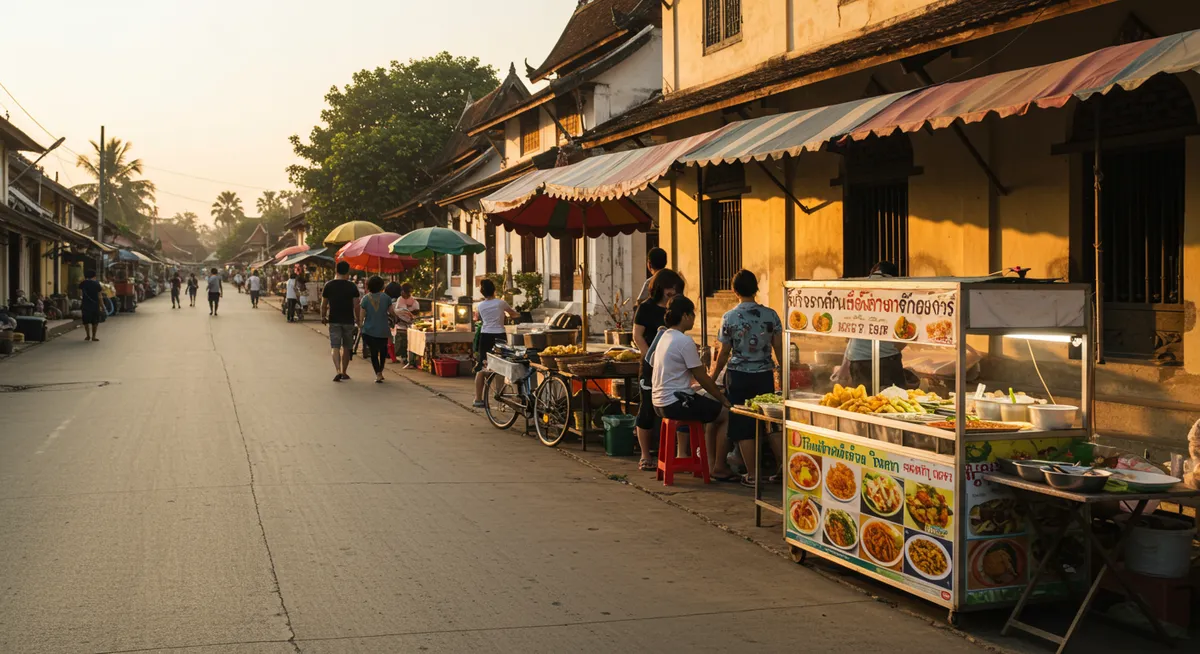
Buses and tuk-tuks whisk you past so much of Luang Prabang’s authentic charm. On foot, however, your senses lead the way. You’ll be drawn by the fragrant steam from a humble noodle shop tucked away down a side street, the sizzle of grilled meats from an unassuming vendor, or the vibrant colours of a fruit stall bursting with exotic durian or mango. These are the truly local, often family-run, eateries and stalls that serve up the most authentic and delicious flavours – the kind of places you won’t find on any tourist map. Don’t be afraid to follow your nose down a promising alley; some of the best discoveries are made off the beaten path.
The “Burn & Indulge” Cycle: Guilt-Free Feasting
Luang Prabang’s culinary landscape is famously irresistible. From the comforting warmth of a bowl of Khao Piak Sen (Lao noodle soup) for breakfast to the satisfying crunch of crispy Sai Oua (Lao sausage) and sweet, sticky coconut pancakes, your taste buds will be in constant delight. The sheer joy of walking everywhere means you’re constantly burning calories, creating the perfect justification for indulging in yet another mouth-watering treat. Every step you take exploring temples, strolling along the Mekong, or climbing Mount Phou Si for sunset views, fuels your appetite for the next delicious discovery. It’s the perfect virtuous cycle for any food lover!
A Full Sensory Feast for All
Walking through Luang Prabang is an orchestra for your senses. The sweet scent of frangipani blossoms mingling with the earthy aroma of fresh coffee, the distant chanting of monks, the vibrant hues of intricate temple carvings, and the gentle lapping of the Mekong River – it’s all part of the experience. Integrating food stops amplifies this sensory journey. Hear the rhythmic chop of ingredients, see the vibrant colours of fresh salads, smell the fragrant herbs in Or Lam (Lao stew), and taste the fiery kick of Jaew Bong (chili paste) or the refreshing sweetness of a fresh fruit shake. Each bite and sip adds a new layer to your appreciation of this magical city.
Practical Food Stops & Recommendations for Your Walk:
- Morning Market (near the main road): An essential early-morning stop for local breakfast delights like Khao Piak Sen, fresh fruit, or sticky rice with grilled fish.
- Night Market Food Stalls (side alleys near the post office): After exploring the craft stalls, dive into the food section for an incredible variety of grilled meats, tempting vegetarian buffets, and refreshing fruit shakes.
- Riverside Cafes: Perfect for a mid-walk break with a strong Lao coffee or a fresh juice, offering serene views of the Mekong or Nam Khan rivers.
- Street Vendors: Keep an eye out for portable carts selling delicious Nam Khao (crispy rice salad), Khanom Krok (warm coconut pancakes), or fresh sugar cane juice as you wander.
So, lace up your comfortable shoes, prepare your taste buds, and let your feet lead you on an unforgettable culinary and cultural adventure through Luang Prabang. Every corner holds a new discovery, and every meal is a deeper connection to this truly special place.
Luang Prabang Must-Try Dishes & Refreshments on Your Walk
One of the true joys of a Luang Prabang walking tour is the constant invitation to taste and savor the local cuisine. As you navigate the peaceful streets and bustling markets, you’ll discover a culinary landscape rich in flavor, history, and incredible affordability. Don’t just walk past; step into the delicious world of Luang Prabang’s local specialties, perfect for fueling your explorations.
Noodle Soups & Savory Snacks
- Khao Piak Sen (Lao Noodle Soup): Start your day like a local with a comforting bowl of Khao Piak Sen. This hearty, glutinous rice noodle soup, often made with chicken or pork broth, is typically garnished with fresh herbs, crispy fried garlic, and a squeeze of lime. It’s a perfect, warming breakfast or light lunch stop found at many street stalls and small local eateries, particularly around the morning market or on side streets.
- Sai Oua (Lao Sausage): As you stroll, the enticing aroma of grilling meats will inevitably lead you to Sai Oua. This flavorful Lao sausage is distinctively herbaceous, made with minced pork, lemongrass, galangal, kaffir lime leaves, and chili. It’s an excellent, easy-to-eat snack on the go. Look for it sizzling on charcoal grills at the Luang Prabang Night Market or at various roadside vendors throughout the day.
Main Dishes & Staples
- Mok Pa (Steamed Fish in Banana Leaf): For a lighter yet profoundly flavorful experience, seek out Mok Pa. Fresh fish (often Mekong catfish or tilapia) is marinated with a fragrant paste of dill, lemongrass, kaffir lime, and chili, then wrapped in a banana leaf and steamed until tender. It’s a delicate, healthy, and aromatic dish perfect for a relaxed lunch at a local restaurant or even found pre-prepared at market food stalls.
- Larb (Minced Meat Salad): Considered by many to be the unofficial national dish, Larb is a must-try. This vibrant “salad” features minced meat (chicken, pork, beef, or even fish) tossed with toasted sticky rice powder, fresh herbs like mint and cilantro, spring onions, lime juice, and chili. It’s incredibly fresh, zesty, and often served with raw vegetables. It’s best enjoyed as part of a meal, often found in local restaurants and guesthouse eateries, and pairs perfectly with sticky rice.
- Sticky Rice (Khao Niao): No Lao meal is complete without a basket of sticky rice. This staple is typically served alongside every dish, meant to be eaten with your hands by rolling it into small balls and dipping it into sauces or scooping up bites of your food. You’ll find it everywhere, from simple street food stalls to upscale restaurants, a constant companion to your culinary journey.
Refreshing Sips
- Fresh Fruit Shakes: Luang Prabang’s tropical climate means an abundance of fresh, ripe fruit. You’ll find countless vendors blending refreshing fruit shakes (known locally as ‘nam pan’) on every corner. Mango, passion fruit, banana, and pineapple are popular choices, often blended with a touch of condensed milk for sweetness. They are an absolute lifesaver for cooling down and rehydrating during your walks.
- Traditional Lao Coffee: For a caffeine kick with a local twist, try traditional Lao coffee. Often served strong and sweet with condensed milk, it’s a rich and invigorating brew. Pop into one of the charming riverside cafes or even grab a quick cup from a street vendor for an authentic taste of Luang Prabang’s coffee culture.
Actionable Tip: Don’t be shy about venturing into small, bustling local spots, even if they look unassuming. These are often where the most authentic and delicious experiences lie. Always carry small kip notes, and remember to look for places with a steady stream of locals – a sure sign of good food!
The Morning Market & Breakfast Bites Walk
🌟 Local Expert Tip: Get the most out of your Luang Prabang visit with guided tours!
Kickstart your culinary adventure in Luang Prabang with a truly immersive experience: a pre-breakfast stroll through the vibrant Morning Market. Located just a short walk from the iconic Royal Palace and Wat Mai, this market isn’t just a place to shop; it’s the beating heart of local life, a sensory feast that awakens with the dawn.
Best Time to Visit: To truly capture the market’s essence and secure the freshest bites, aim to arrive between 6:00 AM and 8:00 AM. This is when the market is most bustling with locals buying their daily provisions, and the food stalls are setting up with hot, freshly prepared dishes. Plus, the morning air is cooler and more pleasant for walking.
The Walk & What to Look For: Begin your gentle exploration from the main road near the Royal Palace, heading into the side streets and alleys where the market truly unfurls. You’ll navigate a maze of stalls overflowing with exotic fruits, fresh vegetables, aromatic herbs, and an astounding array of jungle ingredients. Keep your eyes peeled for the sections dedicated to prepared foods – that’s where your breakfast magic happens!
Breakfast Bites Not to Miss:
- Noodle Soup (Khao Piak Sen / Khao Soi): Follow your nose to the steaming cauldrons. Luang Prabang offers delicious variations of noodle soup. Khao Piak Sen is a hearty tapioca noodle soup, often with pork or chicken, served with fresh herbs. Khao Soi, unique to Northern Laos, features wide rice noodles in a clear broth, topped with a rich minced pork and tomato paste. Look for stalls with plenty of local patrons – a sure sign of authenticity and deliciousness.
- Traditional Lao Sweets (Khanom): As you wander, you’ll spot vendors with trays of colourful, bite-sized sweets. Try Khanom Krok, small coconut pancakes cooked in a special pan, or various sticky rice desserts often wrapped in banana leaves, infused with taro or sweet potato. They’re perfect for a sweet palate cleanser.
- Sticky Rice (Khao Niao) with Accompaniments: Sticky rice is the staple of the Lao diet, and here you’ll find it served alongside an incredible variety of morning delights. Grab a small bamboo basket (tip: hold it gently to keep the rice warm and soft!) and pair it with grilled pork skewers (ping moo), spicy Lao sausages (sai oua), or a dollop of flavorful chili paste (jeow bong). It’s a simple, yet profoundly satisfying, start to the day.
- Freshly Brewed Lao Coffee (Kafae Lao): No breakfast walk is complete without a strong, sweet Lao coffee. Look for small carts with thermos flasks. It’s typically served black with condensed milk, giving it a rich, robust flavour that’s addictive. Sit on a small plastic stool and watch the market awaken around you.
Practical Tips for Your Market Morsels:
- Cash is King: Bring small denominations (10,000, 20,000 kip notes) for easier transactions.
- Eat Like a Local: Don’t be afraid to point at what looks good. Most vendors are friendly and used to visitors.
- Hygiene Check: While street food is generally safe, observe where locals are eating. Stalls with high turnover and freshly cooked food are usually the best bet.
- Pace Yourself: It’s tempting to try everything, but remember there are many more food stops to discover throughout Luang Prabang!
This Morning Market walk offers not just incredible food, but an authentic glimpse into the daily rhythm of Luang Prabang. It’s an unmissable part of understanding the city’s vibrant culture through its cuisine.
Old Town Charm & Riverside Delights Walk
🌟 Local Expert Tip: Get the most out of your Luang Prabang visit with guided tours!
Embark on a delightful journey through the heart of Luang Prabang with our “Old Town Charm & Riverside Delights Walk,” specifically curated to highlight the incredible food stops along the way. This loop, exploring the main peninsula area, offers a perfect blend of cultural immersion and culinary indulgence, making it one of the most rewarding Luang Prabang walking routes for food lovers.
Your culinary adventure begins near the historic Royal Palace Museum, where the tantalizing aroma of freshly baked goods often fills the air. For your first essential stop, choose between two beloved establishments that beautifully showcase Luang Prabang’s French-Lao culinary heritage: Le Banneton Cafe & Bakery or Joma Bakery Cafe. Both are ideal for a morning pick-me-up, offering an array of flaky croissants, pain au chocolat, sourdough bread, and excellent coffee. Fuel up with a French-Lao pastry and a strong Lao coffee as you plan your gentle wander.
From your chosen bakery, leisurely stroll along Sisavangvong Road. This central artery is lined with charming colonial buildings, boutique shops, and intricate temples. As you amble, keep an eye out for small, unassuming stalls selling fresh fruit smoothies or local snacks like Khao Nom Kok (coconut griddle cakes) – perfect little tasters to keep you going. Take a detour to admire the stunning architecture of the Royal Palace Museum or the intricate details of nearby wats.
Continue towards the tip of the peninsula, where Sisavangvong Road seamlessly transitions into Khem Khong Road, running parallel to the majestic Mekong River. This riverside stretch offers a different kind of culinary charm, with eateries providing breathtaking views. For a truly memorable experience, aim to reach Utopia in the late afternoon. Perched on a hill overlooking the river, it’s an iconic spot for sunset drinks and light snacks, offering a relaxed vibe and panoramic Mekong vistas. Enjoy a fruit shake or a local beer as the sky paints itself in vibrant hues.
Along Khem Khong Road, you’ll find a variety of smaller, boutique eateries and guesthouse restaurants that serve traditional Lao dishes alongside international fare. Don’t be shy to step into one that catches your eye for a late lunch or early dinner. Seek out authentic Luang Prabang specialties such as Or Lam (a spicy, woody stew) or sticky rice with grilled Mekong fish. The beauty of this walk is the opportunity to spontaneously discover hidden gems.
Practical Tips for Your Walk:
- Pace Yourself: This loop can take anywhere from 2-4 hours, depending on how many food stops you make and how much time you spend at each.
- Comfortable Footwear: While relatively flat, you’ll be doing a lot of walking, so comfortable shoes are a must.
- Hydration: Luang Prabang can be warm. Carry a water bottle and refill it frequently at cafes or shops.
- Best Time: Early morning offers cooler temperatures and fresh pastries. Late afternoon allows for stunning sunset views over the Mekong.
This “Old Town Charm & Riverside Delights Walk” isn’t just about getting from point A to B; it’s about savoring every moment and every bite, connecting with Luang Prabang’s unique atmosphere through its food and charming streets.
Street Food Alley: A Night Market Culinary Adventure
As the sun dips below the Mekong, painting the sky in fiery hues, Luang Prabang’s main thoroughfare transforms into a vibrant night market. But for the discerning food walker, the real magic happens just off the main Handicraft Market, in what locals affectionately call the Street Food Alley, typically located near Wat Sen or just behind the main market stalls.
This culinary corridor is a sensory explosion, a must-visit food stop on any Luang Prabang walking route. It’s where tantalizing aromas mingle, and the sizzle of grills provides a constant soundtrack to your evening stroll. Here’s what awaits your palate:
- BBQ Skewers Galore: The undisputed stars of the show are the myriad of grilled skewers. From succulent marinated chicken and pork to local fish and unique Lao sausages, these smoky delights are cooked fresh over charcoal. Pick your favorites and enjoy them hot off the grill.
- Fresh & Fried Spring Rolls: Discover both the crispy, golden fried variety bursting with glass noodles and vegetables, and the healthier, refreshing fresh spring rolls packed with herbs, vermicelli, and often shrimp or tofu, served with a sweet chili dipping sauce.
- Sweet Coconut Pancakes (Kanom Krok): Follow your nose to the sweet, buttery scent of these traditional Lao-Thai treats. Cooked in a special dimpled pan, these small, spherical pancakes are crispy on the outside and wonderfully creamy and coconut-y on the inside – perfect for a sweet bite.
- Vibrant Fruit Shakes: Quench your thirst with an invigorating fresh fruit shake. Stands overflow with tropical treasures like mango, passion fruit, dragon fruit, and pineapple. Choose your blend, and watch as it’s blended into a refreshing, ice-cold beverage right before your eyes.
- The Legendary Vegetarian Buffet: A true Luang Prabang institution, this all-you-can-eat vegetarian buffet offers a remarkable value. For a fixed, small price, you get to fill a bowl with an assortment of curries, stir-fries, noodle dishes, and fresh vegetables. Go early for the best selection!
Practical Tips for Your Culinary Adventure:
Navigating this bustling alley is part of the fun. Here’s how to make the most of your visit:
- Timing is Key: Stalls typically start setting up around 5:30 PM and are in full swing by 6:00 PM. Arriving early (around 6:00-6:30 PM) allows you to wander leisurely and see the freshest preparations before the biggest crowds descend.
- Choosing Your Stall: Look for vendors with high turnover – this generally indicates fresh ingredients and popular dishes. While street food by nature is rustic, observe general cleanliness and how food is handled.
- Payment & Haggling: Have plenty of small denominations of Lao Kip ready. Prices are generally very low and often fixed for individual items. For multiple items or a larger order, a gentle attempt at a slightly better price might be accepted, but generally, prices are fair and transparent.
- Embrace the Experience: Don’t expect fine dining. Grab a small plastic stool, find a spot at a communal table, and soak in the lively atmosphere. It’s an authentic Luang Prabang experience.
- Stay Hydrated & Safe: It can get warm and crowded. Keep bottled water handy. While most vendors are trustworthy, use common sense regarding hygiene. A small bottle of hand sanitizer is always a good idea.
The Street Food Alley is more than just a place to eat; it’s a vibrant expression of Luang Prabang’s local life and an unmissable culinary highlight on your walking tour.
Hidden Lanes & Local Eateries: Beyond the Main Drag
While Luang Prabang’s main thoroughfare, Sisavangvong Road, offers an array of delightful cafes and restaurants, some of the most authentic and memorable culinary experiences lie just a stone’s throw away, hidden in plain sight. This section of your walking tour encourages you to embrace the spirit of discovery, veering off the well-trodden path into the quieter lanes and alleys that crisscross this charming city.
Think of these explorations as treasure hunts for your taste buds. Often, the best finds aren’t grand restaurants but humble, family-run establishments where a single dish is perfected over generations, or simple stalls that serve a specific local delicacy. These are the places where locals gather, where the aromas are genuine, and the prices are truly local.
When you’re out walking, here’s what to look for:
- Follow Your Nose: The scent of simmering broth, grilling meats, or freshly baked bread can be your best guide. Strong, inviting aromas often lead to a fantastic find.
- Plastic Chairs and Busy Tables: A tell-tale sign of a good local eatery is a cluster of plastic tables and chairs, especially if they’re bustling with Lao families and friends. High local patronage usually signifies delicious, affordable food.
- Single-Dish Specialists: Many hidden gems specialize in just one or two dishes. Look for small shops with large vats of Khao Piak Sen (Lao noodle soup), or a stall solely dedicated to making fresh spring rolls or grilled Sai Oua (Lao sausage). These narrow-focused spots often offer unparalleled quality.
- Hidden Alleys Near Markets: Explore the small paths branching off from the morning and night markets. You might stumble upon tiny kitchens selling exceptional sticky rice and grilled fish, or a vendor offering sweet snacks you won’t find on the main road.
- “Restaurant” Signs in Lao: Don’t be deterred if you don’t see an English menu or elaborate signage. Pointing to what others are eating or smilingly asking for “menu” (if available) can often suffice.
Don’t be afraid to wander down a residential lane that seems quiet; you might discover a delightful little eatery serving incredible Mok Pa (steamed fish in banana leaf) or a refreshing glass of sugarcane juice. These spots often operate from the front of someone’s home, offering a unique glimpse into everyday Luang Prabang life.
Practical Tips for Your Culinary Detours:
- Carry Small Notes: Many local eateries and stalls only accept cash, and often prefer smaller denominations of Lao Kip.
- Embrace the Humble Setting: The charm of these places often lies in their simplicity. Don’t expect fancy décor or extensive English menus.
- Stay Hydrated: Especially if you’re exploring during the day, remember to carry water or pop into a local shop for a cold drink.
- Go Early for Breakfast/Lunch: Many of these local spots, especially noodle shops, are busiest in the morning or around lunchtime and may close by mid-afternoon.
By venturing beyond the main drag, you’ll not only savor some of Luang Prabang’s most authentic flavors but also immerse yourself more deeply in the city’s charming, unhurried pace and truly connect with its local heart.
Refreshment Stops & Cultural Cafes
As you embark on your delightful Luang Prabang walking routes, remember that pacing yourself is key to truly savoring the city’s charm. Fortunately, Luang Prabang is dotted with inviting spots perfect for a well-deserved pause, a refreshing drink, and a moment to soak in the local atmosphere. These aren’t just pit stops; they’re integral parts of the cultural experience, offering a glimpse into the laid-back Lao lifestyle.
One of the most iconic and highly recommended stops for any coffee lover is Saffron Coffee. Located right by the Mekong River, it offers stunning riverside views – a perfect backdrop for reflecting on your morning’s exploration. Saffron is renowned for its excellent, ethically sourced Lao coffee, often from local growers. Grab a seat on their balcony, enjoy the breeze, and try their signature pour-over or a creamy Lao iced coffee (Café Nom Yen). It’s an ideal spot to rehydrate, re-energize, and perhaps pick up some beans as a souvenir.
For a completely different, yet equally essential, Luang Prabang vibe, make your way to Utopia. Tucked away from the main road near the Nam Khan River, this laid-back establishment is famous for its relaxed, bohemian atmosphere, especially popular in the late afternoons and evenings. During the day, it’s a serene oasis perfect for stretching out on cushions, enjoying a fresh fruit shake, a Lao iced coffee, or a local herbal tea. It’s less about speed and more about slowing down, making it an excellent mid-walk sanctuary for your feet and your mind. The views over the Nam Khan and surrounding greenery are incredibly soothing.
Beyond dedicated cafes, look for opportunities to refresh at Luang Prabang’s various cultural centers. The Traditional Arts and Ethnology Centre (TAEC), for example, often has a small, quiet café or tea room where you can enjoy a drink after exploring their fascinating exhibits. Similarly, places like the main boutique of Ock Pop Tok (Living Crafts Centre) sometimes offer a pleasant spot for a beverage, allowing you to combine cultural immersion with a relaxing break. These venues provide a tranquil setting, often amidst traditional Lao architecture or gardens, enhancing the sense of discovery.
Don’t overlook the simpler, more ubiquitous refreshment opportunities. You’ll find numerous small, family-run shops and street stalls offering bottled water, fresh coconuts, and delicious, inexpensive Lao iced coffee. This local version, often made with condensed milk, is wonderfully sweet and strong – a perfect pick-me-up. Also, be adventurous and try some local herbal teas, often served cold and incredibly refreshing after walking in the tropical warmth.
Actionable Tips for Your Refreshment Stops:
- Hydrate Regularly: Luang Prabang’s climate can be warm, so prioritize water stops even between your chosen cafes.
- Embrace Lao Iced Coffee: It’s a local specialty and a fantastic energy boost. Don’t be shy about asking for Café Nom Yen.
- Look for Shade: Many cafes offer shaded seating areas or outdoor patios that provide a cool respite.
- Combine with People-Watching: Select a cafe with a good vantage point to observe daily life unfolding around you.
- Carry Small Bills: While many larger cafes accept cards, smaller local spots or stalls will appreciate cash.
These refreshment stops are more than just places to drink; they are vibrant social hubs and peaceful sanctuaries that contribute immensely to the authentic Luang Prabang experience. Enjoy these moments of tranquility amidst your walking adventures!
Practical Tips for Your Culinary Walking Tour
🌟 Local Expert Tip: Get the most out of your Luang Prabang visit with guided tours!
Embarking on a culinary walking tour in Luang Prabang is an adventure for your senses, a true highlight of your visit. To ensure your experience is as seamless and delicious as possible, here are some essential practical tips to keep in mind as you explore the city’s vibrant food scene on foot.
Prioritize Food Hygiene and Freshness
- Look for Busy Stalls: A good rule of thumb for street food anywhere, including Luang Prabang, is to eat where the locals eat. High turnover usually means fresh ingredients and popular dishes.
- Opt for Freshly Cooked Food: Wherever possible, choose dishes that are cooked to order, hot off the wok or grill. This minimizes the risk of foodborne illness. The bustling Night Market food street is an excellent place to find an abundance of freshly prepared options, from sizzling Lao sausages to vibrant grilled fish.
- Be Mindful of Produce: While the fresh fruit shakes are irresistible (and highly recommended!), be cautious with pre-cut fruits or salads that might have been washed in unfiltered water. Stick to fruits you can peel yourself, like bananas or mangoes.
Stay Hydrated in the Tropical Heat
Luang Prabang’s climate is warm and humid, especially during the walking hours. Staying hydrated is paramount.
- Carry Bottled Water: Always have a supply of bottled water with you. It’s readily available at convenience stores, guesthouses, and many street stalls throughout the city.
- Embrace Local Refreshments: Quench your thirst with refreshing local drinks. Fresh fruit shakes are popular (ask if they use purified ice), as is sweet Lao iced coffee. Don’t miss trying *Nam Parn* (sugarcane juice), often pressed fresh before your eyes, offering a sweet energy boost as you walk.
Comfortable Footwear is Non-Negotiable
You’ll be doing a lot of walking, navigating uneven sidewalks, charming alleys, and perhaps a few temple steps. Comfortable, breathable, and supportive shoes are absolutely essential for enjoying your culinary journey without discomfort.
Carry Small Denominations of Kip
Street food vendors and local market stalls primarily deal in Lao Kip. It’s crucial to carry small notes (e.g., 5,000, 10,000, 20,000 Kip notes) as vendors often don’t have change for larger bills. This makes transactions smoother and quicker, allowing you to move from one delicious bite to the next with ease. ATMs are available, but withdraw smaller amounts or break larger notes at banks or larger shops if possible.
Respect Local Customs and Etiquette
Luang Prabang is a deeply spiritual and conservative city. When interacting with vendors and locals:
- Smile and Be Patient: A friendly smile goes a long way. Patience is key, especially during busy periods.
- Ask Before Photographing: Always ask for permission before taking photos of people, especially monks or vendors.
- Dress Respectfully: While not strictly required for street food, if your walking tour takes you past temples, ensure you have shoulders and knees covered as a sign of respect.
Handling Dietary Restrictions & Basic Lao Phrases
Navigating dietary restrictions with street food can be challenging, but not impossible. Many Lao dishes contain fish sauce, soy sauce, and sometimes MSG. For vegetarians or those with allergies, consider carrying a translation card.
Learning a few basic Lao phrases will greatly enhance your interaction:
- “Sabaidee!” (Sah-bai-dee) – Hello! (Can also mean ‘How are you?’)
- “Khop Jai” (Khawp-jai) – Thank you
- “Baw Sai…” (Baw sai…) – Don’t put in… (e.g., “Baw sai padek” – don’t put in chili)
- “Gin Jay” (Gin jay) – Vegetarian (though understanding of this can vary)
- “Baw Pet” (Baw pet) – Not spicy
Luang Prabang’s culinary landscape is ripe for exploration on foot. From the aromatic stalls of the Morning Market offering traditional breakfast options like Khao Piak Sen (noodle soup) to the expansive spread of the Night Market’s food street with its grilled fish, savory Sai Oua (Lao sausage), and fresh spring rolls, there’s an endless array of food and refreshment opportunities awaiting your discovery. Enjoy the journey, one delicious step at a time!
Connecting with Local Food Tours & Cooking Classes
While self-guided walks offer incredible freedom to explore Luang Prabang’s enchanting streets, dedicated food tours and cooking classes provide a structured, immersive dive into the heart of Laotian cuisine. These experiences perfectly complement your independent explorations, offering insights and tastes you might otherwise miss, truly enriching your understanding of the local culture and its culinary traditions.
Diving Deep with Local Food Tours:
For those eager to unlock the secrets of Luang Prabang’s vibrant food scene without the guesswork, a guided food tour is an excellent choice. Many of these tours are inherently walking-based, leading you through bustling morning markets, the atmospheric Night Market food stalls, and down charming alleyways to discover hidden eateries. A local guide acts as your culinary translator, explaining the unique ingredients – from foraged jungle herbs to exotic fruits – and sharing stories behind classic dishes like khao piak sen (noodle soup), crispy Mekong riverweed, or the various types of sticky rice. You’ll gain context, learn about the cultural significance of food, and taste authentic flavors with confidence. It’s a fantastic way to navigate the sometimes-overwhelming array of street food options and find the freshest, most delicious bites.
Hands-On Learning with Cooking Classes:
Beyond tasting, a cooking class offers a truly hands-on connection to Laotian food. Most classes begin with an educational stroll through a local market, where you’ll learn to identify and select fresh ingredients unique to Laos. This market visit is a wonderful walking experience in itself, allowing you to observe daily life and interact with local vendors. Back at the kitchen, often set in a tranquil garden, you’ll be guided step-by-step in preparing several traditional dishes. Imagine mastering the art of making mok pa (steamed fish in banana leaf), perfecting a spicy larb (minced meat salad), or simmering a rich or lam (Luang Prabang stew). You’ll gain practical skills and a deeper appreciation for the balance of flavors – sweet, sour, spicy, salty – that defines Laotian cooking. The ultimate reward, of course, is sitting down to enjoy the delicious feast you’ve created.
Practical Tips for a Deeper Culinary Connection:
- Book in Advance: Especially during peak season, popular food tours and cooking classes fill up quickly.
- Consider Your Focus: Some tours specialize in street food, others in market exploration, and cooking classes vary in the dishes they teach. Research to find one that aligns with your interests.
- Communicate Dietary Needs: Most reputable operators are accommodating, but it’s crucial to inform them of any allergies or dietary restrictions (vegetarian, vegan, gluten-free) when booking.
- Enhance Your Walks: Think of these structured experiences as a culinary primer. The knowledge gained – identifying ingredients, understanding flavor profiles – will enhance your subsequent self-guided walks as you discover new food stalls and eateries.
By integrating a food tour or cooking class into your Luang Prabang itinerary, you’re not just eating; you’re engaging with the heart and soul of this beautiful city through its incredible food. It’s an unforgettable way to truly taste and understand Laos.
Frequently Asked Questions
Q: Is it safe to eat street food in Luang Prabang?
A: Generally, yes, street food in Luang Prabang is safe. Look for stalls with a high turnover of customers, freshly cooked food, and clean preparation areas. Avoid anything that looks like it’s been sitting out for too long. If in doubt, stick to hot, cooked dishes.
Q: What’s the best time of day to do a food walking tour?
A: For market experiences and breakfast, early morning (6-9 AM) is ideal. For general exploration and café stops, late morning to early afternoon works well. The evening (5-9 PM) is perfect for the Night Market food street and riverside dining.
Q: How much should I budget for street food per meal?
A: Street food in Luang Prabang is very affordable. You can expect to pay anywhere from 10,000 LAK to 30,000 LAK (approx. $0.50 – $1.50 USD) per dish or serving. A full, satisfying meal from street vendors often costs less than $5 USD.
Q: Are vegetarian or vegan options readily available?
A: Yes, vegetarian options are quite common, especially at the Morning Market and Night Market food street, where you can find fresh salads, fruit, and vegetarian buffets. Many noodle dishes can be made without meat. Vegan options require more careful inquiry, but are increasingly available at cafes.
Q: Should I bring my own water bottle?
A: While tap water is not safe to drink, bringing a reusable water bottle and refilling it at guesthouses or cafes that offer filtered water is an eco-friendly option. Otherwise, bottled water is widely available and inexpensive.
Luang Prabang truly comes alive when you explore it on foot, and its culinary landscape is an integral part of that discovery. From the bustling morning markets to the vibrant night stalls, and hidden cafes to riverside restaurants, every turn offers a new flavor to savor. So lace up your shoes, open your senses, and let the delicious aromas of Luang Prabang guide your unforgettable walking adventure.