
Vang Vieng Walking Tour: Cultural Insights & Local Life (2026)
Explore Vang Vieng on foot! Uncover local life, ancient traditions, and stunning landscapes with our comprehensive walking tour guide. Practical tips included.
On this page
Vang Vieng, often known for its adventurous outdoor activities, holds a deeper, more serene beauty waiting to be discovered by those willing to explore on foot. Beyond the tubing and kayaking, a vibrant local culture, ancient traditions, and breathtaking natural landscapes unfold with every step. This guide is your companion to unlocking the authentic heart of Vang Vieng through immersive walking tours, offering unique cultural insights and unforgettable experiences.
Key Tips and Takeaways
- Embrace the slower pace to truly connect with Vang Vieng’s vibrant culture and landscapes.
- Prioritize comfortable, closed-toe footwear and stay hydrated throughout your walks.
- Always carry a small amount of local currency (Lao Kip) for purchases and small fees.
- Learn basic Lao greetings like ‘Sabaidee’ (hello) and ‘Khop Jai’ (thank you) for meaningful interactions.
- Consider hiring a local guide for deeper cultural insights, unique access, and to support the community directly.
- Practice responsible tourism by respecting local customs, minimizing your environmental impact, and supporting ethical local businesses.
Why Explore Vang Vieng on Foot?
While Vang Vieng is often associated with adventurous activities like kayaking, tubing, and caving, truly experiencing the town’s unique charm and its surrounding tranquil beauty begins with a simple act: walking. Exploring Vang Vieng on foot is not just about getting from point A to point B; it’s an immersive journey that unlocks deeper cultural insights and a more profound connection with this picturesque Lao town.
One of the foremost benefits of a walking tour is the **deeper cultural immersion** it offers. Unlike speeding past on a motorbike or in a tuk-tuk, walking allows you to observe the intricate details of daily life. You’ll witness monks on their morning alms rounds, children playing in dusty alleys, and families preparing traditional meals outside their homes. Stroll through the bustling morning market, where the vibrant sights, sounds, and smells of local produce and street food create an unforgettable sensory experience. You can pause to admire the architecture of traditional wooden houses or step into a local wat (temple) like Wat That or Wat Kang, absorbing the peaceful atmosphere often missed from a vehicle. This **slower pace** is crucial in Vang Vieng, allowing you to truly appreciate the dramatic karst landscapes framing the town and the gentle flow of the Nam Song River, rather than just seeing them as a blur.
Walking also empowers you to **discover hidden gems** that remain elusive to those who stick to the main roads. Venture down narrow pathways off the main strip, and you might stumble upon a charming local eatery serving authentic Lao dishes, a small family-run guesthouse with stunning river views, or a quiet spot by the riverbank perfect for contemplation. These are the places where authentic Vang Vieng truly reveals itself. Walking fosters genuine **connections with locals**. A simple smile, a polite “Sabaidee” (hello), or a purchase from a street vendor can lead to a brief, memorable interaction, offering glimpses into their lives and traditions. It’s a respectful and appreciative way to engage with the community, leaving a positive impression.
Beyond cultural benefits, choosing to walk in Vang Vieng offers significant **environmental advantages** by reducing your carbon footprint and contributing to more sustainable tourism. In a town blessed with breathtaking natural beauty, every step taken on foot helps preserve its pristine environment for future generations. It’s an incredibly **healthier way to travel**. Amidst Vang Vieng’s fresh air and stunning scenery, walking provides excellent physical activity, boosting your well-being and invigorating your senses. It’s a meditative experience that allows you to fully absorb the tranquility and natural grandeur of the region.
In essence, exploring Vang Vieng on foot transforms your visit from a mere sightseeing trip into a rich, personal adventure. Remember to wear comfortable shoes, carry water, and set out in the cooler morning or late afternoon hours. Embrace the unhurried pace, let your curiosity guide you, and you’ll uncover the authentic heart and soul of Vang Vieng.
Best Times & Essential Packing for Your Vang Vieng Walk
To truly embrace the captivating beauty and cultural insights of Vang Vieng on foot, timing your visit and packing smartly are paramount. The region’s tropical climate means careful consideration of the seasons and even the time of day will significantly enhance your walking experience.
Best Times for Your Vang Vieng Walk
While Vang Vieng is beautiful year-round, timing your visit during the dry season, from October to April, is key for comfortable walking tours. During these months, the humidity is lower, skies are generally clear, and temperatures are more pleasant – typically ranging from the mid-20s to low-30s Celsius (70s to 80s Fahrenheit). This period offers ideal conditions for exploring Vang Vieng’s limestone karsts, rice paddies, and local villages without the hindrance of heavy rain or excessive mud, making trails more accessible and enjoyable.
Beyond the season, the daily timing of your walks is crucial. We highly recommend starting your explorations either in the early morning (from 6:00 AM – 9:00 AM) or in the late afternoon (from 3:00 PM onwards). Early mornings offer cooler temperatures, a tranquil atmosphere as the town awakens, and the soft, golden light perfect for photography. You’ll witness local life stirring and enjoy the quietude before the midday heat sets in. Late afternoons provide similar relief from the heat, often bringing stunning sunset views over the karsts, and a different, often vibrant, energy as locals gather. Avoid walking during the midday sun (typically 11:00 AM – 2:00 PM) as temperatures can soar, making it uncomfortable and increasing the risk of sunstroke.
Essential Packing for Your Vang Vieng Walking Tour
Preparing adequately ensures a seamless and enjoyable walking adventure through Vang Vieng’s diverse landscapes. Here’s a comprehensive list of what to pack:
- Comfortable Walking Shoes: This is non-negotiable! Choose broken-in, breathable shoes with good grip, as you’ll encounter uneven paths, dirt tracks, and potentially muddy stretches, especially if exploring off the main roads or after a rare shower.
- Reusable Water Bottle: Staying hydrated is vital in Vang Vieng’s tropical climate. Many guesthouses and cafes offer water refill stations. Carry at least 1-2 liters, especially for longer walks.
- Sun Protection: A wide-brimmed hat, sunglasses, and high-SPF sunscreen are essential to protect yourself from the strong tropical sun.
- Insect Repellent: Vang Vieng is lush, meaning mosquitoes and other insects are present, particularly around dawn and dusk, or near water sources. Apply repellent generously.
- Light & Modest Clothing: Opt for lightweight, breathable fabrics like cotton or linen. For cultural sensitivity, especially if visiting local villages or temples, it’s respectful to have clothing that covers your shoulders and knees. This also offers good sun protection.
- Small Backpack/Daypack: A comfortable, lightweight pack to carry your water, snacks, camera, and other essentials.
- Camera: Vang Vieng offers endless photographic opportunities, from stunning landscapes to local life. Don’t forget extra batteries or a power bank.
- Local Currency (Lao Kip): While some places accept cards, many local stalls, small eateries, and street vendors operate on cash only. Carry smaller denominations for convenience when buying water, snacks, or local handicrafts.
- Basic First-Aid Kit: Include blister plasters, antiseptic wipes, pain relievers, and any personal medications.
By preparing for the climate and packing these essentials, you’re all set to discover the charm and cultural richness of Vang Vieng on foot, creating unforgettable memories with every step.
The Cultural Heart: Vang Vieng Town & Its Temples
⭐ Recommendation: Don't miss out on amazing Vang Vieng tours - book now!
While Vang Vieng is renowned for its adventurous outdoor activities, the town itself holds a quieter charm, offering profound cultural insights Vang Vieng walking tours that reveal the heart of local life and spiritual heritage. This easily accessible walking route takes you through the town’s bustling markets and serene temples, providing a different perspective on this vibrant Lao destination.
Discovering Ancient Serenity: Wat That & Wat Kang
Begin your cultural exploration with Vang Vieng’s revered temples. Just a short stroll from the town centre, you’ll find the elegant Wat That. This active temple offers a peaceful retreat from the town’s energy, with beautifully maintained grounds and intricate Buddhist architecture. Take time to observe the daily rituals and feel the calm ambiance.
Continue your walk to Wat Kang, often considered one of Vang Vieng’s oldest temples. Though perhaps smaller in scale than Wat That, its ancient roots provide a strong sense of history and spiritual continuity. Both temples are central to the local community, serving as places of worship and reflection.
Temple Etiquette: When visiting these sacred sites, respectful interaction is paramount. Always dress modestly, ensuring your shoulders and knees are covered. Remove your shoes before entering any temple building (sim). Speak softly, avoid pointing your feet at Buddha images, and never touch monks, especially if you are a woman. If you wish to photograph monks, always ask for permission first with a respectful bow (nop).
The Pulse of Local Life: The Morning Market
For an authentic glimpse into Vang Vieng’s daily rhythm, an early morning visit to the Morning Market is essential. Located conveniently within the town, this bustling hub awakens with the sun. Here, local vendors lay out an incredible array of fresh produce, from exotic fruits and vegetables to fresh fish, meats, and unique Lao delicacies. The air is thick with the sounds of commerce and the aroma of freshly brewed coffee and simmering soups.
Actionable Tip: Arrive early (around 6-8 AM) to experience the market at its most vibrant. It’s a fantastic place to observe local life, try some traditional Lao snacks, or even pick up fresh ingredients for a picnic.
Evening Delights: The Night Market
As dusk settles, Vang Vieng’s atmosphere shifts to the vibrant Night Market, which lights up near the main street. This lively evening hub is perfect for a leisurely stroll, offering a delightful mix of local handicrafts, souvenirs, and, most notably, an incredible array of street food. From sizzling skewers and savory noodle dishes to sweet pancakes and refreshing fruit shakes, your taste buds are in for a treat.
Actionable Tip: Come hungry! The Night Market is a fantastic opportunity to sample authentic Lao street food at very affordable prices. It’s also a great place to pick up unique, locally made gifts and support local artisans.
Practical Walking Advice for Vang Vieng Town
- Footwear: Wear comfortable walking shoes or sandals, as you’ll be on your feet exploring temples and market stalls.
- Hydration: Carry a refillable water bottle, especially during the hotter months. Dehydration can happen quickly.
- Sun Protection: A hat, sunglasses, and reef-safe sunscreen are advisable, as much of your walk will be exposed to the sun.
- Small Change: Having smaller denominations of Lao Kip (LAK) is useful for market purchases and local snacks.
- Engage Respectfully: The people of Vang Vieng are generally friendly and welcoming. A simple ‘Sabaidee’ (hello) goes a long way.
Exploring Vang Vieng’s cultural heart on foot provides a profound connection to its traditions and daily life, enriching your overall travel experience far beyond its adventure activities.
Village Life & Paddy Fields: Beyond the Main Drag
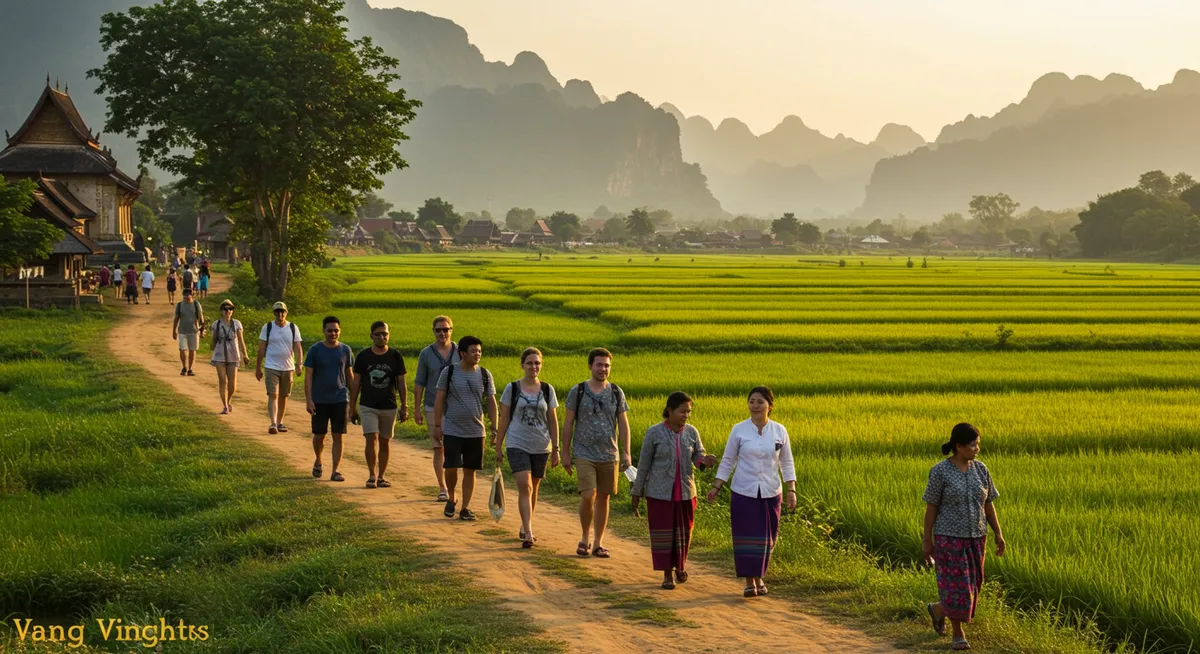
While Vang Vieng’s main street buzzes, some of its most profound experiences lie just beyond the well-trodden path. This walking tour invites you to step into the tranquil rhythm of Laotian village life, offering a genuine glimpse into the region’s agricultural heartland. It’s an opportunity to connect with the land and its people, away from tourist crowds.
To embark, cross the Nam Song River to its west bank (via bamboo bridges or the main concrete bridge, season permitting). Alternatively, quiet roads towards Blue Lagoon 1 or 2 also lead through charming rural landscapes. As you venture, traffic sounds give way to rustling leaves and distant livestock. You’ll quickly be immersed in a mosaic of lush green and golden-yellow paddy fields, often with dramatic limestone karsts as backdrop.
Daily life here unfolds in harmony with nature. Observe local farmers tending their rice paddies – from planting to tending and harvesting. Keep an eye out for magnificent water buffalo, essential to Laotian agriculture, often seen wallowing or grazing. Children play freely in dusty lanes; villagers go about chores, from mending nets to preparing meals over open fires. It’s a slow-paced, authentic tableau of rural life.
Practical Walking Tips for Your Village Exploration:
- Best Time: Early morning (before 8 AM) or late afternoon (after 4 PM) for cooler temperatures and peak village activity. Midday can be intensely hot and quiet.
- What to Wear: Comfortable, sturdy walking shoes are a must for uneven, dusty, or muddy paths. Opt for modest clothing (shoulders and knees covered) out of respect for local customs. A hat and sunscreen are advisable.
- What to Bring: Plenty of water, a small amount of local currency (Lao Kip) for a refreshing drink or snack if available, insect repellent, and your camera (but use it respectfully!).
- Navigation: While Google Maps offers general direction, often the best way to explore is to follow local paths winding through fields and between homes. Don’t be afraid to wander, but stay aware of your surroundings.
Respectful Engagement & Observation:
The essence of this walk is respectful observation. Remember you are a guest. A warm “Sabaidee” (hello) and a smile are always appreciated. If you wish to take photos of people, always ask permission first with a gesture or simple “Okay?”. Do not interrupt daily activities or farming work. Supporting local businesses, even by buying a small bottled drink from a village stall, contributes directly to the community. Always carry out any rubbish you create – leave no trace behind.
Venturing beyond the main drag into Vang Vieng’s villages and paddy fields offers a profound and memorable insight into the genuine spirit of Laos. It’s a walk that nourishes the soul, providing a tranquil counterpoint to the town’s more adventurous offerings.
Sacred Caves & Karst Landscapes: A Cultural Trek
Vang Vieng’s dramatic karst landscapes aren’t just for adventure; they cradle culturally significant caves that offer profound insights when explored on foot. These walking tours transform a simple visit into a journey through local history, spirituality, and daily life, revealing the true essence of Vang Vieng beyond its adventurous reputation.
Tham Chang Cave: A Historical & Scenic Stroll
The walk to Tham Chang (often spelled Tham Jang) is one of the most accessible and rewarding cultural insights Vang Vieng walking tours. Starting just a short distance from the town center, your journey typically begins with a stroll across the charming wooden toll bridge spanning the Nam Song River – a small fee contributes to local infrastructure. The path then winds through lush, well-maintained gardens, leading to the cave entrance. Tham Chang holds significant historical importance, having served as a protective hideout for locals during 19th-century Chinese invasions and later during the Indochina wars. Its name, “Tham Jang,” translates to “cold cave,” referring to the refreshing natural spring at its base, a popular spot for locals to cool off. The gentle ascent to the cave provides stunning panoramic views of the surrounding rice paddies and limestone karsts. Inside, well-lit pathways make for easy exploration of its impressive formations. This walk is ideal for those seeking a less strenuous trek combined with a rich historical narrative.
- Practical Tip: Wear comfortable walking shoes. A small entrance fee for the cave and a separate fee for the bridge are required.
Tham Phu Kham Cave & Blue Lagoon 1: An Immersive Rural Trek
For a deeper dive into Vang Vieng’s cultural tapestry, the walk to Tham Phu Kham Cave and Blue Lagoon 1 is an essential experience. This longer trek takes you across the Nam Song River (via a bamboo bridge in the dry season or a small ferry in the wet) and into the heart of the rural landscape. As you navigate the dusty red earth paths, you’ll pass vibrant green rice paddies, observe local farmers at work, and wave to children playing in traditional Lao villages. This journey itself is a rich cultural encounter, offering glimpses into daily life. The culmination of your walk is Tham Phu Kham, a sacred Buddhist cave renowned for its reclining Buddha statue. The climb to the cave entrance is steep but relatively short, and the spiritual tranquility inside, combined with the breathtaking views from the cave mouth, makes it immensely rewarding. Adjacent to the cave is the famous Blue Lagoon, which, while popular with visitors, is equally cherished by locals as a refreshing swimming spot and a place for community gathering.
- Practical Tip: Allow at least half a day for this trek. Carry ample water, wear sturdy closed-toe shoes, and bring a headlamp if you plan to explore the deeper parts of the cave. Dress respectfully when visiting the sacred cave. Sunscreen, a hat, and insect repellent are also highly recommended.
General Walking Advice for Cave Treks
To fully embrace these Vang Vieng walking tours, preparation is key. Always prioritize sturdy, comfortable footwear suitable for uneven terrain, and carry plenty of water to stay hydrated under the tropical sun. Embrace the slow pace of rural life; take time to observe your surroundings, greet locals with a friendly “Sabaidee,” and remember that these are sacred sites. These treks are not just about reaching a destination; they are about immersing yourself in the unique cultural insights of Vang Vieng, appreciating its spiritual sites, and connecting with the rhythm of life amidst breathtaking natural beauty.
Engaging with Locals: Etiquette & Opportunities
⭐ Recommendation: Don't miss out on amazing Vang Vieng tours - book now!
One of the most enriching aspects of any cultural immersion, especially during your Vang Vieng walking tour, is the opportunity to genuinely connect with the local community. Lao people are renowned for their warmth and hospitality. By observing a few key etiquette points and embracing opportunities to interact, you’ll not only gain deeper cultural insights but also leave a positive impression.
Basic Lao Phrases: Your Gateway to Connection
Even a few words of Lao can go a long way in showing respect and opening doors to friendly encounters. Locals genuinely appreciate the effort. While on your walk:
- Sabaidee (Sa-bai-dee): This is the universal greeting, meaning “hello” or “good health.” Use it with a smile when passing by people, entering shops, or sitting down at a local eatery.
- Khop Jai (Khawp-jai): Meaning “thank you.” This simple phrase is invaluable for expressing gratitude, whether after a purchase at a market stall or receiving directions.
- Don’t be shy! Most Vang Vieng residents, particularly those in hospitality, appreciate attempts to speak their language, however basic.
Photography Etiquette: Respectful Captures
Vang Vieng offers countless picturesque scenes, from the limestone karsts to the vibrant street life. However, when it comes to photographing people, always prioritize respect:
- Always Ask Permission: Before taking a photo of an individual, especially children, monks, or elderly people, make eye contact and politely gesture or ask “Can I take a photo?” (A basic ‘Sabaidee’ followed by gesturing to your camera is often understood). A nod or smile means yes.
- Be Discreet: Avoid intrusive or overly posed shots. Capture candid moments respectfully from a distance if permission isn’t feasible or appropriate.
- Temples and Homes: Be particularly mindful in sacred spaces or near private residences. Never disrupt ceremonies or daily life for a photo.
Understanding Local Customs: Walking with Respect
As you explore Vang Vieng on foot, understanding a few local customs will enhance your experience and demonstrate cultural sensitivity:
- Modest Dress: Especially when visiting temples (like Wat That on the main road) or more rural villages during your walks, ensure your shoulders and knees are covered. This shows respect for local traditions and religious sites. Even in casual areas, overly revealing clothing can draw unwanted attention.
- Removing Shoes: It’s customary to remove your shoes before entering homes, temples, and sometimes even guesthouses or small shops. Look for shoe piles at the entrance as a cue.
- Head & Feet: In Lao culture, the head is considered the most sacred part of the body, and the feet the lowest and least clean. Avoid touching someone’s head, and don’t point your feet at people, Buddha images, or sacred objects. When sitting, try to tuck your feet beneath you or to the side.
- Public Displays of Affection: Keep public displays of affection to a minimum. While Vang Vieng is used to tourists, overt displays can be seen as disrespectful.
Supporting Local Businesses: Giving Back to the Community
Your walking tour is an excellent opportunity to directly contribute to the local economy. Skip the big chains and look for authentic experiences:
- Shop Locally: Purchase souvenirs, crafts, and clothing from small family-run shops, especially those along the river or in the main town. This ensures your money directly benefits the artisans and their families.
- Eat Local: Indulge in Vang Vieng’s incredible street food and dine at local family-run restaurants. Not only is it delicious and authentic, but it also supports local livelihoods. Try the fresh fruit shakes, BBQ stalls, or a steaming bowl of Khao Piak Sen (Lao noodle soup).
- Bargain Gently: In local markets, gentle bargaining is common and expected, but always do so with a smile and a good sense of humor. Don’t be overly aggressive; remember a few thousand Kip (Lao currency) difference can mean a lot more to a local vendor than to you.
By engaging respectfully and thoughtfully, your Vang Vieng walking tour will transform from a simple sightseeing trip into a deeply personal and culturally immersive adventure.
Navigating Vang Vieng Safely & Responsibly
Vang Vieng’s allure lies in its stunning natural landscapes, from the dramatic limestone karsts to the tranquil rice paddies and the meandering Nam Song River. To ensure your walking tours are both enjoyable and safe, and that you contribute positively to this beautiful region, consider the following practical advice.
Prioritizing Your Safety on the Trails
- Stick to Marked Paths: While it can be tempting to explore off the beaten track, especially around the karsts and caves, always prioritize well-trodden and marked trails. Unmarked areas can be slippery, overgrown, or lead to private land. For example, when visiting popular spots like the Blue Lagoon or Pha Ngern Viewpoint, stay on the designated paths.
- Inform Someone of Your Route: Especially if you’re venturing on a longer walk outside the main town, let your hotel reception or a trusted friend know your planned route and estimated return time. Signal can be patchy in more remote areas.
- Carry a Fully Charged Phone: Essential for emergencies, communication, and navigation (even with an offline map). While cellular service is generally good in town, it can be unreliable once you venture deeper into the rural landscapes surrounding Vang Vieng.
- Footwear Matters: Opt for sturdy, closed-toe walking shoes with good grip. The trails can be uneven, rocky, and muddy, especially during or after the rainy season (May to October).
Hydration & Sun Protection: Essential for Comfort
Vang Vieng’s tropical climate means high temperatures and humidity for much of the year. Proper preparation is key to staying comfortable and healthy during your walks.
- Stay Hydrated: Carry ample water, at least 1.5 to 2 liters for a half-day walk. While there are small shops in some villages, they aren’t always conveniently located on walking routes. Consider a reusable water bottle to minimize plastic waste, though dedicated refill stations are not widespread yet.
- Protect Yourself from the Sun: The equatorial sun in Laos is intense. Wear a wide-brimmed hat, high-SPF sunscreen, and sunglasses. Light, breathable clothing that covers your arms and legs can also offer excellent protection against both sun and insects. Aim to walk during the cooler parts of the day – early mornings are particularly rewarding with misty views, and late afternoons offer beautiful golden hour light.
Responsible Tourism: Treading Lightly in Laos
Vang Vieng’s natural beauty is its greatest asset. By practicing responsible tourism, you help preserve it for future generations and support the local communities.
- Minimize Waste & No Littering: Carry out everything you carry in. Plastic waste is a significant issue globally, and Vang Vieng is no exception. Avoid leaving any trash behind, even organic waste, as it can take a long time to decompose in the local ecosystem. If you don’t see a bin, hold onto your rubbish until you return to your accommodation.
- Respect Nature: Stay on marked trails to avoid disturbing local flora and fauna. Do not pick plants or disturb wildlife. Remember, you are a guest in this natural environment.
- Support Local & Fair Trade: When purchasing souvenirs, food, or services, choose local businesses, guesthouses, and restaurants. This ensures your money directly benefits the Lao people and their communities. Look for initiatives that promote fair trade products or community-based tourism projects. Engaging with local vendors in a respectful manner also enriches your cultural insights into Vang Vieng.
Self-Guided vs. Local Tour Guides: Which is Right for You?
Deciding between navigating Vang Vieng on your own two feet or enlisting the expertise of a local guide is a pivotal choice that can significantly shape your cultural insights Vang Vieng walking tours experience. Both approaches offer distinct advantages, depending on your travel style, budget, and desired level of engagement.
Self-Guided Exploration: The Path of Discovery
Opting for a self-guided walking tour in Vang Vieng offers unparalleled flexibility and cost-effectiveness. You set your own pace, linger longer at a charming riverside cafe, or spend extra time exploring the quiet corners of Wat That or the bustling morning market. This approach fosters a strong sense of personal discovery, allowing you to stumble upon hidden gems and create your unique narrative. For easy-to-navigate areas like the main town grid, the riverside promenade, and accessible temples, self-guided walks are perfectly feasible and enjoyable. You can use offline maps and basic research to find your way to popular spots like the various bridges crossing the Nam Song River or the main street’s eateries. However, without a local interpreter, you might miss the deeper cultural significance behind the everyday scenes, the intricate details of Lao Buddhist practices, or the stories etched into the faces of the local vendors.
Hiring a Local Tour Guide: Unlocking Deeper Cultural Insights
For those seeking a profound understanding of Vang Vieng’s rich tapestry, hiring a local tour guide is an invaluable investment. A knowledgeable local guide provides:
- In-depth Knowledge: They possess a wealth of information about Vang Vieng’s history, local legends, the significance of the karst landscape, and the spiritual meaning of the various temples and stupas. They can explain the daily life of local communities, the unique blend of Lao and ethnic minority cultures, and the impact of recent developments on the town.
- Enhanced Cultural Context: A guide bridges the language barrier, allowing for meaningful interactions with locals. They can explain local customs, etiquette (like how to behave respectfully at a temple), and traditions, ensuring your cultural insights Vang Vieng walking tours are respectful and enriching. Imagine understanding the nuances of a traditional Baci ceremony or the ingredients of a specific Lao dish from someone who grew up with them.
- Access & Safety: Guides can lead you to lesser-known paths, hidden viewpoints, or even facilitate access to local homes (with prior arrangement and consent) for truly authentic experiences. For walks venturing slightly off the main roads, particularly towards villages, a guide provides an added layer of safety and confidence, navigating terrain and cultural sensitivities.
- Direct Support for the Local Economy: By hiring a local guide, you are directly contributing to the livelihoods of Vang Vieng residents, ensuring that the economic benefits of tourism remain within the community.
Making Your Choice and Finding Reputable Guides
Consider your priorities. If budget and ultimate flexibility are key, and your interest lies in surface-level exploration, self-guided is fine. If you crave profound cultural immersion, authentic local interactions, and a deeper understanding of Vang Vieng’s soul, then a guide is highly recommended. For the best of both worlds, consider a mix: explore the town center on your own, then hire a guide for a specific half-day tour focusing on a cultural village visit or a detailed temple exploration.
To find reputable local guides in Vang Vieng, start by asking at your guesthouse or hotel, as they often have trusted contacts. You can also visit local tour agencies around the main street – look for those with good reviews and clear descriptions of their walking tours. When booking, inquire about the guide’s English proficiency, their local heritage, and what specific cultural insights they can offer beyond just sightseeing.
Post-Walk Delights: Local Food & Relaxation
After immersing yourself in the cultural tapestry and natural beauty of Vang Vieng on foot, there’s no better way to recharge than by indulging in the town’s delightful culinary scene. Vang Vieng offers a laid-back atmosphere perfect for unwinding, and its food is a fantastic extension of your cultural exploration.
At the heart of Lao cuisine is Khao Niao (sticky rice), served in a small bamboo basket. It’s eaten with your hands, rolled into small balls and dipped into dishes – a true staple you’ll find everywhere. Complementing this, you must try Laap, often considered Laos’ national dish. This savory minced meat salad (typically chicken, pork, beef, or fish) is seasoned with lime juice, fish sauce, chili, and toasted ground sticky rice, giving it a unique texture and nutty flavor. Another essential tasting is Tam Mak Hoong, the Lao version of green papaya salad. While similar to its Thai cousin, the Lao rendition often features fermented fish sauce (padaek), making it richer, more pungent, and incredibly flavorful. Don’t be shy to ask for it “less spicy” if you’re not accustomed to the heat!
For your post-walk meal, Vang Vieng boasts a variety of options. Head to one of the numerous riverside restaurants along the Nam Song River, where you can enjoy your meal with stunning views of the limestone karsts and the river gently flowing by. These spots offer a mix of traditional Lao dishes and Western comfort food. For a more authentic and budget-friendly experience, explore the bustling street food stalls that pop up around the main town area, especially in the evenings. Look for vendors grilling fresh fish or skewered meats, or serving up bowls of fragrant noodle soup (Khao Piak Sen).
Vegetarian options are increasingly available in Vang Vieng. Many restaurants can prepare dishes like fried rice or noodles with mixed vegetables and tofu, or vegetable curries. Don’t hesitate to ask if a dish can be made “vegetarian” (gin jay) or “without meat” (baw sai neua). While less common, some guesthouses and cafes catering to tourists also offer dedicated vegan menus.
To quench your thirst, try a local Lao iced coffee, which is strong, sweet, and typically served with condensed milk – perfect for a pick-me-up. The abundance of fresh tropical fruit means fruit shakes and smoothies are plentiful and incredibly refreshing, especially after a warm walk. And, of course, no visit to Laos is complete without sampling a crisp, cold BeerLao, widely regarded as one of Southeast Asia’s best beers. Always remember to stay hydrated with bottled water, especially after an active day.
Find a comfortable spot, soak in the relaxed atmosphere, and let the flavors of Vang Vieng be the perfect capstone to your walking exploration. It’s an integral part of understanding the local culture and simply enjoying the moment.
Frequently Asked Questions
Q: Is Vang Vieng easy to navigate on foot?
A: The town center of Vang Vieng is very walkable, with most points of interest easily accessible on foot. For areas outside the town, like villages or cave entrances, some routes might involve dirt paths or require crossing small bridges, but generally, they are manageable for walkers. Offline maps or local guidance are helpful for venturing further.
Q: What’s the best time of day for free walking tours in Vang Vieng?
A: Early morning (from sunrise to around 9 AM) or late afternoon (after 3 PM until sunset) are ideal. The temperatures are cooler, and the light is beautiful for photography. Mid-day can be very hot, especially during the dry season (October to April), so plan shorter walks or indoor activities during this period.
Q: Do I need a guide for Vang Vieng walking tours?
A: While many areas are easy to explore independently, hiring a local guide significantly enhances the cultural experience. They can provide historical context, introduce you to local villagers, explain traditions, and help you discover hidden gems you might otherwise miss. It also directly supports the local economy and ensures safer navigation in less-known areas.
Q: What should I wear for walking in Vang Vieng?
A: Wear light, breathable clothing suitable for a tropical climate. Comfortable, closed-toe walking shoes are essential for varied terrain. If visiting temples or local homes, dress modestly (shoulders and knees covered). A hat, sunglasses, sunscreen, and a light rain jacket (during the wet season) are also highly recommended.
Q: Is it safe to walk alone in Vang Vieng?
A: Vang Vieng is generally considered safe for walkers. However, it’s always wise to exercise common sense: be aware of your surroundings, especially after dark, and stick to well-trafficked areas if walking alone. Inform someone of your plans, especially if venturing into more remote areas, and consider a local guide for off-the-beaten-path treks.
Vang Vieng is more than an adventure playground; it’s a tapestry of vibrant culture, serene landscapes, and genuine local warmth. By choosing to explore on foot, you unlock an authentic connection to this incredible corner of Laos. Every step taken on its paths offers a new discovery, a fresh perspective, and a chance to engage deeply with its heritage. Lace up your shoes, open your mind, and let Vang Vieng reveal its true, unforgettable spirit, one cultural step at a time.