
Best Shoes for Hue Walking Tours: Comfort & Style Guide (2026)
Discover the ideal footwear for exploring Hue’s historic sites on foot. Our guide ensures comfort, safety, and enjoyment on your Vietnam walking tours.
On this page
Hue, the former imperial capital of Vietnam, is a city best explored on foot. From the majestic Imperial City to serene pagodas and bustling markets, every corner offers a unique story. But to truly immerse yourself in Hue’s rich tapestry and maximize your walking tour experience, the right footwear isn’t just a recommendation—it’s essential. This guide will help you choose the perfect shoes to navigate Hue’s diverse terrain comfortably and safely.
Key Tips and Takeaways
- Prioritize breathability and good ventilation for Hue’s tropical climate.
- Ensure strong arch support and cushioning for comfort during extended walking tours.
- Choose shoes with reliable traction for diverse surfaces and potential rain.
- Always break in new shoes thoroughly before your trip to Hue.
- Pack moisture-wicking socks to prevent blisters and manage humidity.
- Consider an easy slip-on option for frequent temple and pagoda visits.
Why Your Shoes Matter in Hue
Hue is a city best explored on foot, where every turn reveals ancient history, lush gardens, and vibrant local life. From the sprawling grounds of the Imperial City to the serene riverside paths and the undulating terrain of the royal tombs, your feet will be your primary mode of transport and discovery. The shoes you choose for your Hue adventure aren’t just an accessory; they are fundamental to your comfort, enjoyment, and ability to truly immerse yourself in this historical heart of Vietnam.
Hue’s charm lies in its diverse landscapes, each presenting its own unique walking challenge:
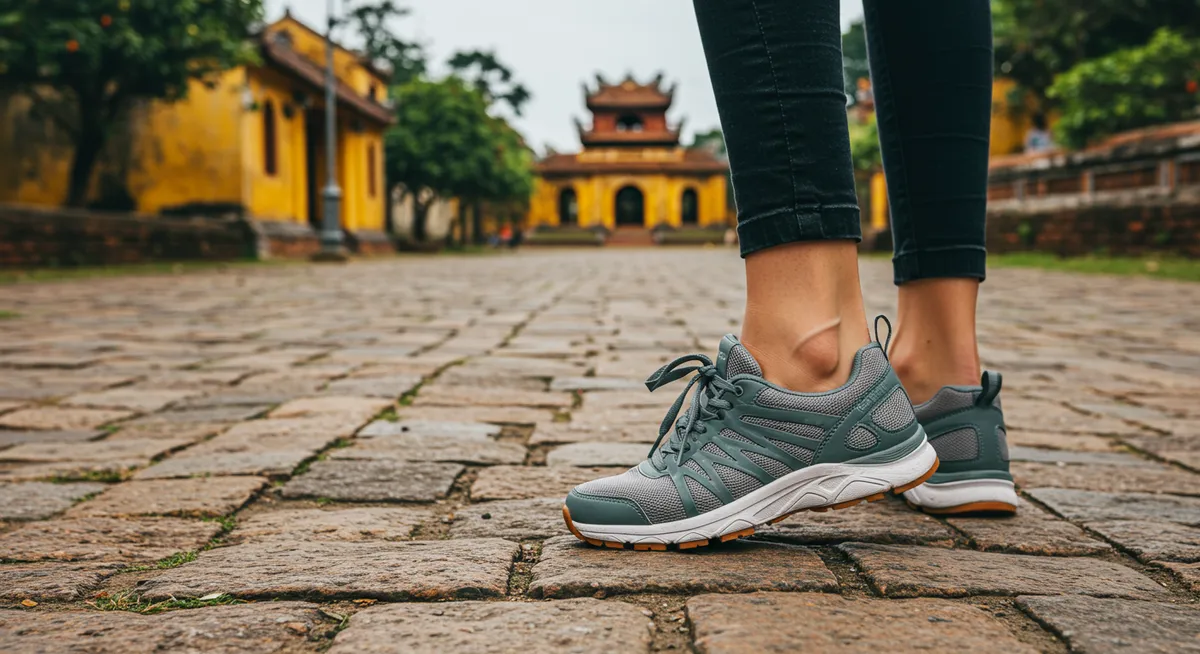
- Imperial City & Citadel: Within the formidable walls of the Imperial City, you’ll encounter a fascinating blend of meticulously laid cobblestone paths and ancient, often uneven, flagstones. The sheer scale of the Forbidden Purple City means significant distances between palaces and gates. A sturdy, supportive sole will be your best friend here, navigating historical textures that might surprise less prepared footwear.
- Royal Tombs: Scattered across the verdant hills surrounding Hue, the majestic imperial tombs (like Minh Mang, Khai Dinh, and Tu Duc) often involve winding uphill climbs, long flights of ancient steps, and picturesque garden paths that can be a mix of gravel, dirt, or smooth, worn stone – potentially slippery when wet.
- Riverside Strolls & City Streets: Along the iconic Perfume River, paved walkways offer charming strolls, but can occasionally be uneven or present unexpected cracks. Within the modern city, pavements vary in condition, sometimes requiring nimble footwork around street vendors or construction.
- Pagodas & Temples: Many spiritual sites, such as Thien Mu Pagoda, feature ornate courtyards, stone walkways, and often require climbing a few steps, sometimes quite steep ones, to reach higher prayer halls or scenic viewpoints.
Beyond the varied terrain, Hue’s tropical climate brings heat, high humidity, and the occasional sudden downpour, even during the dry season. Your shoes need to breathe to prevent your feet from overheating and becoming uncomfortable. Materials that dry quickly are a huge bonus, especially if you get caught in a shower or navigate damp areas. More importantly, long days of exploration – often involving 10,000 steps or more – demand exceptional comfort and support. Adequate cushioning and arch support are crucial to prevent foot fatigue, blisters, and general discomfort that can cut short your explorations.
To truly maximize your Hue walking experience, keep these practical tips in mind:
- Prioritize Comfort and Support: Forget high fashion; functionality is king here. Look for shoes specifically designed for walking or light hiking.
- Excellent Grip: Given the varied surfaces – from worn ancient stone to potentially damp pavements – good traction is non-negotiable for safety.
- Breathable Materials: Opt for mesh, canvas, or other breathable synthetics to keep your feet cool and dry.
- Break Them In: Never bring brand-new shoes on a walking holiday. Ensure they are well broken-in to avoid blisters.
- Consider Socks: Moisture-wicking socks can make a world of difference in preventing sweat build-up and reducing friction.
- Ideal Choices: Comfortable, supportive walking sneakers, trail shoes, or sturdy walking sandals with good arch support are highly recommended. Avoid flip-flops, high heels, or flimsy fashion sneakers – they simply won’t stand up to Hue’s demands.
Understanding Hue’s Walking Terrain & Climate
Embarking on a walking tour through Hue is an incredibly rewarding way to experience its ancient beauty, rich history, and vibrant local life. However, to truly maximize your comfort and enjoyment, it’s crucial to understand the unique characteristics of Hue’s walking terrain and its tropical monsoon climate. These elements significantly influence your footwear choices and overall preparation, ensuring a smooth and memorable exploration.
Hue’s walking terrain offers a fascinating variety, requiring adaptable footwear. Within the bustling city center and around many key attractions like the Imperial City, you’ll encounter predominantly paved roads and sidewalks. While generally walkable, don’t expect perfectly smooth surfaces; many sidewalks can be cracked, uneven, or occasionally encroached upon by vendors or parked motorbikes, demanding constant attention. As you delve into historical sites such as the Imperial City, the Royal Tombs, or ancient pagodas like Thien Mu, the surfaces shift dramatically. You’ll navigate a mix of gravel paths, which can be loose underfoot, and ancient, uneven flagstones or cobblestones that have weathered centuries of footsteps. Inside many temple halls and palaces, you’ll walk on smooth, polished stone or tile floors, which can become incredibly slippery, particularly during or after a rain shower. Keep an eye out for slight inclines and steps that might not always be clearly marked.
Complementing the varied terrain is Hue’s distinctive tropical monsoon climate. Prepare for high heat and pervasive humidity for much of the year, especially from March to August, when temperatures can soar. Even during the cooler months (roughly September to February), humidity remains a constant companion, making even moderate temperatures feel warmer than they are. One of the most significant climatic factors to consider is the possibility of sudden, intense rain showers. These downpours, typical of a monsoon climate, can appear with little warning, turning dry paths into muddy tracks and smooth stones into slick hazards in a matter of minutes. While they often pass quickly, they can significantly impact your comfort and require footwear that can handle moisture.
Given these conditions, your footwear choice becomes paramount. Breathability is absolutely essential to combat the high humidity and heat, preventing discomfort and blisters. Quick-drying materials are highly recommended to cope with unexpected rain and help keep your feet fresh throughout the day. Excellent traction is critical for navigating potentially slippery smooth stone floors, uneven flagstones, and loose gravel paths. Prioritizing comfort and adequate support for your arches and ankles will also make a world of difference, especially during long days of exploring the expansive grounds of the Imperial City or the distant Royal Tombs. While locals often wear light sandals or flip-flops, for the extensive walking distances and varied surfaces a tourist typically covers, more supportive and enclosed options are generally advisable.
In summary, embracing Hue’s historical charm on foot means preparing for its unique environmental challenges. Opt for shoes that offer a combination of breathability, water resistance or quick-drying capabilities, and superior grip. This thoughtful preparation will ensure your focus remains on the breathtaking sights and sounds of Hue, rather than on your feet, allowing you to fully immerse yourself in this captivating ancient capital.
Top Footwear Categories for Hue Walkers
💡 Pro Tip: Book your Hue adventures in advance through Viator for the best deals!
Navigating Hue’s enchanting landscapes, from the grand Imperial City to the serene Perfume River banks, is best done on foot. The right footwear isn’t just about comfort; it’s about enhancing your experience and ensuring you can explore for hours without a hitch. Here’s a breakdown of the top footwear categories to consider for your Hue walking adventure, keeping the city’s unique conditions in mind.
1. Comfortable Walking Sneakers/Trainers
For most Hue explorations, a well-cushioned pair of walking sneakers or trainers is your primary choice. They offer excellent support for varied urban surfaces.
- Pros: Superior cushioning, arch support, and shock absorption for the expansive Imperial City grounds, paved paths, and occasional cobblestones. Ideal for strolling along the Perfume River or through bustling markets.
- Cons: Can feel hot in Hue’s humidity; slow to dry if wet.
- Hue Specifics: Prioritize breathable mesh uppers. This category covers 80-90% of your general walking needs.
2. Lightweight Hiking Shoes/Trail Runners
If your Hue itinerary includes venturing off-pavement or exploring more rugged temple grounds, these offer enhanced stability.
- Pros: Better grip and stability on uneven surfaces or slippery steps (e.g., Thien Mu Pagoda), offering more foot protection. Useful for natural paths to some imperial tombs.
- Cons: Generally bulkier and can feel warmer than regular sneakers.
- Hue Specifics: Consider if you anticipate significant walking on unpaved or slightly hilly terrain beyond central tourist areas.
3. Supportive Sandals/Sport Sandals
Crucially, emphasize “supportive” – leave flimsy flip-flops at home. Good sport sandals are practical for Hue’s climate.
- Pros: Excellent breathability for heat and humidity; quick-drying, perfect for unexpected rain or boat trips. Easy to remove for temple visits.
- Cons: Less foot protection; ensure ample arch support for sustained walking.
- Hue Specifics: Look for adjustable straps and good traction. Fantastic as a secondary pair or for shorter excursions and market visits.
4. Water-Resistant/Quick-Dry Options (for Rainy Season)
Hue’s notable rainy season (typically October-December) makes waterproof or quick-dry footwear a game-changer.
- Pros: Keep feet dry, preventing blisters and discomfort. Quick-drying materials mean less dampness after showers.
- Cons: Dedicated waterproof shoes might be less breathable.
- Hue Specifics: During rainy season, prioritize water-resistant membranes (for sneakers/hikers) or quick-drying synthetic sport sandals. Unexpected showers can occur year-round.
Pro Tip: Always break in new shoes. Pack moisture-wicking socks to prevent blisters. Consider bringing at least two pairs of appropriate walking shoes to rotate, allowing them to dry fully between wears.
Essential Features to Look For
When embarking on a walking tour of Hue, your shoes are your most crucial piece of gear. The unique blend of historical sites, vibrant markets, and scenic river paths demands footwear that can handle diverse conditions while keeping you comfortable all day long. Here are the essential features to prioritize:
-
Cushioning and Arch Support: Hue’s walking tours can involve considerable distances, from exploring the vast grounds of the Imperial City and Forbidden Purple City, with their uneven flagstones and multiple courtyards, to strolling along the Perfume River or climbing the steps to ancient pagodas like Thien Mu. Adequate cushioning in the midsole will absorb impact, reducing strain on your feet, knees, and back. Robust arch support is equally vital to prevent fatigue and common issues like plantar fasciitis, ensuring you can comfortably log those miles without discomfort.
-
Breathability: Hue’s tropical climate is characterized by high humidity and warmth, particularly during the summer months (April to September) or even during the slightly cooler but still damp monsoon season. Shoes with excellent breathability, often featuring mesh uppers or other ventilated materials, are non-negotiable. They allow air circulation, preventing sweat buildup, which is crucial for comfort and preventing blisters in a humid environment. Look for lightweight, airy designs.
-
Traction and Grip: Hue’s charm lies in its ancient beauty, but that also means you’ll encounter a variety of surfaces. Think smooth, worn stone paths within the Citadel, potentially slippery tiled courtyards after a sudden shower, uneven pavements in the city center, and even damp earth paths leading to tombs outside the city. A shoe with a durable rubber outsole and multi-directional lugs or a textured tread pattern will provide reliable grip, minimizing the risk of slips and falls, especially on wet or slick surfaces.
-
Lightweight Design: You’ll be on your feet for hours, often covering several kilometers as you move between attractions like the Imperial City, Dong Ba Market, and riverside cafes. Every ounce counts! A lightweight shoe significantly reduces fatigue, allowing you to walk further and enjoy more of Hue’s captivating sights without feeling weighed down. Opt for materials that offer support without unnecessary bulk.
-
Durability: Your shoes will face varied conditions, from historical sites to bustling streetscapes. A durable pair will withstand the wear and tear of extensive walking, offering longevity for your trip and beyond. Look for quality stitching, reinforced toe caps, and robust materials that can handle different surfaces without quickly breaking down.
-
Quick-Drying Materials: Hue experiences sudden, heavy tropical downpours, especially from September to December. Even if you carry an umbrella, your feet might get caught in a deluge or step into an unexpected puddle. Shoes made from quick-drying synthetic materials (rather than cotton or leather) are a lifesaver. They prevent your feet from staying wet and soggy, which can lead to discomfort, blisters, and unpleasant odors.
-
Blister Prevention Features: While not a standalone feature, several elements contribute to blister prevention. A seamless interior lining reduces friction points, and a well-padded collar and tongue ensure a snug, comfortable fit around your ankle. Most importantly, ensure your shoes fit properly with enough room in the toe box and no heel slippage. Pair them with good moisture-wicking socks for optimal blister protection.
Choosing footwear with these features will ensure your feet stay happy, allowing you to fully immerse yourself in the historical grandeur and local charm of Hue.
Hue-Specific Footwear Considerations
Navigating the ancient capital of Hue on foot is an absolute delight, but the city’s diverse landscapes and cultural practices mean your footwear choices need to be strategic. Here’s a detailed guide to choosing the best shoes for your Hue walking tours, ensuring comfort, practicality, and cultural respect.
For Temple and Pagoda Visits: The Slip-On/Slip-Off Imperative
Perhaps the most crucial Hue-specific footwear consideration is the necessity of easy-to-remove shoes. Many of Hue’s magnificent temples, pagodas like Thien Mu, and revered tombs such as Tu Duc, Minh Mang, and Khai Dinh, require visitors to remove their shoes before entering certain worship areas or private chambers. You’ll be doing this frequently, so convenience is key.
- Ideal Choices: Look for comfortable walking sandals with minimal straps, slip-on sneakers, or travel flats. These allow for quick transitions without the fuss of laces or buckles.
- Practical Tip: Avoid complicated lacing systems or boots that are cumbersome to take on and off repeatedly. Socks are optional, but if you prefer wearing them, choose breathable materials to prevent discomfort in Hue’s humid climate.
Exploring the Imperial City and Forbidden Purple City: Support and Endurance
The sprawling grounds of the Imperial City and its inner Forbidden Purple City demand footwear that can handle extensive walking. You’ll be covering significant distances across vast courtyards, ancient pathways, and sometimes uneven paving stones.
- Ideal Choices: Opt for supportive walking shoes or athletic sneakers with good cushioning. These will absorb the impact of long walks and provide stability on varying surfaces.
- Practical Tip: Breathable materials are a plus, as you’ll likely be walking under the Vietnamese sun. Ensure they have a good grip, especially if you encounter any damp spots after a sudden tropical shower.
Riverfront Promenades and Evening Strolls: Comfort with a Dash of Style
Hue’s scenic Perfume River offers delightful promenades, perfect for a leisurely stroll, particularly in the cooler evenings. You’ll also likely be walking to and from restaurants in the city center.
- Ideal Choices: Comfortable walking sandals, stylish but supportive flats, or light, casual sneakers are perfect here. The paths are generally smooth, so extreme support isn’t always necessary, but comfort remains paramount.
- Practical Tip: If planning evening outings, consider a pair that looks a bit more polished while still prioritizing comfort over high heels, as sidewalks can still be uneven.
Navigating Busy Market Areas: Protection and Grip
Hue’s vibrant Dong Ba Market is a sensory overload in the best way, but it can also be a bit chaotic underfoot. Expect crowds, potential spills, and occasionally wet or uneven surfaces.
- Ideal Choices: Closed-toe shoes with good traction are highly advisable. Sneakers or durable walking shoes will protect your feet from accidental bumps and splashes, and help you maintain footing on potentially slippery surfaces.
- Practical Tip: Avoid open-toed sandals or flip-flops in bustling market environments to protect your feet from dirt, liquids, and accidental knocks.
General Hue Footwear Advice:
- Breathability: Hue’s tropical climate means humidity. Choose shoes made from breathable materials to prevent sweat and discomfort.
- Broken In: Always bring shoes that are already broken in. New shoes are a recipe for blisters and discomfort.
- Backup Pair: Consider packing a secondary pair of comfortable walking shoes. This offers a change of pace and a lifesaver if one pair gets wet or causes an unexpected blister.
By considering these Hue-specific nuances, you’ll ensure your feet are happy, allowing you to fully immerse yourself in the beauty and history of this enchanting Vietnamese city.
Pre-Trip Footwear Prep & Care
💡 Pro Tip: Book your Hue adventures in advance through Viator for the best deals!
Your feet are your most important companions when exploring the enchanting city of Hue on foot. A little preparation goes a long way in ensuring your walking tours—whether through the expansive Imperial City, along the serene Perfume River, or up to the Thien Mu Pagoda—are memorable for the right reasons, not for blisters or discomfort. Here’s how to ensure your footwear is ready for Hue’s unique blend of history, humidity, and beauty.
Breaking In New Shoes: Your Pre-Hue Homework
Never, ever pack brand-new shoes for a trip to Hue. This is perhaps the most crucial piece of advice. The sprawling grounds of the Imperial City alone can account for several kilometers of walking, and that’s before you’ve even considered the pathways to the Royal Tombs or the charming side streets. New shoes are notorious for causing chafing and blisters. Begin wearing your chosen walking shoes for at least 2-3 weeks before your departure. Start with short walks, gradually increasing the distance and duration until you can comfortably wear them for several hours. This allows the shoes to mold to your foot shape and any potential hot spots to reveal themselves while you’re still at home, not halfway through exploring the Forbidden Purple City.
Socks Matter: Embrace Moisture-Wicking Fabrics
In Hue’s tropical, often humid climate, your sock choice is just as vital as your shoe choice. Cotton socks are a no-go. They absorb moisture, stay damp, and create a perfect environment for blisters and discomfort. Instead, pack socks made from synthetic blends (like polyester, nylon) or merino wool. These materials excel at wicking moisture away from your skin, keeping your feet drier and reducing friction. This is especially important during a long day of exploring, as even a light drizzle or the general humidity can make your feet feel clammy without the right socks.
Foot Care Essentials: Your Mini Medical Kit for Feet
Don’t underestimate the power of a small foot care kit. Even with the best shoes and socks, unexpected issues can arise. Pack these non-negotiables:
- Blister Plasters (Compeed or similar): These are miracle workers. Unlike regular band-aids, they create a second skin, cushioning the blister and promoting healing, allowing you to keep walking.
- Anti-Chafing Balm (e.g., BodyGlide): Apply this to known hot spots on your feet or between your toes before you even put on your socks. It creates an invisible barrier that reduces friction and prevents blisters before they start.
- Small Tube of Foot Cream/Balm: At the end of a long day of exploring, a quick foot massage with a refreshing cream can soothe tired soles and prevent cracking.
Drying Shoes in Humid Conditions: The Hue Challenge
Hue’s humidity means that shoes don’t dry out easily, especially if you get caught in a sudden tropical downpour or step in a puddle. Damp shoes can lead to odor and discomfort the next day. Here are some drying tips:
- Newspaper Trick: Remove the insoles from your shoes and crumple up newspaper, stuffing it tightly into your shoes. The newspaper will absorb moisture. Change the newspaper every few hours.
- Air Flow is Key: Don’t leave shoes in a closed closet. Place them in an open, airy spot in your hotel room, ideally with a fan circulating air. Many hotels in Hue have air conditioning, which also helps to dry the air.
- Avoid Direct Sun (for some materials): While tempting, strong direct sun can damage some synthetic materials and adhesives in your shoes. Air drying indoors or in a shaded, breezy area is generally safer.
- Alternate Pairs: If space allows, bringing two pairs of suitable walking shoes lets you rotate them, giving each pair a full day to air out and dry completely.
By taking these steps, you’ll ensure your feet are happy and ready to carry you through every captivating corner of Hue, allowing you to focus on the incredible sights, sounds, and tastes of this historic Vietnamese city.
Local Insights & Expert Tips for Hue Explorers
Diving deep into Hue isn’t just about ticking off historical sites; it’s about soaking in the atmosphere, discovering hidden gems, and truly connecting with the city’s pulse. To do that effectively, your feet need to be your best allies. Here are some invaluable local insights and expert tips to ensure your Hue explorations are as comfortable as they are unforgettable.
Optimal Walking Times for Hue’s Climate
Hue’s tropical climate means humidity and heat are often companions, especially during the peak seasons. To truly enjoy your walking tours without feeling drained, timing is everything. Locals naturally gravitate towards the cooler parts of the day for their activities, and you should too!
- Early Mornings (6:00 AM – 9:00 AM): This is arguably the best time for extensive walking. The air is freshest, the temperatures are milder, and the light is beautiful for photography, especially around the Imperial City or along the Perfume River. You’ll often see locals starting their day with exercise, enjoying morning coffee, or heading to market.
- Late Afternoons/Evenings (4:00 PM onwards): As the sun begins to dip, Hue comes alive again. The heat mellows, making it pleasant for a stroll through the night market, along the river promenade, or for exploring the vibrant street food scene.
- Avoid Midday (11:00 AM – 3:00 PM): Unless you’re hopping between air-conditioned spots or staying in the shade, try to limit long walks during these hours. This is the perfect time for a leisurely lunch, visiting an indoor museum, or simply relaxing before the evening adventures.
Footwear Etiquette & Local Habits
Observe the locals, and you’ll notice a strong preference for practical, comfortable footwear. While you might see many wearing simple sandals or flip-flops (known as dép kẹp) for everyday errands and short distances, especially on motorbikes, they are also adaptable.
- For visiting temples and pagodas (like Thien Mu Pagoda), while full shoe removal isn’t always required in all areas for tourists, opting for easily removable slip-ons or sandals can be respectful and convenient if you wish to enter certain prayer halls.
- For navigating bustling markets like Dong Ba Market or exploring smaller alleys (hẻm), sturdy, breathable sneakers or robust walking sandals are far more practical than flip-flops due to uneven surfaces and potential spills. Locals often switch between styles based on their activity.
Seamlessly Integrating Public Transport
While Hue is wonderfully walkable in its core, some of its magnificent attractions are spread out. Don’t feel obligated to walk everywhere; intelligent use of transport can save your feet and enhance your experience.
- Grab (Motorbike or Car): The undisputed champion for convenience. Download the app! It’s affordable, efficient, and perfect for longer journeys, like reaching the majestic Royal Tombs outside the city center or traveling from the Imperial City to Thien Mu Pagoda.
- Cyclo (Xích Lô): For short, charming rides, especially around the Imperial City walls or along the Perfume River, a cyclo offers a unique, leisurely perspective. Negotiate the price beforehand to avoid surprises.
- Dragon Boat: An iconic way to travel along the Perfume River, especially to Thien Mu Pagoda. It’s a relaxing way to enjoy the scenery and gives your feet a well-deserved break.
Comfortable Feet, Authentic Hue Experiences
Ultimately, the comfort of your feet directly correlates with the depth of your Hue experience. When your feet are happy, you’re more inclined to wander off the beaten path, discover a hidden coffee shop down a narrow alley, linger longer at a street food stall, or simply absorb the vibrant street life without distraction. Good footwear isn’t just about preventing blisters; it’s about enabling spontaneity, encouraging exploration, and allowing you to fully immerse yourself in the rich tapestry of Hue’s local life, transforming a good trip into an extraordinary adventure.
Frequently Asked Questions
Q: Do I need waterproof shoes for walking in Hue?
A: While not strictly essential for all trips, waterproof or water-resistant shoes are highly recommended, especially if traveling during Hue’s rainy season (typically October to December). Sudden downpours are common, and quick-drying materials are a huge plus.
Q: Are sandals acceptable for free walking tours in Hue?
A: Supportive walking sandals with good arch support and grip can be acceptable for shorter strolls or very hot days. However, for full-day walking tours covering varied terrain, closed-toe walking shoes or sneakers are generally more comfortable and offer better protection.
Q: Should I bring multiple pairs of shoes for a Hue walking tour?
A: It’s advisable to bring at least two comfortable pairs: one primary walking shoe and a lighter, breathable backup (like supportive sandals or a second pair of sneakers). This allows for rotation, drying, and offers an alternative if one pair causes discomfort.
Q: Where can I buy good walking shoes in Hue if I forget mine?
A: While there are local markets and some shoe stores in Hue, the selection for high-quality, specialized walking shoes can be limited compared to international brands. It’s always best to bring your tried-and-tested footwear from home. However, you can find basic sneakers or local sandals if absolutely necessary.
Q: How do I prevent blisters when walking in Hue’s heat and humidity?
A: To prevent blisters: ensure your shoes fit well (not too tight or loose), wear moisture-wicking synthetic or merino wool socks (avoid cotton), apply anti-chafing balm to hot spots, and carry blister plasters for immediate treatment. Taking short breaks to air out your feet can also help.
The beauty of Hue unfolds best on foot, and the right pair of shoes is your most important tool for discovery. By prioritizing comfort, support, and suitability for the local climate and terrain, you’ll ensure that every step of your Hue walking tour is a pleasure, not a pain. Lace up, step out, and prepare to be enchanted by the imperial charm and serene beauty of Hue, one comfortable stride at a time.