
Dalat Photography Walks: Best Spots & Tips for Stunning Shots (2026)
Discover Dalat’s most picturesque spots on foot! Get expert photography tips, local insights, and practical advice for stunning walking tour photos in Dalat.
On this page
Dalat, the ‘City of Eternal Spring,’ is a photographer’s dream. Its unique blend of French colonial charm, pine-covered hills, and vibrant flower gardens makes every corner a potential masterpiece. But to truly capture its essence, nothing beats exploring Dalat on foot. This guide will equip you with the best walking routes and photography techniques to immortalize Dalat’s beauty through your lens, transforming your strolls into unforgettable photo expeditions.
Key Tips and Takeaways
- Embrace Dalat’s unique misty mornings for atmospheric, ethereal photographs.
- Always look for leading lines and natural frames within Dalat’s architecture and landscapes.
- Engage respectfully with locals for authentic portraiture and candid street scenes.
- Vary your perspective: shoot high, low, wide, and close-up to capture Dalat’s diverse beauty.
- Prioritize comfort and safety: wear good shoes, stay hydrated, and secure your camera gear.
Why Dalat is a Walking Photographer’s Paradise
Dalat, often called the ‘City of Eternal Spring,’ is a veritable treasure trove for any walking photographer. Its unique combination of climate, culture, and landscape creates an ever-changing canvas that beckons you to explore on foot. Unlike many bustling Vietnamese cities, Dalat’s cool, temperate climate and relatively gentle hills make walking an absolute pleasure, allowing you to truly immerse yourself in its photographic potential.
Misty Mornings & Ethereal Light
One of Dalat’s most enchanting features, and a dream for photographers, is its signature misty mornings. As the city wakes up, a soft, ethereal fog often blankets the landscape, transforming familiar sights into moody, atmospheric scenes. This diffused light is incredibly flattering for portraits, landscapes, and architectural shots, adding depth and a sense of mystery. For photographers, this means:
- Soft, Even Lighting: The mist acts as a giant softbox, reducing harsh shadows and allowing for beautifully balanced exposures, especially beneficial when shooting Dalat’s French colonial villas or the pine forests.
- Moody Ambiance: Embrace the low visibility. Focus on elements emerging from the fog – a solitary pine tree, a lamp post, or the silhouette of a building – to create dramatic, minimalist compositions.
- Patience is Key: The mist often lifts and rolls, offering dynamic changes in light and visibility. Stay put for a few minutes and observe how the scene evolves to capture different moods.
Distinct Architecture & Hidden Alleys
Dalat’s architectural heritage is a captivating blend of French colonial elegance and charming local designs. Walking allows you to peel back the layers of the city, discovering intricate details and hidden gems that you’d undoubtedly miss from a vehicle. Wander the backstreets and you’ll find:
- Colonial Charm: From the iconic Dalat Railway Station to the countless old villas, these structures offer rich textures, vibrant colors, and fascinating lines. Look for wrought-iron balconies, ornate window frames, and arched doorways.
- Local Life Intersecting: You’ll stumble upon local coffee shops, family businesses, and vibrant street art tucked away in unexpected corners. These provide excellent opportunities for street photography and capturing authentic Dalat moments.
- Perspective Play: Utilize Dalat’s hilly terrain to your advantage. Shoot from above to capture sweeping views of rooftops or descend into valleys for unique architectural perspectives.
Lush Nature & Vibrant Markets
Beyond its urban core, Dalat is surrounded by verdant landscapes and bursts of color. The cool air makes long walks enjoyable, leading you through pine forests, past flower gardens, and to bustling local markets.
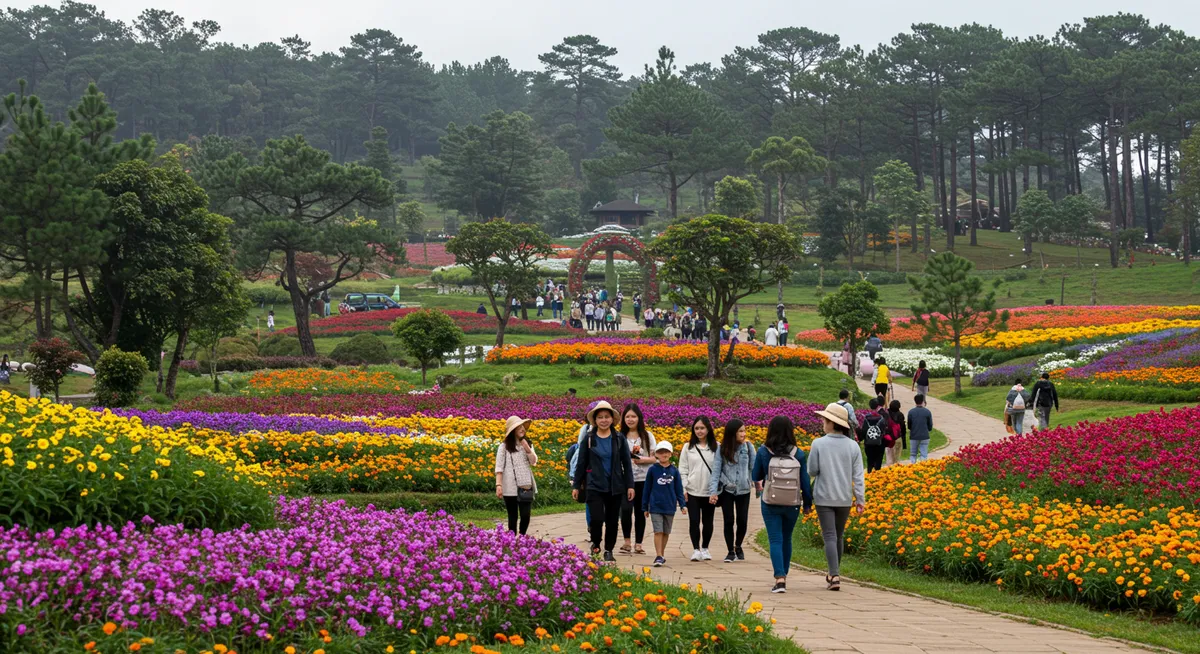
- Floral Paradise: Dalat is famous for its flowers. Xuan Huong Lake is ringed by beautiful gardens, and the Dalat Flower Garden is a riot of color. Get close with a macro lens or your phone’s macro mode to capture the intricate details of blooms like hydrangeas, roses, and wild sunflowers.
- Pine Forests & Lakes: The surrounding pine hills offer endless opportunities for landscape photography, especially with the soft morning light. The serene Xuan Huong Lake provides reflections and a calming backdrop for your shots.
- Dalat Market Vibrancy: The Dalat Night Market is an explosion of sights, sounds, and smells, perfect for capturing the city’s energy. For more authentic street photography, visit the main Dalat Market in the early morning. Be respectful and ask for permission before taking portraits, and focus on capturing candid interactions and the vibrant display of local produce and crafts.
Favorable Walking Conditions & Slow Photography
Perhaps the biggest advantage for a walking photographer in Dalat is the environment itself. The consistently pleasant temperatures mean you can comfortably spend hours on your feet. This unhurried pace is a photographer’s greatest asset:
- Observe & Anticipate: Walking slows you down, allowing you to truly observe your surroundings, notice fleeting moments, and anticipate photo opportunities as they unfold.
- Accessibility: Many of Dalat’s most picturesque spots are within comfortable walking distance of each other, or are best accessed by meandering through side streets.
- Pack Smart: For a walking tour, a lightweight setup is ideal. A mirrorless camera with a versatile zoom lens (e.g., 24-70mm equivalent) or even a high-quality smartphone with multiple lenses will suffice. Always carry an extra battery, a micro-fiber cloth for misty conditions, and wear comfortable shoes!
In Dalat, every turn of a corner, every ascent of a hill, and every encounter holds potential for a unique photograph. Embrace the slow pace, breathe in the cool air, and let Dalat reveal its photogenic soul to you, one step at a time.
Essential Gear & Preparation for Your Dalat Photo Walk
Dalat offers an incredibly diverse canvas for photographers, from misty mornings over Xuan Huong Lake to vibrant market scenes and charming colonial architecture. To truly capture its essence during your walking tour, proper gear and preparation are paramount. Dalat’s unique climate, with its cool mornings, potential midday sun, and ever-present possibility of mist, demands a thoughtful approach to your photography kit.
Mastering Camera Settings for Dalat’s Light
- Aperture (f-stop): Dalat’s light is beautifully varied. For sweeping landscapes like the serene lake or panoramic views from the hills, aim for a narrower aperture (f/8 to f/16) to ensure everything from foreground to background is sharp. When focusing on intimate details like a dew-kissed flower, a steaming cup of Dalat coffee, or a local’s portrait, open up your aperture (f/1.8 to f/4) for a beautiful shallow depth of field that isolates your subject.
- ISO: This setting determines your camera’s sensitivity to light. Keep it as low as possible (ISO 100-400) during bright daylight to minimize noise. However, Dalat’s misty mornings or dimly lit market interiors will require you to bump up your ISO (800-3200, or even higher for extreme low light) to get a usable exposure. Be mindful of noise at higher ISOs, but a slightly noisy photo is better than no photo!
- Shutter Speed: For sharp images of moving subjects like market vendors or bustling motorbikes, use a fast shutter speed (1/250s or faster). When shooting Dalat’s dreamy misty landscapes or capturing the atmosphere of the Dalat Night Market after dusk, you might opt for slower shutter speeds (1/30s – 1/60s handheld, or much slower on a tripod for light trails or soft water effects if you venture near a fountain).
Recommended Lenses for Dalat’s Diverse Scenes
- Wide-Angle Lens (e.g., 16-35mm): Essential for capturing the grandeur of Xuan Huong Lake, the intricate architecture of the Dalat Cathedral, or the sprawling Dalat Market. It helps convey the scale and atmosphere of the city.
- Standard Prime Lens (e.g., 35mm or 50mm): Perfect for street photography, candid shots of locals, and capturing the charming details of Dalat’s cafes and flower gardens. These lenses are excellent in low light and encourage you to ‘zoom with your feet,’ enhancing your walking tour experience.
- Macro Lens (or Close-up Filters): Dalat is the “City of Eternal Spring,” brimming with beautiful flowers and unique local produce. A macro lens allows you to dive into the intricate details, capturing stunning close-ups that tell a different story.
Walking Tour Comfort & Practicalities
- Comfortable Footwear: Dalat is a city of hills and winding paths. Prioritize well-cushioned, supportive walking shoes with good grip. You’ll be covering significant distances, and tired feet can quickly dampen your photographic enthusiasm.
- Weather-Appropriate Clothing (Layers are Key!): Dalat’s weather is famously unpredictable. Mornings can be chilly and misty, often requiring a light jacket or fleece. By midday, the sun might break through, making a t-shirt comfortable. Pack a lightweight, waterproof jacket or a compact poncho for sudden showers, which are common, especially in the afternoon.
- Power Banks & Spare Batteries: Photography, especially with mirrorless cameras or DSLRs, can drain batteries quickly. A fully charged power bank for your phone and spare camera batteries are absolute must-haves to ensure you don’t miss a shot.
- Small, Lightweight Tripod: For capturing Dalat’s magical low-light scenes (like the night market, misty sunrise, or long exposures of city lights), a travel-friendly tripod or a compact tabletop tripod/GorillaPod is invaluable. It allows for sharper images at slower shutter speeds without increasing ISO too much.
Capturing Dalat’s Heart: Iconic Photography Spots on Foot
💡 Pro Tip: Book your Da Lat adventures in advance through Viator for the best deals!
Dalat, with its unique blend of French colonial charm, mist-shrouded hills, and vibrant flower gardens, is a photographer’s dream. Embarking on a walking tour is arguably the best way to capture its essence, allowing you to slow down, observe, and frame the perfect shot. Here’s how to make the most of your photographic journey on foot, focusing on accessible, iconic spots.
Lakeside Serenity: Xuan Huong Lake
Dalat’s iconic Xuan Huong Lake is a must for any walking photography tour. Its sprawling beauty offers diverse opportunities from dawn till dusk. For the most magical shots, aim for early morning. The tranquil waters often reflect the surrounding pines and architecture like a mirror, and the soft, diffused light is perfect for capturing ethereal landscapes. Look out for the swan paddle boats, which add a whimsical touch, and the colonial-era architecture along the northern bank, like Thuy Ta and the Dalat Palace Hotel, for classic vignettes. Try shooting from different vantage points around the lake, using the curving pathways as leading lines. Don’t forget your wide-angle lens for sweeping vistas and a polarizer to cut glare off the water.
Floral Fantasies: Dalat Flower Garden
Just a short walk from Xuan Huong Lake, the Dalat Flower Garden (Vườn hoa Đà Lạt) is an explosion of color and life. This botanical paradise is ideal for macro photography, allowing you to dive into the intricate details of roses, hydrangeas, orchids, and countless other species unique to Dalat’s cool climate. Get low to the ground to capture flowers from their perspective, or use a shallow depth of field to make your subject pop against a blurred background. Mornings are best here too, as the light is gentle and the crowds are thinner. Look for water droplets on petals after a light rain for stunning, natural bokeh. Remember to respect the plantings and stay on designated paths.
Market Melodies: Dalat Market Area
For a different kind of photography – raw, vibrant, and bursting with local life – head to the bustling Dalat Market and the surrounding streets, particularly as evening approaches for the Night Market. This is your chance for authentic street photography. Capture candid moments of vendors selling fresh produce, aromatic coffee, and local delicacies like “Bánh Tráng Nướng” (grilled rice paper). The interplay of light and shadow, the rich textures of fruits and vegetables, and the lively expressions of the locals offer endless storytelling opportunities. Be respectful when photographing people; a smile or a nod often goes a long way. Use a prime lens (like a 35mm or 50mm) for a natural perspective and to handle lower light conditions as dusk sets in. Look for details that tell a story – a vendor’s hands, colorful spices, or the intricate weaving of a local craft.
Practical Photography Tips for Your Dalat Walk:
- Timing is Key: Early mornings often provide the best light (golden hour) and fewer crowds, especially at popular spots. Late afternoon light can also be beautiful for warm tones.
- Pack Light, Walk Smart: While you’ll want your camera gear, avoid overburdening yourself. A comfortable pair of walking shoes is paramount. Consider a light backpack with water, a snack, and your essential lenses.
- Look Up, Look Down, Look Around: Dalat offers beauty at every angle. Don’t just focus on eye-level shots. Notice the intricate French-influenced architecture, the colorful mosaic details, or even interesting patterns on the pavement.
- Be Respectful: Always ask permission before taking close-up photos of individuals, especially in market settings. A simple gesture with your camera, followed by a nod, is often understood.
- Embrace the Mist: Dalat is known for its misty, foggy mornings. Don’t let this deter you; instead, use it to your advantage to create atmospheric, moody photographs.
With these tips and a keen eye, your Dalat walking tour will not only be an incredible experience but also yield a stunning collection of photographs that truly capture the heart of this enchanting city.
Xuan Huong Lake & Surrounds
💡 Pro Tip: Book your Da Lat adventures in advance through Viator for the best deals!
Xuan Huong Lake, the serene heart of Dalat, is a photography playground, constantly shifting its mood and offering endless opportunities for stunning shots. As you embark on your walking tour around its tranquil waters, prepare for a visual feast, especially during the magical transition hours.
Golden Hour & Blue Hour Magic: The absolute best times to capture Xuan Huong Lake are during the golden hour (just after sunrise or before sunset) and the blue hour (just before sunrise or after sunset). These periods bathe the entire landscape in soft, warm, or cool tones, ideal for stunning photography. For the iconic Dalat mist, an early morning start is non-negotiable. Witnessing the lake shrouded in a gentle fog as the sun slowly burns it away is an ethereal experience and a dream for photographers.
Capturing the Lake’s Many Faces:
- Reflections & Stillness: During calm mornings or evenings, the lake’s surface transforms into a giant mirror. Look for crystal-clear reflections of the surrounding pine trees, the Dalat Palace Hotel, or the charming lakeside villas. Position yourself low to the ground to maximize the reflection. A wide-angle lens works wonders here, capturing the expansive sky and its mirrored counterpart.
- Morning Mist & Ethereal Scenes: If you’re an early riser, the mist over Xuan Huong Lake is legendary. To capture its mystical beauty, try shooting *into* the rising sun, allowing the backlighting to highlight the fog’s texture and outline subjects like the swan paddle boats or distant hills. Experiment with long exposures (if using a tripod) to smooth out the water and enhance the misty atmosphere.
- Activity & Local Life: Xuan Huong Lake is a hive of gentle activity. Keep an eye out for the vibrant swan paddle boats gliding across the water – their bright colors offer a striking contrast to the lake’s blues and greens. Frame them against the backdrop of the city skyline or the surrounding foliage. You’ll also encounter locals jogging, practicing Tai Chi, or simply enjoying the morning breeze. Candid shots of these moments add a human element and a touch of authentic Dalat life to your portfolio.
- Vibrant Flower Beds & Promenade Beauty: As you stroll along the paved promenade, you’ll be greeted by beautifully manicured flower beds bursting with color. Depending on the season, you might find hydrangeas, lavender, or various local blossoms. Focus on macro shots for intricate details, or use the flowers as a colorful foreground element for your broader lake landscape shots. The promenade itself, with its graceful curves, makes for excellent leading lines in your compositions.
Practical Photography Tips for Your Walk:
- Gear Up Smart: While a full camera kit is great, a good smartphone with manual controls can also yield fantastic results. Consider a lightweight tripod for stable low-light shots or long exposures. A wide-angle lens is perfect for expansive lake views and reflections, while a telephoto lens can help isolate distant subjects like the boats or architecture.
- Look for Unique Angles: Don’t just stick to the main paths. Wander slightly off, find elevated spots, or get low to the ground to discover fresh perspectives. The bridges crossing the lake offer excellent vantage points.
- Patience is Key: Good light changes quickly, and moments of local life unfold spontaneously. Take your time, observe, and wait for the perfect moment or the ideal light to capture your shot.
- Consider the Entire Loop: The walking path around Xuan Huong Lake is roughly 7 km. You don’t need to do the entire loop, but exploring different sections will offer varying backdrops – from the open side near the city center to the quieter, more forested areas towards the Dalat Flower Garden. Start your walk from the Dalat Market end and head clockwise for a comprehensive view.
- Comfort is Crucial: Wear comfortable walking shoes, especially if you plan to do a significant portion of the loop or visit multiple times for different light. Bring water, and perhaps a light jacket for those chilly Dalat mornings.
Xuan Huong Lake is more than just a body of water; it’s a living, breathing subject that offers something new with every visit. With these tips and a keen eye, you’re set to capture its timeless beauty.
Dalat Railway Station
As you continue your photography walking tour in Dalat, make your way to the iconic Dalat Railway Station (Ga Đà Lạt). A true architectural gem, this station is often cited as one of Vietnam’s most beautiful and offers a wealth of photographic opportunities, especially for those with an eye for vintage charm and historical narrative.
Built in 1938 by the French, Dalat Railway Station is a stunning example of Art Deco architecture with a distinctive Vietnamese twist, notably its three peaks representing the three sacred mountains of Lang Biang. For capturing its vintage allure, focus on the symmetry of the main facade. Use a wide-angle lens to encompass its grand scale, paying attention to the intricate details of its stained-glass windows, geometric patterns, and the classic clock tower. Early mornings are ideal for capturing the soft, diffused light that bathes the ochre walls, enhancing their warm tones without harsh shadows. Overcast days can also work wonders, providing an even light that brings out the architectural intricacies.
The railway tracks themselves are a photographer’s dream for creating powerful leading lines. Get down low to emphasize the tracks stretching into the distance, guiding the viewer’s eye towards the station or the historic train carriages. The platforms, with their distinctive red and cream awnings, also offer excellent linear elements to frame your shots. Experiment with different angles along the tracks – always being mindful of your surroundings and any active train movements – to discover unique perspectives that create depth and draw the viewer into the scene.
A major highlight is the collection of old train carriages, including the original steam locomotive and the charming cog-wheel train (rack railway) that once ran the arduous route from Thap Cham. These weathered relics offer incredible texture and character. Capture close-ups of the peeling paint, rusty metal, and intricate machinery to tell a story of bygone eras. For a broader shot, frame a carriage against the station building to juxtapose its vintage charm with the grand architecture. Consider the short tourist ride to Trai Mat and Linh Phuoc Pagoda; the journey itself provides unique in-motion photography opportunities and a different perspective of the train.
To achieve moody, atmospheric shots, harness the available light. The interiors of the old carriages, especially if empty, can provide wonderfully subdued lighting for evocative images. Look for pockets of light filtering through windows or under the platform overhangs. Experiment with higher ISO settings to capture the low-light ambiance, and don’t be afraid to convert some of these shots to black and white; it often enhances the timeless, dramatic feel of the scene, highlighting textures and forms over color.
Practical Photography Tips & Best Times:
- Crowd Avoidance: Dalat Railway Station can get very busy, especially on weekends and during peak tourist seasons. For truly unobstructed shots, aim to arrive as early as possible, ideally before 8:00 AM. This gives you the best chance to capture the station’s grandeur without hordes of people.
- Golden Hour: While early morning is best for architecture, the late afternoon golden hour can create beautiful, warm light for the carriages and tracks, especially if you can find a less crowded spot.
- Safety First: Always be aware of your surroundings, especially when near the tracks. While the tourist train is slow, active lines may still be present.
- Details Matter: Don’t just shoot the big picture. Look for small details like old signs, benches, or even the shadows cast by the station’s unique roofline.
- Walking Accessibility: The station is easily accessible on foot from Xuan Huong Lake and many central Dalat hotels, making it a perfect mid-point or starting point for exploring the city’s eastern side. Allow ample time to explore the station thoroughly.
Spending time at Dalat Railway Station is not just about photography; it’s a step back in time, offering a glimpse into Dalat’s colonial past and its enduring charm.
Dalat Flower Garden & Hillside Nurseries
A true jewel in Dalat’s crown, the Dalat Flower Garden is a vibrant symphony of color and fragrance. However, for the discerning walking photographer, the magic extends beyond its manicured beds into the authentic, terraced hillside nurseries that cling to the surrounding slopes. This section is a paradise for capturing the essence of Dalat’s floral heritage, offering diverse photographic opportunities as you explore on foot.
Mastering Macro Photography of Blossoms
As you wander through the Dalat Flower Garden, or even along the edges of the smaller, family-run nurseries, the sheer variety of blooms will inspire close-up shots. Hydrangeas, roses, orchids, petunias, and countless other species thrive in Dalat’s temperate climate. For stunning macro shots:
- Isolate Your Subject: Look for a single, perfect blossom. Use a wide aperture (low f-number like f/2.8 or f/4) to create a beautiful bokeh (background blur), making your chosen flower truly pop.
- Look for Details: Focus on dew drops, intricate petal patterns, or even a visiting bee. Dalat’s cool mornings often provide natural moisture for compelling textures.
- Natural Light is Key: Overcast days are fantastic for soft, even light. If it’s sunny, try to position yourself so the flower is backlit by the sun, creating a luminous glow around its edges.
- Go Low: Get down to the flower’s level. This perspective often reveals unique angles and makes the bloom feel more monumental.
Capturing Wide-Angle Landscapes and Nursery Vistas
Beyond the individual blooms, the Dalat Flower Garden and especially the hillside nurseries offer expansive vistas perfect for wide-angle photography. These nurseries, often family-owned and tended, are characterized by their terraced layouts, creating striking patterns of green and vibrant color against the rolling hills.
- Seek Elevated Vantage Points: As you ascend paths around the gardens or venture into the hillside nurseries, look back for sweeping views. These will allow you to capture the scale and organization of the flower farms.
- Utilize Leading Lines: Paths, rows of flowers, or even the terraces themselves can create strong leading lines that draw the viewer’s eye into the composition, conveying depth and perspective.
- Golden Hour Glow: Early morning or late afternoon light casts a soft, warm glow over the landscape, enhancing colors and creating dramatic shadows. This is particularly effective for capturing the gentle slopes of the nurseries.
- Include Context: Sometimes, including a small building, a worker, or even a distant mountain can add narrative and scale to your wide-angle shots.
Portraiture Amidst the Flora
The lush backdrop of Dalat’s gardens provides an enchanting setting for portraits, whether of fellow travelers or local life. The vibrant colors and natural light can elevate any portrait.
- Use Flowers as Framing: Position your subject so that flowers naturally frame their face or body, creating a soft, organic border.
- Shallow Depth of Field: Again, a low f-number will help blur the background, ensuring your subject stands out against the beautiful floral tapestry without being overwhelmed.
- Look for Pathways and Arches: The Dalat Flower Garden has charming pathways, arbors, and small bridges that can add interesting architectural elements to your portraits.
- Candid Moments: As you walk through the hillside nurseries, you might encounter local farmers tending their crops. A respectful, candid shot of them at work can capture the human element of Dalat’s floral industry. Always ask permission if you can, especially if you plan to get close.
Finding Unique Compositions and Hidden Gems
The true joy of a walking tour is discovering the unexpected. Beyond the main attractions, the journey itself reveals countless unique photographic opportunities.
- Look for Patterns and Textures: A uniform row of pots, the intricate netting over a greenhouse, or the rough texture of a stone wall can all make compelling subjects.
- Focus on Details: A discarded gardening tool, a single drop of water on a leaf, or the weathered hands of a local farmer can tell a story.
- Embrace the Unplanned: Don’t just stick to the well-trodden paths. With respect for private property, explore the smaller side trails around the nurseries. You might stumble upon unique species or a particularly picturesque corner.
- Incorporate the Atmosphere: Dalat’s cool, misty climate often creates a soft, ethereal atmosphere. Try to capture this unique light and mood in your photos, especially during early morning walks.
Remember to wear comfortable walking shoes, as you’ll be covering varied terrain. An early morning start is highly recommended not only for the best light but also to avoid crowds, allowing you to capture the Dalat Flower Garden and its surrounding nurseries in their most serene and photogenic state.
Dalat Central Market & Street Scenes
Dalat Central Market is the beating heart of the city, a vibrant sensory explosion that offers endless photographic opportunities. This bustling hub is where local life truly unfolds, providing a rich tapestry for candid street photography, compelling portraits, and mouth-watering food shots. As you navigate its labyrinthine aisles, remember to walk slowly, observe keenly, and interact respectfully.
Capturing Candid Street Scenes & Local Life
The market is a goldmine for capturing authentic moments. Look for the rhythm of daily commerce: vendors expertly weighing produce, locals haggling for the best price, or porters skillfully navigating their laden baskets through the crowds. For candid shots, a prime lens (like a 50mm or 85mm equivalent) or a telephoto zoom (70-200mm equivalent) can help you capture moments discreetly from a distance, allowing subjects to remain natural and unaware. Anticipate actions – a laugh, a gesture, a transaction – and be ready to press the shutter. Focus on genuine human interactions and the unique expressions of Dalat’s friendly residents.
Feasting Your Lens on Food Photography
Dalat is renowned for its fresh produce and unique street food, and the market is where it all converges. Your camera will love the vibrant displays of local fruits like strawberries, avocados, and the famous artichokes. Emphasize texture and color in your food shots. Get in close to highlight the dew drops on fresh vegetables or the intricate layers of a Banh Trang Nuong (Dalat’s grilled rice paper pizza) sizzling on a charcoal grill. Seek out the warm glow of light illuminating a vendor’s stall selling hot soy milk or various sticky rice snacks. Use natural light to your advantage; avoid flash, as it can flatten textures and colors. A wider aperture can help isolate a single, appealing dish against a bustling background.
Utilizing Market Dynamics for Compelling Frames
The market’s inherent chaos can be organized into captivating compositions. Look for leading lines formed by rows of stalls or pathways, drawing the viewer’s eye deeper into the scene. Seek out patterns – repeated stacks of goods, or the rhythmic arrangement of produce – which can add visual interest. Pay attention to light and shadow; the interplay can create dramatic effects, especially as the day progresses. Consider shooting from different perspectives: get low to capture the energy at foot level, or find a higher vantage point (if available and safe) to show the sheer scale and activity of the market below. Don’t be afraid to experiment with your depth of field to either encapsulate the entire bustling atmosphere or isolate a specific subject within the crowd.
Emphasizing Respectful Interaction
Above all, approach your photography with respect and sensitivity. A warm smile and a polite nod go a long way. Learning a few basic Vietnamese phrases like “Xin chào” (hello) and “Cảm ơn” (thank you) can help bridge communication gaps. Before taking a direct portrait, especially of vendors working, always ask for permission. A simple gesture, pointing to your camera and then to them, often suffices. Most locals are incredibly welcoming and happy to be photographed, but always respect a refusal. Be mindful not to disrupt business operations or block pathways while composing your shots. Your thoughtful approach ensures a positive experience for both you and the local community.
French Quarter & Old Villas (Tran Hung Dao Street)
💡 Pro Tip: Book your Da Lat adventures in advance through Viator for the best deals!
Dalat’s “French Quarter” along Tran Hung Dao Street offers a captivating journey back in time, showcasing a collection of elegant, centuries-old villas. These architectural gems, often nestled amidst lush gardens, are a photographer’s dream, exuding a unique blend of French colonial grandeur and Dalat’s inherent melancholic charm. To truly capture their essence, strategic photographic techniques are key on your walking tour.
Capturing Architectural Details & Melancholic Charm
Don’t rush past these stately structures. Take your time to zoom in on the intricate details that tell their story. Look for ornate wrought-iron balconies, meticulously crafted wooden shutters, faded paintwork revealing layers of history, and unique rooflines. These small elements often reveal the skilled craftsmanship and the passage of time. A telephoto lens or even your smartphone’s zoom can help isolate these features. For an even closer look, try using your phone’s macro mode for textures like moss on old stone or peeling paint – these truly amplify the melancholic feel that Dalat is known for.
To capture the villas’ inherent melancholic charm, pay attention to how light interacts with their aging facades. Look for peeling paint, overgrown ivy, and the subtle signs of decay that give these buildings character. Overcast days or the soft light after a rain shower can enhance this mood, creating a more subdued and reflective atmosphere. Experiment with slightly desaturated color profiles in post-processing to further emphasize this timeless, wistful aesthetic.
Using Natural Framing & Exploring Angles
The natural surroundings along Tran Hung Dao Street provide excellent opportunities for natural framing. Utilize overhanging tree branches, lush foliage, ornate gates, or even the archways of adjacent buildings to frame your subject. This technique draws the viewer’s eye directly to the villa, adding depth and context to your composition. For example, position yourself so a vibrant bougainvillea vine frames a particular window or balcony, adding a touch of Dalat’s floral beauty.
Venture beyond the standard eye-level shot. While walking, explore different angles around the villas where access permits (always respecting private property, as many are private residences or hotels). A low angle looking up can exaggerate the height and grandeur of the villas, making them appear even more imposing. Conversely, if you find an elevated spot (perhaps a slight incline on the street or a higher vantage point within the surrounding gardens), a slightly higher perspective can reveal more of the roof details and the surrounding landscape. Don’t be afraid to take wide shots that capture the entire building and its garden, and then switch to tighter compositions focusing on a single window or door, showcasing the contrast.
The Magic of Afternoon Light
For the absolute best results, plan your walk along Tran Hung Dao Street in the late afternoon, ideally between 3:00 PM and 5:00 PM. During this “golden hour,” the sun’s low angle casts long, soft shadows and bathes the buildings in a warm, golden glow. This light adds incredible dimension and texture, highlighting architectural details and creating a more dramatic, inviting atmosphere. Backlighting can also be spectacular, creating beautiful silhouettes or a delicate rim light around the villas, especially if you position yourself against the setting sun. This time of day truly transforms the scene, adding a painterly quality to your photographs of Dalat’s historic French Quarter.
Dalat Cathedral (Chicken Church) & Domaine de Marie Church
Dalat’s architectural landscape is a photographer’s dream, offering a striking blend of French colonial charm and unique local adaptations. On this walking tour, you’ll discover two of its most iconic churches: Dalat Cathedral, affectionately known as the “Chicken Church,” and the distinctive Domaine de Marie Church. Each presents distinct photographic opportunities, from grand facades to intricate details and the play of natural light.
Dalat Cathedral (Chicken Church): Capturing Gothic Grandeur
Standing proudly with its towering spire and pinkish-hue, Dalat Cathedral is a magnificent example of French Gothic architecture. For exterior shots, aim for the golden hours (early morning or late afternoon) when the low sun casts a warm glow, illuminating the detailed stonework and the famous rooster weathercock atop its spire. A wide-angle lens is your best friend here to capture the entire imposing structure. Experiment with different angles – crouch low to emphasize its height against the Dalat sky, or frame it from a distance, using the surrounding trees or the vibrant flowers in the foreground to add depth and context. Look for leading lines created by pathways or fences that draw the viewer’s eye towards the church’s entrance.
Inside the Dalat Cathedral, if accessible (do check opening hours, as access can be limited during services), the challenge and reward lie in capturing the stunning stained-glass windows. These vibrant panes filter Dalat’s natural light into a kaleidoscope of colors. To properly expose both the bright windows and the darker interior, consider bracketing your shots (taking multiple exposures at different settings). Focus on the intricate details of the altar, the vaulted ceilings, and the ornate carvings. Patience is key, especially if there are worshippers present; be respectful and avoid using flash.
Domaine de Marie Church: Embracing Unique Hues & Views
A short walk away, perched gracefully on a hill, is the Domaine de Marie Church. Its striking terracotta-pink walls and distinctive “Normandy style” architecture, lacking a traditional bell tower, make it instantly recognizable. The church’s unique color truly pops against the lush green backdrop of Dalat’s hills. Utilize the various levels and gardens surrounding the church to find compelling compositions. Shoot from the lower steps looking up to highlight its elegant lines, or wander through the flower gardens for foreground interest that beautifully frames the church. The sloping terrain around Domaine de Marie offers excellent opportunities for dynamic wide shots that incorporate the church within its picturesque surroundings.
Photography Tips for Both Churches:
- Light is Key: While golden hour is ideal, don’t shy away from overcast days. The diffused light can reduce harsh shadows and bring out the churches’ unique colors beautifully. Midday can work too, especially for vibrant blue skies complementing the architecture.
- Perspective Play: Beyond wide shots, zoom in for architectural details – the rooster, window frames, specific carvings, or the unique terracotta tiles of Domaine de Marie. Look for symmetry and leading lines.
- Managing Crowds: Both churches are popular. For cleaner shots without too many people, try to visit early in the morning shortly after they open, or later in the afternoon. Be prepared to wait for a clear shot or incorporate people strategically to add a sense of scale and local life.
On your Dalat walking tour, remember to carry water, wear comfortable shoes, and keep an eye on the changing weather – Dalat can surprise you with a sudden misty shower. Take your time at each location; the beauty of a walking tour is the freedom to linger and truly observe. These churches aren’t just architectural marvels; they’re integral parts of Dalat’s identity, offering a rich tapestry for your lens.
Mastering Dalat’s Unique Light for Stunning Shots
Dalat’s charm isn’t just in its cool climate and French-inspired architecture; it’s profoundly shaped by its unique light. Mastering this light is key to capturing the city’s ethereal beauty on your walking tour. As you explore on foot, you’ll discover how Dalat’s elevation and frequent mists transform ordinary scenes into photographic masterpieces.
The Ethereal Embrace of Misty Mornings
Dalat is famous for its cool, often misty mornings, a gift for photographers seeking atmosphere. Picture Xuan Huong Lake shrouded in a gentle fog, or pine trees emerging like silent sentinels from a dream. To capture this:
- Embrace the Softness: The mist diffuses light beautifully. Shoot into the sun for stunning light rays piercing through the fog, or use backlighting to create ethereal silhouettes of people or trees.
- Adjust Exposure: Mist can trick your camera into underexposing. Overexpose slightly (by +0.3 to +0.7 EV) to ensure your photos don’t look dull or muddy.
- Focus on Composition: Look for leading lines like bridges or paths disappearing into the mist, or frame subjects to emphasize the isolation and tranquility. Early morning walks around the lake or towards the higher grounds near Dalat University offer prime opportunities before the city fully wakes.
Golden Hour Glow: Warmth and Richness
Just after sunrise and before sunset, Dalat bathes in the ‘golden hour’ light, transforming its landscapes and architecture with a warm, inviting glow. This is when the city’s French villas and vibrant flower gardens truly come alive.
- Highlight Texture and Dimension: The low-angle sunlight creates long shadows and highlights textures beautifully. Aim for shots that emphasize the intricate details of colonial buildings or the delicate petals of a rose.
- Warm Tones: Let your camera capture the natural warmth, or slightly adjust your white balance to a warmer setting (e.g., ‘Cloudy’ or ‘Shade’ presets) to enhance the golden hues.
- Lens Flare: Experiment with controlled lens flare for an artistic touch, particularly around the edges of pine forests or open areas like Lam Vien Square. Plan your walking route to be at a scenic overlook or a beautifully lit architectural spot during this magical time.
Blue Hour Serenity: Soft Tones and Urban Glow
The ‘blue hour’ occurs briefly just before sunrise and after sunset, when the sky deepens into a rich, velvety blue, contrasting beautifully with artificial lights. In Dalat, this is perfect for capturing the city’s emerging nightscape.
- Soft, Even Light: The light is incredibly diffused and even, making it ideal for portraits or capturing architectural details without harsh shadows.
- Cityscapes & Reflections: The deep blue sky provides a stunning backdrop for illuminated landmarks like the Dalat Market or the charming cafes along its streets. Look for reflections in Xuan Huong Lake as the city lights begin to twinkle. A tripod or stable surface is highly recommended for sharper images in low light.
Overcast Days: The Photographer’s Friend
Don’t let Dalat’s frequent overcast skies deter you; they are often a blessing in disguise for photographers on foot. The clouds act as a giant softbox, diffusing the sun and creating flattering, shadow-free light.
- Ideal for Details & Portraits: This soft, even light is perfect for capturing the vibrant colors of Dalat’s flowers, intricate details of the Dalat Railway Station, or candid street portraits without harsh facial shadows.
- Vibrant Colors: Without direct sunlight washing out colors, the greens of the pine hills and the bright hues of market produce will appear more saturated and vibrant.
- Anytime Exploration: Overcast days mean you don’t have to chase the light as much, allowing you to explore more freely, focusing on composition and subject matter regardless of the time of day.
By understanding and leveraging Dalat’s unique light throughout your walking tour, you’ll be well-equipped to capture truly stunning and evocative photographs of this enchanting city.
Composition & Creativity: Elevating Your Dalat Photo Story
Moving beyond simple snapshots, a Dalat walking tour is your canvas to create a compelling visual story. Here’s how to elevate your photography, focusing on composition, perspective, and narrative, especially when exploring Dalat’s unique charm on foot.
Mastering Compositional Rules
Think of composition as the art of arranging elements within your frame. It guides the viewer’s eye and adds impact to your shots.
- Rule of Thirds: Imagine your frame divided into a 3×3 grid. Instead of placing your subject dead center, position it along one of the lines or at an intersection. This creates a more dynamic and engaging image. When capturing a serene scene by Xuan Huong Lake, place the iconic paddle boats or a lone fisherman off-center. If photographing the Eiffel Tower replica at the Dalat Railway Station, position it on the left or right third, allowing the charming old station or the surrounding greenery to balance the frame.
- Leading Lines: Utilize natural or man-made lines in your environment to draw the viewer’s eye towards your main subject. Dalat is full of these! Think of the winding pathways through the Dalat Flower Gardens, the steep steps leading up to the Dalat Cathedral, or even the colorful rows of produce at the bustling Dalat Market. These lines create depth and direction, guiding the eye through your composition.
- Framing: Use natural elements in your environment to “frame” your subject. This adds depth and context. Look for archways of old French villas, gaps between tree branches at Love Valley, or even open windows. Imagine framing a view of Dalat’s misty hills through the ornate gate of an ancient monastery, or capturing a vibrant street food stall framed by the charming architecture of the Old Quarter.
Experimenting with Perspective
Changing your vantage point can dramatically alter the feel and impact of your photos. Don’t be afraid to get low, go high, or try something in between.
- Low-Angle Shots: Get down on your knees, or even lie on the ground! Shooting from a low angle can make subjects appear grander and more imposing. Imagine the Dalat Cathedral towering over you, or a simple flower blooming with immense presence against the sky. This perspective can also isolate your subject, removing distracting backgrounds.
- High-Angle Shots: If you’re on a hill overlooking the city or near a vantage point, try shooting from above. High-angle shots are excellent for capturing sprawling landscapes, patterns in flower fields, or the bustling energy of the market from a bird’s-eye view. From a viewpoint overlooking Xuan Huong Lake, you can capture the entire sweep of the lake and its surrounding hills, revealing the city’s unique topography.
Telling a Visual Story
A series of well-composed photos can tell a compelling narrative, much like chapters in a book. On a walking tour, you have the unique opportunity to capture a sequence of moments that reflect your journey and the essence of Dalat.
- Vary Your Shots: Don’t just take wide-angle tourist shots. Mix wide shots (to establish the scene, like the misty morning over the lake) with medium shots (e.g., a vibrant flower vendor’s stall) and tight close-ups (the intricate details of an artichoke flower, the texture of a traditional conical hat, or a pair of hands preparing a local delicacy).
- Capture the Details and Emotions: Look for the small, often overlooked details that define Dalat: the dew on a fresh strawberry, the intricate carvings on an old temple, the smile of a street artist, or the steam rising from a bowl of Bánh Mì Xíu Mại. These intimate shots add layers to your story, revealing the soul of the city and its people.
- Sequence Your Photos: Think about the flow. You might start with the peaceful dawn mist, transition to the awakening city and market activities, then capture the serene beauty of the lake in the afternoon, and conclude with the vibrant night market. Your photo series should take the viewer on a journey, reflecting your experience and observations on foot.
As you stroll through Dalat’s charming streets and lush landscapes, remember to slow down, observe, and consciously apply these techniques. Every corner, every vendor, every cloud-kissed hill offers a unique photographic opportunity. By mastering composition and perspective, you’ll transform simple travel photos into a rich, personal Dalat photo story.
Local Insights & Cultural Photography Etiquette
Dalat’s charm extends far beyond its picturesque landscapes; it thrives in the everyday lives of its people, the bustling markets, and the quiet rhythm of its hidden alleys. To truly capture the soul of this city through your lens, embracing local insights and practicing respectful photography etiquette is paramount. It’s about more than just taking pictures; it’s about making connections and understanding the culture.
Engaging Respectfully with Locals
The people of Dalat are generally friendly and welcoming. When you’re on a walking tour, you’ll encounter vendors, shopkeepers, and everyday residents going about their lives. The most authentic photos often come from genuine interaction. Always remember to ask for permission before pointing your camera at someone, especially for close-up portraits. A warm smile and a polite gesture towards your camera, followed by “Xin chào” (hello) and “Chụp ảnh được không?” (Can I take a photo?) or even just a simple “OK?” with a thumbs-up, goes a long way. If they agree, a heartfelt “Cảm ơn” (thank you) after the shot is essential. Consider buying a small item from a vendor if you’ve photographed their stall, showing your appreciation and support for their livelihood.
Capturing Authentic Moments Without Intrusion
The best candid shots are often those where your subject is unaware, allowing you to capture genuine emotion and natural interactions. However, this requires discretion. Instead of directly pointing your camera, try to frame wider shots that include people within their environment – a vendor expertly preparing their goods at Dalat Market, locals sipping coffee at a roadside stall, or students chatting near Xuan Huong Lake. Use a longer lens if you have one to maintain distance, or pre-focus and quickly snap when the moment aligns. Patience is key; observe the scene, anticipate actions, and be ready to capture the fleeting moments of daily life. Early mornings are often best for capturing Dalat’s sleepy awakening, with fewer crowds and softer light, ideal for observing local routines.
Understanding Dalat’s Cultural Nuances
While Dalat is a relatively modern city, traditional values are still deeply ingrained. When photographing in religious sites like Linh Phuoc Pagoda or Truc Lam Zen Monastery, be mindful of sacred spaces and always respect signage regarding photography restrictions. Dress modestly, covering shoulders and knees, as a sign of respect. Avoid disturbing ceremonies or meditation sessions. In general, a respectful demeanor, a humble approach, and a genuine interest in understanding the culture will open doors to more meaningful photographic opportunities.
Finding Hidden Gems and Photographically Rich Alleys
Beyond Dalat’s main attractions, the city’s true character often reveals itself in its lesser-known nooks. On foot, you have the freedom to wander off the beaten path. Look for the narrow, winding hẻm (alleys) that branch off from major streets. These often lead to charming local residences with unique architecture, vibrant potted plants, or even small, unassuming cafes known only to locals. Areas around the historic French Quarter (near Trần Phú Street) or residential zones behind Dalat Market can reveal delightful hidden staircases, colourful street art, and glimpses into everyday life. Don’t be afraid to follow your nose – the scent of brewing coffee or fragrant street food often leads to authentic, photogenic spots. These quiet corners offer excellent opportunities for detailed shots of textures, colours, and the quiet beauty of Dalat life, free from the crowds of more popular spots.
Practical Tips for a Safe & Enjoyable Dalat Photo Walk
💡 Pro Tip: Book your Da Lat adventures in advance through Viator for the best deals!
Embarking on a Dalat photo walk is an incredible way to experience the city’s charm and capture its unique beauty. To ensure your adventure is both safe and yields stunning photographs, keep these practical tips in mind:
Timing is Everything: Chase the Light, Avoid the Crowds
Dalat’s weather is often called the “City of Eternal Spring,” but the sun can still be harsh for photography and comfortable walking during midday. For the best light, aim for the “golden hours” – shortly after sunrise (around 6:00 AM – 8:00 AM) or before sunset (4:30 PM – 6:00 PM). Not only will the soft, warm light flatter your subjects, but these times also offer cooler temperatures and significantly fewer crowds, especially at popular spots like Xuan Huong Lake, Dalat Market, or the bustling night market area. Early mornings often bring a beautiful mist or fog, perfect for atmospheric shots of the pine hills.
Stay Hydrated and Fueled: Maintain Your Stamina
Dalat’s hilly terrain means you’ll be doing a fair amount of walking, so staying hydrated is crucial. Carry a reusable water bottle and refill it frequently from various shops and cafes. You’ll find plenty of opportunities to try local refreshments. Don’t hesitate to pop into a roadside stall for a quick coconut water or a traditional Vietnamese iced coffee (cà phê sữa đá) for an energy boost. Keep some light, easy-to-carry snacks on hand to maintain your energy levels throughout your photo expedition, especially if you’re exploring less developed areas.
Navigate Safely: Be Aware of Your Surroundings
While Dalat’s traffic is generally less chaotic than Hanoi or Ho Chi Minh City, motorbikes and cars are still prevalent, especially on the winding, sometimes steep roads. Always be vigilant when walking, particularly near intersections or when stepping out to frame a shot. Use designated crosswalks where available, and make eye contact with drivers before crossing. Focus on your surroundings as much as on your camera viewfinder to avoid any mishaps. Be extra cautious on cobblestone paths or uneven sidewalks, which can be slippery, especially after Dalat’s frequent afternoon showers.
Secure Your Gear: Protect Your Investment
Your camera gear is valuable, so ensure it’s protected. Use sturdy camera straps around your neck or wrist, and keep your bag securely closed when not in use. While pickpocketing is less common in Dalat than in larger cities, it’s always wise to be cautious in crowded areas like the market. Dalat is also known for its unpredictable afternoon showers; a lightweight rain cover for your camera and bag is a smart addition to your kit. Don’t forget spare batteries and extra memory cards – you don’t want to miss a perfect shot because of a dead battery or full card when you’re far from your hotel!
Emergency Preparedness: A Safety Net for Your Adventure
Before heading out, jot down essential emergency contacts: your hotel’s phone number, the local police (113), and ambulance (115). Keep a small amount of local currency on hand for unexpected needs or small purchases. Consider downloading an offline map of Dalat on your phone, as cellular signal can occasionally be spotty in certain mountainous or forested areas. For peace of mind and deeper local insights, especially if you’re keen on discovering hidden photography gems, consider joining a guided Dalat walking tour. Local guides not only know the best photo spots and angles but also prioritize your safety and can assist with any unexpected situations, ensuring you can fully immerse yourself in capturing Dalat’s unique charm.
Frequently Asked Questions
Q: What’s the best time of year for walking and photography in Dalat?
A: The dry season from November to April offers cooler, more stable weather, ideal for walking and clear skies for photography. However, the misty mornings in the rainy season (May-October) can also offer unique, atmospheric photo opportunities.
Q: Do I need a professional camera, or is a smartphone enough for good Dalat photos?
A: While a professional camera offers more control and quality, modern smartphones are incredibly capable. Focus on composition, light, and storytelling. Many of Dalat’s beautiful scenes can be captured stunningly with just a phone.
Q: How safe is walking around Dalat with camera gear?
A: Dalat is generally safe for tourists. However, always be mindful of your surroundings, especially in crowded areas like the market. Use a secure camera bag, avoid flashy displays of expensive gear, and be aware of motorbikes on sidewalks.
Q: Are there any photography restrictions or sensitive areas in Dalat?
A: Generally, no specific restrictions in public areas. However, always be respectful when photographing people, especially monks or local vendors; it’s polite to ask permission. Inside temples, be quiet and respectful, and check if photography is permitted.
Q: Can I hire a local photography guide for a walking tour in Dalat?
A: Yes, there are local guides and tour operators in Dalat who specialize in photography tours. They can help you discover hidden gems, navigate efficiently, and offer insights into local culture and the best angles. Inquire at your hotel or local tour agencies.
Dalat truly unfolds its photographic potential when explored on foot. Each step reveals new angles, stories, and light, waiting to be captured. Armed with these tips, you’re not just taking pictures; you’re crafting visual memories of this enchanting city. So, lace up your shoes, pack your camera, and let Dalat’s charm guide your lens on an unforgettable walking tour.