
Accessible Vientiane Walking Tours: Explore Laos on Foot (2026)
Discover accessible walking tours in Vientiane, Laos. Explore temples, markets, and riverside paths with practical tips for all mobility levels. Your guide to an inclusive Vientiane adventure.
On this page
Vientiane, the charming capital of Laos, offers a laid-back atmosphere perfect for exploration on foot. From ancient temples to bustling markets and serene riverside promenades, the city invites travelers to slow down and soak it all in. While often seen as a destination for able-bodied adventurers, Vientiane also holds potential for accessible walking tours. This guide aims to empower travelers with mobility challenges, offering practical advice and insights to navigate Vientiane’s unique terrain safely and enjoyably, connecting you to the heart of this captivating city.
Key Tips and Takeaways
- Plan your routes in advance, utilizing maps and local insights to identify flatter, more accessible areas.
- Consider hiring a local guide who can offer support and navigate the best accessible paths.
- Stay hydrated and protect yourself from the sun, especially during peak heat hours.
- Be flexible and prepared for occasional uneven surfaces; locals are often willing to assist.
- Confirm accessibility details for specific attractions or services before your visit, if possible.
Understanding Vientiane’s Terrain & Infrastructure for Walkers
Vientiane offers a uniquely charming urban walking experience. The city’s core, encompassing most key attractions, temples, and eateries, is predominantly flat. This natural topography significantly reduces physical strain, making it manageable for all walkers, including those with mobility aids.
While the terrain is flat, Vientiane’s sidewalks present the primary challenge. Be prepared for surfaces that are often uneven, cracked, or broken, with common missing pavers. Obstructions are frequent: parked motorbikes, street food stalls, vendors, utility poles, and open drains can abruptly narrow or block pathways. In some areas, sidewalks may be very narrow or non-existent, requiring cautious street walking. Always keep your eyes on the ground; sturdy, comfortable closed-toe shoes with good grip are essential.
For those relying on wheelchairs or mobility aids, kerb cuts (curb ramps) are regrettably rare, especially outside of newer commercial developments. Where they exist, they may be improvised or steep, posing challenges for independent navigation. Street crossings, even at marked pedestrian zones, require vigilance. While traffic is less chaotic than larger Southeast Asian cities, drivers don’t always yield. Employ the common regional practice of crossing with confidence and maintaining a steady pace, always exercising caution.
Despite these challenges, certain areas offer a much smoother walking experience:
- Mekong Riverfront Promenade: Wide, paved, and smooth, this pathway along the Mekong River is Vientiane’s most accessible and pleasant walking area, ideal for leisurely strolls and sunset views.
- Chao Anouvong Park: Adjacent to the riverfront, this park is flat and well-maintained with accessible pathways.
- Vientiane Centre & Newer Commercial Hubs: These modern developments often boast well-paved, wider sidewalks and better accessibility features.
To maximize your accessible walking tour:
- Prioritize Accessible Routes: Focus on the Mekong Riverfront and nearby accessible parks. Use tuk-tuks or taxis for longer distances between less accessible areas.
- Travel with a Companion: If using a mobility aid, a companion can be invaluable for navigating challenging kerbs and obstructions.
- Embrace Flexibility: Be prepared to adapt your route if a sidewalk becomes impassable, cautiously walking in the street if necessary.
- Manage Expectations: Vientiane isn’t designed to Western accessibility standards. Appreciate areas where walking is genuinely easy.
With awareness and preparation, Vientiane offers a rewarding walking tour experience for all. Its flat terrain is a significant advantage, allowing comfortable exploration of this unique city by focusing on more accessible areas and being mindful of sidewalks.
Defining ‘Accessible’ in Vientiane: What to Expect
When planning “accessible” free walking tours in Vientiane, it’s crucial to recalibrate expectations. Unlike cities with comprehensive universal design standards, Vientiane’s infrastructure, while improving, isn’t built with universal accessibility primarily in mind. Our definition here focuses on areas that are navigable for most walkers, often with flat or gently sloping surfaces, wider paths where available, and sites requiring minimal steps. The goal is to provide realistic insights so you can prepare for an enjoyable, albeit potentially adventurous, experience.
Expect the ground beneath your feet to be an adventure in itself. Pavements are frequently uneven, cracked, or simply non-existent, often giving way to dirt paths. Obstructions like parked motorbikes, street vendor stalls, open drains, or even construction materials are common. However, many of Vientiane’s most charming areas, particularly the scenic Mekong Riverside promenade, offer wide, relatively smooth, and flat stretches perfect for leisurely strolls. The main boulevards around government buildings can also provide wider, more consistent walking surfaces, though still requiring vigilance.
For specific sites, the reality varies. Temples (wats) and stupas, while often boasting expansive, flat courtyards ideal for exploration, typically have several steps leading up to the main prayer halls or entrance gates. For instance, the magnificent That Luang stupa has a vast, flat outer perimeter that is highly walkable, but accessing the inner sanctuary involves steps. Similarly, Wat Sisaket and Wat Ho Phra Keo offer relatively flat grounds once inside, but entrance can require navigating a few steps. Patuxay (Victory Arch) is generally flat at its base, allowing for easy viewing from below, though climbing to the top for panoramic views requires many stairs.
Perhaps the most significant ‘accessibility feature’ in Vientiane is the incredible willingness of locals to assist. Laotian culture is deeply rooted in hospitality and helpfulness, and physical challenges are often met with genuine offers of support. If you encounter a barrier, don’t hesitate to politely ask for help. You’ll often find strangers readily offering a hand, helping to lift a wheelchair over a curb, or guiding you around an obstacle. This genuine warmth and readiness to assist can make a world of difference, bridging infrastructural gaps with human kindness.
To maximize your accessible walking tour experience in Vientiane:
- Plan your routes carefully: Prioritize areas known for flatter terrain, such as the Mekong riverside or the wide boulevards around major government buildings.
- Consider a local guide: A knowledgeable local guide can anticipate challenging spots, suggest alternative paths, and facilitate interactions if assistance is needed, often knowing accessible entry points not obvious to tourists.
- Embrace flexibility: Be prepared for unexpected detours or the need to take a short tuk-tuk ride if a path becomes too challenging or if you need to bypass a difficult section.
- Wear sturdy, comfortable footwear: Essential for navigating uneven surfaces and occasional dirt paths.
- Don’t be afraid to ask: Laotians are incredibly accommodating. A polite request for assistance will almost always be met with eagerness to help.
Top Accessible Walking Routes & Sights in Vientiane
🎯 Insider Tip: Discover the best Vientiane experiences with Viator Tours!
Vientiane, while not always boasting the most polished infrastructure, offers several surprisingly accessible and enjoyable walking routes that cater to a variety of mobility needs. The key is knowing where to go and what to expect. These suggested routes prioritize flat, relatively smooth surfaces, allowing you to immerse yourself in the city’s charm and cultural highlights with greater ease.
Riverside Promenade (Chao Anouvong Park)
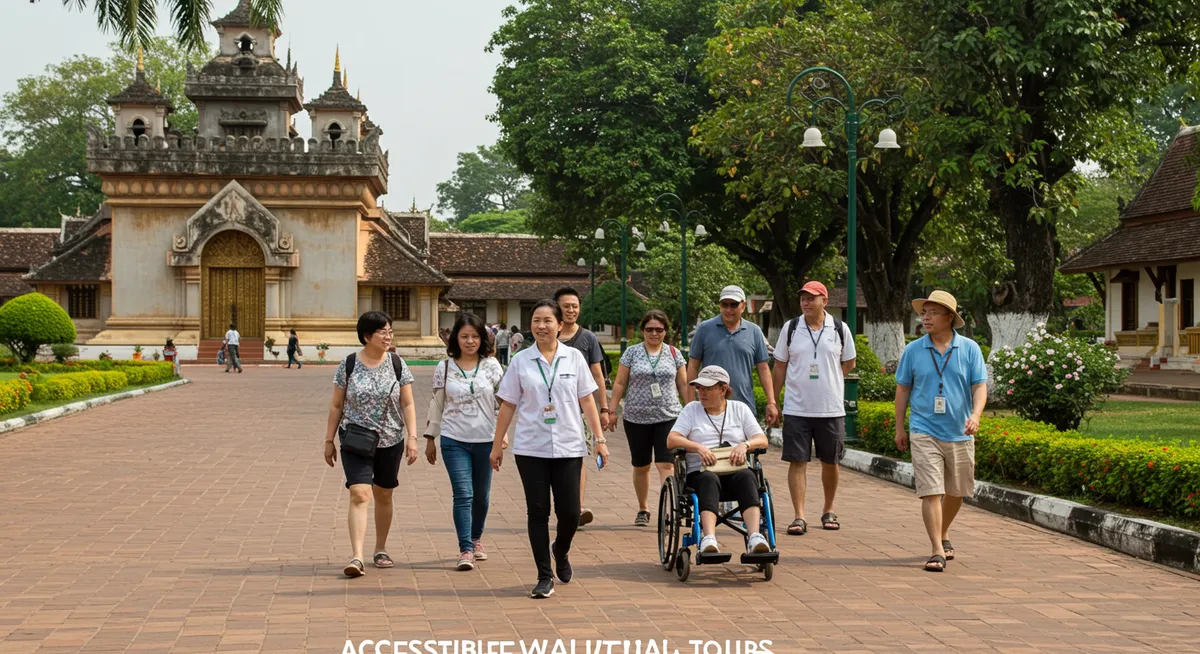
One of Vientiane’s true accessible gems is the extensive Riverside Promenade, part of Chao Anouvong Park. This beautifully paved, wide pathway stretches along the Mekong River, offering breathtaking sunset views and a lively atmosphere, especially in the late afternoon and evening. It’s almost entirely flat and smooth, making it ideal for strollers, wheelchairs, and those who prefer an even walking surface. You’ll find plenty of benches to rest, and the area comes alive with food stalls and local vendors, though navigating through crowded sections may require patience. Stick to the main paved path for the easiest experience.
- Accessibility: Excellent for its flat, wide path.
- Tips: Visit just before sunset for spectacular views. Be mindful of occasional street vendor setups that might narrow the path slightly. Public restrooms are available but check their accessibility.
Wat Si Saket and Haw Phra Kaew (Outer Grounds)
While the interior of many traditional temples in Vientiane presents accessibility challenges due to stairs, raised thresholds, and the custom of removing shoes, the outer grounds of Wat Si Saket and Haw Phra Kaew (both opposite each other) offer a wonderful, accessible walking experience. These historic sites feature relatively flat, paved courtyards and pathways around their perimeters. You can admire the intricate architecture, the stunning Buddha statues (at Wat Si Saket) and the serene atmosphere from the exterior, capturing the essence of these significant cultural landmarks without needing to navigate internal steps. The pavements immediately surrounding these complexes are generally well-maintained.
- Accessibility: Good for exterior pathways and courtyards. Interiors are generally not accessible.
- Tips: Maintain respectful distance when viewing and avoid peak tourist times for a more relaxed stroll.
Patuxay Monument and Surrounding Park (Exterior/Grounds)
Vientiane’s iconic Patuxay, often called the “Arc de Triomphe of Vientiane,” stands majestically at the end of Lan Xang Avenue. While climbing the monument itself involves multiple flights of stairs (and is thus not accessible), the surrounding Patuxay Park offers wonderfully flat, wide, and paved pathways perfect for an accessible walk. The park is beautifully landscaped with fountains, ponds, and open green spaces. You can enjoy fantastic photo opportunities of the monument and its intricate details from various angles on level ground. It’s a peaceful spot for a leisurely stroll, offering shade from mature trees.
- Accessibility: Excellent for the park grounds; monument interior is not accessible.
- Tips: Best visited in the cooler mornings or late afternoons. There are benches available for rest.
Talat Sao Mall (Interior)
For a completely different, fully accessible experience, consider exploring the interior of Talat Sao Mall, Vientiane’s main shopping complex. This modern, air-conditioned mall provides smooth, level floors, elevators, and escalators between its multiple levels. It’s a great option for escaping the heat or rain and offers a comfortable environment for walking, window shopping, or grabbing a bite at the food court. While it lacks the traditional charm of other Vientiane sights, it provides a practical, accessible space for a leisurely walk and offers amenities like accessible restrooms.
- Accessibility: Very good throughout the mall, including elevators and smooth floors.
- Tips: A good choice for a comfortable break. The adjacent ‘Morning Market’ (Talat Sao) itself can have uneven surfaces, so stick to the mall interior for optimal accessibility.
Practical Tips for an Enjoyable Accessible Walk
Embarking on an accessible walking tour in Vientiane offers a unique way to experience the city’s charm. To ensure your journey is as comfortable and enjoyable as possible, particularly for those with mobility considerations, here are some practical tips to keep in mind:
Footwear for Firm Foundations
Vientiane’s charm includes its slightly uneven pavements, occasional cracks, and sometimes unpaved sections, especially off the main thoroughfares. Wearing sturdy, closed-toe shoes with excellent grip is paramount. This provides crucial stability, reduces fatigue, and minimizes the risk of trips or falls. For those using mobility aids, good footwear supports your natural gait and complements the stability provided by your aid, offering an essential layer of security on varied surfaces.
Stay Hydrated, Stay Happy
The tropical climate of Vientiane means humidity and warmth are constants, particularly during the dry season. Dehydration can quickly sap your energy and exacerbate any mobility challenges. Always carry a refillable water bottle and drink frequently, even if you don’t feel thirsty. Bottled water is readily available from street vendors and convenience stores throughout the city, making it easy to replenish your supply.
Shield Yourself from the Sun
The sun in Laos can be intense, especially during the midday hours. Protect yourself with a wide-brimmed hat, UV-blocking sunglasses, and high-SPF sunscreen, reapplying as needed. Light-colored, loose-fitting, breathable clothing made from natural fabrics will also help you stay cool and comfortable. Overheating can lead to fatigue and discomfort, which is particularly important to avoid when managing mobility or exerting extra effort on your walk.
Timing is Everything
To beat the midday heat and enjoy the most pleasant walking conditions, plan your accessible tours for early morning (ideally before 9:00 AM) or late afternoon (after 4:00 PM). The cooler, gentler temperatures during these times make exploring Vientiane much more comfortable and less strenuous, allowing for a more relaxed and extended experience as you navigate the city’s sights.
Navigate with Awareness: Drains and Vendors
A key aspect of walking in Vientiane is constant awareness of your immediate surroundings. Many pavements feature open drains, sometimes unexpectedly deep or without covers, posing a significant tripping hazard. Ubiquitous street vendors often set up stalls that can narrow pathways, requiring careful navigation around their setups. For wheelchair users, cane users, or those with visual impairments, this vigilance is crucial. Look ahead, scan your path carefully, and be prepared for sudden changes in surface or unexpected obstacles.
Optimizing Mobility Aids
If you’re using a wheelchair, a smaller, more nimble model might be easier to maneuver on Vientiane’s varied terrain, which can include uneven sections and occasional curbs. For users of canes or walkers, ensure your aid has good rubber tips for optimal grip on potentially slippery or uneven surfaces. Don’t hesitate to ask for assistance if you encounter a particularly challenging section; Lao people are generally very hospitable and willing to help. Having a companion can also significantly enhance the ease and enjoyment of your tour, providing an extra pair of hands or eyes when needed.
Embrace Local Interactions
The people of Vientiane are known for their warm smiles and welcoming nature. A simple “Sabaidee” (hello) will go a long way in fostering positive interactions. If you need assistance, don’t be afraid to politely ask; many locals will go out of their way to offer help. Patience, a positive attitude, and an open mind will enhance your interactions and make your accessible walking tour a truly memorable and enriching experience in this charming city.
Hiring Accessible Support & Guides
Navigating a new city, especially with mobility considerations, becomes significantly richer and smoother with the right local support. While Vientiane offers a charming, relatively flat landscape compared to other parts of Laos, its sidewalks can be uneven, and popular attractions often have steps or varying terrain. This is where an accessible-aware local guide or dedicated support can truly transform your walking tour experience.
The Invaluable Role of an Accessible-Aware Local Guide
Hiring a local guide who understands the nuances of accessible travel offers a multitude of benefits, particularly for walking tours in Vientiane:
- Expert Navigation: A good guide knows the city like the back of their hand. They can steer you away from excessively uneven pavements, identify accessible routes around common obstacles like stairs at temple entrances (e.g., Wat Sisaket or Haw Phra Kaew often have steps), or find the smoothest paths through bustling market areas (like the Riverside Night Market). They can also recommend accessible shortcuts or alternative entry points.
- Tailored Pace and Route: Unlike a generic group tour, a private guide can fully customize your itinerary and pace to your specific mobility needs. Need more frequent breaks? Want to focus on a particular area without rushing? They can design a tour that suits your energy levels and interests perfectly.
- Logistical Support: Beyond just guiding, a local expert can assist with practicalities. This includes identifying accessible restrooms, knowing which cafes or restaurants have step-free access, and even helping with communication if you need to arrange an accessible tuk-tuk or taxi for part of your journey. They understand the local context for services and facilities.
- Cultural Immersion & Insight: Guides provide deep cultural insights that you might otherwise miss. They can explain local customs, interpret historical sites, and help you interact respectfully with locals. For an accessible traveler, this often means bridging communication gaps and ensuring a truly inclusive experience.
Considerations for Hiring Direct Assistance
For individuals with significant mobility challenges, beyond a guide, you might consider hiring direct assistance for specific routes or activities. While Vientiane doesn’t have a formalized industry for “personal mobility assistants” for tourists, it’s often possible to arrange this through a reputable guide or tour operator. This could involve someone to assist with pushing a wheelchair over short distances, navigating small curbs, or offering physical support on particularly challenging stretches.
When discussing your needs, be very specific about the type of assistance required (e.g., “someone to help push a wheelchair on certain inclines,” “assistance getting over small steps,” “carrying a portable oxygen concentrator”). A good guide will either be able to provide this support themselves or arrange for a trustworthy assistant.
Finding Reputable Services in Vientiane
Locating reliable, accessibility-aware guides and support requires a bit of research and clear communication:
- Specialized Accessible Tour Operators: Your best starting point is to search for tour companies that specifically market accessible travel in Laos or Southeast Asia. These operators often have pre-vetted guides and a network of resources dedicated to accessible tourism.
- Reputable Local Agencies & Hotels: Contact well-regarded local tour agencies or your hotel concierge in Vientiane. High-end hotels, in particular, often have established relationships with knowledgeable guides. Be explicit about your accessibility needs when inquiring.
- Online Forums & Communities: Accessible travel forums, Facebook groups, and blogs can be a goldmine for recommendations from fellow travelers who have visited Vientiane. Look for firsthand accounts and guide suggestions.
- Communicate Clearly: When contacting potential guides or agencies, outline your mobility needs in detail. Ask about their experience working with travelers with disabilities, their knowledge of accessible routes in Vientiane, and their flexibility in adapting tours. Don’t hesitate to ask for references or testimonials.
- Clarify Costs: Ensure you understand the guide’s fees, what’s included (e.g., transport, entry fees, meals), and if there’s an additional cost for dedicated physical assistance.
By investing in the right local support, your accessible walking tour in Vientiane can transform from a potential challenge into a deeply rewarding and seamless exploration of this enchanting city.
Beyond Walking: Accessible Transport Options in Vientiane
🎯 Insider Tip: Discover the best Vientiane experiences with Viator Tours!
While exploring Vientiane on foot offers unparalleled intimacy with the city, there will undoubtedly be times when you need a break from walking, cover longer distances, or require more accessible transport options. Vientiane provides several convenient alternatives to ensure your exploration remains comfortable and enjoyable, especially for those with mobility considerations.
Tuk-Tuks and Jumbos: The Quintessential Vientiane Ride
The iconic tuk-tuk is ubiquitous in Vientiane, offering an open-air, immersive experience. These three-wheeled vehicles are fantastic for short distances. A larger variant, often called a “jumbo” (a 4-wheeled minivan), offers more space. When using either:
- Negotiate Fare Upfront: Always agree on the price before you get in. Drivers rarely use meters, so a polite negotiation is expected. Knowing your destination and a rough idea of the distance helps.
- Space and Accessibility: Tuk-tuks can be quite cramped and require a step up to board. While not ideal for rigid wheelchairs, a foldable walking aid or crutches can often be managed. Jumbos offer more legroom and easier access, potentially accommodating a folded wheelchair, making them a better choice if you need extra space or have minor mobility issues.
- Ride Comfort: Expect a lively ride! Roads can be uneven, and the open-air nature means exposure to dust and exhaust fumes.
Metered Taxis: Comfort and Convenience
While less common than tuk-tuks, metered taxis are available, particularly around the airport, bus stations, and major hotels. These offer a more comfortable and air-conditioned alternative, especially appreciated during Vientiane’s hot and humid days.
- Accessibility: Taxis are standard cars, offering easier entry and exit compared to tuk-tuks. They can usually accommodate a folded wheelchair or other mobility devices in the boot, making them a practical choice for longer journeys or when comfort is a priority.
- Using the Meter: Always insist on the meter. If a fixed price is quoted that seems unreasonable, consider another taxi or a ride-hailing app.
Ride-Hailing Apps: Modern Solutions
For transparent pricing and ease of booking, ride-hailing apps are increasingly popular in Vientiane. They eliminate the need for cash negotiation and offer a more consistent experience.
- Loca: Laos’s homegrown Loca app is generally reliable and widely used. It offers various vehicle types, from standard cars to SUVs, beneficial for those needing more space or easier access. Payment can be via the app or cash to the driver.
- InDrive: This app allows drivers to bid on your fare, potentially offering competitive prices, though availability might vary.
- Practical Tips: Ensure you have a local SIM card or reliable roaming data. Pin your precise location and destination. If you have specific accessibility needs (e.g., needing space for a folded wheelchair), you can often message the driver through the app.
Private Car Hire with Driver: Ultimate Flexibility
For ultimate convenience, particularly for half-day or full-day excursions outside the city center, or if you have significant mobility challenges, consider hiring a private car with a driver. This can be arranged through your hotel, a local tour operator, or reputable travel agencies.
- Tailored Accessibility: You can specify the vehicle type (e.g., a larger SUV for easier entry/exit, or more space for mobility equipment). The driver is dedicated to your itinerary, offering flexibility for multiple stops and assistance as needed.
- Cost vs. Convenience: This is the most expensive option but provides unmatched comfort, privacy, and peace of mind, an excellent investment for a stress-free and accessible exploration of Vientiane and its surroundings.
Combining these transport options with your walking excursions allows you to tailor your Vientiane experience to your comfort level and accessibility needs, ensuring you don’t miss out on any of this charming city’s wonders.
Local Insights: Vientiane’s Approach to Accessibility
Navigating Vientiane on foot offers an authentic glimpse into local life, but it’s important to approach its accessibility with a realistic and open mind. While Laos is making slow but steady progress, the city’s infrastructure is still evolving and doesn’t always meet international accessibility standards. You’ll encounter uneven, cracked pavements, high curbs, and sporadic curb cuts, and some older traditional buildings or temple grounds might present more challenges for those with mobility aids.
However, what Vientiane might lack in physical infrastructure, it more than compensates for with the incredible spirit of its people. The inherent kindness and genuine willingness of local Lao individuals to lend a hand is perhaps Vientiane’s most significant “accessibility feature.” Don’t be surprised if a shopkeeper offers to help lift a wheelchair over a step, or a passerby instinctively helps guide you through a busy street. A warm smile and a simple “Khop Chai” (thank you) go a long way in fostering these helpful interactions.
For an enjoyable walking tour, especially if you have mobility considerations, consider the following practical advice:
- Embrace the Vientiane Pace: The city moves at a relaxed tempo, which can be an advantage. Plan for shorter walking distances and take frequent breaks.
- Prioritize Accessible Routes: Newer areas or more developed spots like the Mekong Riverside promenade tend to have smoother, wider paths. When planning your route to temples or markets, inquire locally or check recent reviews for insights into specific accessibility challenges.
- Footwear is Key: Sturdy, comfortable shoes with good grip are essential for navigating uneven surfaces and occasional gravel paths.
- Don’t Hesitate to Ask: Locals are generally very approachable and eager to assist. Use simple English phrases, gestures, or a translation app if needed. A polite request can often lead to unexpected help or alternative solutions.
- Flexibility and Alternative Transport: Be prepared to adapt your route. For longer distances or particularly challenging sections, utilize the extensive network of tuk-tuks or taxis. They are generally affordable and can drop you very close to your desired destination, bypassing difficult stretches of pavement. Many drivers are also very helpful and patient.
- Stay Hydrated and Seek Shade: Vientiane can be hot and humid. Regardless of mobility, frequent water breaks and seeking shade are crucial. This is even more important if you might be expending extra effort.
- Communicate Your Needs: If you are on a guided walking tour, communicate any specific mobility needs to your guide beforehand. Many local guides are adept at adjusting routes and paces to accommodate diverse groups, ensuring everyone has a fulfilling experience.
Vientiane’s approach to accessibility is a blend of ongoing, gradual infrastructure improvements and the deeply ingrained culture of helpfulness. By being prepared, patient, and open to engaging with the local community, you’ll find that exploring this charming capital on foot can still be a rewarding and accessible adventure.
Connecting with the Community & Responsible Tourism
Embarking on an accessible walking tour of Vientiane offers a unique opportunity to not only explore the city’s charming sights but also to genuinely connect with its warm-hearted people and contribute positively to the local economy. Responsible tourism is about fostering respect, understanding, and mutual benefit, ensuring your journey leaves a positive footprint.
Engaging Respectfully with Locals
Laotians are known for their gentle nature and welcoming smiles. Learning a few basic phrases can significantly enhance your interactions:
- “Sabaidee” (Sa-bai-dee): A friendly “hello” goes a long way. Use it often!
- “Khop Jai” (Khawp Jai): Thank you.
- Smile Often: A genuine smile is universally understood and appreciated.
When encountering monks, remember it’s respectful for women not to touch them. If you wish to take photographs of people, especially children, always ask for permission first with a gesture or “Kor taai huup dai baw?” (May I take a photo?). Vientiane’s pace is slower, so embrace the tranquility and be patient; it’s part of the charm.
For those navigating with mobility aids, local residents may not always be familiar with assistive devices. A little patience and a friendly demeanor will help bridge any initial curiosity or hesitation. Often, people are eager to assist if they see you need help, so don’t hesitate to accept a kind offer.
Supporting Vientiane’s Local Businesses
Your spending choices can have a direct and meaningful impact. Prioritize local establishments during your accessible exploration:
- Dine Locally: Skip the international chains and savor authentic Laotian cuisine at family-run restaurants or bustling street food stalls. Many ground-level eateries, especially around the Mekong riverside or near Wat Sisaket, offer relatively easy access for walking tour participants. Enjoy a bowl of fragrant Khao Piak Sen (noodle soup) or fresh spring rolls.
- Shop for Handicrafts: Seek out locally made textiles, silverwork, or wood carvings. Visit independent shops rather than larger souvenir emporiums. The Vientiane Night Market, though it can be crowded, has relatively flat, wide paths making some sections navigable, and purchasing here directly supports local artisans.
- Choose Local Services: If you book a short transfer between walking areas, try to use independent tuk-tuk drivers or local taxi services recommended by your hotel, rather than large chains. While fully accessible vehicles are rare, some tuk-tuks can accommodate collapsible wheelchairs or offer easier boarding than others – don’t hesitate to ask around.
Practicing Responsible Tourism Principles
Your actions contribute to the preservation of Vientiane’s beauty and culture:
- Minimize Your Footprint: Carry a reusable water bottle to reduce plastic waste, especially important given the heat. Proper waste disposal bins are becoming more common, but avoid littering entirely.
- Dress Modestly: When visiting temples or sacred sites (many of which, like Pha That Luang or Wat Si Saket, have pathways and flat entrances suitable for accessible exploration), ensure your shoulders and knees are covered as a sign of respect.
- Bargain Respectfully: While light bargaining is acceptable in markets, do so with a smile and remember that a small difference to you can mean a lot to a local vendor. Avoid aggressive haggling.
- Be Mindful of Infrastructure: When using mobility aids, be aware of your surroundings to avoid accidental damage to older pavements or structures. Navigate crowded areas patiently and considerately.
By embracing these principles, your accessible walking tour of Vientiane transforms from a simple sightseeing trip into a rich, immersive experience that benefits both you and the vibrant community you encounter.
Frequently Asked Questions
Q: Is Vientiane generally considered an accessible city for walking?
A: While Vientiane doesn’t have universal design standards, its relatively flat city center and the helpful nature of its people make many areas surprisingly navigable for those with mobility challenges, especially with good planning. Some key attractions have uneven terrain or steps.
Q: What is the best time of year for accessible walking tours in Vientiane?
A: The cooler, dry season from November to February is ideal, offering more comfortable temperatures for walking. Avoid the hot season (March-May) and rainy season (June-October) if possible, as heat and rain can add challenges.
Q: Are sidewalks in Vientiane generally good for wheelchairs or strollers?
A: Sidewalk quality varies significantly. Some main roads have decent pavements, but many are uneven, narrow, or obstructed by vendors and parked vehicles. The riverside promenade is a notable exception, offering smooth, wide paths.
Q: Can I rent mobility aids like wheelchairs in Vientiane?
A: Rental options for wheelchairs and other mobility aids are limited and not widely advertised for tourists. It’s highly recommended to bring your own if possible. For longer stays, inquire with larger hospitals or expat communities.
Q: Are major temples like Wat Si Saket accessible for visitors with mobility issues?
A: The grounds of major temples like Wat Si Saket and Haw Phra Kaew are generally flat and navigable. However, accessing the main sim (chapel) or certain stupas may involve steps, limiting interior access for wheelchairs. Exterior appreciation is often fully possible.
Vientiane, with its gentle pace and welcoming spirit, offers a unique opportunity for accessible exploration. While challenges exist, the city’s flat core, navigable riverside, and the inherent helpfulness of its people pave the way for a rewarding experience. By embracing local insights and preparing thoughtfully, travelers with mobility challenges can confidently discover the serene beauty and rich culture of Laos’ capital on foot, creating unforgettable memories and truly connecting with this enchanting destination.