
Hue Walking Tour Map: Self-Guided Exploration Tips (2026)
Explore Hue on foot with our ultimate self-guided walking tour map! Discover imperial history, local markets, and hidden gems. Practical tips for a safe and enriching experience.
On this page
Hue, Vietnam’s former imperial capital, is a city steeped in history, culture, and serene beauty. While its iconic landmarks like the Imperial City and Thien Mu Pagoda draw countless visitors, the true magic of Hue often reveals itself to those who choose to explore its charming streets and riverside paths on foot. A self-guided walking tour offers unparalleled freedom to delve deep into the city’s soul, discover hidden alleys, savor local flavors, and connect with its vibrant rhythm at your own pace. This comprehensive guide provides you with all the practical tips, local insights, and actionable advice to make your Hue walking adventure unforgettable.
Key Tips and Takeaways
- Always carry water and stay hydrated in Hue’s climate.
- Invest in comfortable, broken-in walking shoes for maximum enjoyment.
- Don’t hesitate to use Grab (bike or car) for longer distances or when your feet need a break.
- Embrace spontaneity: some of Hue’s best discoveries are down unexpected alleys.
- Start your walks early in the morning to beat the heat and crowds, especially for the Imperial City.
Why Explore Hue on Foot?
Hue, the former imperial capital of Vietnam, is a city that truly reveals its soul when explored on foot. While motorbikes and cyclos offer quick transit, choosing a self-guided walking tour allows for an unparalleled depth of discovery, transforming your visit from a passive observation into an active, sensory immersion. It’s not just about getting from point A to point B; it’s about savoring every step of the journey.
One of the foremost reasons to embrace walking in Hue is the **immersive cultural experience** it provides. By slowing down, you gain access to the city’s hidden veins – the narrow, quiet alleyways within the ancient Citadel walls, or the bustling residential streets outside the main tourist routes. These are where you’ll stumble upon tucked-away pagodas, discover authentic local eateries serving regional specialties like bún bò Huế that rarely make it to tourist menus, or observe artisans meticulously crafting traditional items. A car or motorbike simply glides past these intricate details; on foot, you’re invited into their world.
Walking also creates organic opportunities for **spontaneous local interaction**. A smile, a nod, or a simple “Xin chào” (hello) can lead to unexpected conversations with vendors at Dong Ba Market, children playing in the streets, or friendly locals curious about your journey. These genuine exchanges offer invaluable insights into daily Hue life, far beyond what any guidebook can provide. It’s the ultimate **budget-friendly exploration**, allowing you to bypass costly transportation and discover affordable, delicious street food stands and local shops that offer better value than their tourist-focused counterparts.
Beyond the cultural tapestry, walking lets you truly **connect with Hue’s serene atmosphere**. Imagine strolling along the tranquil banks of the Perfume River at dawn, feeling the gentle breeze and hearing the distant ringing of temple bells. Or perhaps wandering through the vast, quiet grounds of the Imperial City, contemplating the grandeur of Vietnam’s last dynasty, unhurried by tour groups or vehicle noise. The city’s historic and spiritual sites, from Thien Mu Pagoda to the majestic tombs along the river, feel far more profound when approached at a pedestrian pace, allowing you to absorb their ancient beauty and peaceful ambiance.
Practical Tips for Your Hue Walking Adventure:
- **Comfortable Footwear is Key:** Hue’s streets can vary from smooth pathways to uneven cobblestones and dirt paths. Invest in well-cushioned, breathable walking shoes.
- **Dress for the Climate:** Opt for lightweight, breathable clothing. Hue can be hot and humid, especially from March to August. Bring a hat, sunglasses, and reef-safe sunscreen.
- **Be Prepared for Rain:** Even outside the rainy season (roughly September to January), sudden showers can occur. A compact umbrella or a lightweight poncho is a smart addition to your bag.
- **Stay Hydrated:** Carry a refillable water bottle and replenish it often. You’ll find plenty of small shops selling water, and many cafes offer chilled drinks.
- **Essentials in a Small Backpack:** A small daypack for water, snacks, sunscreen, power bank for your phone (for maps/photos), and a compact camera.
- **Embrace Getting (Slightly) Lost:** While having a general map (digital or physical) is wise, don’t be afraid to take a spontaneous turn down an intriguing alley. That’s often where the magic happens!
- **Learn Basic Vietnamese Phrases:** Even a few words like “Cảm ơn” (thank you) or “Bao nhiêu tiền?” (how much?) will be greatly appreciated and can enhance your interactions.
- **Start Early:** To avoid the midday heat and larger crowds, begin your exploration in the early morning. It’s also often when the city is most peaceful and photogenic.
Planning Your Self-Guided Walking Adventure in Hue
Embarking on a self-guided walking adventure in Hue offers an unparalleled opportunity to truly immerse yourself in the city’s rich history, vibrant culture, and daily life. The beauty of a self-guided tour lies in its flexibility – you dictate the pace, the focus, and the discoveries. Here’s how to plan your perfect Hue itinerary.
Identify Key Areas & Craft Your ‘Wish List’
Hue is wonderfully walkable, with its main attractions clustered into distinct, navigable zones. Start by creating a ‘wish list’ of all the sites, experiences, and tastes you absolutely want to explore. Then, group them geographically:
- Imperial City (Dai Noi): The undeniable heart of Hue’s historical significance. This vast complex demands significant walking time to explore its palaces, temples, gates, and gardens. Think half a day to a full day here alone.
- Perfume River Banks: Strolling along the poetic Perfume River offers serene views, especially at dawn or dusk. You can easily walk from Trang Tien Bridge towards the Imperial City or explore the less developed banks further north/south for a glimpse of local life.
- French Quarter & City Center: Located on the south bank, this area boasts colonial architecture, modern cafes, boutique shops, and a lively atmosphere. It’s great for evening strolls, dining, and people-watching.
- Local Neighborhoods & Markets: Venture beyond the main tourist arteries into areas like Dong Ba Market or residential streets. This is where you’ll find authentic street food, traditional crafts, and observe daily Vietnamese rhythms.
Choose Your Theme & Pace
Once you have your wish list, consider what kind of experience you’re after. This will help you narrow down your routes and manage your time effectively.
- History Buff: Focus heavily on the Imperial City, perhaps combining it with a walk to the Thien Mu Pagoda (a short Grab ride might be needed to get there, but then you can walk around the pagoda and back to the river).
- Foodie Adventure: Plan routes around key markets (Dong Ba is a must!) and known street food alleys. Seek out Hue specialties like bún bò Huế, bánh khoái, and various sweet soups.
- Cultural Immersion: Mix historical sites with visits to traditional craft shops, local pagodas, and perhaps an art gallery.
- Daily Life Explorer: Dedicate time to simply wander through local streets, observe daily routines, and perhaps enjoy a coffee at a non-touristy cafe.
Estimate distances and time realistically. Hue can get very hot, especially midday. A leisurely 2-3 km walk might take longer than expected due to humidity and frequent stops for photos or refreshment. Factor in breaks for water, iced coffee, or a quick snack.
Leverage Your Maps
Both digital and traditional maps have their merits:
- Digital Maps (Google Maps, Maps.me): Incredibly useful for real-time navigation, searching for specific points of interest, and estimating walking times. Download offline maps for Hue on Google Maps or Maps.me before you arrive, especially if you anticipate limited data access. Maps.me is fantastic for showing smaller paths and local businesses.
- Traditional Paper Maps: Excellent for getting a broad overview of the city layout and understanding the relationship between different areas. They can also be a reliable backup if your phone battery dies. Many hotels or tourist information centers offer free maps.
Before heading out, plot your desired route on your chosen map, identify potential stops for food or shade, and note down any specific addresses for hard-to-find gems.
Practical Considerations for Your Hue Walk
- Footwear: This is paramount! Comfortable, broken-in walking shoes or sturdy sandals are essential. You’ll be covering significant distances.
- Hydration: Carry a reusable water bottle and refill it frequently. Look for small shops or cafes offering bottled water. The humidity in Hue can be draining.
- Sun Protection: A wide-brimmed hat, sunglasses, and high-SPF sunscreen are non-negotiable. Light, breathable clothing that covers your shoulders and knees (especially for pagodas) is also advisable.
- Rain Gear: If visiting during the wet season (October-February), pack a lightweight rain jacket or a small umbrella.
- Small Backpack: To carry your essentials: water, snacks, camera, power bank, and a light souvenir or two.
- Local Currency (VND): Have small denominations of Vietnamese Dong for street food, small purchases, and refreshing drinks from local vendors.
- Flexibility & Engagement: Don’t be afraid to veer off your planned path if something catches your eye. Smile, be open to interactions with locals, and try a few basic Vietnamese phrases – a simple “Xin chào” (hello) or “Cảm ơn” (thank you) goes a long way!
Essential Pre-Tour Preparation for Walkers
💡 Pro Tip: Book your Hue adventures in advance through Viator for the best deals!
Embarking on a self-guided walking tour of Hue is an incredible way to immerse yourself in its history and vibrant local life. However, a little pre-tour preparation goes a long way in ensuring a comfortable, enjoyable, and seamless experience. Here’s what you need to consider before you lace up your walking shoes:
Check Hue’s Climate and Weather Forecast
Hue’s tropical climate means weather will significantly impact your walking comfort. From April to August, expect intense heat and high humidity, often soaring above 35°C (95°F). Walking during midday can be challenging; plan your explorations for early mornings or late afternoons. Hydration is paramount, and sun protection (hat, sunglasses, high-SPF sunscreen) is non-negotiable. The rainy season typically runs from September to January, with October and November often experiencing heavy, prolonged downpours. These can lead to flooded streets, so a lightweight raincoat or poncho and waterproof footwear are essential. Conversely, February and March often offer the most pleasant weather, with milder temperatures and less humidity, ideal for extensive walking. Always check the local forecast the night before or morning of your walk to adjust your packing and itinerary accordingly.
Assess Your Physical Fitness
While Hue’s city center and the Imperial City are relatively flat, a self-guided walking tour can cover significant distances. Exploring the vast grounds of the Citadel, for instance, involves extensive walking. You might also encounter uneven pavements, especially outside the main tourist zones, and some attractions like certain pagodas (e.g., Thien Mu Pagoda) may involve stairs. Assess your current fitness level realistically. If you’re not accustomed to long walks in tropical heat, consider starting with shorter routes and gradually increasing your distance. Comfortable, broken-in walking shoes are an absolute must to prevent blisters and ensure you can fully enjoy your day without discomfort.
Research Opening Hours of Attractions
For a seamless self-guided experience, pre-tour research into the opening hours of your chosen attractions is vital. Major sites like the Imperial City (Citadel), various Royal Tombs (if your walk extends to them, though many are a short taxi/motorbike ride from the city center), and Thien Mu Pagoda generally have consistent hours, but these can change. Check official websites or reputable travel guides for the most up-to-date information. It’s also wise to note any potential holiday closures or specific days when certain sections might be inaccessible. Planning your route around these hours will help you maximize your time and avoid arriving at closed gates, ensuring a smooth and rewarding walking experience.
Learn a Few Basic Vietnamese Phrases
While many people in tourist areas will speak some English, making an effort to learn a few basic Vietnamese phrases will significantly enhance your interactions and show respect for the local culture. Simple greetings and polite words can go a long way. Here are a few essentials:
- Xin chào (seen-chow): Hello
- Cảm ơn (gahm-uhn): Thank you
- Bao nhiêu tiền? (bow nyew tee-en): How much money?
Locals genuinely appreciate the effort, and it can sometimes lead to warmer interactions or even a slightly better deal at local markets. Don’t worry about perfect pronunciation; the attempt itself is valued.
Understand Local Currency (Vietnamese Đồng – VND)
Vietnam’s currency, the Đồng (VND), can be a bit confusing at first due to its high denominations. You’ll encounter banknotes ranging from 1,000 VND to 500,000 VND. A common tip is to pay close attention to the number of zeros; 20,000 VND looks similar to 200,000 VND at a quick glance, but their values are vastly different! Familiarize yourself with the appearance of common notes, especially the 20,000 VND, 50,000 VND, and 100,000 VND bills, as these are frequently used for street food, drinks, and small purchases. It’s always a good idea to carry a mix of smaller denominations for convenience, particularly when buying from street vendors or paying for small items where larger bills might not be easily broken.
What to Pack: Your Hue Walking Tour Essentials
Embarking on a self-guided walking tour of Hue, Vietnam, is an immersive way to connect with its rich history and vibrant local life. To ensure your exploration is comfortable, safe, and truly enjoyable, packing smart is key. Here’s a definitive checklist of essentials tailored for navigating Hue’s charming streets and magnificent historical sites on foot.
Comfortable, Broken-In Walking Shoes
This is non-negotiable. You’ll be covering significant distances, from the well-paved pathways of the Imperial City to the potentially uneven terrain around ancient tombs or local markets. Opt for breathable, supportive shoes that you’ve worn multiple times before – blisters are the quickest way to derail your adventure. Sneakers, sturdy sandals with good arch support, or lightweight hiking shoes are all excellent choices.
Lightweight, Breathable & Modest Clothing
Hue’s tropical climate means humidity and heat are constants. Pack lightweight, quick-drying fabrics like cotton, linen, or moisture-wicking synthetics. Loose-fitting clothes will help you stay cool. Importantly, when visiting sacred sites such as the Thien Mu Pagoda, the Imperial City, or any temples, modesty is a must. Ensure your shoulders and knees are covered as a sign of respect. Carrying a lightweight scarf or sarong can be handy for impromptu temple visits.
Hat or Umbrella
Hue’s weather can be notoriously unpredictable – scorching sun one minute, a sudden downpour the next, especially during the rainy season (September to December). A wide-brimmed hat offers excellent sun protection, while a compact travel umbrella can serve as both a sun shade and a rain shield. Don’t underestimate the tropical sun; it’s more intense than you might think.
High-SPF Sunscreen
Protecting your skin from the sun’s powerful UV rays is crucial. Apply a high-SPF, water-resistant sunscreen generously, especially on exposed areas, and reapply throughout the day, particularly if you’re sweating a lot.
Insect Repellent
With its lush landscapes and proximity to the Perfume River, Hue can have mosquitoes, especially around dusk or in green areas like the Imperial City gardens or tomb complexes. Pack a reliable insect repellent to ward off bites and ensure a more comfortable experience.
Reusable Water Bottle
Staying hydrated is paramount in Hue’s heat and humidity. Carry a reusable water bottle that you can easily refill. Many cafes, hotels, and even some public places offer water refill stations, reducing plastic waste and keeping you refreshed without constant purchases.
Small, Secure Daypack
A lightweight, comfortable daypack (or cross-body bag) is essential for carrying your essentials. Choose one with secure zippers and keep it close to your body. While Hue is generally safe, it’s always wise to be mindful of your belongings, especially in crowded areas.
Portable Power Bank
Your smartphone will be your indispensable tool for navigation, photos, and perhaps translation. A portable power bank ensures your device stays charged throughout the day, especially when you’re relying on online maps and snapping countless photos of Hue’s stunning scenery.
Basic First-Aid Kit
Be prepared for minor scrapes or blisters. A small kit containing band-aids, antiseptic wipes, pain relievers, and any personal medications will be invaluable. Walking long distances can sometimes lead to unexpected foot issues, so blister pads are a good addition.
Small Denominations of Vietnamese Dong (VND)
While credit cards are accepted in larger establishments, many smaller vendors, street food stalls, and cyclo drivers prefer cash. Having small notes (e.g., 10,000 VND, 20,000 VND, 50,000 VND) makes transactions smoother, avoids issues with vendors not having change for large bills, and is convenient for quick purchases like a refreshing coconut or a delicious bánh mì.
Safety & Local Etiquette for Walkers in Hue
Navigating a new city on foot is an exhilarating experience, but understanding local nuances around safety and etiquette ensures your self-guided walking tour in Hue is seamless and respectful. Here’s what you need to know to walk confidently and courteously through this historic city.
Navigating Hue’s Lively Traffic
Hue’s streets, while charming, are dominated by motorbikes. Crossing the street can feel like a game of Frogger, but with a few simple strategies, you’ll master it:
- Embrace the Flow: Don’t wait for traffic to stop. Instead, step out slowly and maintain a predictable, steady pace. Motorbike riders are adept at weaving around obstacles (including pedestrians) if you don’t make sudden, unpredictable movements.
- Eye Contact & Predictability: Try to make eye contact with approaching drivers to signal your intention. Walk confidently and steadily, not erratically.
- Use Crossings (with caution): While marked pedestrian crossings exist, they don’t always guarantee right-of-way. Still, they are generally safer points to attempt a crossing.
- Peak Hours: Be extra vigilant during rush hours (roughly 7-9 AM and 4:30-6 PM) when traffic volume is highest.
Staying Safe & Sound: Health and Valuables
Hue’s tropical climate means you need to prioritize your well-being, and like any popular tourist destination, basic precautions with valuables are wise.
- Hydration is Key: Hue can be hot and humid, especially from March to August. Carry at least 1-2 liters of bottled water and sip frequently. Tap water is not potable.
- Recognize Heatstroke: Symptoms include dizziness, nausea, extreme fatigue, rapid pulse, and headache. If you feel unwell, seek shade, hydrate, and consider resting in an air-conditioned cafe. Wear a hat and use sunscreen.
- Secure Your Valuables: Keep your wallet, phone, and passport in a zipped front pocket or a secure, cross-body bag worn to the front. Be particularly mindful in crowded areas like Dong Ba Market or walking streets.
- Beware of Minor Scams: While Hue is generally safe, be aware of common tourist ploys. Always agree on a price before getting into a cyclo or motorbike taxi. When shopping, confirm the price before the item is wrapped. Always double-check your change after a transaction. Overly friendly strangers offering unsolicited tours or “special deals” should be approached with caution.
Respecting Local Etiquette
Showcasing respect for local customs will enhance your experience and endear you to the friendly Hue locals.
- Dress Code for Temples & Pagodas: When visiting spiritual sites like Thien Mu Pagoda or temples within the Imperial City, ensure your shoulders and knees are covered. A light scarf or sarong is a versatile item to carry for quick coverage. Footwear that can be easily slipped off is also helpful, as you’ll remove your shoes before entering many religious buildings.
- Polite Bargaining in Markets: At places like Dong Ba Market, bargaining is expected and part of the cultural experience. Do it politely, with a smile, and don’t be aggressive. Aim for roughly 20-40% off the initial asking price. If you can’t agree on a price, a polite “Cảm ơn” (thank you) and walking away is perfectly acceptable.
- Interacting with Locals: A friendly “Xin chào” (hello) goes a long way. Vietnamese people are generally warm and hospitable. When offered something, use both hands to accept or give.
- Photography Guidelines: Always ask for permission before taking someone’s photo, especially children or vendors. Be respectful in religious sites; avoid flash photography or overly intrusive shots. Avoid photographing military installations or government buildings.
By keeping these practical tips in mind, you’ll navigate Hue safely and respectfully, allowing you to fully immerse yourself in its history, culture, and vibrant daily life.
Maximizing Your Walking Experience in Hue
💡 Pro Tip: Book your Hue adventures in advance through Viator for the best deals!
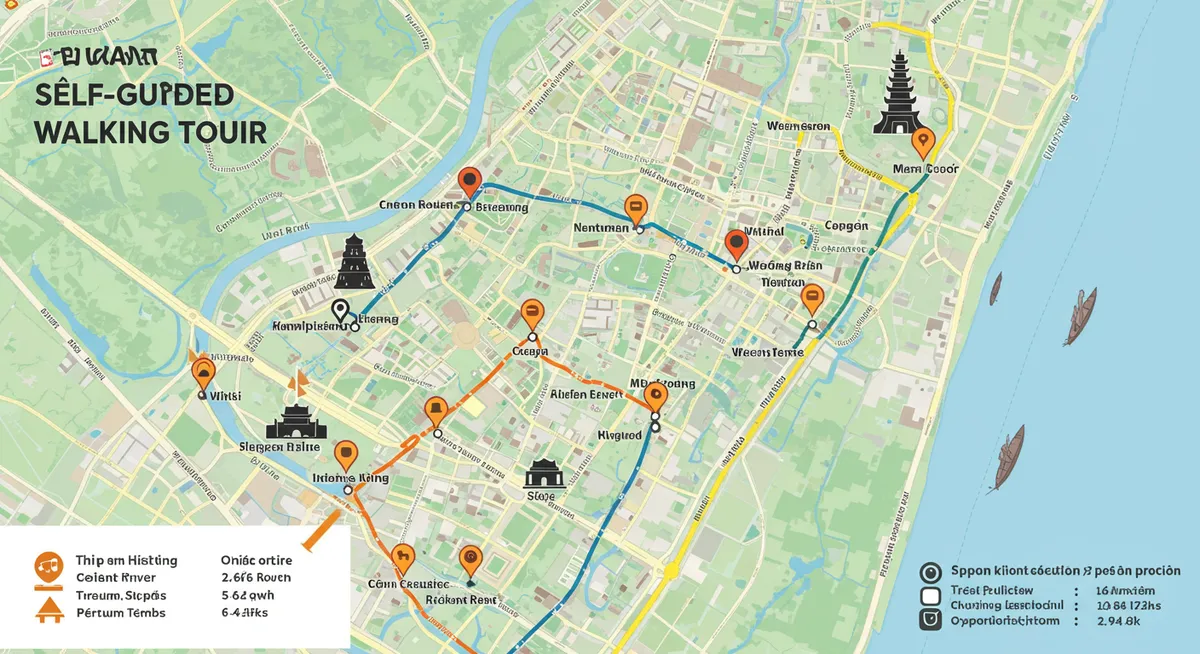
Hue, with its captivating blend of imperial history, tranquil waterways, and vibrant street life, is a city best explored on foot. While our self-guided map provides a clear path, truly maximizing your walking experience in Hue involves more than just following directions. It’s about immersing yourself in the city’s rhythm, embracing its unique charm, and knowing how to adapt for comfort and discovery.
Pace Yourself and Embrace Breaks
Hue’s tropical climate, especially from March to August, can be hot and humid. Start your walks early in the morning or later in the afternoon to avoid the midday sun. Stay hydrated by carrying plenty of bottled water – you’ll find vendors everywhere. Allow yourself frequent breaks: duck into a local cafe for a refreshing iced coffee (cà phê sữa đá), sit on a bench along the Perfume River, or find shade within the spacious grounds of the Imperial City. Trying to rush through sights like the vast Citadel will only lead to exhaustion; savour it slowly.
Embrace Spontaneity and Get ‘Lost’ (Safely!)
While our map guides you to key attractions, some of Hue’s greatest treasures are found off the beaten path. Dare to venture down a narrow alleyway (known as a kiệt or hẻm). You might discover a hidden local pagoda, a traditional garden house, or witness everyday Hue life unfolding. Hue’s residential areas are generally safe and welcoming. Just remember to keep an eye on your offline map (like Google Maps) to reorient yourself, and you’ll always find your way back to a main street.
Savour Hue’s Street Food
Hue is Vietnam’s culinary capital, and walking is the perfect way to sample its diverse street food scene. Keep an eye out for bustling stalls with high turnover, especially those with many locals dining there – a sure sign of freshness and authenticity. Don’t miss Hue specialties like bún bò Huế (spicy beef noodle soup), bánh khoái (crispy pancake), or nem lụi (grilled pork skewers). Many vendors set up near Đông Ba Market or along the riverfront in the evenings, offering a sensory feast. Try small portions at multiple places to sample more variety.
Engage with Locals (Respectfully)
Hue’s residents are renowned for their gentle demeanour and friendliness. A simple “Xin chào” (hello) or a smile can go a long way. Don’t be afraid to try a few more Vietnamese phrases if you know them. Engaging with vendors, asking about their craft, or even just observing their daily routines enriches your understanding of the city. Remember to always be respectful when taking photos; a polite gesture or asking for permission is always appreciated, particularly with older individuals or children.
Capture the Moment: Photography Tips
Hue offers incredible photographic opportunities. The golden hours around sunrise and sunset are ideal for capturing the serene beauty of the Perfume River, the ancient gates of the Imperial City, or the intricate details of a pagoda. Look beyond the grand monuments; candid shots of daily life in the markets, the vibrant colours of street food, or the subtle beauty of a traditional garden can tell a compelling story. Always be mindful of people’s privacy and surroundings.
Know When to Use Complementary Transport
While walking is paramount, Hue’s attractions can be quite spread out. For longer distances, like reaching the tranquil Thien Mu Pagoda from the city center, or venturing out to the Royal Tombs, don’t hesitate to use local transport. A traditional cyclo offers a charming, leisurely way to cover shorter distances around the Imperial City or along the river, but always agree on the price beforehand. For convenience and fixed fares, Grab (the ride-hailing app for bikes or cars) is readily available and affordable. Don’t feel obliged to walk every kilometer; a timely Grab ride can save your energy for more enjoyable exploration and ensure you see everything on your itinerary.
Sample Self-Guided Walking Itineraries
Hue, with its rich history and captivating charm, is a city best explored on foot. Self-guided walking tours offer the freedom to discover hidden alleys, linger at intriguing spots, and truly immerse yourself in the local rhythm. Here are a few thematic itinerary ideas to help you design your perfect Hue walking adventure, complete with practical tips to make the most of your journey.
Imperial City Immersion
Step back in time as you traverse the majestic grounds of the Hue Imperial City, a UNESCO World Heritage site. This itinerary focuses on the core historical landmarks within the Citadel walls, offering a profound glimpse into Vietnam’s last imperial dynasty.
- Starting Point: Ngo Mon Gate (Noon Gate), the main entrance to the Imperial City.
- Key Landmarks:
- Ngo Mon Gate: Marvel at its grandeur and imagine emperors passing through.
- Thai Hoa Palace: Admire the exquisite architecture and the throne room where significant court ceremonies took place.
- Hall of Mandarins & Surrounding Courtyards: Explore the administrative areas.
- Forbidden Purple City (Tu Cam Thanh): Wander through the ruins of what was once the exclusive residence of the emperor and his closest family. While much was destroyed, the layout and remaining structures evoke a powerful sense of history.
- The Mieu Temple & Hien Lam Cac: Visit the solemn dynastic temple dedicated to the Nguyễn emperors and the stately pavilion.
- Practical Tips:
- Duration: Allocate at least 2-3 hours, or even half a day, to truly appreciate the scale and details.
- Footwear: Absolutely essential to wear comfortable walking shoes, as there’s a lot of ground to cover.
- Hydration & Sun Protection: Carry plenty of water, wear a hat, and apply sunscreen. The open courtyards can be very exposed.
- Guided Insight: While self-guided, consider hiring a local guide at the entrance for deeper historical context – even for an hour – then explore independently.
Perfume River Promenade
Embrace the serene beauty of the Perfume River with a leisurely walk along its banks, connecting iconic bridges and bustling markets with quieter colonial charm.
- Starting Point: North bank near Truong Tien Bridge.
- Key Landmarks:
- Truong Tien Bridge: Start your walk by admiring or crossing this iconic, graceful steel bridge. Capture photos of its unique architecture.
- Dong Ba Market: Dive into the sensory overload of Hue’s largest and oldest market. Explore everything from fresh produce and seafood to traditional crafts and clothing.
- River Walkways: Stroll along the well-maintained pathways on either the north or south bank, enjoying the cool breeze and views of daily river life.
- Colonial Quarter (South Bank): Cross back to the south bank and explore the streets around Le Loi and Ly Tu Trong for glimpses of French colonial architecture, a contrast to the imperial grandeur.
- Practical Tips:
- Best Time: Early morning for a cooler, quieter market experience, or late afternoon/evening to witness the sunset over the river and the bridge illuminated.
- Market Navigation: Be prepared for crowds at Dong Ba Market. Keep an eye on your belongings and be open to sampling local snacks.
- Traffic Awareness: While walking along river paths is safe, crossing streets in Hue requires caution due to motorbike traffic.
Local Life & Foodie Walk
Get off the main tourist circuit and immerse yourself in the vibrant daily life of Hue, discovering hidden street food gems and observing traditional crafts. This itinerary typically involves exploring neighborhoods on the south bank, often beyond the main backpacker streets.
- Starting Point: Begin exploring the smaller streets and alleys around the south bank, perhaps near residential areas or specific food streets like Tran Cao Van or Nguyen Thi Minh Khai (check locally for current hotspots).
- Key Experiences:
- Street Food Exploration: Keep an eye out for bustling local eateries and street stalls. Sample Hue specialties like Bún Bò Huế (beef noodle soup), Bánh Khoái (crispy pancake), Nem Lụi (grilled pork skewers), and various steamed cakes (Bánh Bèo, Nậm, Lọc).
- Local Markets & Vendors: Discover smaller, neighborhood markets that offer a more authentic glimpse into local commerce than Dong Ba.
- Traditional Crafts: Look for small workshops specializing in conical hats (nón lá), incense sticks, or traditional paintings.
- Everyday Scenes: Enjoy observing daily life – kids playing, vendors chatting, and the general rhythm of Hue’s residential areas.
- Practical Tips:
- Go Hungry: This is a foodie tour, so pace yourself and leave room for multiple tastings!
- Cash is King: Have plenty of small Vietnamese Dong (VND) denominations for street food vendors.
- Be Adventurous: Don’t be afraid to try new dishes, even if you don’t know exactly what they are. Pointing and smiling often works wonders.
- Hygiene: While street food is generally safe, choose stalls that look busy and clean.
- Interaction: Many locals are friendly and welcoming, a smile and a simple “xin chào” (hello) can go a long way.
Beyond Walking: Complementing Your Hue Exploration
While a self-guided walking tour is undoubtedly the best way to immerse yourself in Hue’s street-level charm and uncover hidden alleyways, the city’s unique layout and spread-out historical sites mean that walking alone might not always be the most efficient or comprehensive way to explore. Think of your walking adventures as the core, beautifully complemented by other local transport options that add layers of convenience, unique perspective, and deeper understanding to your Hue journey.
Embracing Local Transport Beyond Your Feet
- The Timeless Cyclo (Xích Lô): For a truly iconic Hue experience, hop on a cyclo. These leisurely pedicabs offer a charming, unhurried way to see the city. They’re perfect for short, scenic rides around the Citadel perimeter, along the Perfume River promenade, or simply when your feet need a break after a long day of exploration. Agree on the price before starting your journey – a typical ride for an hour or so around a specific area should be negotiated upfront. It’s a wonderful way to absorb the atmosphere at a slower pace, seeing details you might miss from a car.
- Quick Transits with Grab (Bike/Car): For longer distances, especially to reach the distant imperial tombs or pagodas outside the main city center, Grab (Vietnam’s popular ride-hailing app) is your best friend. Both GrabBike (for solo travelers) and GrabCar (for groups or if you prefer air-conditioned comfort) are readily available and incredibly affordable. Download the app before your trip; it’s an indispensable tool for efficient and transparent travel, ensuring you can quickly get from your walking tour’s endpoint to your next remote destination.
- The Serene Perfume River Boat Trip: The Perfume River is Hue’s lifeline, and a boat trip along its waters is an essential part of any visit. Many of Hue’s famous pagodas, most notably Thien Mu Pagoda, and several imperial tombs are situated along the riverbanks, making a boat tour a practical and picturesque way to reach them. You can hire a private dragon boat or join a group tour. This offers a completely different perspective of the city and its historical grandeur, allowing you to relax between your walking excursions at each disembarkation point. Negotiate prices for private boats, and always confirm what stops are included.
Deepening Your Understanding with a Local Guide
While self-guided walking tours offer freedom, hiring a local guide, even for just a half-day, can profoundly enrich your Hue experience. A knowledgeable local guide provides invaluable context, historical anecdotes, and cultural insights that no guidebook or online resource can fully replicate. They can:
- Unlock History: Dive deeper into the complex narratives of the Imperial City, the Forbidden Purple City, or the various tombs, understanding the significance beyond what you see.
- Offer Local Insights: Discover hidden gems, learn about local customs, and get recommendations for authentic eateries or artisanal shops that only locals know.
- Facilitate Specialized Tours: Consider a guide for a dedicated food tour, a historical architecture tour, or a visit to specific craft villages. Their expertise turns a simple walk into a truly immersive educational journey.
By strategically combining your rewarding self-guided walks with these complementary transport options and the invaluable insights of a local guide, you’ll ensure your Hue exploration is not just comprehensive, but also remarkably rich, convenient, and unforgettable.
Local Insights & Expert Tips for Hue Walkers
Embarking on a self-guided walking tour in Hue offers a unique window into its soul, far beyond the typical tourist trails. To truly savor the experience and connect with the city’s gentle rhythm, here are some local insights and expert tips that will elevate your Hue adventure.
Timing Your Exploration: The Golden Hours
- Early Morning (6:00 AM – 9:00 AM): This is arguably the best time to walk in Hue. The air is refreshingly cool, the streets are less congested, and the golden sunlight paints the Citadel walls and Perfume River in a soft, inviting glow. You’ll witness locals performing tai chi by the river, vendors setting up their stalls in bustling markets, and the city slowly awakening. It’s perfect for photography and experiencing authentic daily life before the heat sets in.
- Late Afternoon & Sunset (4:00 PM – 6:30 PM): As the day cools down, Hue regains its charm. The light is fantastic for photos, and you can enjoy spectacular sunsets over the Perfume River or from various vantage points around the Imperial City. This is when local life buzzes again, with people heading out for evening strolls and street food stalls coming alive.
- Avoid Midday (11:00 AM – 3:00 PM): Hue can be intensely hot and humid during these hours. Plan to be indoors – perhaps enjoying a leisurely lunch, visiting a museum, or simply resting – to avoid exhaustion and sunburn.
Unearthing Hue’s Hidden Gems
- Local Coffee Culture: Beyond the main thoroughfares, seek out small, unassuming coffee shops down narrow alleys. Hue is famous for its unique cà phê muối (salt coffee) – a delightful blend of rich coffee, condensed milk, and a creamy, slightly salty foam on top. Look for places frequented by locals; they often offer the most authentic atmosphere and delicious brews.
- Enchanted Garden Houses: Hue is synonymous with its traditional garden houses, often hidden behind lush greenery. While many are private residences, some are open to visitors (e.g., An Hien Garden House is well-known). Keep an eye out for subtle signs or ask locals for recommendations. These tranquil oases offer a glimpse into Hue’s refined architectural and cultural heritage.
- Authentic Local Eateries: To truly taste Hue, venture off the main tourist streets. Follow your nose and look for eateries bustling with local patrons, often with simple plastic tables and chairs. Don’t be shy about pointing at dishes others are enjoying! Must-try Hue specialties include bún bò Huế (spicy beef noodle soup), bánh khoái (crispy pancake), nem lụi (grilled pork skewer), and various delicate rice cakes like bánh bèo, nậm lọc, and ít trần. Often, the best spots are small, family-run establishments.
Respectful Interactions & Practical Tips
- Engage with a Smile: A friendly “Chào bạn” (hello friend) or “Cảm ơn” (thank you) goes a long way. Hue locals are generally reserved but incredibly warm and welcoming.
- Bargain Gently: At local markets, lighthearted bargaining is common, but always do so with a smile and good humor. Avoid aggressive tactics.
- Ask Before You Snap: When photographing people, especially vendors or children, always ask for permission first. A simple gesture or “Chụp ảnh được không?” (Can I take a photo?) shows respect.
- Dress Modestly at Sacred Sites: If your walk takes you past pagodas or temples, ensure your shoulders and knees are covered as a sign of respect.
- Hydration is Key: Always carry plenty of water. Hue’s humidity can be draining. A reusable water bottle is excellent for refilling.
- Comfortable Footwear: This cannot be stressed enough. You’ll be covering significant distances, so choose breathable, well-cushioned walking shoes.
- Sun Protection: A wide-brimmed hat, sunglasses, and high-SPF sunscreen are essential, even on cloudy days.
- Offline Maps & Power Bank: Download offline maps (like Google Maps or Maps.me) to navigate without constant data. A portable power bank will keep your phone charged for photos and navigation.
- Small Denominations: Carry plenty of small Vietnamese Dong notes for street food, coffee, and market purchases.
By embracing these insights, your self-guided walking tour of Hue will transform from a simple sightseeing trip into an immersive cultural journey, revealing the true charm and authentic spirit of this historic city.
Frequently Asked Questions
Q: Is Hue safe for solo female travelers on a walking tour?
A: Generally, Hue is considered very safe for solo travelers, including females. Locals are friendly and helpful. However, it’s always wise to exercise standard precautions: be aware of your surroundings, especially at night, keep valuables secure, and avoid poorly lit or deserted areas. Sticking to well-trafficked routes is advisable.
Q: What’s the best time of year to visit Hue for walking tours?
A: The ideal time for free walking tours in Hue is from February to April, during the dry season, when temperatures are mild and pleasant. September to January can also be good, though there might be more rain and cooler temperatures. May to August is the hot and humid summer, which can be challenging for extensive walking.
Q: Can I explore the entire Imperial City (Citadel) on foot?
A: Yes, you can explore the Imperial City primarily on foot, but be prepared for a substantial amount of walking. The Citadel complex is vast, and many key attractions are spread out. Allow at least 3-4 hours, or even half a day, to truly appreciate it without rushing. Wear comfortable shoes and stay hydrated.
Q: How do I deal with street vendors or cyclo drivers approaching me?
A: It’s common for street vendors or cyclo drivers to approach tourists. A polite but firm ‘No, thank you’ (Không, cám ơn) is usually sufficient. If you are interested, politely bargain for the price before agreeing to any service or purchase. A smile and respectful demeanor go a long way.
Hue truly comes alive when explored on foot. Beyond the grandeur of its imperial past, the city offers a tapestry of vibrant local life, serene landscapes, and culinary delights waiting to be discovered. Armed with these practical tips and a spirit of adventure, you’re now ready to craft your own unforgettable self-guided walking tour map of Hue, creating personal memories and uncovering the myriad charms of this beautiful Vietnamese city, one step at a time.