
Hoi An Walking Tour Packing List: Essentials for Vietnam (2026)
Explore Hoi An on foot with confidence! Discover the essential packing list for comfortable, safe, and enjoyable walking tours in Vietnam’s charming ancient town.
On this page
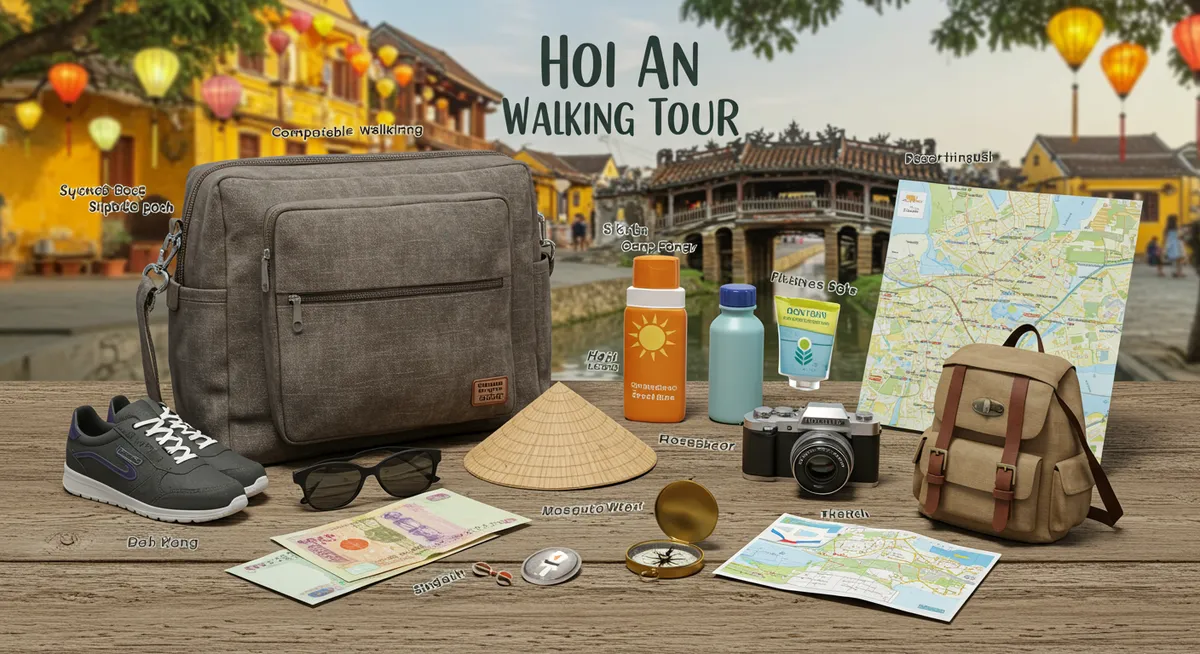
Hoi An’s ancient charm is best experienced on foot. Winding lantern-lit streets, historic temples, and vibrant markets beckon you to explore every corner. To truly immerse yourself in this UNESCO World Heritage site, a well-prepared packing list is key. This guide ensures you’re ready for everything Hoi An’s free walking tours in Hoi An have to offer, from sun-drenched afternoons to unexpected downpours.
Key Tips and Takeaways
- Prioritize comfortable, broken-in footwear – your feet will thank you!
- Pack light, breathable, and quick-drying clothing suitable for tropical heat and modesty.
- Always carry sun protection (hat, sunscreen, sunglasses) and a reusable water bottle.
- Be prepared for sudden rain with a lightweight rain jacket or poncho, regardless of the season.
- A small first-aid kit, insect repellent, and a power bank are essential for comfort and safety.
Understanding Hoi An’s Climate: Prepare for Tropical Weather
Hoi An, nestled on Vietnam’s central coast, is a tropical paradise, but its climate requires thoughtful preparation, especially for extensive walking tours. Understanding the local weather patterns is crucial for ensuring a comfortable and enjoyable exploration of its ancient streets, vibrant markets, and scenic surroundings.
The city experiences a distinct tropical monsoon climate, characterized by high humidity year-round and two main seasons:
The Dry Season: February to August
This period is generally hot, sunny, and less rainy, making it a popular time to visit. Temperatures can soar, often reaching into the 30s°C (high 80s to 90s°F), with humidity consistently high. For your walking tours, this translates to:
- Intense Sun Exposure: Days are long and bright. You’ll be walking under direct sunlight for extended periods, especially when exploring the Ancient Town, cycling through rice paddies, or strolling along the riverbanks.
- Hydration is Key: The heat and humidity mean you’ll sweat a lot. Staying hydrated is paramount to avoid fatigue and heatstroke.
- Early Mornings & Late Afternoons: Locals often conduct business or leisure activities during these cooler parts of the day. Consider scheduling your longer walks for these times to beat the midday heat.
Packing Tip for Dry Season Walking Tours: Prioritize lightweight, breathable fabrics like cotton or linen. A wide-brimmed hat, sunglasses, and high-SPF sunscreen are non-negotiable. Always carry a refillable water bottle, and consider a small, absorbent towel for perspiration.
The Wet Season: September to January
While still warm and humid, this season sees increased rainfall. October and November are typically the wettest months, with the potential for typhoons and significant flooding, particularly in the low-lying Ancient Town. Despite this, there are still plenty of sunny intervals.
- Sudden Downpours: Expect heavy, but often brief, tropical showers. These can turn streets into puddles and make surfaces slippery.
- Potential for Flooding: During peak wet season, parts of the Ancient Town can become submerged. This offers a unique (and sometimes challenging) perspective, with locals navigating by boat, but it significantly impacts walkability.
- Cooler (but Still Humid) Temperatures: While not cold, temperatures are generally lower than the dry season, making walks slightly less oppressive, though humidity remains high.
Packing Tip for Wet Season Walking Tours: A lightweight, packable rain jacket or a sturdy umbrella is essential. Opt for quick-drying clothing and waterproof or water-resistant footwear that offers good grip. Closed-toe sandals or water shoes can be a good option if you anticipate extensive flooding. Don’t forget insect repellent, as mosquitoes are more prevalent after rain.
Regardless of the season, remember that high humidity is a constant in Hoi An. This means clothes take longer to dry, and you’ll feel perpetually damp if your attire isn’t breathable. Always pack light and quick-drying layers, prioritize comfortable, worn-in walking shoes, and embrace the tropical rhythm of this enchanting town.
The Foundation: Comfortable & Practical Footwear
Hoi An is a city designed for discovery on foot. Its enchanting Ancient Town, a UNESCO World Heritage site, is largely pedestrianized, inviting you to wander freely through narrow, atmospheric lanes, across ancient bridges, and along the picturesque Thu Bon River. This intimate, unhurried exploration is a highlight of any visit, but it means your feet will be doing a significant amount of work. To truly immerse yourself in Hoi An’s magic without being distracted by aching feet or blisters, your footwear choice is absolutely paramount.
The foundation of a successful Hoi An walking tour begins with comfortable, practical, and well-suited footwear. Forget about packing brand-new shoes; the golden rule for any extensive walking, especially in a humid climate like Hoi An’s, is to bring footwear that is thoroughly broken in. New shoes are a surefire way to get blisters, which can quickly ruin your exploration and leave you hobbling instead of happily strolling.
Hoi An’s tropical climate means heat and humidity are constant companions. Prioritize shoes made from highly breathable materials like mesh, canvas, or specialized quick-drying synthetics. This will help keep your feet cool and dry, minimizing discomfort and preventing odor. If you happen to encounter one of Hoi An’s sudden, refreshing downpours (common during the rainy season, but possible any time), quick-drying materials will be a lifesaver, allowing your shoes to dry faster and preventing that squishy, uncomfortable feeling as you continue your journey.
While much of the Ancient Town appears flat, you’ll still be covering significant distances over varied surfaces. Good arch support and adequate cushioning are crucial for absorbing shock and supporting your feet over extended periods. The charming cobblestone streets and older pavements in Hoi An can sometimes be uneven, and surfaces may become slick after rain. A good grip or sturdy tread on your soles will help you navigate confidently, whether you’re strolling across the iconic Japanese Bridge or exploring the bustling central market.
Leave your flimsy flip-flops, stylish but impractical high heels, and delicate sandals at home. While tempting for their ease in hot weather, flip-flops offer zero support, poor traction, and expose your feet to dust and dirt – completely insufficient for hours of walking. High heels are not only uncomfortable but also dangerous on the uneven surfaces of Hoi An’s ancient streets. Your best bet is a pair of lightweight, breathable walking shoes or athletic sneakers. If you prefer sandals, ensure they are sturdy, have adjustable straps for a secure fit, offer good arch support, and feature a cushioned sole. Brands known for robust walking sandals like Teva, Chaco, or Keen are often excellent choices. Many experienced travelers even pack a pair of each for versatility!
Before you even pack, wear your chosen footwear around your home or on short walks to ensure they’re truly comfortable and don’t cause any rubbing. Pack a couple of pairs of moisture-wicking socks to reduce friction and keep feet dry. And always, always throw a small blister kit (band-aids, moleskin, antiseptic wipes) into your daypack – just in case!
Smart Clothing Choices: Lightweight & Respectful Attire
⭐ Recommendation: Don't miss out on amazing Hoi An tours - book now!
When embarking on a walking tour through Hoi An’s charming streets and ancient sites, your clothing choices will significantly impact your comfort and overall experience. The city’s tropical climate is characterized by high temperatures and humidity for much of the year, often punctuated by sudden, heavy downpours. Smart fabric selections are paramount.
Lightweight & Breathable Fabrics: Your Best Friends
Prioritize garments made from materials that allow your skin to breathe and help wick away moisture. Think loose-fitting, light-colored clothing that won’t cling or make you feel stifled in the heat. Here are the top contenders:
- Cotton: A classic for a reason. Natural cotton is breathable, soft, and feels comfortable against the skin, especially important when you’re sweating. Opt for lighter weaves.
- Linen: The ultimate warm-weather fabric. Linen is incredibly breathable, absorbent, and dries quickly. While it wrinkles easily, that’s part of its relaxed charm in a place like Hoi An.
- Moisture-Wicking Synthetics: For those who plan on doing extensive walking or tend to sweat more, performance fabrics like polyester or nylon blends designed for activewear can be a lifesaver. They efficiently draw moisture away from your body and dry extremely fast, preventing chafing and keeping you feeling fresher.
Quick-drying properties are especially valuable not only for handling sweat but also for coping with Hoi An’s humidity and the possibility of unexpected rain showers. Being able to air-dry your clothes overnight or after a sudden downpour is a huge convenience.
Respectful Attire for Cultural Immersion
Hoi An is rich in history and spirituality, home to numerous temples, pagodas, and ancestral homes. Visiting these sites requires a degree of cultural sensitivity regarding your dress. To ensure a respectful and welcomed visit, particularly to places like the Phuc Kien Assembly Hall, Quan Cong Temple, or any active pagoda:
- Cover Shoulders and Knees: This is a universal sign of respect at religious and sacred sites. Pack tops that cover your shoulders (t-shirts, blouses, or light long-sleeved shirts are ideal) and bottoms that reach at least to your knees (long shorts, capris, skirts, or trousers).
- Versatility is Key: A light, oversized scarf or sarong can be a fantastic versatile item. You can drape it over your shoulders or around your waist for instant modesty when entering a temple, then easily pack it away as you continue your walk through the Ancient Town.
- General Modesty: While walking through the bustling markets or serene lantern-lit streets, dressing somewhat conservatively (avoiding overly revealing clothing) is also a good practice. It shows respect for local customs and traditions, ensuring a more authentic and comfortable interaction with the community.
By choosing lightweight, quick-drying fabrics and ensuring your wardrobe includes respectful options, you’ll be well-prepared to comfortably explore every enchanting corner of Hoi An, from its ancient ruins to its vibrant daily life.
Sun Protection Essentials: Guarding Against the Rays
Hoi An, with its charming ancient streets, vibrant markets, and scenic riverfront, is best explored on foot. However, its tropical climate means sunshine is abundant, often intense, and combined with high humidity. Protecting yourself from the sun’s powerful rays is not just a recommendation; it’s an absolute necessity for a comfortable and safe walking tour experience.
Here are the sun protection essentials you absolutely must include in your Hoi An walking tour packing list:
- Wide-Brimmed Hat: This is your primary defense against direct sunlight. A hat with a wide brim (at least 3-4 inches) offers comprehensive protection for your face, neck, and ears – areas highly susceptible to sunburn. Opt for lightweight, breathable materials like straw, cotton, or quick-drying synthetics, and consider one that’s crushable or foldable for easy packing. As you wander through Hoi An’s lantern-strewn alleys or bicycle paths leading to rice paddies, you’ll appreciate the continuous shade a good hat provides, especially during the midday sun when natural shade can be scarce.
- High SPF Sunscreen (Water-Resistant Recommended): Don’t leave home without it! Choose a broad-spectrum sunscreen with an SPF of at least 30, but ideally 50+, to protect against both UVA and UVB rays. Given Hoi An’s humidity and the inevitable perspiration that comes with walking, a water-resistant formula is highly recommended. Apply sunscreen generously to all exposed skin at least 20-30 minutes *before* you head out for your tour. The most crucial part? Reapply frequently! Plan to reapply every two hours, or more often if you’re sweating heavily, wiping your face, or if you happen to get a bit wet near the river or during a brief downpour. Keep a travel-sized bottle handy in your daypack for convenient reapplication on the go.
- UV-Protective Sunglasses: Your eyes need protection too! Invest in a pair of sunglasses that block 99-100% of both UVA and UVB rays (often labeled UV400 or 100% UV protection). The bright Vietnamese sun can cause significant glare, especially when reflecting off the Thu Bon River or the ancient town’s pale yellow walls. Quality sunglasses will not only protect your eyes from harmful UV radiation but also enhance your comfort by reducing squinting and eye strain, allowing you to fully appreciate Hoi An’s beautiful sights.
Beyond these essential items, remember to actively seek shade whenever possible. Plan your longer walking excursions for the cooler mornings or late afternoons, avoiding the peak sun hours between 10 AM and 3 PM. Hoi An’s ancient town, with its narrow streets and overhanging roofs, offers some natural respite. Don’t hesitate to duck into one of the many charming cafes or shops for a cool drink and a brief break from the sun’s intensity. Staying sun-savvy will ensure your Hoi An walking tour is memorable for all the right reasons.
Staying Hydrated & Carrying Essentials: Bags & Bottles
Exploring the enchanting lantern-lit streets and ancient alleys of Hoi An Ancient Town on foot is an absolute delight, but it’s also an activity that requires thoughtful preparation, especially when it comes to staying hydrated and comfortably carrying your essentials. Hoi An’s tropical climate, characterized by warmth and high humidity for much of the year, means you’ll be perspiring more than usual, making proper hydration paramount to an enjoyable and energetic walking tour.
Hydration: Your Reusable Water Bottle is Gold
In Hoi An, and indeed throughout Vietnam, you’ll encounter a prevalence of single-use plastic water bottles. While readily available and inexpensive, opting for a reusable water bottle is one of the most impactful ways you can travel responsibly and reduce your environmental footprint. Beyond the eco-benefits, it’s also incredibly practical for your walking tour.
- Beat the Heat: An insulated reusable water bottle is a game-changer in Hoi An’s climate. It will keep your water refreshingly cool for hours, a true blessing when you’re strolling through the sun-drenched streets or browsing bustling markets.
- Constant Access: Staying hydrated isn’t about guzzling a liter at once; it’s about consistent sipping throughout your walk. Carrying your own bottle ensures you can drink little and often, preventing dehydration and maintaining your energy levels.
- Refill Opportunities: While tap water in Vietnam is generally not safe for direct consumption, most hotels and many guesthouses offer filtered water dispensers where you can easily refill your bottle for free or at a minimal cost. Many cafes are also becoming more environmentally conscious and may offer refills, especially if you purchase something. Keep an eye out for signs or simply ask.
A good starting point is to aim for at least 1-2 liters of water during a multi-hour walking tour, adjusting based on the temperature and your activity level.
Carrying Essentials: The Right Bag for Your Walk
A hands-free approach is always best for a walking tour, allowing you to comfortably browse shops, take photos, and navigate the charming, sometimes crowded, pedestrian-friendly areas of Hoi An. Your bag should be lightweight, comfortable, and just large enough for your absolute essentials.
- For the Light & Easy: A Cross-Body Bag: If you’re only carrying your phone, wallet, and perhaps a small camera, a compact cross-body bag is ideal. It keeps your valuables secure and close to your body, offering peace of mind while you’re navigating busy spots like the Central Market or Japanese Bridge. Look for one with sturdy zippers and perhaps an internal pocket for extra security.
- For a Bit More Gear: A Small, Lightweight Daypack: If you plan to carry your reusable water bottle (and you absolutely should!), a larger camera, a light jacket (for cooler evenings or unexpected rain), or sunscreen, a small, lightweight daypack (10-15 liters) is an excellent choice.
- Comfort is Key: Ensure it has breathable shoulder straps and a back panel, as even a light load can feel heavy in the humidity.
- Accessibility: Look for exterior pockets for quick access to your water bottle or a snack.
- Security: While generally safe, it’s always wise to choose a bag with secure zippers. Consider placing high-value items in internal pockets or even wearing the daypack on your front in particularly crowded areas.
Remember, the goal is to carry only what you need to avoid unnecessary bulk and weight. Leave large backpacks and bulky items at your accommodation. The narrower streets and charming lanes of Hoi An are best explored unencumbered, allowing you to fully immerse yourself in the town’s unique atmosphere.
Rainy Season Readiness: Don’t Get Caught Off Guard
⭐ Recommendation: Don't miss out on amazing Hoi An tours - book now!
Don’t let a sudden downpour dampen your Hoi An walking adventure! While the dry season (February to August) offers abundant sunshine, unexpected tropical showers can still occur. However, if your Hoi An exploration falls during the wet season (typically September to January), readiness is paramount. The ancient town’s charming lanes and riverside paths can transform rapidly, and being prepared means you can continue your explorations comfortably and safely, rain or shine.
Your Essential Rainy Season Gear for Hoi An Walks:
1. Lightweight Rain Jacket or Poncho:
- Why it’s crucial: Hoi An’s rain can be intense but often short-lived. A quality rain jacket or poncho will keep you dry, allowing you to duck into a café or continue strolling until the shower passes. Staying dry is key to comfort and preventing chills, especially in the humid air.
- What to look for: Opt for something lightweight, packable, and breathable. Heavy, non-breathable materials can feel stifling in Hoi An’s tropical climate. A good quality waterproof jacket with taped seams will offer superior protection compared to a flimsy disposable poncho.
- Hoi An tip: While local vendors often sell colourful, inexpensive ponchos on nearly every corner once it starts raining, investing in a more durable, comfortable option before you arrive will serve you better for longer walks. Plus, you won’t be scrambling for cover when the skies open up.
2. Waterproof Bag Cover:
- Why it’s crucial: Your backpack or day bag holds your most valuable items: passport, wallet, camera, power bank, and perhaps a spare change of clothes. A sudden downpour can soak through standard fabric bags in minutes.
- What to look for: Many hiking backpacks come with integrated rain covers, or you can purchase a separate, fitted waterproof cover. Ensure it’s large enough for your bag when full.
- Hoi An tip: Imagine navigating the bustling central market or the serene riverside in a sudden downpour. Protecting your electronics and documents means less worry and more enjoyment as you embrace the moody, glistening beauty of the ancient town in the rain.
3. Waterproof Phone Pouch:
- Why it’s crucial: Your phone is likely your navigation tool, camera, and communication lifeline. Rain can quickly damage it.
- What to look for: A clear, submersible waterproof pouch allows you to use your phone’s touchscreen and camera even when it’s pouring. Look for one with a reliable seal and a sturdy lanyard.
- Hoi An tip: Capturing the serene beauty of the Old Town’s lanterns reflecting in puddles, or quickly checking Google Maps for the nearest Banh Mi stand, is still possible with a waterproof phone pouch. It’s a small investment that offers huge peace of mind for an immersive walking tour.
Being prepared for rain doesn’t mean your Hoi An walking tour will be less enjoyable; in fact, the ancient town takes on a unique, romantic charm when wet, with fewer crowds and glistening cobblestones. A little readiness goes a long way in ensuring your adventure remains unforgettable, come rain or shine.
Health, Safety & Comfort Kit: Be Prepared
While Hoi An offers incredible experiences, being prepared for minor health and safety needs will ensure your walking tour remains enjoyable and uninterrupted. Think of this kit as your personal peace-of-mind package, tailored for the unique conditions of a tropical, bustling town like Hoi An.
The Essential Mini First-Aid Kit
Even the most careful traveler can encounter minor scrapes, aches, or blisters. With hours of walking on varied terrain – from smooth riverfront paths to ancient cobblestones and bustling market areas – a few essentials can make all the difference:
- Assorted Band-Aids: Crucial for blisters, which are common when walking in warm, humid conditions. Pack various sizes for small cuts or scrapes you might pick up while exploring crowded areas or uneven paths.
- Antiseptic Wipes: Small, individually wrapped wipes are perfect for cleaning minor cuts before applying a band-aid. They’re lightweight and incredibly practical.
- Pain Relievers: Pack your preferred over-the-counter pain relievers (e.g., ibuprofen or paracetamol) for headaches, muscle aches from extensive walking, or minor discomforts. The heat and humidity in Hoi An can sometimes trigger headaches.
- Blister Treatment: Beyond standard band-aids, specialized blister patches (like Compeed) are a game-changer. They provide cushioning and promote healing, allowing you to keep exploring without hobbling. Your feet will thank you after a day of wandering the Ancient Town.
Insect Repellent: Your Shield Against Bites
Hoi An, with its lush rice paddies, serene river, and abundant greenery, is undeniably beautiful. However, this tropical charm comes with mosquitoes, especially during dusk and evening hours. Given concerns like Dengue fever in Vietnam, protecting yourself from insect bites is paramount:
- Effective Repellent: Choose a repellent containing DEET for maximum protection, especially if you plan to spend evenings by the Thu Bon River, cycle through the surrounding countryside, or dine in open-air restaurants.
- Application: Apply generously to exposed skin, particularly around your ankles, arms, and neck, especially from late afternoon onwards. Consider packing a travel-sized bottle for easy reapplication throughout the day if you’re venturing into greener, more rural areas around Hoi An.
Hand Sanitizer: A Hygienic Must-Have
Hoi An is a culinary paradise, with street food being a highlight of any visit. From delicious Banh Mi to savory Cao Lau, you’ll be eager to sample everything. A small bottle of alcohol-based hand sanitizer is indispensable:
- Before Eating: You’ll often be eating on the go or at small street stalls where handwashing facilities might be basic or unavailable. A quick squirt of sanitizer ensures your hands are clean before you dig into that delectable bowl of noodles or a fresh spring roll.
- After Handling Money/Surfaces: Beyond food, you’ll be handling local currency, touching market goods, and navigating bustling streets. Hand sanitizer provides a convenient way to maintain hygiene throughout your day.
Personal Medications
While pharmacies are available in Hoi An, it’s always best to carry any personal prescription medications you require. Ensure you have enough for your entire trip, plus a few extra days’ supply, just in case. Consider packing:
- Allergy Medication: If you suffer from allergies (food or environmental), having your specific medication on hand is crucial, as local brands might differ or be hard to find.
- Anti-diarrheal Medication: A common travel ailment, having immediate relief can save a day of your precious vacation.
Packing these few thoughtful items will empower you to tackle any minor health or comfort challenge, leaving you free to fully immerse yourself in the magic and charm of your Hoi An walking adventure.
Navigation & Communication: Stay Connected
Staying connected and oriented is key to a stress-free Hoi An walking tour. While the Ancient Town is charmingly compact, its labyrinthine alleys can sometimes disorient even seasoned travelers. Plus, having access to information on the go can significantly enhance your experience.
Smartphone & Power
Your smartphone is arguably your most versatile tool. It’s your map, camera, translator, and communication device all rolled into one. Ensure it’s fully charged before you step out. Hoi An’s humidity and the constant use of GPS and camera functions will drain your battery faster than you might expect. To combat this, a portable power bank is non-negotiable. Aim for one with at least 10,000mAh capacity, enough for 2-3 full charges. Opportunities to recharge during your Ancient Town explorations are limited, especially during peak hours. A dead phone means no maps, no photos of the iconic Japanese Bridge, and no way to call a Grab back to your hotel.
Offline & Online Maps
While wandering aimlessly can be part of the charm, knowing where you are and where you’re going is incredibly reassuring. Always download offline maps of Hoi An before you leave your accommodation. Both Google Maps and Maps.me are excellent choices:
- Google Maps: User-friendly for directions, identifying restaurants, shops, and attractions. To download, open the app, tap your profile picture, select “Offline maps,” and download the area around Hoi An. Pin your hotel and key landmarks for easy reference.
- Maps.me: Praised by travelers for its incredibly detailed mapping, including small pathways and points of interest that Google Maps might miss. Useful for exploring quieter corners. Download the Vietnam map pack in advance.
Even with a local SIM, offline maps are a fantastic backup in areas with patchy signal, or if your data plan runs out. This also saves your battery from constantly searching for a signal.
Local SIM Card
For truly seamless navigation and communication, consider purchasing a local SIM card. They are incredibly affordable and readily available throughout Vietnam. Upon arrival at Da Nang International Airport (DAD), or from phone shops and convenience stores in Hoi An, you can pick up a SIM from major providers like Viettel, Mobifone, or Vinaphone. Data packages are generous and cost-effective.
Having local data allows you to:
- Access real-time information: quickly check opening hours or read reviews of a nearby coffee shop.
- Use ride-hailing apps like Grab for convenient and affordable transport if your feet get tired.
- Stay in touch with your hotel or tour guide for immediate assistance.
- Look up quick translations for local phrases or menu items.
The convenience and peace of mind far outweigh the small cost.
Important Phone Numbers
Beyond technology, ensure you have a physical or easily accessible digital list of important phone numbers. This includes:
- Your hotel front desk number: Crucial for getting directions back if you get lost, or for any unexpected issues.
- Emergency services: Police (113), Ambulance (115), Fire (114) in Vietnam.
- Your travel insurance emergency contact.
- A trusted contact back home.
Save these as favorites on your phone, or jot them down on a small card in your wallet as a backup. Being prepared means you can focus on truly enjoying the magic of Hoi An without a worry.
Money & Documents: Secure Your Valuables
When you’re exploring the charming streets of Hoi An on foot, the last thing you want to worry about is the security of your money and essential documents. While Hoi An is generally a very safe and welcoming city, smart preparation ensures you can fully immerse yourself in its beauty without a hitch.
Carrying Local Currency: Vietnamese Dong (VND)
For a true Hoi An walking tour experience, cash is king, especially for those delightful impromptu purchases. Street food vendors, local market stalls, small souvenir shops, and even some of the iconic lantern makers often prefer—or only accept—cash. This is where you’ll want a small stash of Vietnamese Dong (VND).
- How much to carry: You don’t need to carry a large sum. Think enough for a few rounds of delicious street food like Banh Mi Phuong or a bowl of Cao Lau, some fresh fruit from the market, a refreshing drink, and perhaps a small souvenir or a boat ride on the Hoai River. A general guideline might be 300,000 – 500,000 VND per person for a morning or afternoon of walking and snacking.
- Break larger notes: When you get cash from an ATM, you’ll likely receive large denominations (e.g., 500,000 VND notes). Try to break these at larger establishments or well-known shops before venturing into smaller, cash-only spots. Vendors at the market or street stalls will greatly appreciate smaller notes (10,000, 20,000, 50,000 VND) as they may not have change for larger ones.
Securing Your Valuables
With narrow streets and bustling markets, particularly the Night Market and areas around the Japanese Covered Bridge, it’s wise to keep your money and cards secure, even if pickpocketing is rare. The goal is discreet protection, not Fort Knox!
- Money belt or neck pouch: These are excellent for keeping larger sums of cash, extra credit cards, and copies of important documents close to your body and out of sight, especially under your clothing.
- Discreet wallet: For daily spending cash, use a slim wallet or pouch kept in a front pocket or a secure zippered compartment of your daypack (not an outer, easily accessible pocket).
- Only carry what you need: Leave your main stash of cash, most credit cards, and other valuables securely locked in your hotel safe. Just bring what you anticipate needing for the day’s walking adventures.
- Avoid obvious targets: Don’t flash large amounts of cash. When paying, try to be discreet.
Documents: Copies Are Your Best Friend
You should never carry your original passport, visa, or international driver’s license with you while out walking unless specifically required (e.g., renting a motorbike, which isn’t part of a walking tour, or checking into a new hotel). For daily excursions, copies are perfectly sufficient for identification or emergencies.
- Photocopies: Keep physical photocopies of your passport’s main page, your Vietnamese visa, and your travel insurance policy in a separate secure place from your wallet (e.g., in your hotel room, or a money belt).
- Digital copies: Even better, save digital copies to a secure cloud service (like Google Drive, Dropbox, or iCloud) and email them to yourself. This way, you can access them from any internet-connected device if your physical copies are lost or stolen.
- Emergency contacts: Have a small card with emergency contact numbers (your hotel, travel insurance 24/7 line, your embassy/consulate in Vietnam, and a family contact) stored securely with your document copies.
By following these practical tips, you’ll feel confident and secure, allowing you to fully enjoy every lantern-lit alley and delicious bite Hoi An has to offer on your walking tour.
Capturing Memories: Camera Gear & Accessories
Hoi An is a photographer’s dream, a living canvas of ancient architecture, vibrant lanterns, bustling markets, and serene river scenes. Every corner offers a unique opportunity to capture lasting memories. For a walking tour, packing the right camera gear is about balancing quality with portability, ensuring you can snap away without feeling weighed down.
Your Essential Camera Kit for Hoi An:
-
A Lightweight Camera is Your Best Friend
You’ll be doing a lot of walking, exploring every charming alley and riverside path, so a heavy DSLR might become a burden quickly. Consider a high-quality mirrorless camera (like a Fujifilm X-T series, Sony Alpha 6000 series, or Canon EOS M), a premium compact camera (such as a Ricoh GR or Canon G7X Mark III), or even your advanced smartphone (iPhone 15 Pro, Google Pixel 8 Pro, Samsung Galaxy S24 Ultra). Modern smartphones, in particular, offer incredible computational photography for stunning results in a pocket-friendly package. The goal is to have something you’ll enjoy carrying all day, ready to capture the moment when a street vendor smiles, or a lantern shop glows with its signature yellow hues.
-
Extra Battery Power
From sunrise strolls capturing the golden light on ancient walls to twilight shoots of the lantern-lit Old Town, Hoi An offers endless photo opportunities that will drain your battery fast. Always pack at least one, preferably two, fully charged spare batteries for your camera. If you’re relying on your smartphone, a portable power bank is non-negotiable to keep you charged through the day’s explorations and beyond, into the magical night by the Thu Bon River.
-
Sufficient Memory Cards
Don’t underestimate how many photos you’ll take in this picturesque town! With every turn offering a new frame-worthy scene, from the Japanese Covered Bridge to the vibrant street food stalls, your memory card can fill up surprisingly quickly. Pack multiple memory cards (e.g., two 64GB cards rather than one 128GB) to avoid running out of space and as a safeguard against potential card corruption. It’s a good practice to clear your cards daily by backing up your precious Hoi An memories to cloud storage or an external hard drive.
-
Small Tripod (Optional, but Recommended for Nights)
While not essential for daytime meandering, a small, lightweight travel tripod or a flexible GorillaPod can transform your evening photography. Hoi An’s night market, the Thu Bon River at dusk, and the ancient streets illuminated by thousands of lanterns provide incredible long-exposure opportunities. A tripod will help you capture those magical, blur-free shots of glowing lanterns reflected on the water or vibrant night street scenes without camera shake. It’s also great for self-portraits against stunning backdrops, ensuring everyone in your group gets into the picture.
Protecting Your Precious Gear:
-
Guard Against Dust and Rain
Hoi An’s charming cobblestone streets can get dusty, especially during the dry season (February to August). Always keep a lens cap on when not shooting and carry a small dust blower or microfiber cloth for lens cleaning. More importantly, be prepared for Hoi An’s unpredictable weather. While the rainy season peaks from September to November, sudden, heavy showers can occur at any time of year. A waterproof camera bag cover, a dry bag insert, or even a simple plastic bag can protect your gear from unexpected downpours. Humidity can also be a factor, so keeping your camera in a sealed bag with silica gel packets when not in use can be beneficial to prevent moisture damage.
By thoughtfully preparing your camera kit, you’ll be ready to capture the enchanting beauty and unique atmosphere of Hoi An, ensuring your memories are as vibrant as the town itself.
Local Insights & Expert Tips for Your Hoi An Walk
⭐ Recommendation: Don't miss out on amazing Hoi An tours - book now!
Embarking on a walking tour through Hoi An is an immersive experience, but a little local knowledge goes a long way to ensure it’s seamless and respectful. Beyond your packing list, here are some invaluable insights and expert tips that will enhance your journey through Hoi An’s charming streets.
Where to Top Up Your Supplies
Forgot something essential, or just need a quick top-up? Hoi An has you covered, often in charmingly local ways:
- Local Markets: The bustling Hoi An Central Market (Chợ Hội An), situated by the Thu Bon River, is your primary hub for almost anything you might need. Need a wide-brimmed conical hat (nón lá) to combat the sun, or a lightweight sarong to cover up for temple visits? You’ll find them here at very reasonable prices. It’s also fantastic for fresh fruit, local snacks, and even inexpensive rain ponchos if an unexpected shower catches you off guard. Don’t be afraid to haggle a little, but always do so with a smile and good humor!
- Pharmacies & Mini-Marts: Throughout the Ancient Town and just outside its core, you’ll find numerous pharmacies (easily identifiable by their green crosses). These are excellent for essentials like sunscreen, insect repellent, basic first-aid items, and common toiletries. For bottled water and quick snacks, local mini-marts and small convenience stores (like Circle K) are plentiful and convenient.
Respecting Local Etiquette & Dress Codes
Hoi An is rich in history and spirituality, and mindful behavior enhances your experience while showing respect for local customs:
- Sacred Sites & Ancestral Homes: When visiting temples, pagodas, or traditional ancestral houses (such as the Assembly Hall of Fujian Chinese Congregation or the Tan Ky House), it’s customary to dress modestly. This means ensuring your shoulders and knees are covered. Carrying a lightweight scarf or sarong in your daypack is an excellent idea – it’s versatile for sun protection and quick modesty. Remember to remove your shoes before entering private homes or sacred areas, usually indicated by a shoe rack or a clear entrance mat.
- General Conduct: While Hoi An is incredibly welcoming, maintaining a respectful demeanor is always appreciated. Keep your voices down in quiet areas, especially inside temples, and avoid pointing with your feet (considered impolite). Always ask permission before taking close-up photos of individuals, especially children or local vendors, as a gesture of respect.
Navigating Cash & Commerce
While many larger establishments accept credit cards, cash is still king for street food, market purchases, and transactions with smaller vendors:
- Small Denominations are Your Best Friend: Vendors at markets, street food stalls, and cyclo drivers often prefer or can only provide change for smaller notes (VND 10,000, 20,000, 50,000). ATMs typically dispense larger notes (VND 100,000, 200,000, 500,000), so make it a habit to break these at larger restaurants, cafes, or souvenir shops before heading into the bustling market areas.
- Mindful Vendor Interactions: Hoi An’s livelihood is deeply tied to tourism, and local vendors are eager to engage with visitors. If you’re not interested in purchasing, a polite “No, thank you” (or a gentle shake of the head) with a smile is usually sufficient. Avoid prolonged eye contact if you’re not planning to buy, as it can sometimes be interpreted as an invitation to engage in a sale. Support local artisans and small family businesses where possible – your purchases directly benefit the community and help preserve Hoi An’s unique heritage.
By keeping these local insights and expert tips in mind, your Hoi An walking tour will not only be smoother but also more culturally enriching and respectful, allowing you to truly connect with the authentic heart of this enchanting city.
Frequently Asked Questions
Q: What are the best shoes for walking in Hoi An?
A: Comfortable, breathable walking shoes or sturdy sandals with good arch support are ideal. Ensure they are broken-in before your trip. Avoid new shoes, high heels, or flimsy flip-flops for extended walking.
Q: Do I need special clothing for visiting temples and pagodas in Hoi An?
A: Yes, it’s respectful to cover your shoulders and knees when entering religious sites. Loose-fitting long pants or skirts and a top that covers your shoulders are appropriate. Keep a lightweight scarf handy if you plan spontaneous temple visits.
Q: Is it easy to buy things I might forget in Hoi An?
A: Absolutely! Hoi An has numerous shops, pharmacies, and markets where you can find basic necessities like sunscreen, hats, water, simple clothing, and first-aid items. Prices are generally very reasonable.
Q: What’s the best way to stay hydrated while walking around Hoi An?
A: Always carry a reusable water bottle. Many cafes, restaurants, and hotels are happy to refill it for you, helping to reduce plastic waste. Fresh coconut water, readily available, is also a delicious and hydrating option.
Q: Should I bring cash or rely on credit cards for my Hoi An walking tour?
A: While larger restaurants and hotels accept credit cards, cash (Vietnamese Dong) is essential for street food vendors, local markets, smaller shops, and cyclos. It’s best to carry a mix of small denominations of cash and a credit card for flexibility.
With this comprehensive packing list, you’re not just preparing for a trip; you’re gearing up for an unforgettable adventure. Hoi An’s magic unfolds with every step, and being well-equipped allows you to embrace its beauty, history, and vibrant culture without a hitch. So pack smart, step out with confidence, and let the ancient town of Hoi An captivate your senses on foot!