
Family Sapa Treks: Easy Routes & Kid-Friendly Adventures (2026)
Discover easy Sapa trekking routes perfect for families with children. Explore terraced rice fields, meet local tribes, and enjoy safe, memorable adventures in Vietnam’s stunning highlands.
On this page
Sapa, with its breathtaking terraced rice fields and vibrant ethnic minority cultures, offers an unparalleled walking tour experience. Many travelers dream of exploring its trails, but families often wonder if it’s suitable with children. The answer is a resounding yes! Sapa provides numerous family-friendly trekking routes, allowing even the youngest explorers to immerse themselves in Vietnam’s majestic highlands safely and enjoyably. This guide is designed to help you plan an unforgettable Sapa adventure, ensuring comfort, safety, and cultural immersion for every member of your family.
Key Tips and Takeaways
- Prioritize gentle, shorter trekking routes over challenging ones for family comfort and safety.
- Pack layers, waterproof gear, sturdy footwear, and ample snacks and water for everyone.
- Always hire a local guide for safety, navigation, and invaluable cultural insights.
- Engage children with trail games, nature observation, and frequent breaks to keep them motivated.
- Practice responsible tourism: support local, respect culture, and leave no trace.
Why Sapa is Perfect for Family Treks
Sapa, with its dramatic landscapes and rich tapestry of ethnic cultures, isn’t just a destination for seasoned trekkers; it’s an extraordinary playground for families. Far from a typical beach holiday or theme park adventure, Sapa offers a unique blend of natural wonder, cultural immersion, and educational opportunities that create lasting memories for all ages, even the youngest adventurers.
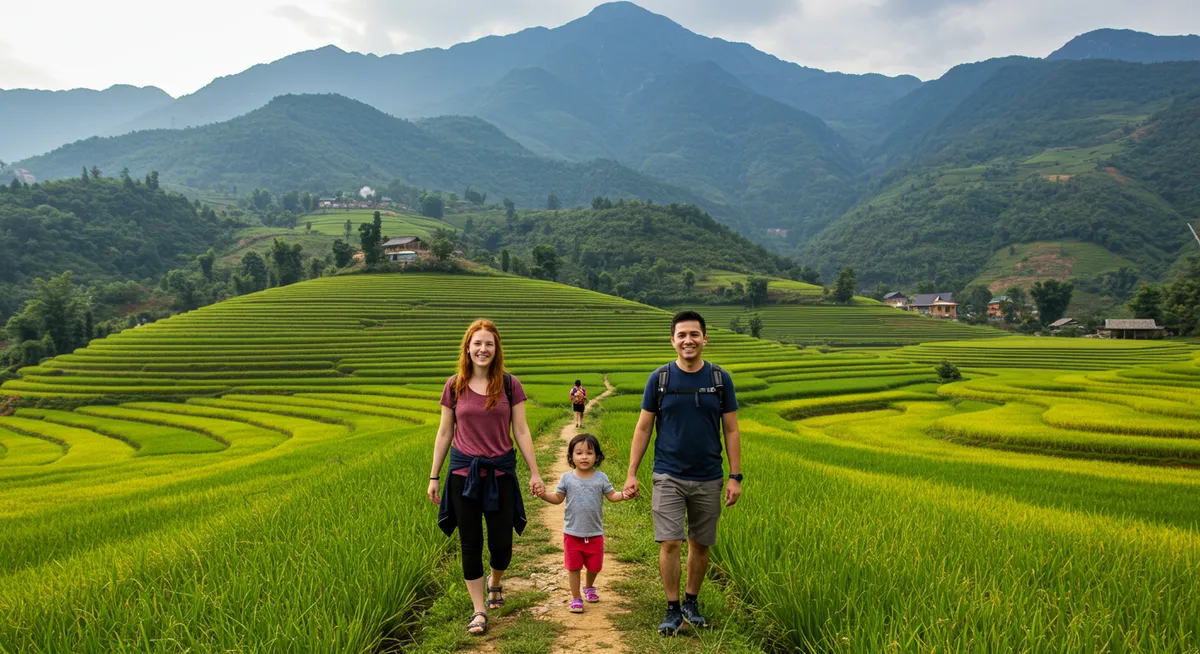
One of Sapa’s most compelling draws for families is its **breathtaking natural beauty**. Imagine walking hand-in-hand with your children along gentle paths winding through verdant terraced rice paddies, which cascade down mountainsides like giant, emerald staircases. The misty valleys, the distant peaks, and the occasional sight of a water buffalo grazing peacefully provide an ever-changing, vibrant backdrop. This isn’t just scenery; it’s an active, sensory experience. Children can marvel at the intricate irrigation systems, spot local flora and fauna, and simply breathe in the fresh mountain air, connecting with nature in a way few other destinations allow.
Beyond the stunning vistas, Sapa offers unparalleled **cultural immersion**. During a family walking tour, you’ll have the incredible chance to encounter and interact with the local ethnic minority communities, primarily the H’mong and Red Dzao people, who call these mountains home. Your children can observe traditional weaving techniques, witness daily life in remote villages, and even learn a few basic phrases. This direct interaction goes beyond a classroom lesson; it fosters empathy, broadens perspectives, and teaches valuable lessons about diverse ways of life. Guided treks often include stops in villages where you can genuinely connect with locals, sharing smiles and perhaps even a cup of tea. It’s a genuine, engaging experience that builds bridges between cultures.
For parents seeking an **educational adventure**, Sapa delivers in spades. Every step of a trek becomes a learning opportunity. Children can learn about sustainable agriculture by observing the rice paddies, understand different ecosystems, and gain insight into the history and traditions of Vietnam’s highland communities. The challenges of a trek, even a gentle one, teach resilience, teamwork, and the satisfaction of achieving a goal together. It’s an active classroom where every view, every sound, and every interaction provides a lesson.
Sapa also ignites a wonderful **sense of adventure**. For kids, navigating muddy trails, crossing small streams, or simply exploring a new environment feels like a grand expedition. The trails are varied, offering options from easy, flat walks suitable for toddlers in carriers or young children, to slightly more challenging routes for older, more energetic kids. With a local guide, you can ensure the route is perfectly tailored to your family’s pace and capabilities, ensuring fun and safety without compromising on the thrill of discovery.
To make your family’s Sapa walking tour truly amazing:
- Choose a Local Guide: This is paramount. Local guides know the safest, most scenic, and family-friendly routes. They also act as invaluable cultural bridges, facilitating interactions and sharing insights that enrich the experience.
- Pack Smart: Layers are key due to changing mountain weather. Good, broken-in walking shoes are essential. Don’t forget rain jackets (even in dry season), hats, sunscreen, insect repellent, and plenty of water and snacks.
- Go at Their Pace: Allow ample time for breaks, photo opportunities, and for children to simply observe. Don’t rush. The journey itself is the adventure.
- Embrace the Elements: Sapa trails can be muddy, especially after rain. See it as part of the fun, not a hindrance. A sense of humor and acceptance of a little dirt go a long way!
- Engage Them: Turn the trek into a game. Point out interesting plants, animals, or local farming activities. Encourage them to ask questions and interact with your guide.
Sapa offers a distinct and deeply engaging family travel experience that fosters connection, curiosity, and a profound appreciation for nature and culture. It’s an adventure that promises not just beautiful photos, but a treasure trove of shared memories and valuable life lessons.
Choosing the Right Family-Friendly Route
Selecting the perfect Sapa trekking route for your family is paramount to ensuring everyone has a memorable and enjoyable experience. Prioritize routes with gentle inclines, manageable distances, and minimal strenuous elevation, ensuring comfort for even the youngest trekkers.
Here are some of Sapa’s most beloved family-friendly trails, along with considerations for different age groups:
- Cat Cat Village Trek: This 2-3 km loop, just a few kilometers from Sapa town, is ideal for younger children or shorter cultural experiences. Trek on paved paths to a picturesque waterfall and traditional Hmong homes, often with cultural performances. While parts accommodate strollers, a baby carrier is recommended for the full loop.
- Lao Chai – Ta Van Village Trek: Longer (8-12 km), this trek is mostly gentle descent or flat through stunning terraced rice fields. Perfect for school-aged children, it offers immersive cultural experiences and homestay options. Enjoy a relaxed pace with ample photo opportunities.
- Muong Hoa Valley Strolls: Offering numerous interconnected paths, Muong Hoa Valley is perfect for gentle strolls. Select shorter segments winding through the valley, past ancient rock fields and rice paddies, for breathtaking views with minimal effort. Ideal for peaceful walks and picnics.
- Short Loops around Sapa Town: For toddlers or light activity days, explore Sapa town itself. Leisurely strolls around Sapa Lake, through the bustling town center, and to the local market offer a taste of Sapa’s atmosphere with flat, accessible paths.
Consider your children’s energy levels:
- For Toddlers and Preschoolers: Opt for largely flat or gentle routes. A sturdy baby carrier is essential. Prioritize frequent breaks, ample snacks/water, and be prepared to turn back.
- For School-Aged Children (6-12 years): Gentle to moderate treks like Lao Chai – Ta Van are suitable. Engage them with local flora/fauna, ethnic minority culture, or turning the trek into a game.
- For Teenagers: They can handle longer distances; ensure routes offer engaging scenery and cultural insights. Slightly more challenging sections might be enjoyable if balanced with rewarding views.
A local guide is highly recommended. They offer invaluable terrain knowledge, adapt routes to your family’s pace, provide cultural insights, and assist with language, ensuring a safe and enriching Sapa trekking adventure.
Essential Packing List for Kids & Parents
⭐ Recommendation: Don't miss out on amazing Sapa tours - book now!
Preparing for a family trek in Sapa means packing smart and efficiently. The region’s diverse terrain and often unpredictable mountain weather require a thoughtful approach, especially when little adventurers are in tow. A well-prepared backpack ensures comfort, safety, and maximum enjoyment for everyone on your Sapa walking tour.
Footwear: The Foundation of Comfort
- Comfortable, Broken-In, Waterproof Walking Shoes/Boots: This is non-negotiable! Sapa’s trails can range from gentle paths to muddy, slippery slopes, especially after a morning mist or a sudden rain shower. Ensure everyone, from toddlers to teens, has footwear with excellent grip and waterproof protection. Avoid brand-new shoes that might cause blisters. For kids, make sure they fit well and offer ankle support if possible.
- Extra Socks: Always pack a spare pair or two of moisture-wicking socks for everyone. Keeping feet dry is key to preventing discomfort and blisters.
Layered Clothing: Adapting to Sapa’s Fickle Weather
Sapa’s weather is notoriously fickle, often experiencing ‘four seasons in one day’! The key to staying comfortable is intelligent layering:
- Moisture-Wicking Base Layers: Start with a synthetic or merino wool base layer to wick sweat away from the skin, keeping you dry and warm.
- Insulating Mid-Layers: Pack a fleece jacket or a lightweight down vest for warmth, especially in the cooler mornings or evenings, or at higher altitudes.
- Waterproof and Windproof Outer Shells: Every family member needs a high-quality rain jacket (and ideally rain pants). A sudden downpour is common in the mountains, even if it’s sunny when you start. These also provide excellent wind protection.
- Long Pants/Trousers: Protect against scratches, insects, and sun. Lightweight trekking pants that dry quickly are ideal.
Sun & Insect Protection: Essential for Mountain Exploration
- Wide-Brimmed Hats or Caps: Even on cloudy days, the sun’s rays can be strong at Sapa’s altitude.
- High-SPF Sunscreen: Apply liberally and reapply, especially after sweating. Look for reef-safe options if possible. Don’t forget lip balm with SPF.
- Insect Repellent: Given Sapa’s lush, natural environment, insect repellent is a must, particularly during the wetter seasons when mosquitoes are more prevalent. Choose products safe for children.
Health & Safety: Your Portable Peace of Mind
A comprehensive first-aid kit is essential for any family adventure:
- Assorted Band-Aids & Blister Plasters: For minor cuts, scrapes, and blisters.
- Antiseptic Wipes & Cream: For cleaning wounds.
- Pain Relievers: Child-friendly paracetamol/ibuprofen, plus adult versions.
- Personal Medications: Any prescription medications, allergy pills, or asthma inhalers your family needs.
- Motion Sickness Remedies: The winding roads to and from Sapa can be challenging for some children (and adults!).
- Gauze, Small Scissors, Tweezers: For more significant first-aid needs.
- Hand Sanitizer: For hygiene on the go.
- Rehydration Salts: Useful for hot days or upset stomachs.
Hydration & High-Energy Snacks: Fueling Your Adventure
- Plenty of Reusable Water Bottles: Staying hydrated is paramount. While you can often buy water along popular routes, having your own reduces plastic waste and ensures you always have a supply.
- High-Energy Snacks: Pack trail mix, energy bars, dried fruit, nuts, and crackers. These are great for quick refuels during breaks and keeping energy levels high. Consider grabbing some delicious local fresh fruit from Sapa town like bananas or passion fruit – they’re nutritious and a wonderful treat!
Kids’ Specifics & Entertainment: Keeping Spirits High
- Small, Lightweight Backpacks for Kids: Empower your little trekkers! Give each child a small backpack to carry their own water bottle, a snack, and a small, beloved item. It fosters a sense of responsibility and excitement.
- Entertainment for Breaks: For moments when motivation wanes or during rest stops, a tiny toy, a travel-sized drawing pad with pencils, or a small book can work wonders. The goal is enjoyment, not just reaching the destination.
Miscellaneous & Local Tips:
- Power Bank: To keep phones charged for navigation, photos, or emergencies.
- Small, Quick-Dry Microfibre Towel: Always handy for various uses.
- Reusable Shopping Bag: For any souvenirs or extra food you might pick up from local villages.
- Local Currency (VND): Small denominations are useful for buying snacks or drinks from local vendors you might encounter along the trails.
- Wet Wipes/Tissues: Indispensable for sticky hands or quick clean-ups.
Keeping Kids Engaged and Safe on the Trail
Embarking on a Sapa trekking adventure with children promises unforgettable memories, but keeping little legs and minds happy requires a bit of planning. The key is to transform the trek from a mere walk into an engaging expedition, ensuring both their enjoyment and safety amidst Sapa’s stunning landscapes.
Set Their Pace, Not Yours
The mountainous terrain of Sapa, with its undulating paths through rice paddies and bamboo forests, demands a flexible approach. Resist the urge to push for speed or distance. Instead, let your child dictate the rhythm. Frequent, short breaks are far more effective than trying to cover long stretches at once. These pauses aren’t just for resting; they’re opportunities to absorb the stunning vistas, spot a water buffalo grazing peacefully, or simply sit and listen to the sounds of the valley. Encourage them to point out things they see, making the journey collaborative.
Transform the Trail into a Playground
- Nature Scavenger Hunts: Challenge kids to find specific items: a purple flower, a unique leaf shape, a smooth river stone, or a feather. In Sapa, they might also look for traditional H’mong patterns on clothing, the different shades of green in the terraced rice fields, or listen for the distinct sounds of local village life.
- Storytelling Adventures: Engage their imagination by weaving tales inspired by the surroundings. Perhaps the terraced fields are giant’s staircases, or the misty peaks hide ancient spirits. Ask them to contribute to the story, fostering creativity and distraction from fatigue.
- Photo Safari: Give them a kid-friendly camera or let them use your phone for a few shots. Encouraging them to capture what they find interesting makes them more observant and invested in the journey.
Safety First: Navigating Sapa’s Trails
Sapa’s trails, while beautiful, can be narrow, slippery, or steep in places, especially after rain. Emphasize basic safety rules from the start:
- Stay on the Path: Crucial to avoid slipping on muddy sections, disturbing local crops, or encountering unseen obstacles. Explain that wandering off can be dangerous and disrespectful to the local farmers whose livelihoods depend on these fields.
- Hold Hands: On trickier sections, near steep drop-offs (like the edges of rice terraces), or when crossing small streams or bridges, holding hands is paramount.
- Active Supervision: Always keep an eye on your children, especially when passing through local villages where motorbikes might be present, or near livestock. Hiring a local H’mong or Dzao guide is highly recommended; they possess invaluable knowledge of the terrain, potential hazards, and can offer a helping hand when needed, ensuring a smoother and safer experience for the whole family.
Motivate and Celebrate Small Victories
Positive reinforcement goes a long way. Acknowledge their effort and progress. “Great job climbing that hill!” or “You’re doing fantastic!” can boost morale significantly. If boredom or fatigue sets in, try a quick game, a silly song, or promise a special treat at the next scenic viewpoint (like a piece of local fruit or a small trinket from a village market). Celebrate reaching milestones, no matter how small, to build a sense of accomplishment and keep spirits high.
Fuel Their Adventure: Hydration & Snacks
Keep hunger and thirst at bay. Pack plenty of water bottles and encourage frequent sips, even if they don’t feel thirsty. Sapa’s climate can be warm and humid, leading to dehydration. High-energy, easy-to-carry snacks like dried fruit, nuts, energy bars, or local bananas are perfect for replenishing energy levels. A well-fed, well-hydrated child is a happy trekker!
Hiring a Local Guide: A Family’s Best Friend
Navigating the enchanting yet sometimes challenging terrains of Sapa with children can be an incredible adventure, but one that is significantly enhanced, and made immensely safer and more enriching, by hiring a local guide. For families, a local ethnic minority guide is truly your best friend on the trails, transforming a simple trek into a profoundly memorable and authentic experience.
Enhanced Safety and Navigation
Sapa’s breathtaking landscapes, while stunning, can feature uneven paths, muddy stretches, and varying gradients, especially after rain. A local guide, often from the Hmong or Red Dao communities, possesses an intimate knowledge of every trail, shortcut, and safe footing. They know which routes are best suited for children of different ages and energy levels, can anticipate changing weather conditions, and know where to find shelter. This unparalleled local expertise ensures your family’s safety is paramount, allowing parents to relax and soak in the majestic scenery, confident that their little ones are in capable hands.
Deep Local Knowledge and Cultural Insights
This is where a local guide truly shines. Beyond simply leading the way, they open a window into the vibrant cultures of Sapa. Imagine your children learning about traditional rice cultivation techniques directly from someone who has practiced them their entire life, or understanding the intricate patterns of Hmong embroidery from a woman whose family has passed down the skill for generations. They can share fascinating local legends, identify edible plants, or even teach you a few basic phrases in the local Hmong or Dao languages. This direct, authentic cultural exchange transforms a walk into an immersive educational journey that textbooks cannot replicate, bridging the language barrier and fostering genuine interactions with villagers you might otherwise only observe.
Supporting Local Communities
By choosing to hire a local ethnic minority guide, you’re not just gaining an expert companion; you’re directly contributing to the local economy and promoting sustainable tourism. This provides direct income to families and communities who often rely on it for their livelihood, empowering them and preserving their unique way of life. It’s a powerful and tangible lesson in responsible travel for your children to witness firsthand, showing them the positive impact of their visit.
Finding a Reputable Guide for Your Family
Finding a trustworthy guide is crucial for a positive experience. Here are some actionable tips:
- Through Homestays: Often the best starting point. Many family-run homestays in Sapa and surrounding villages like Ta Van or Lao Chai have family members who are experienced, licensed guides. This offers a more personal, authentic, and often flexible experience tailored to your family’s pace.
- Local Agencies: Reputable local trekking agencies in Sapa town can arrange guides. Look for those with strong online reviews that emphasize responsible tourism and fair wages for their guides.
- Online Platforms: A few reputable online platforms specializing in ethical and community-based tours in Vietnam can also connect you with certified local guides. Always check reviews and ensure their commitment to supporting local communities.
- Ask for Recommendations: Don’t hesitate to speak to other families who have visited Sapa. Word-of-mouth is a powerful tool for finding excellent guides.
Tips for Families with Children
- Communicate Needs: Clearly state your children’s ages, energy levels, and any specific interests (e.g., animals, crafts, local games) to your guide beforehand. They can tailor the route and activities accordingly.
- Flexibility is Key: A good guide understands that children need breaks, snacks, and perhaps a slower pace or even a spontaneous detour to play. Be prepared to be flexible with your itinerary.
- Encourage Engagement: Prompt your children to ask questions. A local guide can facilitate incredible learning opportunities and help bridge any communication gaps.
Hiring a local guide in Sapa is more than a convenience; it’s an investment in a richer, safer, and profoundly memorable family adventure. It transforms your Sapa trek from just a walk into an immersive cultural journey, creating cherished memories that will last a lifetime.
Cultural Immersion for Young Explorers
⭐ Recommendation: Don't miss out on amazing Sapa tours - book now!
One of the most enriching aspects of a Sapa family trekking adventure isn’t just the breathtaking landscapes, but the chance to respectfully immerse yourselves in the vibrant cultures of its ethnic minority communities. A walking tour is your perfect gateway to genuine connection, offering a unique opportunity for young explorers to learn about traditions far different from their own.
Connecting with Local Children
Walking through the villages of Sapa, your children will likely encounter local children, often from the H’mong or Red Dao communities, playing or helping their families. Encourage respectful interaction through smiles and simple greetings like “Chào bạn!” (Hello friend!). It’s a wonderful opportunity for your kids to see how other children live and play. However, it’s crucial to practice responsible tourism: please avoid giving candy, money, or unsolicited gifts to children. While seemingly kind, this practice can disrupt the local economy, create dependency, and encourage begging. Instead, consider purchasing handicrafts directly from their families – this provides sustainable income and truly supports the community.
Experiencing a Homestay (Optional but Recommended)
For an unparalleled cultural immersion, consider incorporating a family homestay into your trekking itinerary. Many reputable tour operators offer overnight stays in traditional homes within villages like Ta Van or Lao Chai. This provides an authentic glimpse into daily life, from sharing home-cooked meals prepared by your hosts (often using fresh local ingredients) to participating in simple household activities. It’s an incredible learning experience for both parents and children, fostering empathy and understanding. Discuss expectations with your family beforehand – facilities will be basic but the warmth and authenticity are priceless. Always choose a homestay through a certified and ethical tour operator to ensure fair practices benefit the local families directly.
Observing Traditional Crafts
As you trek through villages such as Cat Cat, Ta Van, or Giang Ta Chai, you’ll often see villagers engaged in age-old crafts. The H’mong women are renowned for their intricate indigo dyeing and embroidery, creating stunning textiles and garments. The Red Dao are known for their silversmithing and unique traditional medicines. Take the time to observe these artisans at work. Many welcome visitors to watch, and purchasing a piece directly from them provides a genuine souvenir and directly supports their traditional livelihoods. This allows your children to see the skill and dedication involved in creating these beautiful items firsthand.
Understanding Local Customs & Responsible Tourism
- Respectful Interaction: When entering villages or visiting homes, always ask for permission before taking photographs, especially of people. Dress modestly, particularly when visiting sacred sites or formal gatherings.
- Support Local Economy: Prioritize buying goods and services directly from local people and small businesses. This includes handicrafts, food, and guides, ensuring the benefits of your visit remain within the community.
- Minimize Your Footprint: Stick to marked trails, avoid littering, and carry out everything you bring in. Help teach your children about environmental responsibility by setting a good example.
- Be Patient and Open: Cultural differences can sometimes lead to misunderstandings. Approach interactions with patience, a smile, and an open mind. A local guide can be invaluable for translating and explaining customs, enriching your family’s understanding.
By engaging thoughtfully and responsibly, your family’s Sapa trekking experience will be far more than just a hike; it will be a profound journey of cultural discovery and connection, leaving lasting memories and a deeper appreciation for the world’s diverse tapestry.
Best Time to Visit Sapa with Family
Choosing the right time to visit Sapa is crucial for ensuring a comfortable, enjoyable, and safe family trekking adventure. Sapa’s weather can be quite unpredictable, and selecting the ideal season can make all the difference, especially when you have little ones in tow. We’ve outlined the best times to experience Sapa’s stunning landscapes on foot, along with seasons to approach with caution.
Spring (March – May): The Season of Blooms and Gentle Breezes
Spring in Sapa offers a truly enchanting experience, making it one of the most family-friendly periods for free walking tours in Sapa. The weather during these months is generally mild and pleasant, with comfortable temperatures that are perfect for outdoor activities without being too hot or too cold. The valleys come alive with vibrant colors as peach blossoms, plum blossoms, and various wildflowers bloom, creating picturesque backdrops for your family photos.
- Pleasant Temperatures: Days are warm enough for comfortable walks, while evenings remain cool, perfect for relaxing after a day of exploration.
- Lush Greenery: The terraced rice fields, though not yet golden, are a beautiful shade of green, indicating new life.
- Manageable Trails: With less rainfall than summer, trails are typically dry and firm, reducing the risk of slips and falls for young trekkers.
Family Tips for Spring Treks:
- Pack layers for varying temperatures throughout the day.
- Sun protection (hats, sunscreen) is advisable, even on cloudy days.
- Keep an eye out for interesting insects and plants – a great way to engage children.
Autumn (September – November): Golden Terraces and Crisp Air
Often hailed as the most visually stunning time to visit Sapa, autumn (especially September and early October) is another prime season for family trekking. This is when the iconic rice terraces turn a magnificent golden hue, ready for harvest, creating breathtaking panoramic views that truly define Sapa. The weather is typically cool, dry, and crisp, offering ideal conditions for more extensive walks.
- Spectacular Scenery: The golden rice fields are a sight to behold, providing incredible photo opportunities and a sense of wonder for all ages.
- Ideal Trekking Conditions: The cool, dry air makes walking invigorating, and the trails are generally firm, reducing mud.
- Less Humidity: Compared to summer, autumn brings lower humidity, making outdoor activities more comfortable.
Family Tips for Autumn Treks:
- Bring warmer layers for evenings and early mornings, as temperatures can drop significantly.
- Sturdy, comfortable walking shoes are a must to truly enjoy the golden landscapes.
- Consider booking popular routes in advance, as this is a peak season.
When to Reconsider (or Plan Carefully)
While Sapa is charming year-round, certain seasons present challenges that can impact a family’s comfort and safety during walking tours:
Summer (June – August): The Rainy Season Challenge
This period brings Sapa’s peak rainy season. While the landscape is lush, heavy downpours are frequent and can last for extended periods. Trails become extremely muddy and slippery, posing a significant safety risk, especially for children who are prone to falls. Visibility can also be poor due to fog and rain, obscuring the stunning views you came to see. If you must travel during these months, stick to shorter, paved paths or consider activities that don’t rely heavily on extensive trekking. Waterproof gear is essential.
Winter (December – February): Chilly and Misty
Sapa winters are cold, often misty, and can even experience occasional light snow or frost, particularly in higher elevations. While a misty Sapa has its own unique charm, the cold temperatures, dampness, and persistent fog can make outdoor walking less enjoyable, especially for young children who might struggle to stay warm. Trails can also be damp and muddy. If visiting in winter, focus on shorter, less exposed routes and ensure everyone is bundled up in warm, waterproof layers.
Ultimately, the best time for your family to visit Sapa depends on your priorities. For comfortable trekking and stunning scenery, Spring and Autumn are undoubtedly the prime choices, ensuring a safe, enjoyable, and memorable adventure for the whole family.
Beyond the Trek: Family Activities in Sapa Town
While Sapa’s majestic trails beckon with unparalleled beauty, there’s a treasure trove of family-friendly activities right within Sapa town and its immediate surroundings, perfect for active days or those times you need a break from serious trekking. These excursions offer a wonderful opportunity to immerse yourselves in local culture at a relaxed pace, often involving enjoyable strolls perfect for all ages.
A gentle and delightful activity is a leisurely walk around Sapa Lake. Located centrally, it’s easily accessible on foot from most accommodations. The paved pathway around the lake is flat and offers charming views of the surrounding mountains reflecting in the water. Kids will love the option of renting a pedal boat, adding an element of fun to your lakeside visit. It’s a fantastic spot for a quiet morning or a peaceful afternoon stroll, allowing you to soak in the fresh mountain air.
For a true sensory immersion, head to the bustling Sapa Market. This vibrant hub is a microcosm of local life and a fantastic place for families to explore. Encourage your children to discover the colorful textiles crafted by ethnic minority groups, admire intricate silver jewelry, and perhaps even try some local snacks from the food stalls. It’s an educational experience that highlights the region’s rich cultural tapestry. Remember to practice polite bargaining if you’re purchasing souvenirs – it’s part of the local experience! Keep a close eye on younger children, as the market can get quite crowded.
After your explorations, unwind at one of Sapa’s many charming local cafes. Many offer comfortable seating, excellent Vietnamese coffee for the adults, and delicious hot chocolate or fresh fruit juices for the kids. Several cafes boast incredible views over the valleys, providing a perfect backdrop for a relaxing break. It’s an ideal way to refuel and simply watch the world go by, offering a quiet moment of connection amidst your adventures.
If your family is feeling adventurous and the weather is clear, consider the Fansipan Cable Car experience. While not a “walk” in the traditional sense, it’s an incredible aerial journey to the “Roof of Indochina.” The views are breathtaking, but it’s crucial to consider the comfort of younger children – the ride is long, and the altitude at the top can be chilly and thin. Ensure your family is prepared for a significant height gain and potential ear pressure. It’s an unforgettable experience for older kids and teens, but assess if it’s truly suitable for toddlers or those prone to motion sickness.
Finally, for a deeper cultural dive, look into local cooking classes or organized farm visits. Many local families and homestays offer hands-on cooking experiences where you can learn to prepare traditional Vietnamese dishes. This is an engaging activity for older children and teens, allowing them to interact directly with locals and learn about the ingredients and techniques unique to the region. Farm visits can be equally rewarding, offering insights into local agricultural practices and the daily lives of ethnic communities. These activities often involve short, easy walks through fields or villages to reach the host family’s home, adding a gentle walking element.
Tips for Families in Sapa Town:
- Pace Yourselves: Don’t try to cram too much into one day. Sapa is best enjoyed at a leisurely pace.
- Snacks & Hydration: Always carry water and snacks, especially when walking, to keep energy levels up.
- Comfortable Shoes: Even for town explorations, comfortable walking shoes are a must.
- Engage Respectfully: Encourage your children to greet locals with a friendly smile, and remember to ask before taking photos.
- Flexibility: The weather in Sapa can change quickly, so be prepared to adjust your plans. Embrace the unexpected!
Responsible Tourism for Families
A family trekking adventure in Sapa offers incredible connection with nature and vibrant local cultures. To ensure these breathtaking landscapes and communities thrive, embracing responsible tourism is paramount. It’s a chance to teach your children invaluable lessons about respect, sustainability, and global citizenship, making your Sapa journey truly meaningful.
Tread Lightly: Embracing ‘Leave No Trace’ Principles
Sapa’s delicate ecosystems require ‘Leave No Trace’ principles. Make it a fun challenge for your kids to become “Nature Heroes”!
- Stick to Marked Paths: Guide children to stay on designated trails to prevent erosion, protect vegetation, and avoid disturbing local farms.
- Pack It In, Pack It Out: Pack out all waste (wrappers, bottles). Teach children to carry a small rubbish bag for their own trash.
- Leave What You Find: Observe and appreciate Sapa’s natural beauty without taking anything, like wildflowers or rocks.
Support Local, Empower Communities
Directing your spending towards Sapa’s Hmong and Red Dzao communities is impactful responsible tourism.
- Hire Local Guides: Arrange trekking tours directly via local homestays or community-based initiatives. Your money directly benefits their families and offers unique cultural insights.
- Purchase Locally Made Handicrafts: Seek out beautiful indigo-dyed textiles, embroidery, or silver jewelry directly from artisans in the villages. This provides fair income and preserves traditional crafts.
- Eat at Local Eateries: Choose family-run restaurants and guesthouses. It supports local livelihoods and offers an authentic taste of regional cuisine.
Respect Local Customs and Privacy
Sapa’s cultural richness requires respect. Approach local interactions with sensitivity to enhance your family’s experience.
- Ask Before You Photograph: Always ask permission before photographing locals, especially children. A simple “xin phép chụp ảnh?” (may I take a photo?) shows respect.
- Dress Modestly: When visiting villages or homestays, dress respectfully (shoulders and knees covered are appreciated).
- Understand Cultural Nuances: Avoid giving money or sweets directly to children (this can encourage begging). Support local schools or buy goods from their parents instead. Learn a few basic phrases like “Chào bạn” (hello).
- Be Mindful of Noise: Keep noise levels down in villages; remember they are homes, not just attractions.
Teaching Children the Joy of Responsible Travel
Your Sapa adventure is a living classroom. Involve children in responsible practices, explaining the ‘why’ behind your actions.
- Engage and Explain: Talk about why actions matter (e.g., staying on path, buying local). Frame it as being a good guest.
- Lead by Example: Children learn best by observing. Your actions (packing trash, politely asking for photos) shape their understanding.
- Encourage Observation, Not Consumption: Help them appreciate Sapa’s sights, sounds, and smells, rather than focusing on acquiring souvenirs.
By embracing these principles, your family’s Sapa trekking experience becomes not just an unforgettable holiday, but a profound lesson in global citizenship and respect for our planet and its people.
Frequently Asked Questions
Q: Is Sapa safe for families with very young children or toddlers?
A: Yes, Sapa can be very safe for families. For toddlers, using a sturdy baby carrier (front or back) is recommended as strollers are impractical on most trails. Stick to well-trodden, gentler paths and always hire a local guide for extra safety and assistance.
Q: Do we need to book a local guide in advance, or can we find one upon arrival?
A: While you can often find guides upon arrival, especially in Sapa town, it’s highly recommended to book a reputable guide in advance, particularly during peak seasons or if you have specific route or language requirements. This ensures availability and peace of mind.
Q: Are there any specific cultural sensitivities families should be aware of?
A: Absolutely. Always ask for permission before taking photos of local people, especially children. Avoid giving money or candy directly to children, as it can encourage begging and dependency; instead, support their families by purchasing goods or contributing to community projects. Dress modestly when visiting villages, especially temples or homes.
Q: What if my child gets tired or sick during the trek?
A: This is where a local guide is invaluable. They know the terrain, can help adjust the pace, and often carry light first-aid. Pack a personal first-aid kit with basic medications. Choose routes with easier exit points or those closer to villages/roads where transportation might be more accessible if needed. Always prioritize your child’s well-being over completing the trek.
Q: Can we do a homestay with children, and what should we expect?
A: Many homestays in Sapa are very welcoming to families and offer a unique cultural experience. They typically provide basic but comfortable accommodation. Be prepared for shared bathroom facilities and simple meals. It’s an excellent way for children to interact with local families and learn about their way of life firsthand. Always confirm family-friendliness and amenities when booking.
Sapa offers an unparalleled family adventure, where every step unveils stunning landscapes and rich cultural tapestry. By choosing appropriate routes, packing smartly, embracing local guidance, and engaging respectfully with the communities, your family’s trekking journey through Sapa will be more than just a walk – it will be a collection of cherished memories and profound discoveries. So lace up those tiny boots, prepare for wonder, and embark on an unforgettable exploration of Sapa’s family-friendly trails.